 No Duties or Customs Fees For EU & UK Customers
 Free UK Delivery On Orders Over £30
 90 Day Returns

Waterproof vs Water Resistant Golf Shoes: Which To Buy?
RYYou're shopping for a new pair of golf shoes and you keep seeing two terms thrown around: waterproof vs water resistant golf shoes. They sound similar, but the difference between them can mean dry feet on the 18th hole, or squelching your way back to the clubhouse. If you play golf in the UK or Ireland, where rain doesn't exactly send an RSVP, understanding what each label actually means matters more than you might think.
The short answer is that waterproof shoes block water entirely for a set period, while water-resistant shoes only slow it down. But the full picture involves materials, construction methods, price, breathability, and how each type holds up over time. Getting it wrong costs you comfort and, potentially, your performance when conditions turn.
At MoreSports, we stock golf shoes from brands like FootJoy, Stuburt, and Adidas, many of which sit on either side of this divide. We've put together this guide to break down exactly how these two categories differ, what to look for on the spec sheet, and which option makes the most sense for your playing habits and budget.
Why this choice matters on UK courses
The UK is one of the most consistently wet places in the world to play golf. Average annual rainfall varies from around 600mm in parts of East Anglia to well over 1,500mm in the Scottish Highlands and Northern Ireland, and many courses see rain on more than 150 days a year. If you're playing regularly between September and April, the likelihood of staying dry for an entire round is low. Picking the right shoe for that environment isn't a small decision.
Wet conditions do more than ruin your round
Wet feet on a golf course affect more than your comfort. Moisture inside your shoe changes how your foot moves, which disrupts your stance, your balance through the swing, and your ability to transfer weight consistently. When your foot is slipping inside a damp shoe, you lose the stable platform that a reliable strike depends on. That instability often shows up in your ball striking before you even notice your feet are wet.
Wet feet cost you shots long before they cost you warmth.
Dew on morning tee times is another factor worth taking seriously. Even on a day with no rain in the forecast, an early round means walking through soaked grass for the first several holes. Water-resistant shoes handle light surface moisture initially, but that protection degrades quickly. A proper waterproof shoe holds up through both dew and rain, meaning you're not making compromises based on what the weather happened to be when you left the house.
UK golfers play year-round, and the shoes need to match that
Golf culture in the UK doesn't pause for winter. Courses stay open through the colder months, and cancellations due to wet weather are far less common than in many other countries. Golfers in Southern Europe or parts of the US may simply avoid the course in poor conditions. In the UK, you put on waterproofs and go out anyway. Your shoes need to hold up to the same standard as the rest of your wet weather gear.
This is also exactly why the waterproof vs water resistant golf shoes debate carries more weight here than in most other markets. A water-resistant shoe might suit someone who plays occasionally in a dry climate and catches the odd light shower. If you're playing links courses in Northern Ireland, coastal courses in Scotland, or parkland courses in the North West through autumn and winter, that same shoe will let in water well before you reach the turn.
The long-term cost is also worth considering. Waterproof shoes carry a higher upfront price, but a pair that keeps your feet dry across two or three full UK seasons will likely outlast multiple cheaper pairs that break down when exposed to regular wet conditions. When you spread the cost over actual rounds played in comfort, the premium often makes sense.
What waterproof and water-resistant really mean
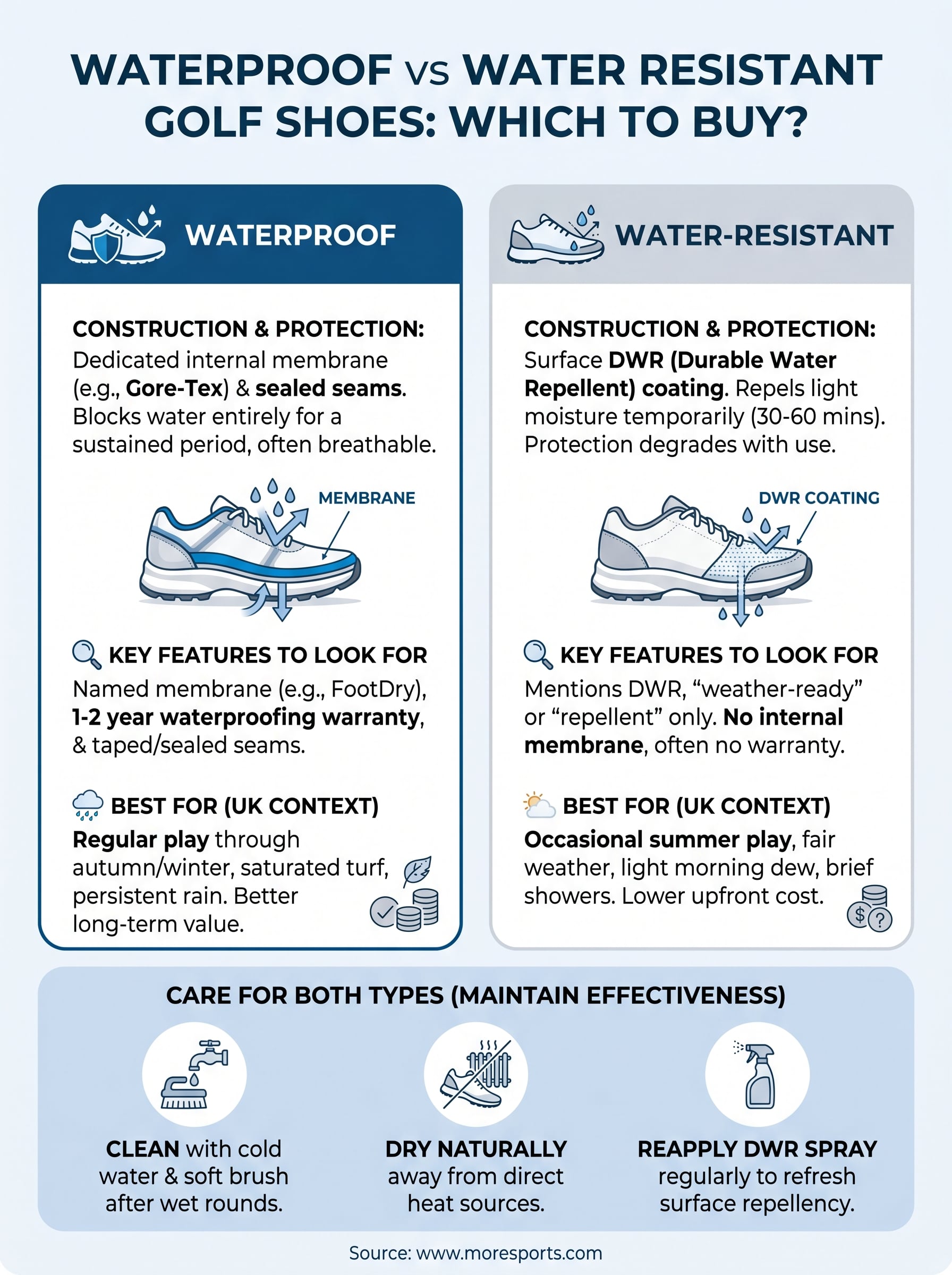
These two terms describe different levels of protection and entirely different construction methods. "Waterproof" means the shoe contains a physical barrier that prevents water from entering the upper over a sustained period. "Water-resistant" means the outer material repels light moisture temporarily, with no internal membrane to back it up. Both labels appear on golf shoes regularly, but they don't deliver the same level of protection on a wet course.
What waterproof actually means
Waterproof golf shoes use a dedicated membrane, such as Gore-Tex or a brand-specific equivalent, bonded to the inside of the upper. This membrane blocks water droplets from outside while still allowing moisture from your foot to escape as vapour, which is why waterproof shoes often carry a breathability rating alongside the waterproofing claim. Most reputable brands also back waterproof footwear with a one or two-year waterproofing warranty, giving you something concrete to hold them to.
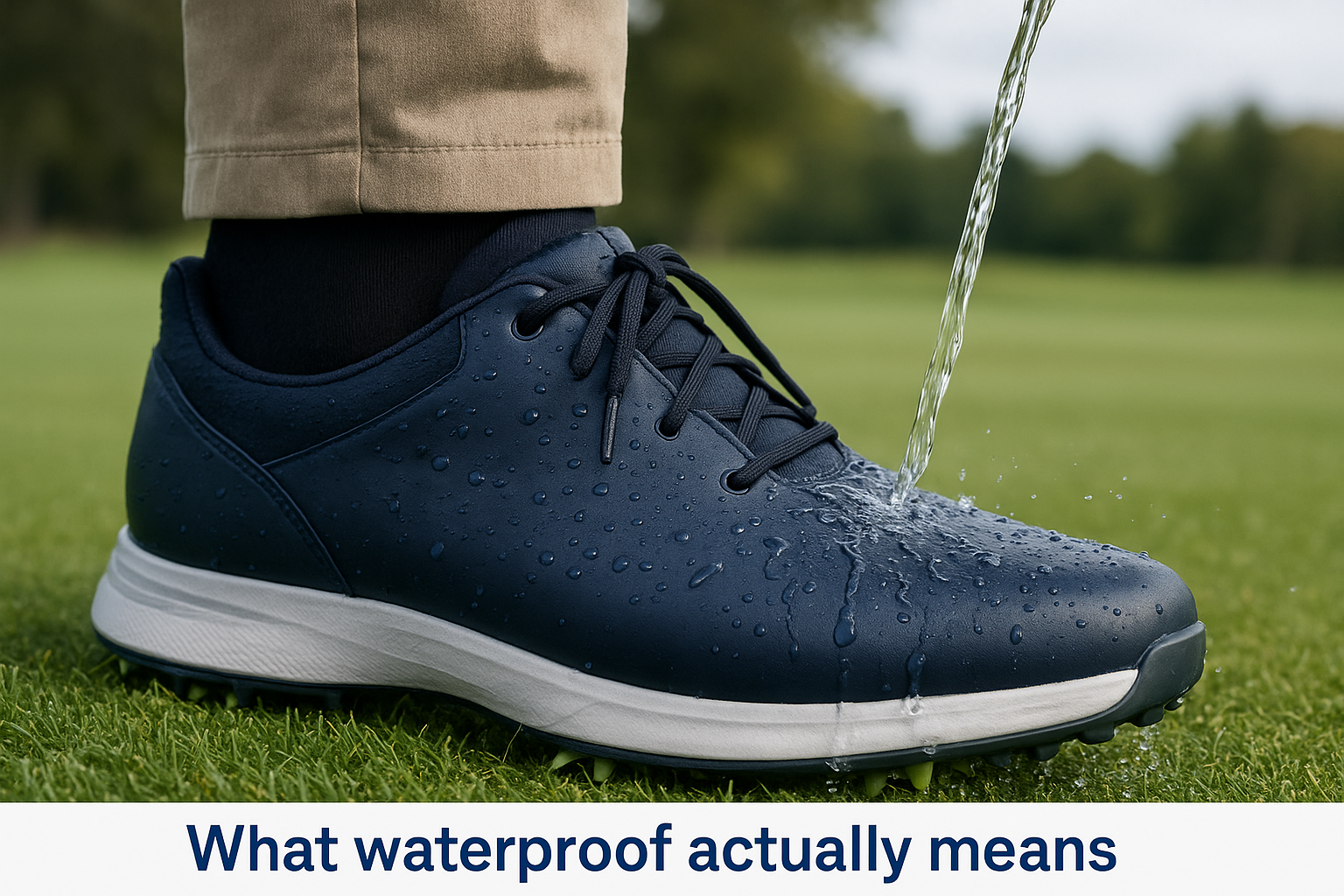
The seams in a properly waterproof shoe are sealed or taped during construction. Without that step, water travels through the stitching regardless of what the outer material is made from, so sealed seams are what separate a genuinely waterproof shoe from one that simply uses a treated surface.
What water-resistant actually means
Water-resistant shoes rely on a Durable Water Repellent (DWR) coating applied to the outer surface of the upper. This coating causes water to bead and roll off rather than soak in, and it works well against light rain or dew for a short window, typically around 30 to 60 minutes depending on conditions and coating quality. There is no internal membrane involved, so once the coating is overwhelmed or wears down with use, water passes straight through the material.
DWR coatings degrade with use and washing, which means water-resistant shoes lose their effectiveness over time without retreatment.
When you look at waterproof vs water resistant golf shoes side by side, this difference in construction explains the price gap. You're paying for a built-in engineering solution, not just a surface finish.
How to choose based on when and where you play
Your playing schedule and home course are the most practical filters for this decision. The technical differences between waterproof and water-resistant shoes are clear, but what actually matters is how those differences map to your specific situation. The type of course, the season you play most, and how often you're out in the wet will point you toward the right choice faster than any spec sheet.
If you play regularly through autumn and winter
Playing through the colder months in the UK means consistent exposure to rain, dew, and saturated turf. On links courses especially, wind-driven rain comes from low angles and soaks the upper of your shoe quickly. A water-resistant shoe simply won't hold up long enough to protect you through 18 holes in those conditions. If wet-weather rounds make up a significant portion of your season, a fully waterproof shoe with a sealed membrane is the practical choice, not just a premium one.
Most serious UK golfers who play year-round find that the waterproof vs water resistant golf shoes question answers itself once autumn arrives. The protection gap between the two becomes obvious within the first few holes on a wet morning, and there's no recovering from wet feet once the damage is done.
If your golf is mostly summer and fair weather
Summer golf in the UK still brings occasional showers, but the intensity and duration are usually lower than in the wetter months. If you play most of your rounds between May and August and tend to stay off the course when conditions are poor, a water-resistant shoe can work well for you. Light morning dew and brief showers fall comfortably within what DWR-treated shoes handle before the coating is overwhelmed.
Water-resistant shoes are a reasonable option if you play selectively and avoid the worst of UK weather.
The trade-off is that you'll need to reapply a DWR treatment regularly to keep that protection active. On the odd occasion you do get caught in heavy rain, your feet will get wet sooner than you'd like. For fair-weather golfers on a tighter budget, that's an acceptable compromise.
What to check before buying a pair
When you're comparing waterproof vs water resistant golf shoes in-store or online, the product description often tells you less than the spec sheet does. Marketing language varies widely across brands, and a shoe described as "weather-ready" or "all-conditions" doesn't automatically carry full waterproofing. Knowing exactly what to look for means you won't overpay for a shoe that underdelivers the moment conditions deteriorate on course.
Look for a named membrane or waterproofing system
A genuine waterproof shoe will name its membrane clearly, whether that's Gore-Tex, FootDry, or a brand-specific proprietary equivalent. If the product listing only mentions a DWR coating or "water-resistant treatment," you're looking at a water-resistant shoe, not a waterproof one. These are two different products with different construction methods, and the difference in protection is significant once rain starts falling on a UK course.
If the spec sheet doesn't name a membrane, assume the shoe is water-resistant at best.
Verify the waterproofing warranty
Most reputable waterproof golf shoes carry a one or two-year [waterproofing guarantee](https://www.moresports.com/blogs/moregolf/what-are-golf-shoes), which gives you a concrete measure of the manufacturer's confidence in the construction. Check whether the warranty covers the membrane specifically or just the overall shoe. Shoes with no waterproofing warranty are typically relying on surface treatments alone, which degrade far quicker under regular use.
Check seam sealing, fit, and outsole grip
Sealed or taped seams are non-negotiable in a genuinely waterproof shoe. Water travels through stitching easily if the seams aren't sealed during construction, so confirm this detail before purchasing. Alongside seam sealing, check that the fit is snug but not tight, as excess movement inside the shoe accelerates moisture ingress at the collar and tongue.
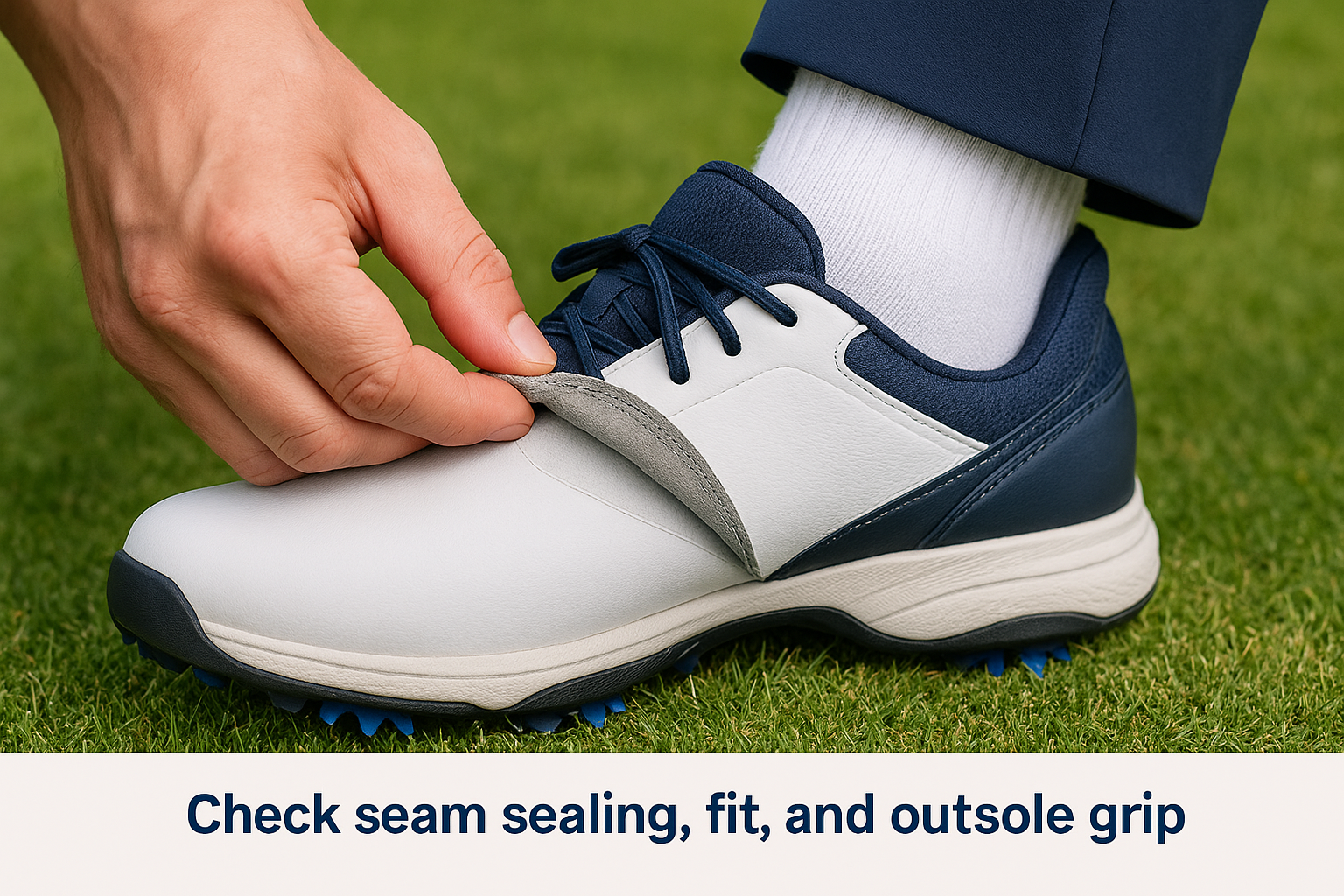
Outsole grip is worth checking separately from the waterproofing rating. Soft spike or hybrid outsoles perform better on wet turf than hard-shell alternatives, and your stability through the swing depends on that contact. A waterproof upper combined with a poor-grip outsole still leaves you compromised on a wet course.
How to care for them so they stay effective
Buying the right shoe is only half the job. How you maintain it determines how long the waterproofing or water-resistant coating holds up. Both types degrade faster when neglected, so a basic care routine after each round extends the life of the protection significantly.
Clean them after every wet round
Mud and debris left on the upper trap moisture against the material, which breaks down both DWR coatings and waterproof membranes faster than normal use alone. After every wet round, rinse your shoes with cold water and a soft brush to remove surface dirt before it dries and sets into the seams. Avoid machine washing, as the heat and agitation damage the membrane bonding and loosen the seam sealing in waterproof shoes.
Leave them to dry naturally in a well-ventilated area away from direct heat sources like radiators or direct sunlight. Stuffing them with newspaper speeds up the drying process by absorbing interior moisture without applying heat.
Reapply DWR treatment regularly
Whether you own waterproof vs water resistant golf shoes, the outer DWR coating on both types wears down over time and needs refreshing. Waterproof shoes still rely on an outer DWR layer to keep water away from the membrane, and once that layer degrades, the membrane works harder and eventually lets more moisture through. Water-resistant shoes lose their primary protection entirely when the coating fades.
Reapplying a quality DWR spray every few months keeps both shoe types performing closer to how they did when new.
Use a purpose-made footwear DWR spray rather than a generic fabric treatment. Apply it to clean, slightly damp shoes and allow it to dry fully before wearing. This takes less than ten minutes and makes a measurable difference to how water beads off the upper during your next wet round.
Store them correctly between rounds
Storing your shoes in a sealed bag or damp kit bag creates the conditions for mould growth and accelerates material breakdown. Keep them in a cool, dry place with space to breathe. Removing insoles between rounds also helps moisture escape from inside the shoe rather than sitting against the lining overnight.
Key takeaways
The waterproof vs water resistant golf shoes decision comes down to where and when you play. Waterproof shoes use a sealed membrane and taped seams to block water entirely, while water-resistant shoes rely on a surface coating that degrades with use and offers far shorter protection in wet conditions. For UK golfers playing regularly through autumn and winter, a fully waterproof shoe is the practical choice.
Before buying, check for a named membrane, a manufacturer's waterproofing warranty, and confirmed seam sealing. These three details separate genuine waterproof construction from surface-treated shoes that won't hold up past the first few holes in heavy rain.
Whichever type you choose, a basic care routine keeps the protection working for longer. Clean them after wet rounds, dry them away from heat, and reapply a DWR spray every few months. Browse the full range of golf shoes at MoreSports to find the right pair for your game.