 No Duties or Customs Fees For EU & UK Customers
 Express Tracked UK Delivery On 1000s of Items
 90 Day Returns

Wedge Bounce Explained: Choose the Right Bounce & Grind
R YWedge Bounce Explained: Choose the Right Bounce & Grind
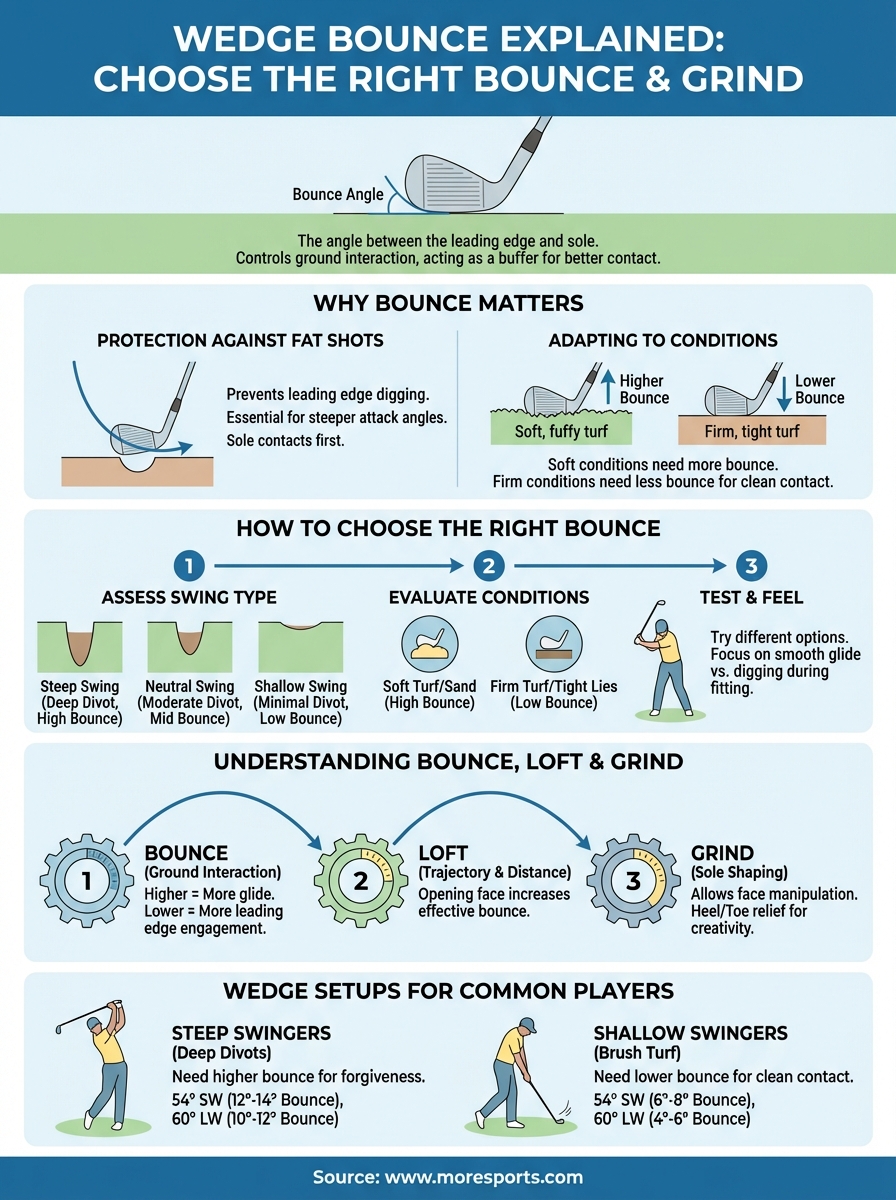
Wedge bounce is the angle between your wedge's leading edge and its lowest point on the sole. When you set a wedge on the ground, bounce determines how high the leading edge sits above the surface. Higher bounce angles keep the leading edge elevated, whilst lower bounce angles bring it closer to the ground. This angle fundamentally controls how your club moves through turf and sand at impact. Think of it as built-in forgiveness that helps the club glide rather than dig.
Getting bounce right transforms your short game. Pick too much bounce and you might blade shots off firm turf. Choose too little and you'll dig into soft conditions or struggle in bunkers. This guide breaks down everything you need to know about wedge bounce and grind options. You'll learn why bounce matters for different shot types, how to match bounce to your swing style, what the numbers actually mean when paired with loft and grind, and which setups work best for common player profiles. We'll also share practical tips to help you use your wedges properly on the course.
Why wedge bounce matters
Bounce controls how your wedge interacts with the ground and determines whether your club glides smoothly or digs into the turf. When you strike the ball, the bounce angle acts as a buffer between the leading edge and the surface. Without adequate bounce for your swing type, the leading edge catches and digs, leading to heavy shots that come up short. With proper bounce, your club skims through impact and maintains consistent contact quality even when you don't strike the ball perfectly.

Protection against fat shots
Your wedge bounce provides forgiveness on slightly heavy strikes. The sole contacts the ground first and prevents the leading edge from digging too deeply into the turf. This design feature lets you recover from minor swing errors that would otherwise result in chunks or complete mishits. Players with steeper attack angles benefit most from higher bounce, whilst those with shallow swings need less bounce to avoid bounce.
Bounce is the difference between a playable miss and a shot that travels half the intended distance.
Adapting to course conditions
Different course conditions demand different bounce angles. Soft, fluffy turf requires more bounce to prevent excessive digging, whilst firm, tight lies work better with lower bounce that lets the leading edge make cleaner contact. Bunker sand also influences your bounce needs, with soft sand favouring higher bounce and firm, wet sand working better with moderate to low bounce options.
How to choose the right wedge bounce
Selecting the right bounce depends on three key factors: your swing characteristics, the turf conditions you typically play, and the shots you need to execute around the green. Most golfers benefit from carrying wedges with different bounce angles to handle various situations, but understanding your dominant swing style provides the foundation for building your wedge setup.
Assess your swing type
Your attack angle determines which bounce range suits your game best. Players with steep swings that create deep divots need higher bounce (10° or more) to prevent excessive digging. Conversely, those with shallow swings that barely brush the turf require lower bounce (4° to 6°) to avoid bounce interference that causes thin or bladed shots. Mid-bounce wedges (7° to 10°) work for neutral swing styles that produce moderate divots.

Match your bounce to your natural swing pattern rather than trying to change your swing to suit a specific wedge.
Evaluate your typical conditions
The firmness of your course influences bounce requirements as much as swing type. Soft, lush fairways and thick rough demand more bounce regardless of your swing style, whilst firm, tight lies benefit from lower bounce that lets the leading edge engage cleanly. If you play courses with significant seasonal variation, consider carrying multiple wedges or choosing mid-bounce options that offer greater versatility across conditions.
Test before committing
Try different bounce options during a proper wedge fitting or demo day before purchasing. Hit full shots, pitch shots, and bunker shots with various bounce angles to understand how each performs with your swing. Notice whether the club glides smoothly through impact or catches and digs. Pay attention to launch angle and spin rates as well, since proper bounce helps you achieve optimal ball flight. This hands-on experience reveals which bounce angles feel natural and produce consistent results for your game.
Understanding bounce, loft and grind
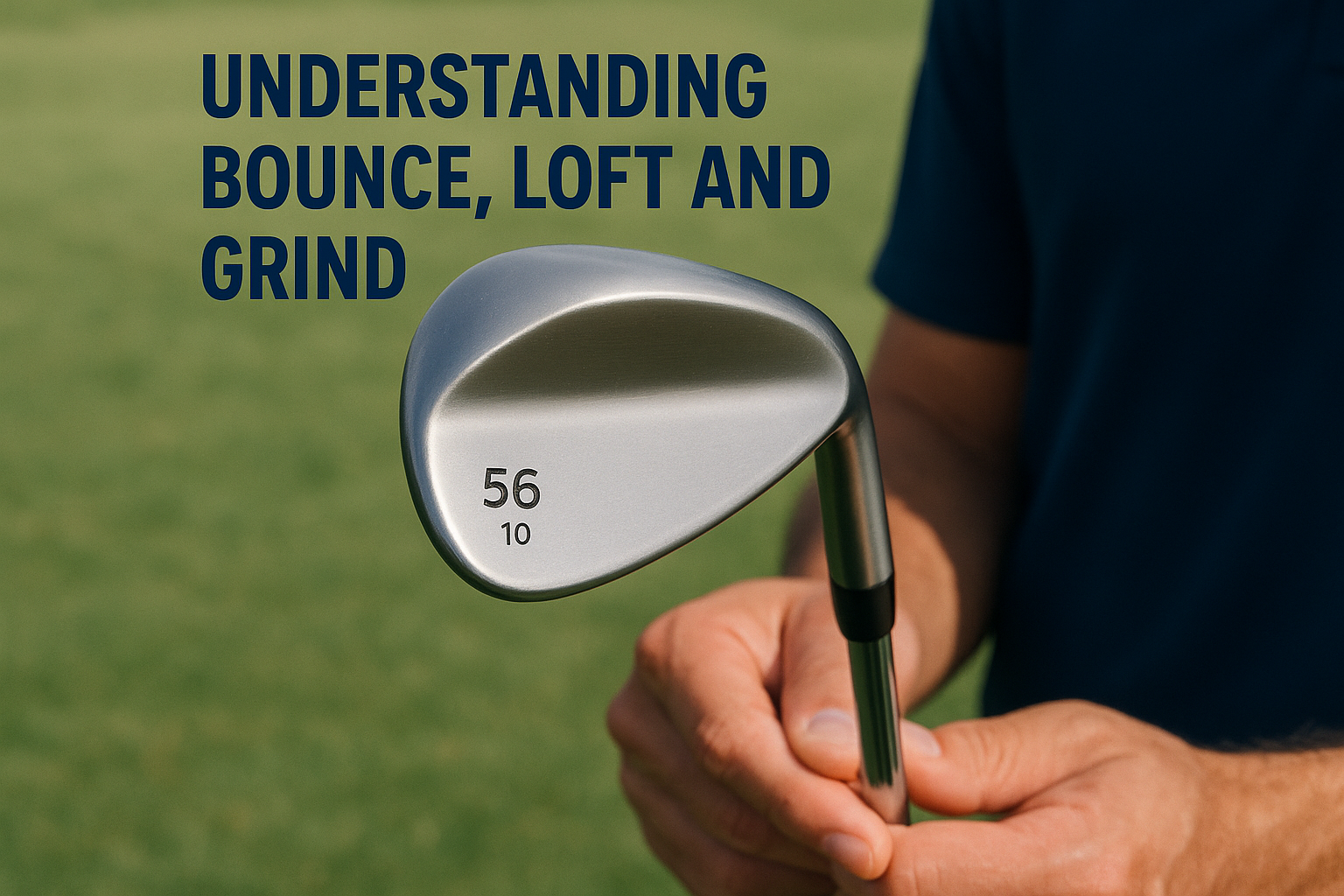
Wedge bounce explained fully requires understanding how bounce, loft, and grind work together to determine your wedge's performance. These three specifications aren't independent variables but rather interconnected elements that combine to shape how your club performs through impact. Loft determines your shot trajectory and distance, bounce controls ground interaction, and grind defines how you can manipulate the bounce angle by opening or closing the clubface.
How loft affects bounce performance
Loft influences how bounce functions during different shot types. When you open your wedge face to add loft for a high, soft shot, you also increase the effective bounce angle, which helps the club glide through turf or sand. Conversely, closing the face reduces effective bounce and brings the leading edge closer to the ground. This relationship means your 60-degree lob wedge with 10° bounce might behave like a wedge with 12° or 14° bounce when you open the face for flop shots around the green.
The bounce angle stamped on your wedge represents its measurement at square face position, but changes as you manipulate the face angle during play.
Grind options explained
Grind refers to material removed from the sole during manufacturing, which shapes how your wedge sits at address and moves through impact. Full sole grinds maintain maximum bounce across all shot types, whilst heel and toe relief grinds let you open or close the face more dramatically without excessive bounce interference. A versatile mid-grind option suits players who use standard setups for most shots, whereas aggressive heel/toe grinds benefit creative players who frequently manipulate face angle for specialty shots around greens.
Wedge bounce setups for common players
Understanding which wedge bounce setup matches your playing style helps you build a consistent short game. Most golfers fit into one of three broad categories based on their swing characteristics and ball-striking tendencies. Your setup should reflect how you naturally deliver the club to the ball rather than forcing yourself to adapt to wedges that don't suit your swing pattern.
Steep swingers who take divots
Players with steep attack angles and pronounced divots need higher bounce throughout their wedge set. A typical setup includes a 54-degree sand wedge with 12° to 14° bounce and a 60-degree lob wedge with 10° to 12° bounce. This configuration prevents excessive digging in all turf conditions and helps you maintain consistent contact on full swings and pitch shots. You'll find these wedges glide smoothly through impact even when you catch the ground slightly behind the ball.

Higher bounce setups give steep swingers the margin for error they need to score well around greens.
Shallow swingers who brush the turf
Golfers with shallow swings that produce minimal divots perform best with lower bounce options. Consider a 54-degree wedge with 6° to 8° bounce paired with a 60-degree wedge featuring 4° to 6° bounce. These lower bounce angles allow your leading edge to engage cleanly on tight lies and prevent bounce interference that causes thin or bladed strikes when you sweep through impact.
Practice tips to use wedge bounce
Understanding wedge bounce explained through theory matters little without practical application on the course and range. Developing a feel for how bounce works requires deliberate practice with different setups and swing techniques. Start with simple drills that isolate bounce interaction, then progress to more complex shot scenarios that replicate on-course situations. This hands-on approach builds confidence in your wedge play and helps you trust your equipment during competitive rounds.
Feel the club interact with turf
Hit practice shots from various lies to understand how your wedge bounce performs in different conditions. Place balls on tight fairway lies, thick rough, and sand to experience how the sole interacts with each surface. Notice whether your club glides smoothly or catches and digs. Try hitting shots with different shaft leans and attack angles whilst maintaining the same wedge to feel how your swing influences bounce effectiveness.
Practice with purpose by paying attention to how the sole contacts the ground rather than just watching ball flight.
Experiment with face angle
Open and close your wedge face during practice to learn how face manipulation affects bounce performance. Start with square setups for standard pitch shots, then gradually open the face for higher, softer trajectories. Pay attention to how effective bounce increases as you add face angle and decreases when you hood the club. This experimentation reveals which shots work best with your bounce specifications and builds versatility around greens.
Final thoughts
Selecting the right wedge bounce transforms your short game from inconsistent to reliable. This comprehensive wedge bounce explained guide covered everything you need to know about matching bounce angles to your swing type, understanding how loft and grind interact with bounce, and building a wedge setup that performs across various course conditions. Remember that proper bounce selection depends on your attack angle, divot pattern, and typical playing environment rather than following generic recommendations.
Start by assessing your natural swing characteristics and testing different bounce options through actual practice sessions. Build confidence in your equipment by experimenting with face angles and hitting from various lies around the green. Your wedges should feel natural and produce consistent results without forcing swing adjustments. Ready to upgrade your wedge selection? Browse our complete range of golf wedges from leading brands at More Sports, where you'll find competitive prices and expert guidance for building your ideal short game setup.