 No Duties or Customs Fees For EU & UK Customers
 Express Tracked UK Delivery On 1000s of Items
 90 Day Returns

Are Golf Bags Waterproof? A Guide To StaDry, Seams & Zips
RYIf you've ever been caught in a downpour mid-round, you've probably asked yourself: are golf bags waterproof? The short answer is that most standard golf bags offer some level of water resistance, but truly waterproof protection depends on the materials, seam construction, and zip design used.
A soggy towel is one thing. Water seeping into your bag and damaging your clubs, electronics, or that expensive rangefinder is another problem entirely. Understanding the difference between water-resistant and fully waterproof matters more than most golfers realise, and it can save you hundreds of pounds in the long run.
At MoreSports, we stock golf bags from brands like Titleist, TaylorMade, and Callaway that are built with serious wet-weather performance in mind. In this guide, we'll break down how waterproof technology actually works in golf bags, from StaDry linings to sealed seams and waterproof zips, and help you choose the right bag for British weather that rarely plays fair.
Why most golf bags are not truly waterproof
Most golf bags you'll find on the market are described as "water-resistant" rather than fully waterproof, and that distinction matters enormously when you're playing in typical British conditions. Manufacturers use materials like polyester or nylon that can shed light rain for a short period, but sustained rainfall will eventually push through the fabric, seams, and zips. If you've ever asked yourself are golf bags waterproof and assumed the answer was yes, the construction of most standard bags tells a different story. The marketing on the label and the reality on the 14th hole in a downpour are often very different things.
Water-resistant vs waterproof: the key difference
A water-resistant bag uses a Durable Water Repellent (DWR) coating applied to the outer fabric. This coating causes water to bead up and run off the surface rather than soaking in immediately. It works well in a light drizzle or short shower, but once the coating becomes saturated or degrades through UV exposure and repeated use, it loses its effectiveness quickly.
A truly waterproof bag, by contrast, uses sealed or welded seams, waterproof membranes, and purpose-built waterproof zips that physically block water from passing through any part of the bag's construction. The difference in protection between these two types is significant, and in a long wet round, your scorecard is not the only thing that gets ruined.
A DWR coating on a water-resistant bag can begin to fail after just one or two seasons of regular play, leaving your equipment far more exposed than the bag's original description would suggest.
Where water gets into your bag
Even bags marketed as using waterproof fabrics often have specific weak points that let water in. Understanding exactly where those entry points are helps you make a more informed buying decision rather than relying on packaging claims alone.
The three most common entry points are stitched seams, conventional zips, and the top opening. Standard stitching creates thousands of tiny needle holes in the fabric, and water tracks through those gaps quickly under sustained pressure. Conventional zips are even worse, as the interlocking teeth leave channels that water follows straight into the bag's interior. The hood or top opening on a stand bag or cart bag is also a problem area, because rain pools there first and runs directly down into the club section if the design isn't sealed properly.
- Stitched seams allow water in through needle holes unless taped or welded shut
- Standard zips offer no real barrier once rain runs along the zip line
- Top openings collect pooling water if no fitted rain hood is included
- Base drainage holes can draw in water from saturated wet ground
- Worn fabric on older bags breaks down remaining DWR coatings faster
What makes a golf bag waterproof
When golfers ask are golf bags waterproof, the answer comes down to four core construction features that work together: the fabric membrane, seam sealing, zip type, and rain hood design. A bag that falls short on any one of these will let water in, regardless of how well the other three perform. Understanding what each feature actually does helps you shop with confidence rather than relying on vague marketing claims.
Sealed seams and waterproof membranes
The fabric itself is the first line of defence. Fully waterproof bags use a bonded or laminated membrane, similar to the technology found in high-end hiking jackets, that physically blocks water from passing through the material at a microscopic level. Crucially, the seams must then be taped or welded shut, because even the finest waterproof fabric is useless if the joins between panels are left open to the rain through standard stitching.
Seam sealing is one of the most telling signs of a genuinely waterproof bag, and many golfers overlook it entirely when comparing bags in a shop.
Waterproof zips and rain hoods
The zips on your bag are where most water enters during a wet round. Standard coil zips leave small channels between the teeth that act as a direct path for water to travel inside the bag. Truly waterproof bags use YKK AquaGuard or equivalent waterproof-rated zips, which feature a laminated flap or sealed construction that breaks that water path entirely.
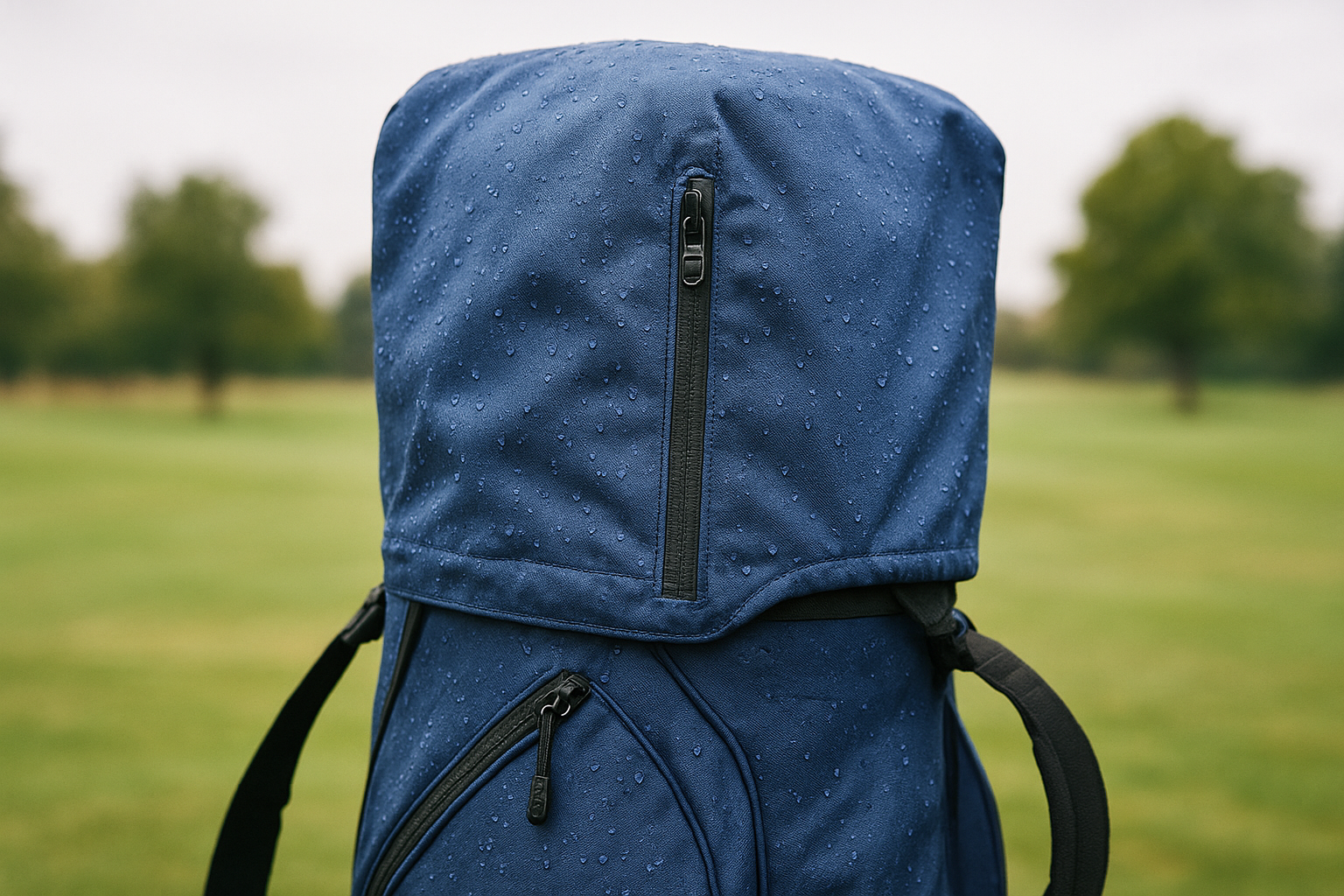
Your rain hood matters just as much as the zips. A fitted, elasticated hood that covers the full club opening stops pooling water from running straight down into your bag. Look for hoods that attach securely and cover the entire top section, not just a loose flap that lifts away in the wind.
How to tell if a bag is waterproof in shop
When you're standing in a shop wondering are golf bags waterproof, the bag's label alone won't give you the full picture. Manufacturers often use "water-resistant" and "waterproof" interchangeably on packaging, so you need to physically inspect the bag before committing to a purchase rather than trusting the marketing copy on the tag.
Check the seams and zips first
Turn the bag inside out if you can, or run your fingers along the interior seam lines. Taped or welded seams feel smooth and have a continuous strip of material covering the stitch line, whereas standard stitched seams leave exposed holes that water tracks through immediately. On the outside, squeeze the zip fabric and look for a laminated coating or a protective flap sitting over the zip teeth. If the zip looks identical to a standard clothing zip, it almost certainly offers no meaningful waterproof protection.
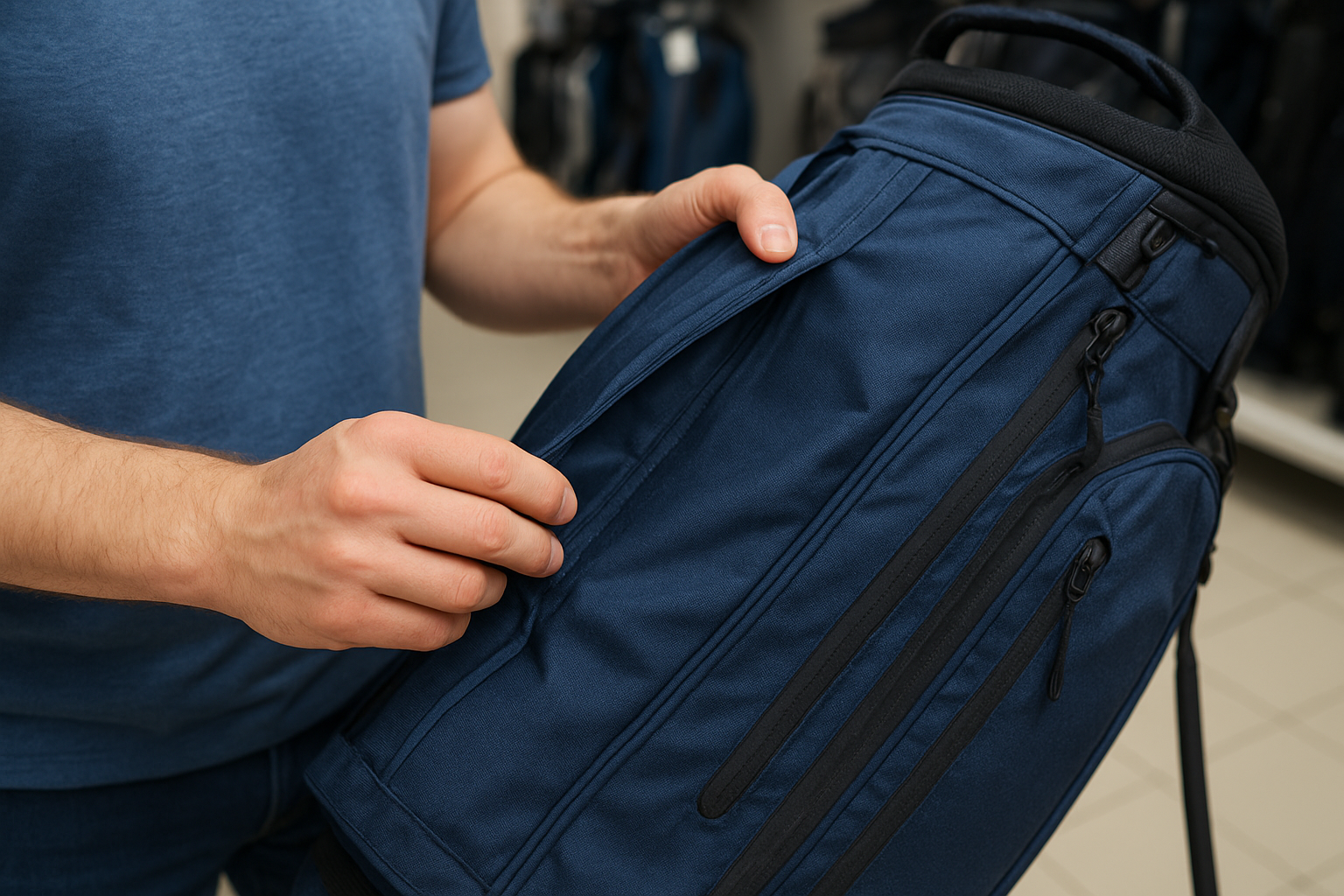
A quick zip inspection takes under 30 seconds and tells you more about a bag's wet-weather performance than any label or product description will.
Look for a fitted rain hood
Check whether a rain hood is included and test how it fits over the club section. A hood that attaches loosely or covers only part of the top opening will let pooling water run straight down inside the bag during a heavy shower. A properly fitted hood should sit snugly around the full circumference of the top and stay securely in place without needing to be held down.
Run through this checklist before you buy:
- Seams: taped or welded, not exposed stitching
- Zips: laminated or flapped, not standard coil teeth
- Hood: fitted and elasticated, covering the full opening
- Fabric: firm membrane feel, not lightweight coated polyester
How to keep your clubs dry in the rain
Even if you're still working out are golf bags waterproof or just water-resistant, you can take practical steps to keep your clubs and gear dry during a wet round. Your bag's design is only part of the equation; the habits you build on the course make just as much difference as the materials your bag is constructed from.
Use a rain hood every single round
Many golfers leave their rain hood at home or packed at the bottom of the bag because it seems unnecessary when the forecast looks clear. British weather changes quickly, and by the time rain arrives, your clubs are already exposed. Keep your rain hood fitted and ready before you tee off, not folded away in a side pocket where retrieving it costs you time and dry hands.
Fitting your rain hood before the rain starts, rather than after, is one of the simplest ways to protect your clubs during a wet round.
Protect vulnerable gear separately
Your electronics, gloves, and scorecards are the items most likely to be ruined by water that gets past your bag's outer layers. A small waterproof pouch inside your bag's accessory pocket adds a reliable second layer of protection for anything that water damages quickly. Basic waterproof pouches from outdoor retailers fit neatly inside most standard pockets without taking up meaningful space.
Keeping a dry towel clipped inside the bag rather than hanging on the outside also makes a real difference. An outside towel absorbs rain steadily throughout the round, and using a soaked towel on your grips creates far more problems than the shower itself. Swapping to a dry one mid-round helps you maintain grip and control even when conditions stay wet from the first hole to the last.
Best waterproof golf bags for UK golfers 2026
Knowing are golf bags waterproof before you buy is one thing; knowing which specific bags actually hold up in British conditions is another. The bags below come from brands stocked at MoreSports and are built with sealed seams, waterproof zips, and fitted hoods that keep your clubs protected through a proper British downpour. Each one has been selected for proven wet-weather performance rather than packaging claims alone, making them worth considering ahead of the 2026 season.
Stand bags with full waterproof construction
Stand bags are the most popular choice for UK golfers who walk the course, and the best waterproof options combine low carry weight with genuine waterproof credentials. The Titleist Players 4 StaDry uses a proprietary waterproof fabric with fully taped seams and waterproof zips throughout, making it one of the most reliable wet-weather stand bags currently available. Callaway's Chev Dry stand bag offers a similarly sealed construction at a slightly lower price point, with a fitted rain hood and a reinforced base that keeps the bag stable and upright on saturated ground.
A lightweight waterproof stand bag protects your clubs without adding unnecessary strain during a full 18-hole walk in wet weather.
Cart bags built for British weather
Cart bags suit golfers who use a trolley or buggy, and the larger frame gives manufacturers room to build in more waterproofing features without the weight constraints that affect carry bags. The TaylorMade Pro Cart bag features welded pocket seams and laminated YKK zips across all main compartments, giving you consistent protection through heavy and sustained rain. For golfers who need maximum storage capacity alongside waterproof performance, the Callaway Org 14 Hyper Dry delivers both, with a full-length clothing pocket that stays completely dry even after a long, wet round.
Key takeaways
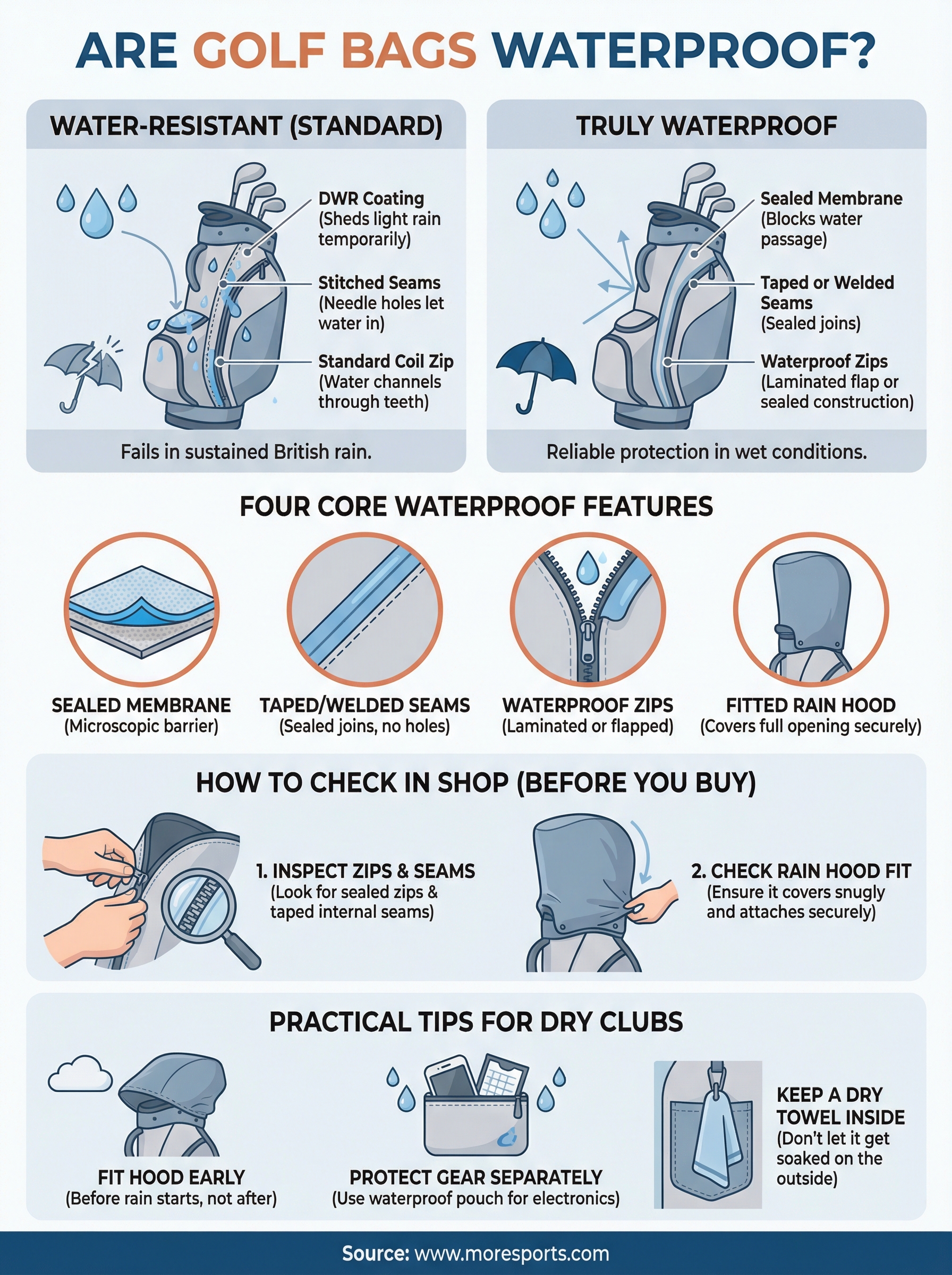
The core question of are golf bags waterproof has a clear answer: most are not. Standard bags use DWR-coated fabrics that shed light rain temporarily, but sustained British weather pushes through stitched seams, standard zips, and poorly fitted hoods without much resistance. Truly waterproof bags rely on sealed or welded seams, laminated waterproof zips, and fitted rain hoods that work together as a system rather than any single feature alone.
When you buy a bag, inspect the seams and zips physically rather than trusting the label. Use your rain hood before the rain arrives, carry a dry towel inside the bag, and protect electronics in a separate waterproof pouch for reliable cover throughout a wet round.
If you're ready to find a bag that handles British conditions properly, browse the full range of waterproof golf bags at MoreSports and pick one built to perform when the weather turns.