 No Duties or Customs Fees For EU & UK Customers
 Free UK Delivery On Orders Over £25
 90 Day Returns

Callaway Chrome Soft Golf Balls: Specs, Feel, Who They Suit
RYChoosing the right golf ball can make a genuine difference to your game, and Callaway Chrome Soft golf balls have earned a loyal following among players seeking a blend of distance and soft feel. But with so many options on the market, including Callaway's own Chrome Soft X and competitors like the Titleist Pro V1, it's worth understanding exactly what sets this ball apart before you commit.
This guide breaks down the specs, performance characteristics, and player profiles that suit the Chrome Soft best. Whether you're a mid-handicapper chasing more greenside control or a weekend golfer wanting a premium ball without the harsh feel, you'll find the details you need here. At More Sports, we stock Callaway's full range at competitive UK prices, so once you've decided the Chrome Soft is right for you, picking one up is straightforward.
Why the Chrome Soft matters for club golfers
Performance that suits real-world swing speeds
Most club golfers don't swing at tour-level speeds, and that's exactly where the Chrome Soft shines. Callaway designed this ball to compress fully at moderate swing speeds (85-105 mph with a driver), which means you get optimal energy transfer even if you're not a powerhouse hitter. Tour-level balls often feel hard and unresponsive when you lack the clubhead speed to compress them properly, but the Chrome Soft activates at your speed.
The lower compression core (around 75-80, depending on the model year) ensures you're not leaving distance on the table. You'll notice this particularly with your irons and fairway woods, where the ball responds to clean contact with a satisfying trajectory. Players who switched from harder balls often report gaining 5-10 yards on approach shots simply because the ball compresses better for their swing.
"A golf ball that doesn't compress properly for your swing speed is like running in shoes two sizes too small: you're fighting your equipment instead of using it."
Greenside control without the premium price penalty
When you're standing over a delicate chip or facing a bunker shot with limited green to work with, soft urethane cover construction makes a genuine difference. The Chrome Soft uses the same Tour Urethane cover found on balls costing £5-10 more per dozen, giving you that responsive feel and spin control around greens without the inflated price tag.
This matters because short game consistency often separates a 15-handicapper from a 10-handicapper. You can open your wedge, accelerate through impact, and trust the ball will check up rather than skidding across the green. Spin rates hold up across multiple rounds too, so you're not buying new balls every few weeks to maintain performance.
Confidence through feedback and durability
Club golfers need equipment they can trust round after round. Callaway chrome soft golf balls deliver consistent feel off the clubface, which helps you develop reliable distance control with each club. That audible click at impact gives you instant feedback about strike quality, something firmer balls mask.
Durability also matters when you're playing the same ball for multiple rounds. The Chrome Soft resists scuffing better than many competitors in its class, and small imperfections don't drastically affect flight. You'll get 3-4 solid rounds from a single ball under normal conditions, making the per-round cost more palatable than the box price suggests.
Callaway Chrome Soft specs and core tech
Understanding what makes Callaway chrome soft golf balls tick helps you appreciate why they perform differently from cheaper alternatives. The ball's construction involves specific engineering choices that directly affect how it launches, spins, and responds at impact. Each layer serves a distinct purpose, from the core that determines compression to the cover that grips your wedge grooves.
Compression rating and core construction
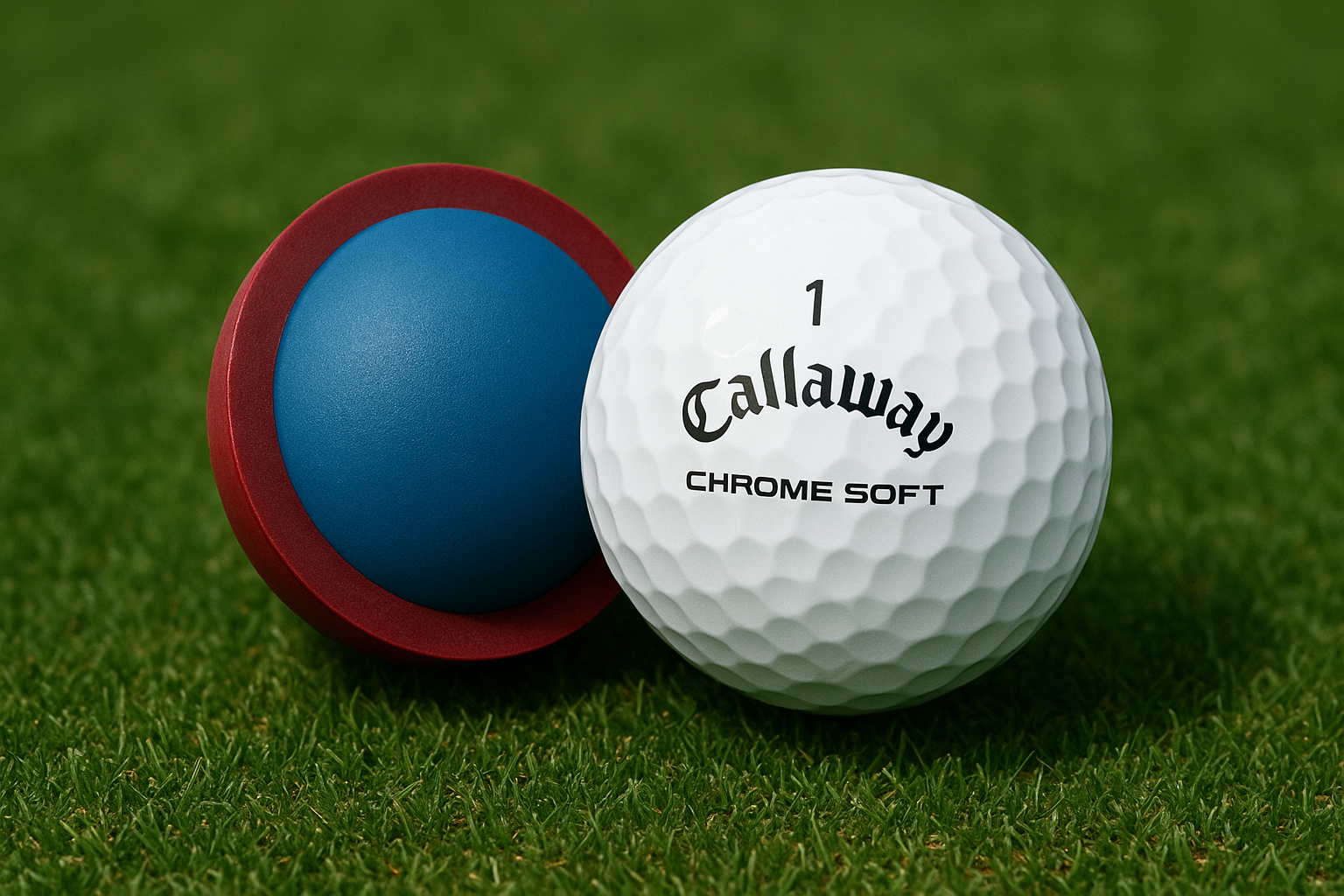
The Chrome Soft operates at a compression rating between 75-80, which sits in the sweet spot for players with swing speeds below 105 mph. Callaway uses a Hyper Elastic SoftFast core that allows maximum energy transfer without requiring tour-level power. This core technology compresses and rebounds quickly, giving you both distance and that soft feel at impact.
The core itself is oversized compared to earlier models, taking up more of the ball's interior volume. This design choice means the core handles most of the compression work, while outer layers focus on spin control and stability. You get consistent ball speed across your entire set, from driver to wedges.
"The right core compression transforms a ball from decent to ideal for your specific swing profile."
Tour Urethane cover and aerodynamic design
Callaway wraps the Chrome Soft in a thin Tour Urethane cover (around 0.055 inches thick) that delivers greenside spin without sacrificing durability. This same cover material appears on balls costing £50-60 per dozen, but the Chrome Soft typically retails for £35-45. The urethane formulation grips wedge grooves effectively, letting you generate spin rates of 7,000-9,000 RPM on full wedge shots.
The 332-dimple pattern uses HEX Aerodynamics to reduce drag during flight. Callaway positions these dimples to maintain stable flight in wind and promote a penetrating trajectory. This pattern also helps the ball hold its line on putts, giving you predictable roll characteristics on the greens.
How the Chrome Soft feels and performs
The true test of any golf ball comes down to how it behaves across different shots in your bag. Callaway chrome soft golf balls deliver distinct characteristics that vary from full swings with your driver to delicate pitches around the green. Understanding these performance traits helps you make better strategic decisions on the course and know exactly what to expect when you commit to a shot.
Off the driver: launch and carry distance
Your driver shots with the Chrome Soft produce a mid-to-high launch with moderate spin rates around 2,200-2,500 RPM. This combination gives you carry distance without excessive ballooning, which matters when you're playing into wind or trying to maximize roll-out. Players with swing speeds between 90-100 mph typically see total distances of 240-270 yards, depending on attack angle and strike quality.
The soft compression means you won't get that explosive, clicky feel some tour balls provide, but you also won't lose energy from incomplete compression. Your ball speed remains consistent across the face, so slight mishits still produce acceptable distance. The ball holds its line well in crosswinds without the excessive sidespin that plagues firmer constructions.
Iron play and trajectory control
Mid-iron shots reveal where the Chrome Soft truly excels. You get consistent height and spin rates that make distance control predictable, typically producing 5,500-6,500 RPM on 7-iron shots. The ball releases your clubface with immediate feedback, letting you sense whether you've caught it pure or slightly thin.
"Predictable iron spin separates balls that help you score from balls that cost you strokes."
Short irons compress fully even at modest speeds, giving you stopping power on approach shots without requiring perfect contact. The urethane cover grips your grooves effectively, so you can attack pins with confidence rather than aiming for the centre of every green.
Around the greens: spin and stopping power
Greenside performance showcases the Chrome Soft's Tour Urethane cover. Full wedge shots generate 8,000-9,000 RPM, which lets you stop the ball within 10 feet on receptive greens. Partial shots maintain enough spin to control trajectory, and you can open your wedge face for high-spin flop shots when needed.
Putting feel is soft without being mushy, giving you clear feedback at impact. The ball rolls smoothly off your putter face with minimal skid, and you'll notice consistent speed control once you dial in your stroke tempo.
Who the Chrome Soft suits and who should skip it
Not every ball works for every player, and Callaway chrome soft golf balls deliver specific advantages that match certain swing profiles better than others. Your handicap, swing speed, and playing priorities determine whether this ball maximizes your performance or holds you back. Understanding these factors helps you avoid spending money on equipment that doesn't suit your game.
Player profiles that benefit most
Mid-handicappers (10-20) with driver swing speeds between 85-100 mph get the most from the Chrome Soft. You compress the ball properly without needing tour-level power, which translates to consistent distance and predictable spin rates. Your approach shots land softer, and you gain meaningful control around greens without sacrificing yardage off the tee.
Players who prioritize short game performance over maximum distance also thrive with this ball. The Tour Urethane cover responds to your wedge grooves, giving you spin options that cheaper balls simply can't match. You'll appreciate this when facing tight pins or difficult up-and-downs, where control matters more than gaining an extra five yards.
"Choose equipment that amplifies your strengths rather than chasing specifications that suit someone else's swing."
When to choose a different ball
High swing speed players (105+ mph) often find the Chrome Soft too soft, losing compression and ball speed they'd capture with firmer alternatives like the Chrome Soft X or Pro V1x. Your swing generates enough power to benefit from higher compression cores, so you're leaving performance on the table with this model.
Budget-conscious players who lose multiple balls per round should question whether premium pricing makes sense. You'll get similar distance from balls costing half as much, even if greenside spin suffers slightly. Save the Chrome Soft for rounds where you expect to keep it in play.
Compare and buy: Chrome Soft vs other balls
Narrowing your choice between premium balls requires direct comparisons based on your swing characteristics and playing priorities. Callaway chrome soft golf balls compete directly with several options, each offering distinct performance traits. Understanding these differences helps you invest in the ball that actually improves your scores rather than just matching your playing partners.
Chrome Soft vs Chrome Soft X: compression differences
The Chrome Soft X uses a firmer core with compression around 90-95, which suits players generating driver swing speeds above 100 mph. You'll notice higher ball speeds and a more penetrating trajectory compared to the standard Chrome Soft, but you sacrifice some greenside feel. The X version produces lower spin off your driver (around 2,000-2,200 RPM), which helps if you battle excessive ballooning or sidespin.
Standard Chrome Soft delivers softer feel and more responsive short game performance for moderate swing speeds. Your wedge shots generate slightly higher spin rates, and putting feedback feels clearer. Choose the X only if you consistently compress tour-level balls or need to reduce driver spin.
Chrome Soft vs Titleist Pro V1: price and feel
The Pro V1 operates at similar compression (around 85-90) but costs £5-10 more per dozen in most UK retailers. You get marginally higher spin rates on iron shots and slightly firmer feel at impact. The Chrome Soft matches greenside performance while providing softer compression for slower swing speeds.
"Spending extra on a ball that doesn't suit your swing profile wastes money that could improve other areas of your game."
Both balls deliver tour-level urethane covers and consistent quality. Your choice comes down to whether you prefer softer feel (Chrome Soft) or firmer feedback (Pro V1).
Where to buy at competitive UK prices
More Sports stocks Callaway's full range at competitive UK prices with free delivery over £25. You'll find current Chrome Soft models alongside previous generations at clearance pricing, letting you test premium balls without the full retail cost.
Quick recap and what to do next
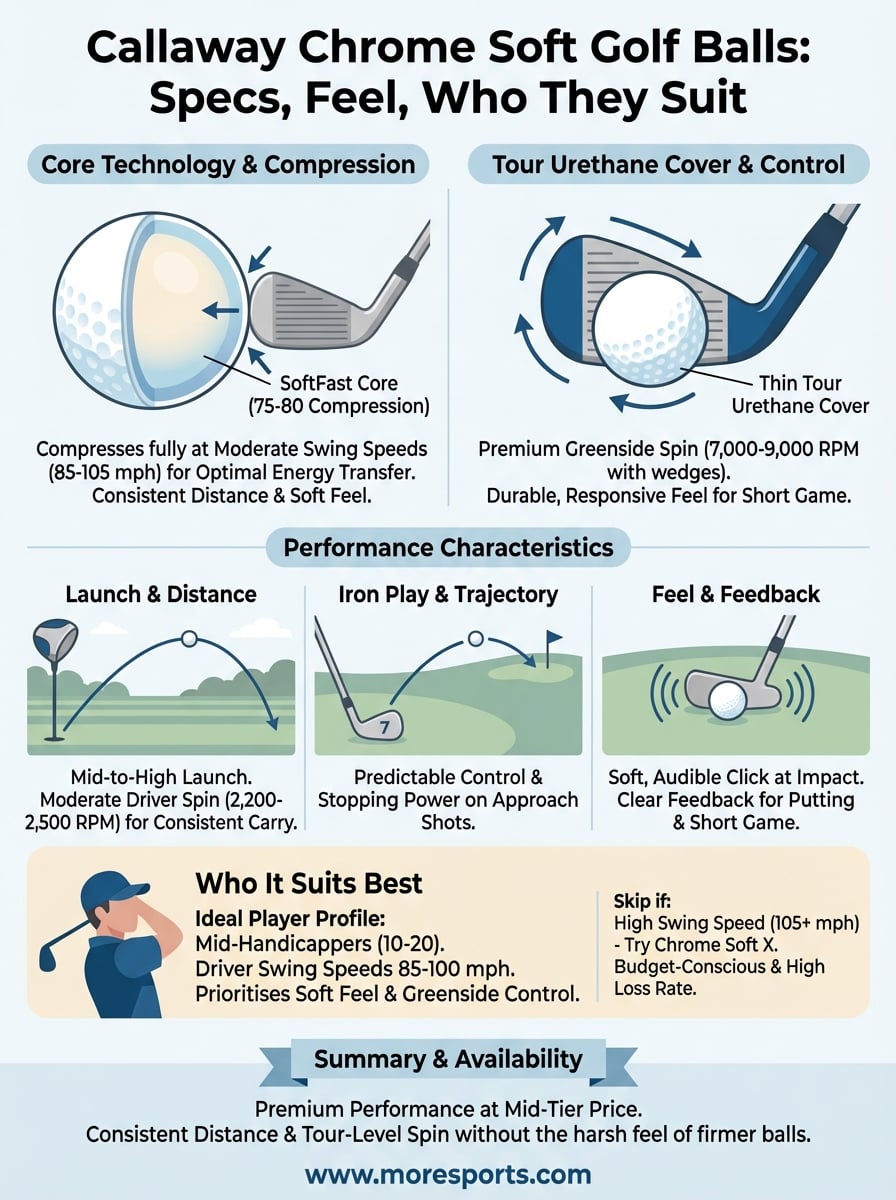
Callaway chrome soft golf balls deliver premium performance at mid-tier pricing, making them ideal for club golfers with driver swing speeds between 85-100 mph. The 75-80 compression core gives you full energy transfer without requiring tour-level power, while the Tour Urethane cover provides greenside spin control that matches balls costing £10-15 more per dozen. You get consistent distance across your bag and responsive feel around greens.
Your next step depends on your swing profile. Players prioritising soft feel and greenside control should test the standard Chrome Soft, while those generating higher swing speeds benefit from moving up to the Chrome Soft X. Either way, you're buying proven tour-level construction that performs round after round.
Browse our full range of Callaway golf balls at More Sports to find competitive UK pricing with free delivery over £25. Stock up now and experience the difference proper ball compression makes to your scoring.