 No Duties or Customs Fees For EU & UK Customers
 Express Tracked UK Delivery On 1000s of Items
 90 Day Returns

Dart Flight Protectors: What They Do & Prevent Robin Hoods
RYYou've just landed a perfect treble 20, only for your next dart to split the flight of the one already in the board. That's a Robin Hood, impressive to watch, expensive to repeat. Dart flight protectors are small, inexpensive accessories designed to stop exactly this from happening, yet many players overlook them entirely. They slot onto the rear of your flights and deflect incoming darts away rather than letting them pierce straight through.
At MoreSports, we stock a wide range of darts equipment and accessories from top brands, so we know which small upgrades make the biggest difference to your game, and your wallet. Flight protectors sit near the top of that list. Whether you're burning through flights every session or you've never heard of them before, this guide covers what flight protectors do, how they work, and whether they're worth adding to your setup.
Why dart flight protectors matter
Flights are among the most frequently replaced parts of any dart setup. Dart flight protectors reduce that replacement rate significantly, saving you money over a full season of play. They also keep your darts flying consistently, because a torn or bent flight changes the dart's trajectory in ways that are difficult to predict mid-game, which can cost you crucial legs in a close match.
Replacing flights every session adds up fast; a set of flight protectors costs less than a single replacement pack and lasts far longer.
The Robin Hood problem
A Robin Hood happens when one dart flies directly into the shaft or flight of a dart already sitting in the board. It looks spectacular the first time it happens, but it ruins the flight on the dart already there and often damages the shaft too. The more accurate your throwing, the more likely this becomes, because you're consistently landing darts in the same tight cluster. Flight protectors deflect the tip of an incoming dart sideways rather than letting it punch straight through the flight.
Situations where Robin Hoods happen most often:
- Tight grouping in treble 20 or treble 19
- A consistent throwing angle that hits the same entry point on the shaft
- Short shafts that position flights close together on the board
Flight wear beyond Robin Hoods
Robin Hoods get most of the attention, but regular flight wear is just as damaging to your game over time. Flights split along the fold, peel at corners, and lose their shape from repeated handling and storage between sessions.
A protector reinforces the point where the flight slots into the shaft, which is exactly where most stress fractures begin. Keep that connection point solid and your flights hold their shape longer, your darts fly more predictably, and you spend less time hunting for replacements mid-match.
How dart flight protectors work on impact
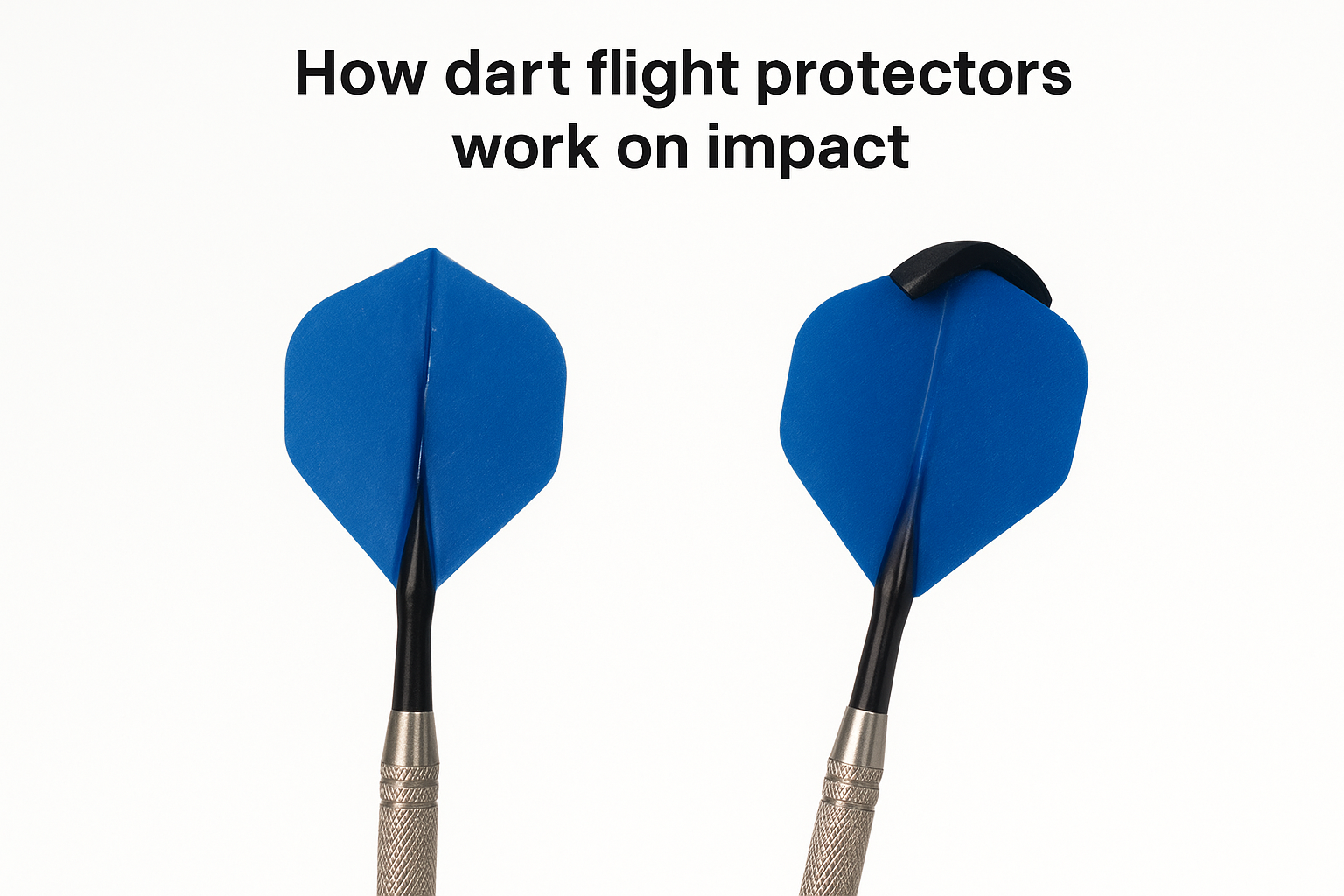
When an incoming dart strikes a bare flight, the pointed tip finds the path of least resistance and splits straight through the material. A dart flight protector sits across the top edge of the flight and presents a hard surface that redirects the tip at an angle, sending the incoming dart off to the side rather than through your existing flight.
The deflection mechanism
Most protectors are moulded from hard nylon or metal, shaped with a slight curve or angled face. When a dart tip contacts that surface, the force redirects outward rather than forward, which is the key mechanical difference between a protected flight and an unprotected one. Your dart in the board stays exactly where it landed.
The harder the protector material, the more reliably it deflects a direct hit rather than just absorbing and cracking under pressure.
The shape also distributes impact stress away from the flight material itself, so even a glancing blow won't leave a split at the top edge where damage typically begins. That means fewer ruined flights and more consistent dart behaviour across a full session.
How to fit dart flight protectors correctly
Fitting dart flight protectors takes about ten seconds once you know what you're doing. Most protectors clip or push directly onto the flight at the rear end, opposite to where the flight slots into the shaft. Before you fit one, make sure your flight is fully seated in the shaft and sitting flat, because a protector fitted over a misaligned flight will loosen quickly during play.
Fitting step by step
The process is straightforward regardless of which protector style you use. Open the protector if it has a clip mechanism, align it squarely over the top edge of all four flight panels, then press it firmly until it clicks or seats flush.
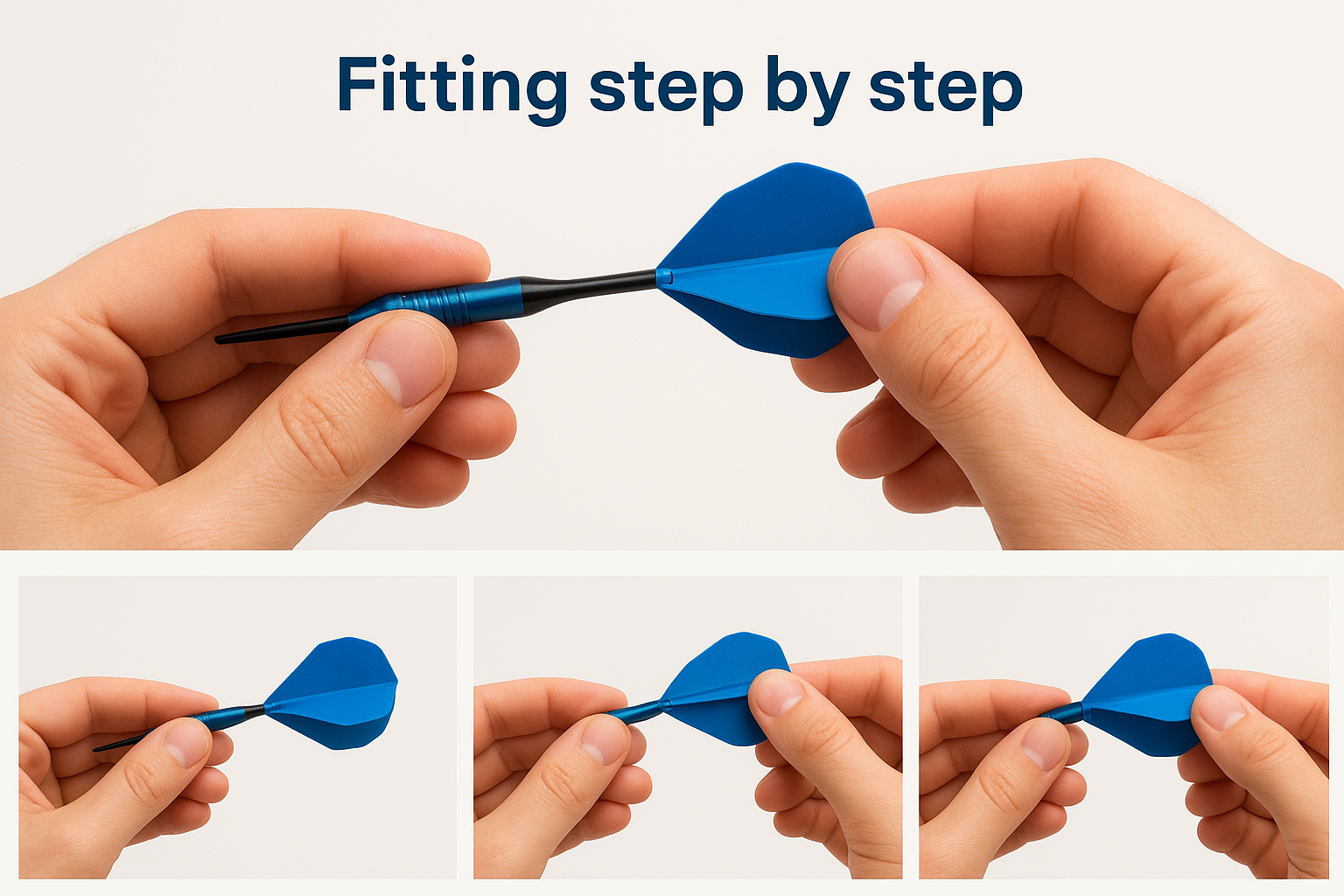
A protector fitted off-centre will pinch one side of the flight and cause a split at the fold within a few throws.
Avoid forcing it at an angle, as that stresses the flight material at exactly the point you're trying to protect. Follow these steps each time you replace a flight:
- Check the flight is fully flat and properly folded before fitting
- Align the protector centrally over all four panels
- Press firmly and evenly until it seats flush
- Give a light tug to confirm it's secure before throwing
Checking the fit before you throw
A loose protector comes off in flight and offers no protection when it matters most. Grip the dart by the barrel and tug the protector gently before you step up to the oche. If it stays firm, you're ready to go.
Types of flight protectors and what to choose
Dart flight protectors come in two main materials: nylon and metal. The right choice depends on how often you play, the flight shape you use, and whether added weight affects your throwing preference. Both types do the same fundamental job, but they perform differently under repeated impact and wear at different rates.
Nylon protectors
Nylon protectors are the most common option and suit most players well. They're lightweight, inexpensive, and available in a range of colours to match your existing setup. The trade-off is that nylon can crack after heavy use, particularly if Robin Hoods are a regular part of your sessions rather than a rare occurrence.
If you play several times a week, expect to replace nylon protectors every couple of months rather than treating them as permanent fixtures.
Metal protectors
Metal protectors cost slightly more but handle repeated direct impacts without cracking. They suit competitive players or anyone who throws frequently and wants a more durable solution without constantly inspecting for wear between sessions. The added weight is minimal, usually under one gram, but check your total dart weight if you compete in a league with strict weight limits before swapping in metal versions.
Common questions and problems to fix
Even with the right setup, dart flight protectors can cause minor frustrations if something isn't quite right. Most issues come down to fit rather than the protector itself, and they're straightforward to resolve once you know what to look for.
My protector keeps falling off
A protector that drops off mid-session isn't gripping the flight material properly. This usually happens when the flight is slightly too thin for the protector's clip, or when the protector has worn loose from repeated use. Switch to a tighter-fitting model or try a metal protector, which tends to hold more firmly than nylon on thinner standard flights.
Check the protector after every few legs during your first session with a new set; it takes a short while to confirm the fit is reliable under real throwing conditions.
My flights still split even with a protector fitted
If your flights still split, the protector is probably sitting off-centre, leaving one edge of the flight exposed. Re-seat it squarely so all four panels sit inside the protector evenly. Splits along the fold rather than the top edge usually point to an overused flight that needed replacing before the protector was fitted, so start fresh with a new flight and fit the protector correctly from the beginning.
Quick recap
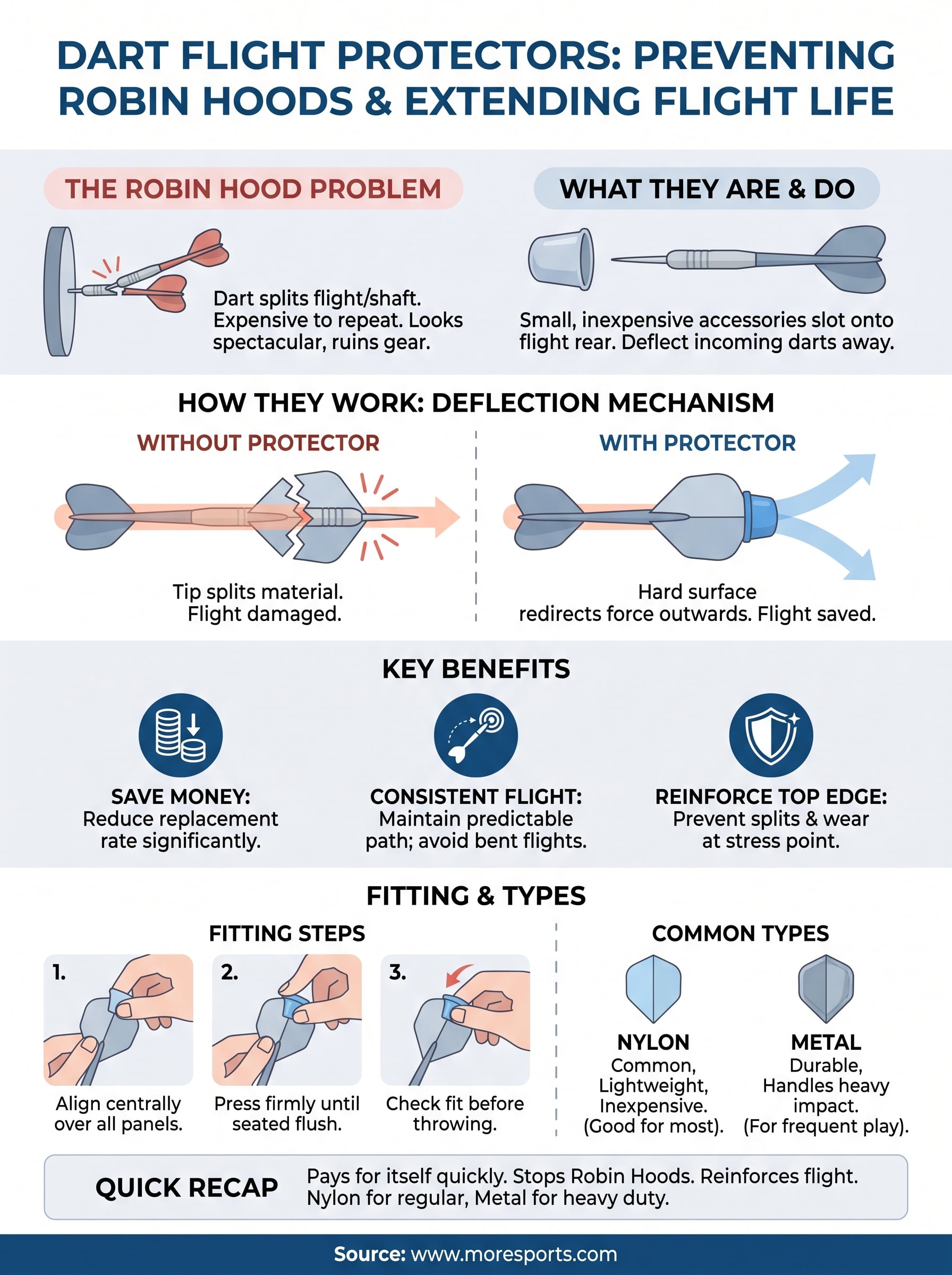
Dart flight protectors are a small addition that pays for itself quickly. They deflect incoming darts on impact, stopping Robin Hoods from wrecking flights you've only just fitted, and they reinforce the top edge where splits most commonly begin. Nylon versions suit casual and regular players, while metal protectors handle the heavy workload of competitive or frequent play without cracking under repeated direct hits.
Fitting one correctly takes seconds: seat your flight flat, align the protector centrally over all four panels, and press it firmly until it sits flush. A loose or off-centre protector leaves your flight exposed, so always check the fit before you step up to the oche. Most problems come down to fit rather than the protector itself, and both are easy to fix once you know what to look for. Browse the full range of darts equipment and accessories at MoreSports to find the right protectors for your setup.