 No Duties or Customs Fees For EU & UK Customers
 Free UK Delivery On Orders Over £60
 90 Day Returns

Golf Apparel Fit Guide for Peak Comfort and Performance
BLG
Struggling with restricted swings, sticky fabrics, or discomfort halfway through a round is a frustration every UK golfer knows. Choosing the right apparel goes far beyond ticking off dress code requirements at your local British club. The ideal golf clothing enhances your movement, keeps you dry through the rain, and adapts to rapidly changing weather. With a clear understanding of your needs and focus on performance fabrics with moisture-wicking and stretch properties, you can upgrade your comfort on the course from the very first tee.
Table of Contents
- Step 1: Assess Your Golf Apparel Requirements
- Step 2: Select Suitable Materials And Sizes
- Step 3: Try On Key Apparel Pieces For Fit
- Step 4: Test Movement And Comfort With Swings
- Step 5: Confirm Final Fit And Prepare For Play
Quick Summary
| Key Takeaway | Explanation |
|---|---|
| 1. Assess Your Clothing Needs | Evaluate your current golf apparel and identify gaps based on your playing habits. |
| 2. Choose Appropriate Materials | Opt for moisture-wicking and stretchable fabrics to enhance performance and comfort. |
| 3. Proper Fit is Crucial | Ensure apparel allows full range of motion; size clothing one size up from usual wear. |
| 4. Test Movement Practicality | Simulate actual golf swings when trying on, checking for comfort and freedom of movement. |
| 5. Care for Your Apparel | Wash and maintain clothing according to guidelines to prolong lifespan and performance. |
Step 1: Assess your golf apparel requirements
Before you spend money on new golf clothing, take time to understand what you actually need. This means looking at your current wardrobe, identifying gaps, and thinking about where and how you play. Are you a weekend player at your local club? Do you travel to different courses? Will you be playing in various seasons? Your answers shape everything that follows.
Start by examining what you already own and wear on the course. Most golfers discover they can work with what they have whilst identifying specific problem areas. Maybe your shirts absorb sweat too quickly in summer rounds, or your trousers restrict movement during your swing. Perhaps you need something waterproof for British weather, or lightweight options for warmer months. Understanding golf dress codes specific to your club matters too. Some courses enforce stricter standards than others, and knowing these requirements prevents the frustration of being turned away at the first tee.
Consider the functional demands of golf itself. Your apparel needs to support a full range of motion through the swing, breathe properly to manage body temperature, and maintain its shape after multiple hours of wear. Moisture-wicking fabrics keep you dry without weighing you down, whilst stretchable materials allow freedom of movement without binding at the shoulders or hips. Different seasons require different approaches. Summer rounds demand breathable, quick-drying materials in lighter colours, whereas winter golf benefits from layering options and weather-resistant outer garments.
Think about your budget alongside your playing frequency. A casual player who visits the course monthly might approach clothing differently than someone who plays twice weekly. Those regular outings justify investing in higher-quality pieces that last, whilst occasional players might focus on covering basic requirements first. The real work comes when you consider how different pieces work together. A complete outfit functions as a system. Your base layer affects how outer garments fit. Your footwear influences whether you need particular trouser lengths. Proper shoe selection impacts both comfort and course compliance, since many clubs prefer or require certain footwear standards.
Write down your answers to these questions: Which seasons do you play in most? What specific comfort issues do you face currently? What dress codes apply at your regular courses? How many times monthly do you play? What’s your realistic budget for apparel upgrades? This simple exercise becomes your personal assessment, guiding every purchasing decision moving forward.
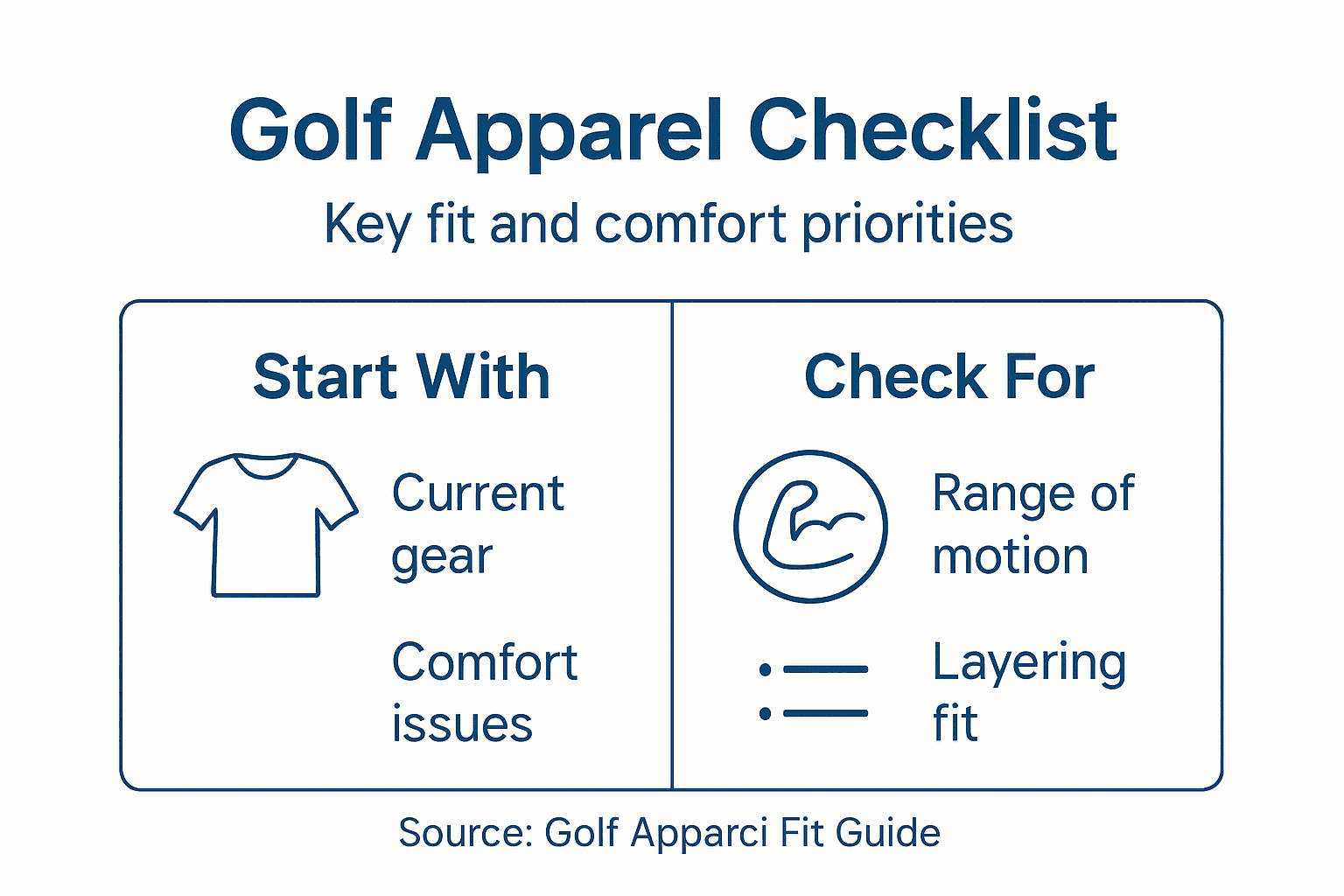
Tip Record your current discomfort points on the course—whether it’s sweating issues, restricted movement, or temperature problems—then prioritise solutions for these specific challenges rather than buying apparel randomly.
Step 2: Select suitable materials and sizes
Now that you understand your apparel needs, it’s time to focus on the materials that will make or break your comfort on the course. The right fabric transforms how you feel during eighteen holes, whilst the wrong choice leaves you uncomfortable and distracted from your game. Material selection and proper sizing work together. A premium fabric in the wrong size wastes money, just as perfect sizing in poor material disappoints.
Polyester dominates golf apparel for good reason. This synthetic fabric excels at moisture-wicking, pulling sweat away from your skin and drying quickly so you stay comfortable through your round. Polyester also resists wrinkles and maintains its shape better than natural fibres after repeated washing and wearing. Spandex blends add stretch without sacrificing durability, allowing your shirt to move with your swing rather than against it. When you’re rotating your shoulders through the backswing, fabric that stretches with you prevents that restrictive feeling that throws off your tempo. Nylon offers similar benefits with excellent durability and weather resistance, making it ideal for waterproof layers during wet British weather. Cotton, whilst soft and breathable, absorbs moisture rather than wicking it away, so it’s best reserved for cooler autumn rounds when breathability matters more than sweat management. Performance fabrics with moisture-wicking properties provide the foundation for comfortable golf wear that actually enhances your game.
Here’s a quick comparison of common golf apparel fabrics and their practical benefits:
| Material | Key Strengths | Limitations | Best Use Scenario |
|---|---|---|---|
| Polyester | Excellent moisture-wicking | May feel less natural | Hot weather rounds |
| Spandex Blend | Superior stretch and comfort | Slightly less breathable | Full-range swing support |
| Nylon | Durable and water-resistant | Can feel firmer against skin | Wet or windy conditions |
| Cotton | Comfortable and breathable | Absorbs moisture, less quick-drying | Cooler, dry climates |
| Performance Blend | Enhanced breathability and fit | May cost more than basic options | All-season garment layering |
Size matters more than you might think. Golf apparel sizing differs from casual clothing because you need freedom for a full swing. A shirt that fits perfectly when you’re standing still might bind across your shoulders when you rotate through your swing. The general rule is to size up one size from your normal casual wear, particularly through the chest and shoulders where rotation happens. Try moving through your actual golf swing when trying on apparel. Rotate your shoulders fully, simulate your follow-through, and bend as you would addressing the ball. If anything feels tight or restrictive, size up. For trousers and shorts, consider inseam length carefully. You want approximately half an inch of fabric breaking at the top of your shoe. Too long and you’ll step on the hem walking, too short and you’ll show bare leg during your swing. Waist sizing should be comfortable when wearing a belt, allowing room for expansion without becoming baggy. Women’s golf apparel often offers different proportions than unisex cuts, with considerations for bust and hip placement that affect how the garment moves with your body.
Layer strategically for versatility. A base layer in moisture-wicking polyester beneath a breathable mid-layer works across seasons. Summer rounds need only the base layer with shorts or lightweight trousers. Spring and autumn benefit from adding a lightweight sweater. Winter golf demands an insulated outer layer over everything. This system approach means fewer purchases cover more playing scenarios. Before committing to full-price items, check sizing guides on retailer websites and read reviews from other golfers describing fit. Many online retailers offer extended return windows, so you can order multiple sizes and return what doesn’t work.
Tip Order two sizes in the same item when shopping online, try both with your actual golf swing motions, then return the size that restricts movement, ensuring you invest only in apparel that genuinely supports your game.
Step 3: Try on key apparel pieces for fit
Trying on golf apparel properly requires more than standing in front of a mirror in a shop. You need to simulate the actual movements and conditions you’ll experience on the course. This step separates apparel that looks good from apparel that performs well during your round. The goal is to ensure every piece supports your swing, breathes properly, and feels comfortable after hours of wear.
Start with the shirt or top since this piece most directly affects your swing mechanics. Put it on and move through your complete golf swing motions. Rotate your shoulders through a full backswing, feeling how the fabric moves across your back and chest. Simulate your downswing and follow-through, extending your arms fully. Bend forward as you would when addressing the ball. Pay attention to any pulling, bunching, or tightness around the shoulders, armpits, or torso. If you feel restricted anywhere, the shirt is too small. Move your arms in windmill motions to test shoulder mobility. Reach behind your head as if removing a hat. Swing your arms across your body as if swinging a club. Quality golf apparel should feel invisible during these movements, not noticeable or limiting. Check the collar as well. It should sit comfortably without choking when you rotate your neck. Many golfers overlook neck fit until they’re three holes in and uncomfortable.
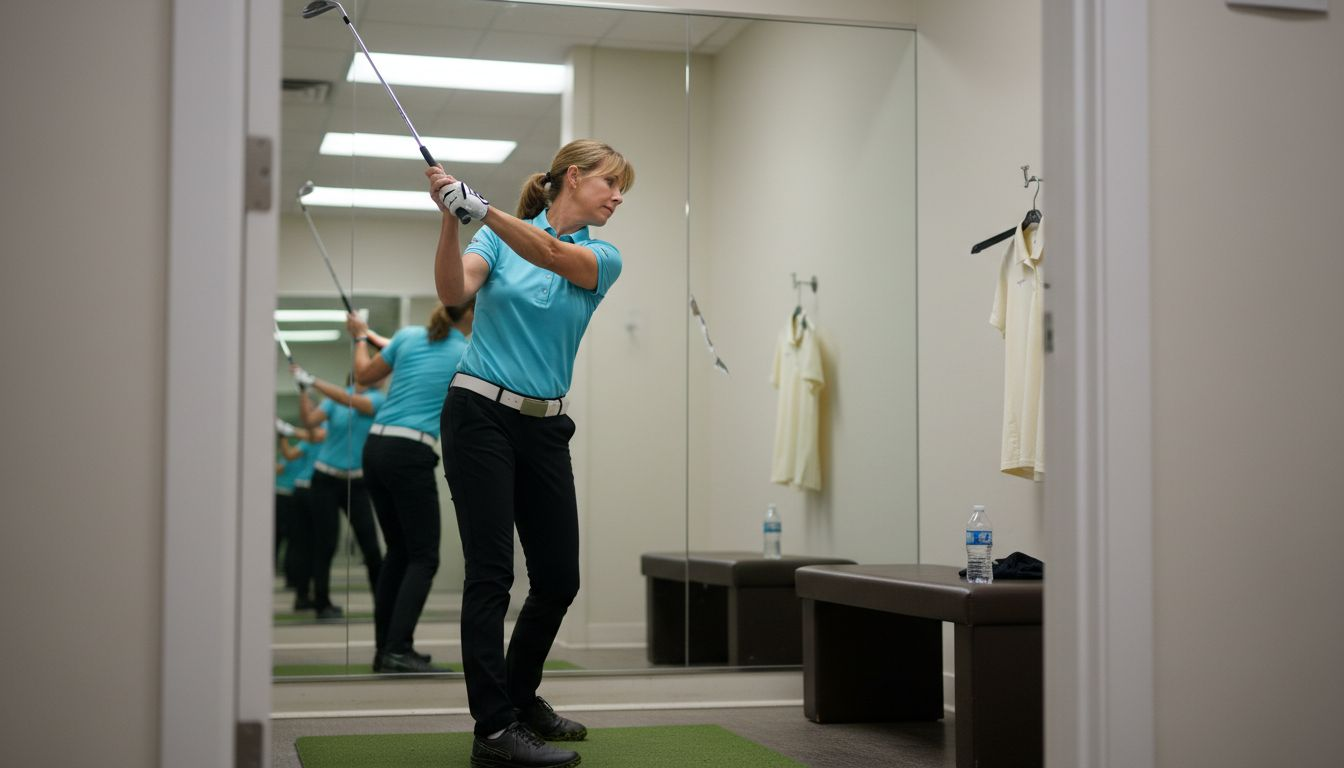
Next, assess your trousers or shorts with the same movement focus. Walk around the shop, bend at the knees to simulate picking up a ball, and squat as you would at address. Trousers should have enough give in the thigh and knee areas to allow full movement without pulling. The waist should feel secure with your belt on but not tight enough to restrict your stomach when you bend. Inseam length matters significantly. Stand in your normal posture and check that the trouser breaks just at the top of your shoe. Walk a few steps to confirm the hem doesn’t drag. Sitting down should feel comfortable without excessive fabric bunching at the back of the knees. For shorts, ensure they’re long enough that you don’t show excessive leg when swinging, typically ending just above the knee. Test these pieces with the shirt tucked in the way you’ll wear it on the course.
Below is a table summarising typical movement tests and what to look for during a fitting session:
| Movement Test | Check for | Why It Matters |
|---|---|---|
| Full swing motion | Shoulder stretch, no pulling | Ensures freedom during play |
| Bending/squatting | No tightness in knees/thighs | Comfort while picking up ball |
| Walking around | Waistband stays secure | Prevents adjusting mid-round |
| Arm rotations | Seam or collar comfort | Avoids discomfort when swinging |
| Layering pieces | No bunching at joins | Adapts well to different seasons |
Don’t forget about how to measure golf glove size properly if you’re trying on gloves. A glove that’s too loose slides during your swing and causes grip issues, whilst one too tight restricts blood flow and causes hand fatigue. The glove should fit snugly with minimal excess material at the fingertips. Your fingers should reach nearly to the end without bunching. Try your actual grip with the glove on to confirm it feels secure and natural.
Consider layering combinations if you’re selecting pieces for different seasons. Put on your base layer, add a mid-layer sweater, and then your outer jacket to ensure nothing binds or creates uncomfortable bunching where layers meet. Weather-resistant outer layers should fit loosely enough to go over your other pieces without restricting movement. The key principle applies to all apparel. Movement trumps aesthetics every time. That shirt looking perfect on the hanger means nothing if it restricts your swing on the course. Spend time moving in the fitting room. Most retailers understand that golfers need to test their apparel this way.
Tip Visit in-store during quieter hours when you can take time moving through full swings without feeling rushed, and wear the socks and underwear you’ll actually wear golfing to ensure accurate fit assessment.
Step 4: Test movement and comfort with swings
This is where theory meets practice. Testing your apparel through actual golf movements reveals whether your selections will genuinely work during a real round. You’ve already tried things on and checked sizes, but now you need to confirm that the fabric moves with you, breathing properly and staying comfortable as you swing repeatedly. This final assessment prevents buyer’s remorse and ensures your investment pays off on the course.
Find a fitting room or space where you can move freely without feeling self-conscious. Take your shirt and trousers as a complete outfit since they work together. Begin with slow, controlled swings to establish baseline comfort. Stand in your address position and feel how the apparel sits across your torso. Does anything dig in? Does the waistband feel secure? Now accelerate your swing speed gradually. Move through ten to fifteen full swings, increasing intensity with each repetition. Pay attention to how the fabric responds. Quality apparel with four-way stretch materials should feel like a second skin, moving with your body rather than against it. You shouldn’t feel the garment restricting your rotation or limiting your follow-through. If you notice any pulling sensations, bunching, or areas where fabric catches, note the specific location. This tells you whether the size is wrong or the garment simply isn’t suitable for golf.
Test your walking and bending motions too, since golf involves much more than swings. Walk back and forth several times, simulating the pace you’d move between shots. Bend at the waist as you would to pick up your ball from the cup. Squat down to simulate checking your line on the green. Sit on a chair if available to test how fabric behaves in that position. During these movements, check that nothing rides up or shifts uncomfortably. Trouser waistbands should stay put without requiring constant adjustment. Shirt hems should remain tucked if you wear them that way. Layering pieces should move together without one piece sliding up whilst another slides down. If layering creates uncomfortable bunching or restriction, you may need to adjust sizes or reconsider the layering combination.
Now test breathability by staying in motion. After your swings, notice whether you feel hot or if the fabric allows air circulation. Touch the fabric against your body. Does it feel damp or clammy, or does it feel dry? Properly fitted apparel that supports dynamic movements should manage moisture effectively whilst maintaining comfort. If you feel uncomfortably warm or if sweat sits on the fabric rather than being drawn away, the material may be wrong for your climate or activity level. Spring and autumn rounds might tolerate less breathability than summer golf, so context matters.
Pay special attention to your shoulders and neck since these areas drive the golf swing. Rotate your shoulders through their full range of motion both with and without simulating a club grip. Your neck should rotate freely without the collar choking you. Reach your arms overhead and behind your head as you would during a real swing. Check your armpits for tightness. Many golfers discover restricted armpits only once they’re on the course in hole six, far too late to do anything about it. Test mobility in all directions, not just forward and back. Rotate fully to both sides. The apparel should never feel like it’s limiting your natural range of motion.
After completing this movement test, stand still and assess your overall feeling. Do you feel confident in this outfit? Does it feel like quality apparel that will hold up to repeated wearing and washing? Trust your instincts here. Your body knows whether something works or doesn’t. If you have even mild concerns after this testing phase, reconsider before purchasing. The right apparel will feel right during this test. No amount of good intentions compensates for wearing something that doesn’t perform.
Tip Record a short video of yourself swinging in the fitting room to review later, noticing any bunching, fabric pulling, or movement restriction that you might overlook whilst focused on your swing motion.
Step 5: Confirm final fit and prepare for play
You’ve tested your apparel thoroughly and everything feels right. Now comes the practical work of finalising your selections and preparing them for actual course use. This step transforms your new golf clothing from shop purchases into reliable kit you can depend on during your rounds. Taking time here prevents disappointment and ensures your apparel performs consistently from day one.
Before wearing anything on the course, wash and dry your new apparel according to the care instructions. New fabrics often contain finishes and dyes that can transfer to your skin or feel stiff. A single wash removes excess dye and softens the material, making it more comfortable immediately. Check that colours don’t bleed and that seams hold securely. Pay attention to how the apparel feels after this first wash compared to before. Most quality golf clothing improves slightly after initial washing as fibres relax. Dry according to label instructions, avoiding excessive heat which damages stretch fabrics and elastic. Once dry, try everything on again briefly to confirm the fit hasn’t changed. Quality apparel maintains its shape through washing, but inferior pieces can shrink or stretch unpredictably.
Organise your complete outfits before your first round. Lay out your shirt, trousers or shorts, and any layering pieces together. Check that colours coordinate and that you’re happy with the overall aesthetic. This prevents last-minute scrambling the morning of your round and ensures you’ve thought through your complete look. Consider weather conditions for your upcoming round and select appropriate pieces. You’ve invested in apparel that works; now use that investment strategically. If your forecast shows potential rain, pair your moisture-wicking base layer with your waterproof outer jacket. For cool mornings warming into afternoons, select layering pieces you can remove. Document which combinations work well together so you can replicate them quickly on future rounds.
Break in your new apparel on a casual round before playing competitively or with friends who might distract you. Use this round to notice small details you might have missed in the fitting room. Does your waistband stay comfortable after four hours of walking? Do your armpits feel restricted after eighteen holes rather than fifteen swings? Does any seam rub unexpectedly during your actual swing? Real-world conditions reveal issues that fitting rooms don’t. You want to discover minor adjustments needed before an important round. Make notes about any concerns, no matter how small. Sometimes a simple belt adjustment or wearing slightly different socks solves comfort issues.
Invest in proper care moving forward. Your apparel is equipment just like your clubs. Quality golf clothing lasts years with appropriate care. Wash in cool water with gentle detergent. Avoid fabric softeners which coat fibres and reduce moisture-wicking effectiveness. Turn items inside out before washing to protect colours. Hang dry rather than machine drying whenever possible. These small practices maintain the performance characteristics that made you select these pieces initially. Your MoreSports golf apparel represents an investment in your comfort and performance. Treat it accordingly.
Before your first official round in new apparel, mentally prepare yourself. You’ve done the work of selecting clothing that fits properly and performs well. Trust that work. You shouldn’t be thinking about your clothes during your round. Your focus should be entirely on your game, your course management, and enjoying time outdoors. Quality apparel designed for golf gets out of the way and lets you play. If you find yourself constantly adjusting something or feeling uncomfortable, that apparel hasn’t met the standard you set during fitting. Don’t make do with subpar clothing. Life’s too short and golf too enjoyable for that.
Tip Keep a simple notebook or phone note documenting which outfit combinations work best for different weather conditions and seasons, allowing you to dress appropriately without overthinking your selections on busy mornings before rounds.
Achieve Peak Comfort and Performance with Expertly Fitted Golf Apparel
Selecting golf apparel that fits perfectly and performs throughout your round is essential to enjoy every swing. Whether you struggle with restricted movement, poor moisture management, or navigating strict golf dress codes, this guide highlights the key to resolving those issues: prioritising materials with moisture-wicking properties, correct sizing, and comfortable layering choices. At MoreSports, we understand these challenges and offer a carefully curated range of golf clothing designed to support your comfort and enhance your game.

Explore our collection of high-quality golf apparel featuring trusted brands like FootJoy and Callaway. Benefit from competitive pricing, free UK delivery on orders over £25, and a generous 90-day return policy so you can confidently find your perfect fit. Visit MoreSports today to upgrade your golf wardrobe and experience apparel that truly moves with you. Don’t settle for anything less than peak performance and comfort on the course—make your next round your best with golf gear you can trust.
Frequently Asked Questions
How do I assess my golf apparel requirements?
Before purchasing new golf clothing, evaluate your current wardrobe and identify gaps based on your playing frequency and local climate. Consider factors such as comfort, dress codes, and the specific demands of golfing to determine what you genuinely need.
What materials should I look for in golf apparel?
Opt for materials that enhance comfort and performance, such as moisture-wicking polyester and stretchable blends for shirts, and durable nylon for outer layers. Focus on selecting fabrics that provide the necessary breathability and freedom of movement for your swings.
How do I ensure the proper fit for golf apparel?
To achieve the right fit, try on clothing that allows ample movement with your golf swing. Simulate your swing motions in the fitting room, and look for any pulling or tightness, particularly around the shoulders and waist. If you feel restricted, choose a larger size.
What final checks should I make before using my new golf apparel?
Before wearing your new apparel on the course, wash and dry it to remove any excess dye and soften the material. Once cleaned, recheck the fit and ensure comfort during your initial rounds to prevent discomfort during actual play.
How can I maintain the performance of my golf clothing?
To maintain your golf apparel’s performance, wash items in cool water with a gentle detergent and avoid fabric softeners. Hang dry whenever possible, and document which outfit combinations work best for varying weather to streamline your selections for future rounds.