 No Duties or Customs Fees For EU & UK Customers
 Express Tracked UK Delivery On 1000s of Items
 90 Day Returns

Golf Bag Trolleys: What They Are And How To Choose One
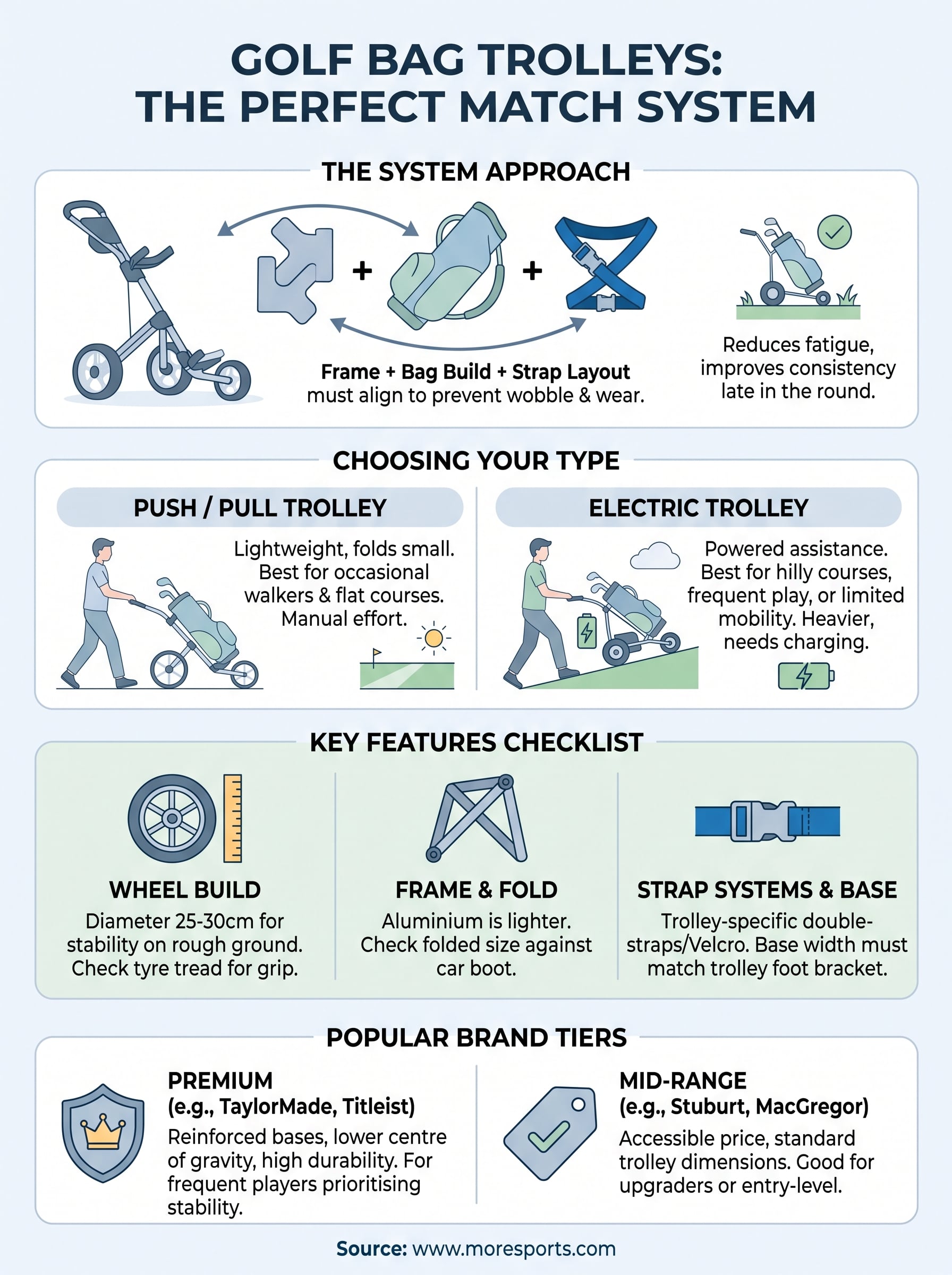
RYCarrying a full golf bag round eighteen holes wears you out before you reach the back nine. That's why most golfers eventually switch to a trolley, but the bag matters just as much as the wheels underneath it. Golf bag trolleys work as a system: the frame, the strap layout and the bag's build all need to line up, or you end up with a setup that wobbles, rattles or simply doesn't fit.
If you're trying to work out what actually makes a good trolley for golf bag use, this guide breaks it down properly. We cover the difference between push, pull and electric trolleys, what cart bags need that carry bags don't, and which features (strap systems, base dimensions, wheel types) actually affect performance on the course.
We'll also point you towards specific brands and models worth considering, from TaylorMade and Titleist cart bags to trolley-friendly ranges from Stuburt and MacGregor, so you can compare features and prices before you buy rather than guessing at the golf shop.
Why the right golf bag trolley matters on the course
A mismatched trolley and bag combination causes more problems than most golfers expect. Bag shift is the big one: if your cart bag doesn't have the right strap system or base width for your trolley, it slides forward on every downhill stretch and rocks sideways on uneven fairways. You end up stopping every few holes to reposition it, which breaks your rhythm and slows down the whole group behind you.
Comfort matters too, but not in the way most people think. It's not just about avoiding a sore shoulder from carrying. A trolley that's genuinely suited to your bag lets you focus on your round instead of wrestling with equipment. Reducing fatigue over eighteen holes means your swing stays consistent late in the round, when tiredness usually starts affecting tempo and balance. Golfers who switch from carrying to a well-matched trolley setup often report their scores hold up better on the back nine simply because they're not physically drained by hole fourteen.
A trolley that fits your bag properly disappears into the background of your round, letting you focus on the game instead of the equipment.
The cost of getting it wrong
Buying a trolley and bag separately, without checking they'll actually work together, is where most golfers go wrong. A narrow-base bag on a wide-set trolley frame will lean and eventually tip on slopes. A bag without dedicated trolley straps will slip on the frame no matter how tightly you cinch it down. These aren't rare complaints, they're the most common issues raised in golf equipment reviews and forums.
Here's what a poor match typically causes:
- Constant repositioning, adding time to your round and frustrating playing partners
- Premature wear on straps and bag fabric from repeated friction against the frame
- Wheel strain from carrying uneven weight distribution, especially on electric models
- Damaged clubs if the bag tips and clubheads knock against the ground or each other
Weight distribution and course conditions
Golf courses aren't flat, and that's exactly where trolley and bag compatibility gets tested. Undulating fairways, cart paths with cambers, and wet ground all put extra strain on a setup that isn't properly matched. Manufacturers like TaylorMade and Titleist design their cart bags with reinforced base plates and lower centres of gravity specifically because they know their bags will spend most of their life strapped to a trolley rather than carried.
Regular use on varied terrain also means the wheels and axle bear more load than they would with a lightweight carry bag. The R&A's equipment guidance notes that golf bags and trolleys are treated as separate pieces of kit, but in practice they perform as one unit once they're paired on the course, which is exactly why compatibility deserves attention before you buy either piece.
Overall, thinking of your bag and trolley as a single system rather than two separate purchases pays off in fewer breakdowns, less on-course faffing, and a setup that actually lasts more than a season. It's a small consideration at the point of purchase that saves plenty of hassle once you're twelve holes into a round in the rain.
How to choose a golf bag trolley that suits you
Start by being honest about how you actually play golf, not how you'd like to play it. If you walk most rounds and want to keep your arms free, a push or pull trolley is the obvious fit, light enough to fold into a car boot and cheap enough to replace without much thought. If your knees or back struggle over eighteen holes, or you regularly play hilly courses, an electric trolley takes the physical strain out of the walk entirely, at the cost of extra weight and a battery to charge before every round.
Think next about how often you play and where. Someone teeing off twice a week at a flat parkland course has very different needs from someone playing occasional rounds on a hilly links layout. Frequency affects how much you should spend, since a budget push trolley that's fine for occasional use will show its limits quickly under regular wear. Terrain affects which drivetrain suits you best; electric trolleys with stronger motors and bigger wheels cope far better with slopes and rough ground than entry-level models built for flat courses.
Choose your trolley around how and where you actually play, not around what looks impressive in the shop.
Matching trolley type to your game
Here's a quick way to narrow things down before you start comparing specific models:
- Occasional walker, flat courses: a basic push trolley with a simple two-wheel or three-wheel frame
- Regular walker, mixed terrain: a pull trolley with adjustable wheel angles and a sturdier frame
- Limited mobility or hilly courses: an electric trolley with a distance-tested battery and remote control
- Frequent traveller or storage-conscious: a compact folding trolley that fits in a small car boot or hallway cupboard
Budget matters here too, but don't let it be the only factor. A cheap trolley paired with a bag that doesn't sit properly on its frame will cost you more in replacement parts and frustration than spending a bit more upfront on a matched set. Bag compatibility should factor into your decision at this stage, not as an afterthought once you've already bought the trolley. Check the manufacturer's base dimensions and strap system before committing, since even a well-reviewed trolley will disappoint if it doesn't hold your bag securely on the course.
Key features to check before you buy
Checking specs before you buy saves you from returning a trolley two weeks after your first round. Look past the marketing photos and check the practical details: wheel diameter, frame weight, folding size, and how the frame secures your bag. Wheel type affects grip on wet grass, and frame material affects how much you'll be lifting in and out of the boot, and neither shows up clearly in a glossy product shot.
Spec sheets tell you more about a trolley's real-world performance than any product photo ever will.
Frame and wheel build
Aluminium frames keep weight down without sacrificing much strength, which matters if you're lifting the trolley in and out of a car boot every week. Wheel size and tread pattern decide how the trolley copes with wet grass, sand-based rough, and muddy paths in a UK winter, especially if you play through autumn and into spring.
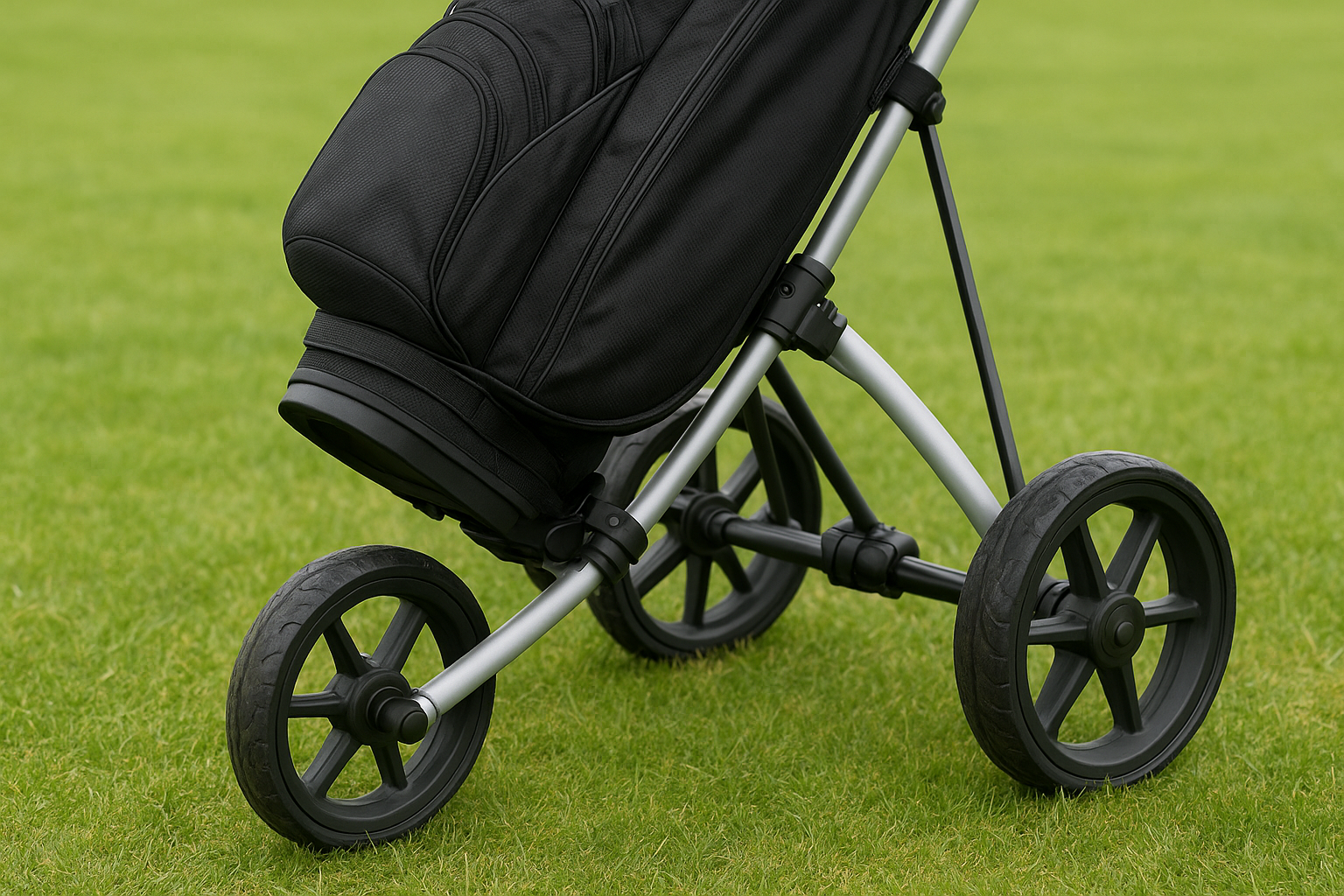
| Feature | What to check | Why it matters |
|---|---|---|
| Wheel diameter | 25-30cm for stability on rough ground | Smaller wheels struggle on soft or wet turf |
| Frame material | Aluminium vs steel | Aluminium is lighter, steel is cheaper but heavier |
| Folded size | Check against your car boot | Some electric models fold larger than expected |
| Battery range (electric) | 18-36 holes per charge | Running out mid-round means carrying the rest |
Strap systems and base fit
Straps hold your bag to the frame, so a loose or mismatched system undoes everything else you've checked. Trolley-specific bags use a double-strap or Velcro band designed to sit flush against the frame's uprights, while carry-only bags often lack this entirely and will slip under load.
- Confirm the bag has trolley straps, not just carry straps
- Check the base width matches the trolley's foot bracket
- Look for a lower strap position that clears the wheel axle
- Test the strap tension before your first round, not during it
Getting these details right before you buy means less fiddling on the first tee and a setup that holds together for years, not months.
Popular golf bag trolley brands worth considering
Brand reputation counts for something in this market, mostly because the manufacturers who dominate golf trolleys and cart bags tend to build the two around each other. Buying within a recognised range gives you a far better chance of getting a matched trolley and bag without doing all the compatibility checking yourself. That said, no brand is automatically the right choice for every golfer, so it's worth knowing what each one actually does well before you commit.
The best brand for you is the one whose cart bag and trolley range were designed to fit together, not just the biggest name on the shelf.
TaylorMade and Titleist
TaylorMade and Titleist sit at the premium end, and both design their cart bags with reinforced base plates and lower centres of gravity specifically for trolley use. You pay more, but you get a bag that won't shift or lean on slopes, and a build quality that holds up over several seasons of regular play. If you play often and want kit that lasts, these ranges justify the extra cost.
Stuburt and MacGregor
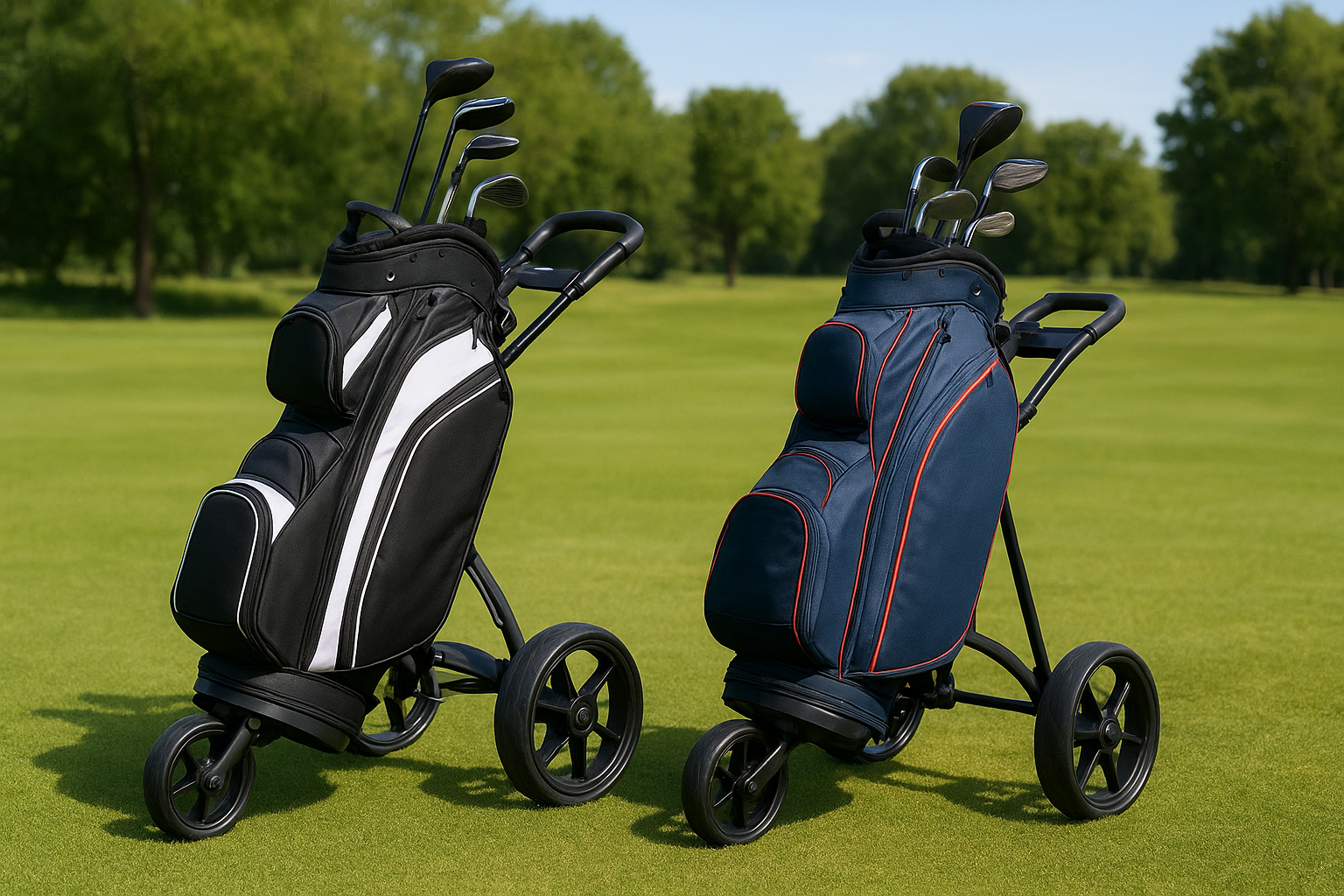
Stuburt and MacGregor offer a more accessible middle ground, with trolley-friendly cart bags that cover the essentials without the premium price tag. Both brands build straps and base widths to standard trolley dimensions, which makes them a safe bet if you're buying bag and trolley separately rather than as a set. They're a sensible starting point for golfers upgrading from a carry bag for the first time.
Comparing the ranges
| Brand | Best for | Typical price position |
|---|---|---|
| TaylorMade | Frequent players wanting durability | Premium |
| Titleist | Golfers prioritising stability on slopes | Premium |
| Stuburt | Budget-conscious upgraders | Mid-range |
| MacGregor | Entry-level trolley users | Mid-range to budget |
Whichever brand you lean towards, check current stock and pricing before assuming last season's model is still the best specced option, since ranges update yearly and older bags sometimes lack newer strap systems.
Finding the right trolley bag for your game
Getting your golf bag trolleys setup right comes down to treating the bag and frame as one purchase, not two separate decisions made months apart. Check the strap system, match the base width, and pick a wheel type suited to the courses you actually play, not the ones you occasionally dream about. Sort those details first and everything else, comfort, durability, resale value, falls into place on its own.
Quality kit from proven ranges takes the guesswork out of matching a trolley for golf bag use, and it saves you the trial-and-error most golfers go through before landing on a setup that actually works. Rather than piecing together mismatched parts, browse trolley-ready cart bags and compatible frames from TaylorMade, Titleist, Stuburt and MacGregor over at MoreSports, where you can compare specs and prices side by side before you commit.