 No Duties or Customs Fees For EU & UK Customers
 Free UK Delivery On Orders Over £25
 90 Day Returns

7 Golf Bag Types Explained: Stand, Cart, Tour & More (2026)
RYPicking the wrong golf bag is one of those mistakes you only make once. You either end up hauling a bag that's too heavy around 18 holes, or you show up with a flimsy carry bag strapped to the back of a cart. Either way, it's a frustrating (and avoidable) problem. That's exactly why we've put together this guide on golf bag types explained, so you can match the right bag to how you actually play.
There are more options on the market now than ever before, from lightweight stand bags built for walkers to oversized tour bags designed for serious storage. Each type serves a specific purpose, and the differences between them matter more than most golfers realise. Understanding those differences before you buy saves you money and makes your time on the course far more enjoyable.
At MoreSports, we stock golf bags from brands like TaylorMade, Titleist, and MacGregor, all at competitive UK prices with free delivery over £25. Below, we break down seven distinct golf bag categories, covering their features, pros, cons, and ideal use cases so you can make a confident choice without the guesswork.
1. Stand bags
Stand bags are one of the most versatile options you'll find when getting golf bag types explained in full detail. They combine lightweight portability with the added convenience of built-in retractable legs that prop the bag upright on the course. That single feature changes the way you interact with your clubs on every single hole.
What a stand bag is
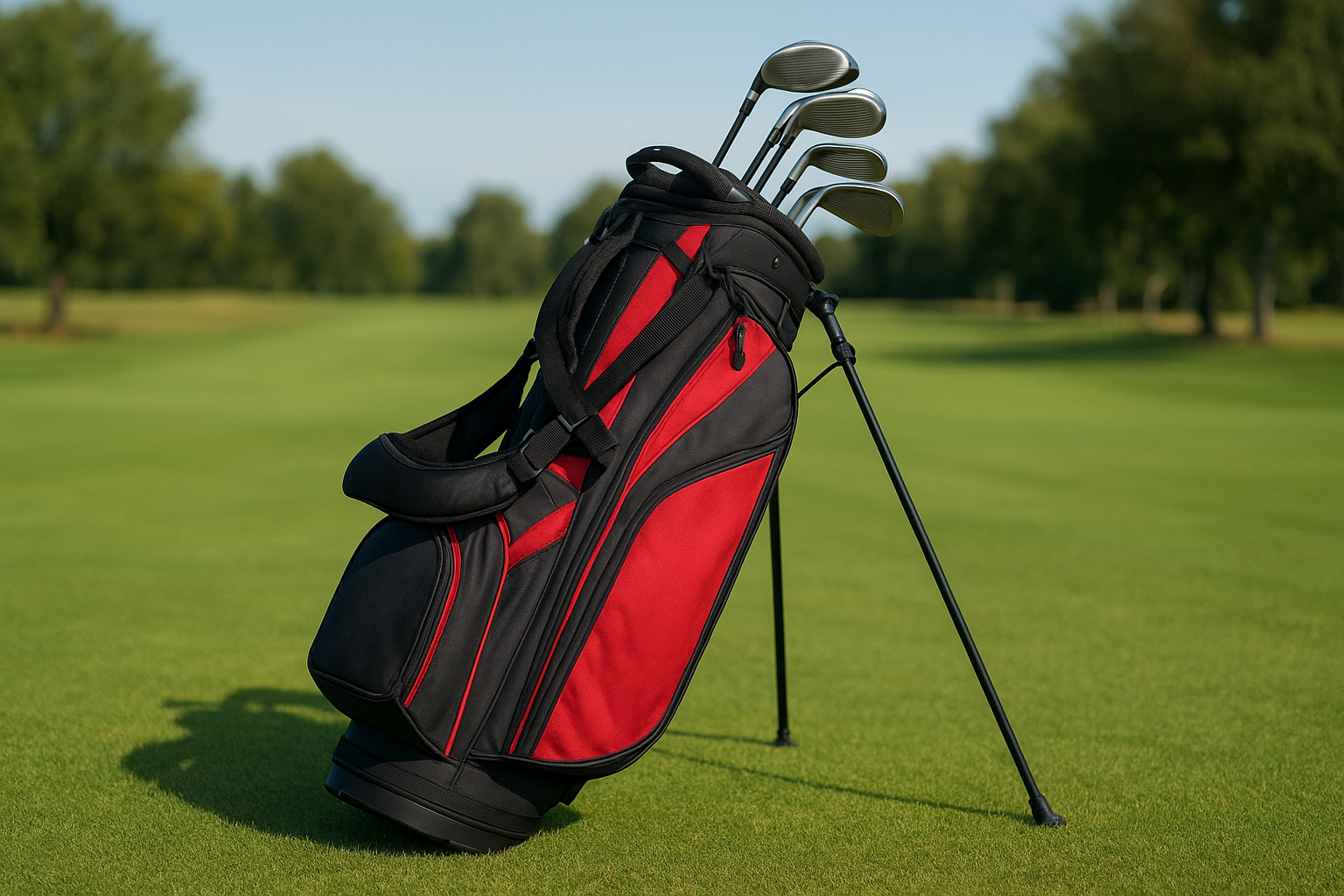
A stand bag is a lightweight golf bag fitted with two retractable metal or carbon legs that fold out automatically when you set the bag down. This keeps your clubs off the ground and easy to access from any angle. Most stand bags also include dual shoulder straps, making them practical to carry across the full round without putting uneven strain on your back.
Key features to look for
When shopping for a stand bag, focus on strap padding and harness design first, since that determines your comfort level over 18 holes. You also want a divider system with at least 14 slots to keep your clubs organised and prevent them from rattling against each other during the walk. Extra pockets for valuables, waterproofing on the base panel, and a dedicated putter tube are all worth factoring in before you buy.
A bag that distributes weight evenly across your shoulders will make a real difference to how fresh you feel on the back nine.
Who a stand bag suits
Golfers who walk the course regularly and prefer to carry their own bag rather than rely on a trolley will get the most from a stand bag. The combination of a lightweight frame and stable leg system suits players who cover all 18 holes on foot. They also work well for golfers who occasionally ride a cart, since most stand bags clip securely to cart frames without any fuss.
Trade-offs to know before you buy
The main downside is reduced storage space compared to cart or tour bags. Stand bags prioritise portability, so the pockets tend to be shallower and fewer in number. The leg mechanism also adds a small amount of extra weight and a moving part that can wear out over time, so check build quality before committing to a purchase.
2. Cart and trolley bags
Cart and trolley bags are built around a straightforward principle: the bag rides, so you don't have to carry it. Whether you use a motorised electric trolley or a manual push-pull trolley, these bags are designed to sit securely on a frame and stay there throughout your round.
What a cart and trolley bag is
A cart and trolley bag is a larger, structured bag with a flat base and reinforced panels that attach firmly to a trolley or golf cart frame. Unlike stand bags, they don't have retractable legs or a dual-shoulder harness, because the trolley handles all the weight for you.
Key features to look for
Look for a wide, stable flat base that fits your specific trolley model without any wobble. Plenty of full-length club dividers, easy-access external pockets, and a dedicated umbrella slot are worth prioritising. Some bags also include an integrated cooler pocket or a waterproof hood cover for wet rounds.
Checking your trolley's compatibility specs before you buy a cart bag will save you a frustrating return trip.
Who a cart and trolley bag suits
Golfers who use a push trolley or electric trolley on every round will get the most from this option. It's also a strong pick for anyone who prioritises maximum storage space over the ability to carry their bag across the course unaided.
Trade-offs to know before you buy
The main limitation is sheer bulk. Cart bags are heavier and awkward to carry any distance, making them a poor fit if you regularly walk the course without a trolley. This is an important distinction to keep in mind when getting golf bag types explained before making a purchase.
3. Carry bags
Carry bags strip everything back to the basics of golf bag types explained in their simplest form. Where stand bags add retractable legs and cart bags prioritise storage volume, a carry bag focuses entirely on keeping weight to a minimum so you can move around the course with as little friction as possible.
What a carry bag is
A carry bag is a slim, lightweight golf bag designed to be shouldered and carried across the course without any built-in leg mechanism. That absence of legs removes extra weight but means the bag rests flat on the ground when you set it down. Most carry bags hold a reduced number of clubs and accessories by design, keeping the overall profile narrow and manageable.
Key features to look for
Focus on strap padding and overall bag weight when empty, since that combination determines your comfort level across a full round. A padded top handle for easy lifting and a simple 4-6 section divider system are the key practical features to compare across models.
The lighter the bag, the more energy you save for your swing rather than hauling kit around the course.
Who a carry bag suits
Carry bags work best for golfers who walk fast and travel light, particularly beginners building up their first partial set of clubs. They also suit experienced players who prefer a no-fuss option for shorter, more casual rounds.
Trade-offs to know before you buy
Storage is the main sacrifice with this style of bag. Pocket space is minimal, and without legs, the bag can tip over on uneven terrain. If you carry a full 14-club set regularly, the limited structure makes a stand bag the more practical choice for most rounds.
4. Tour and staff bags
Tour and staff bags represent the most substantial end of the golf bag types explained spectrum. These are the bags you see on professional tours, carried by caddies across major championship courses, and they're built to a very different standard from anything else on this list in terms of size, structure, and storage capacity.
What a tour and staff bag is
A tour bag, often referred to as a staff bag, is a large, cylindrical, full-length bag typically measuring 9-10 inches across the top opening. Built to accommodate a complete 14-club set, these bags prioritise organisation and protection above everything else, with reinforced panels and rigid construction throughout.
Key features to look for
The most important features to check are full-length individual club dividers that protect each shaft from contact damage, along with deep external pockets for rain gear, accessories, and personal items. A reinforced base and an integrated rain hood are both standard at this level and worth confirming before you buy.
Tour bags are the most over-engineered option available, which is exactly the point for golfers who demand that level of protection for their equipment.
Who a tour and staff bag suits
Tour bags suit serious or low-handicap golfers who always play with a caddie or use a cart and want the best possible storage and club protection available on the market.
Trade-offs to know before you buy
The primary downside is weight. These bags often reach 4-5kg empty, making them completely impractical to carry across a round unaided. Before buying, confirm you have reliable access to a trolley or caddie on every round you plan to play.
5. Sunday and pencil bags
Sunday and pencil bags occupy a genuinely useful corner of the golf bag types explained landscape. These ultra-compact bags strip out everything non-essential, leaving you with just enough structure to carry a small selection of clubs around the course comfortably.
What a Sunday and pencil bag is
A Sunday bag, also called a pencil bag, is a small, tube-shaped bag designed to hold between 7 and 9 clubs at most. The name comes from the relaxed Sunday round tradition of taking fewer clubs out for a casual game without committing to a full 14-club set.
Key features to look for
Since storage is minimal by design, focus on strap comfort and overall bag weight when comparing models. A single padded shoulder strap is standard, though some bags include a basic dual-strap setup. A small external pocket for tees, balls, and a scorecard is the only storage you should realistically expect from this style of bag.
If you walk nine holes a few times a week, a Sunday bag removes every unnecessary gram from your round.
Who a Sunday and pencil bag suits
These bags suit casual golfers, beginners, or anyone playing a quick nine holes without needing a full club set. They also work well on practice rounds and par-3 courses where carrying a larger bag adds no practical benefit.
Trade-offs to know before you buy
Carrying a full 14-club set is simply not possible with a Sunday bag. Accessory storage is also extremely limited, making this a poor fit for your main competitive rounds where you need full kit available throughout the game.
6. Travel bags and flight covers
Travel bags and flight covers serve a very specific purpose in the golf bag types explained breakdown: they protect your clubs during transit rather than on the course itself. If you fly to play golf regularly, this category matters just as much as any bag on this list.
What a travel bag and flight cover is
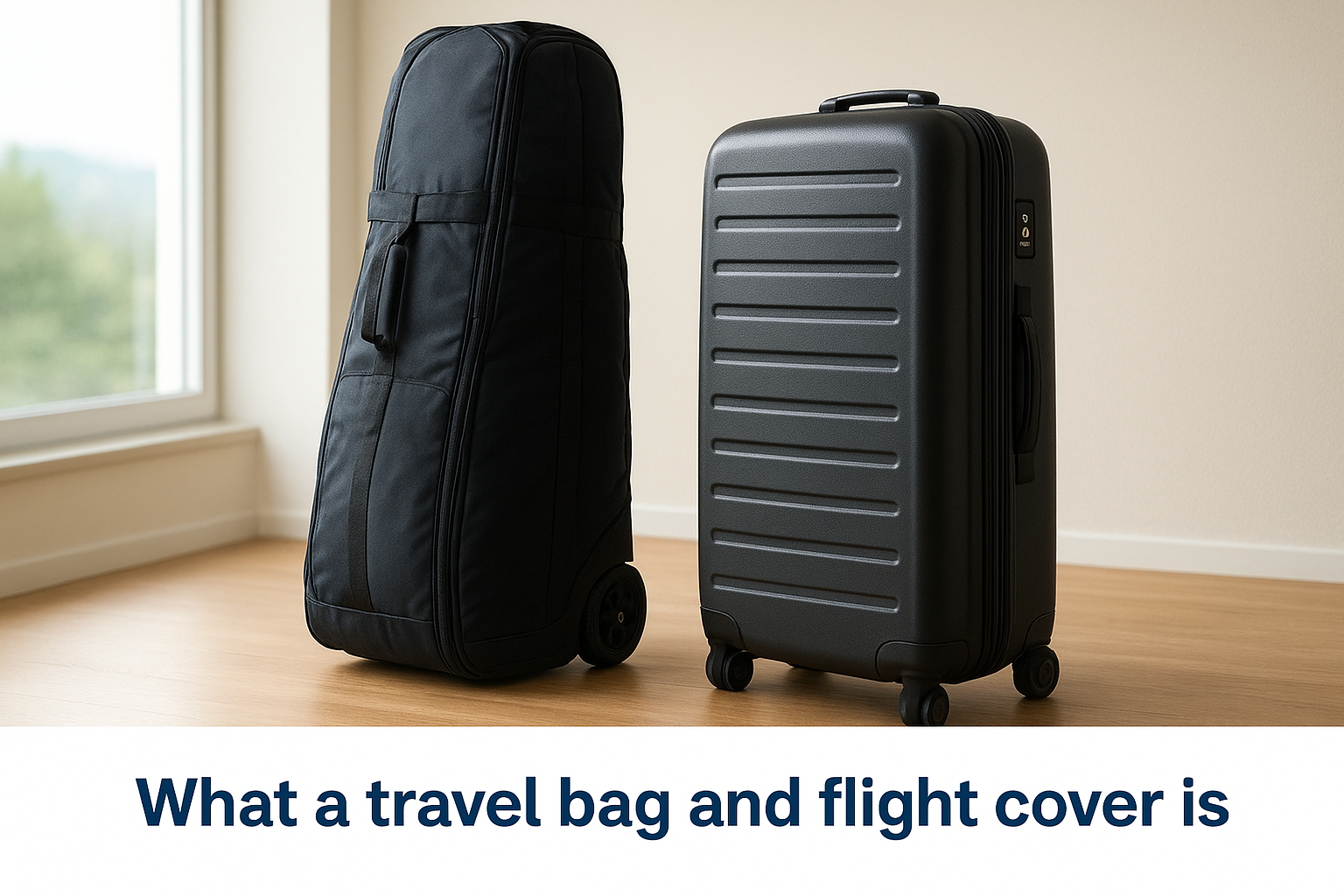
A travel bag is a protective outer casing designed to hold your entire golf bag and clubs during air or road travel. They come in two main formats: soft-shell bags made from padded nylon or polyester, and hard-shell cases with rigid outer panels. Soft covers are lighter and easier to store; hard cases offer superior impact protection for expensive club sets.
Key features to look for
Heavy-duty wheels and a reinforced base are the most important features to check, since airport handling is notoriously rough on golf equipment. Look for thick internal padding around the club heads, secure zip closures, and a TSA-approved lock so security staff can access the bag without forcing it open.
A hard-shell case with foam padding inserts is the safest option if you're travelling with high-value clubs.
Who a travel bag and flight cover suits
This option suits golfers who fly to courses regularly or travel to competitions abroad. It also works well for anyone shipping clubs to a destination holiday where renting equipment would cost more than protecting your own set.
Trade-offs to know before you buy
Travel bags add bulk and extra luggage fees to every trip. Hard cases in particular are heavy before you even pack your clubs inside, so weigh up the airline's baggage allowances before committing to a hard-shell option.
7. Waterproof golf bags
Waterproof golf bags round off the golf bag types explained breakdown by addressing a challenge every UK golfer knows well: the weather simply cannot be relied upon. A bag that keeps your gear dry regardless of conditions is not a luxury on British courses. For many golfers, it's a practical necessity.
What makes a golf bag waterproof
A genuinely waterproof golf bag uses fully seam-sealed construction and waterproof zips throughout, rather than just a water-resistant coating on the outer fabric. That distinction matters because a coated bag repels light rain but fails under sustained downpours. A fully waterproof bag protects your valuables, electronics, and accessories even in heavy, prolonged rainfall.
Checking for seam-sealed seams and waterproof zip ratings before buying will tell you far more than the product description alone.
Key features to look for
Focus on IPX-rated waterproof zips and a sealed base panel when comparing models. A detachable waterproof hood cover adds an extra layer of protection for your club heads during heavy rain.
Who a waterproof golf bag suits
Waterproof bags suit golfers who play through winter or in consistently wet conditions, particularly in Ireland, Scotland, and northern England where course closures for rain are rare.
Trade-offs to know before you buy
The primary trade-off is added cost compared to standard bags at a similar specification level. Waterproof construction also adds a small amount of weight, so confirm the total bag weight suits your preferred carrying method.
Quick recap
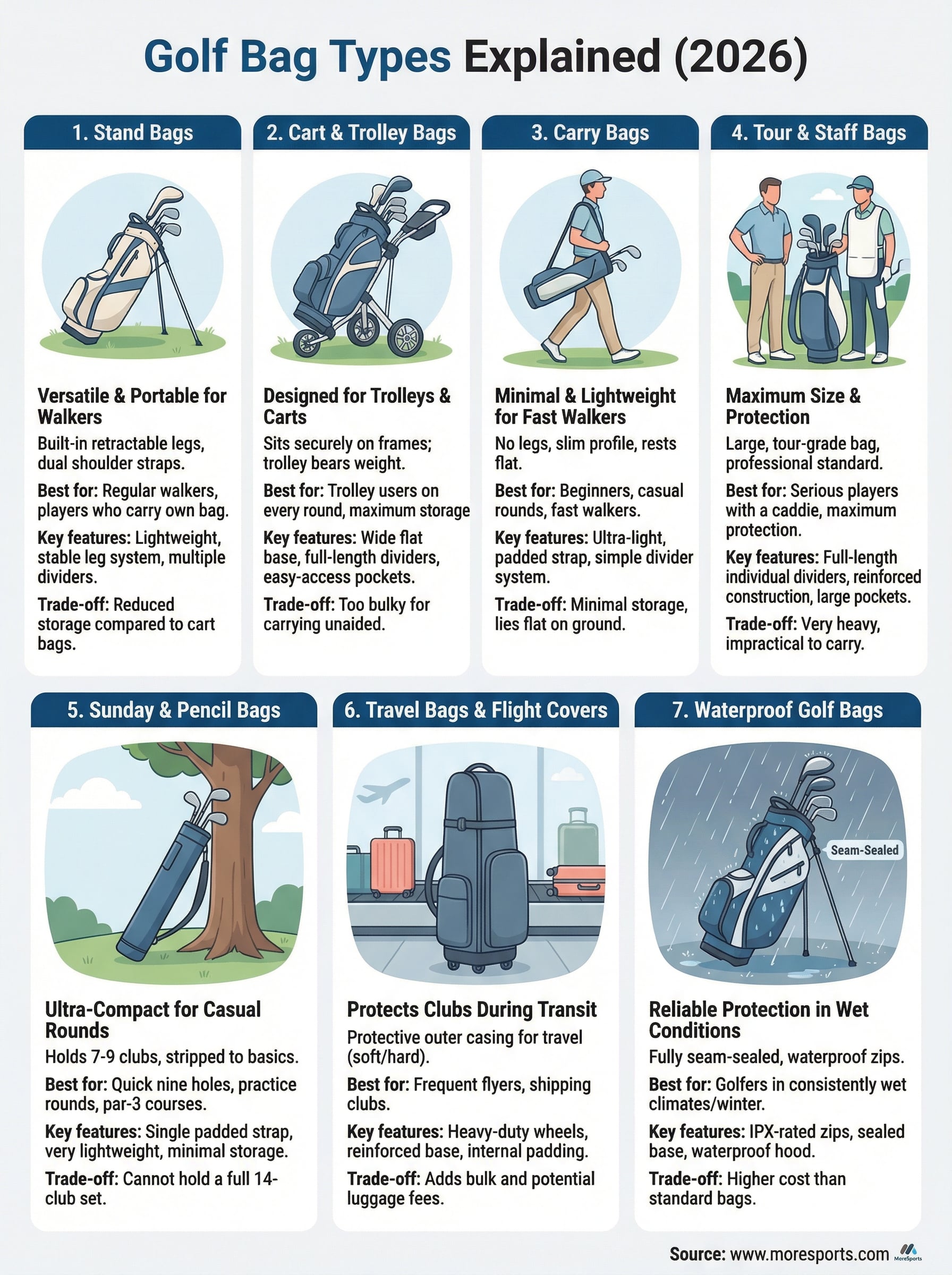
With golf bag types explained across all seven categories, the right choice comes down to how you play and what you need from your bag on the course. Stand bags suit walkers who want versatility. Cart and trolley bags work best when you always use a trolley or electric cart. Carry bags keep things minimal and lightweight, while tour bags deliver maximum storage and protection for serious players with caddie access.
Sunday bags handle casual short rounds and par-3 courses. Travel bags and flight covers protect your clubs during transit, and waterproof bags give you reliable cover against the British weather that will catch you out eventually.
Whatever your playing style, the right bag makes every round smoother and more practical. Browse the full range of golf bags at MoreSports and find the right fit for your game, with competitive UK prices and free delivery on orders over £25.