 No Duties or Customs Fees For EU & UK Customers
 Express Tracked UK Delivery On 1000s of Items
 90 Day Returns


5 Best Headcovers for Golf Clubs by Style and Material
RYThe best headcovers for golf clubs protect the club first and show off your personality second. Choose leather if you want a premium cover that lasts, knit if you like a classic look at a lower price, and novelty designs if you want your bag to start conversations. Putter covers and matched sets suit the golfer who cares most about fit and a tidy bag.
Choosing is harder than it looks. Drivers, fairway woods, hybrids and putters all need different shapes. A cover that is too tight splits at the neck, and one that is too loose slips off in the boot of the car. Add hundreds of designs, from plain tan leather to cartoon animals, and the decision gets noisy fast.
This guide ranks five styles by what they do well, who they suit and what to check before you pay. Each one uses the same three checkpoints, so you can compare them side by side. When you are ready to buy, the golf range at MoreSports carries equipment from brands such as TaylorMade and Titleist. UK delivery is free over £25, and unused items can be returned within 90 days.
1. Leather headcovers
What you get
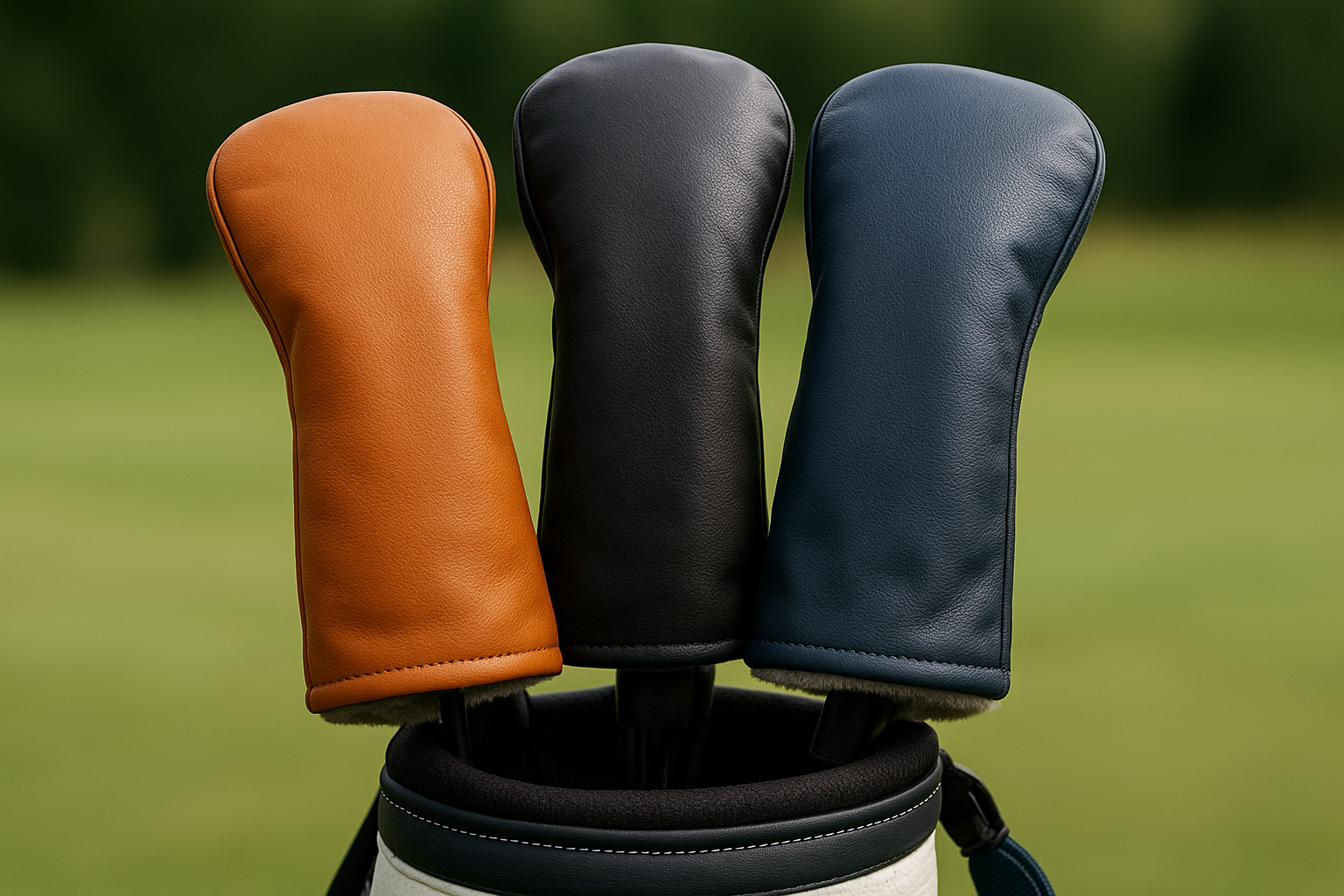
Leather headcovers are the premium option, built to protect a club for years rather than a single season. Good ones combine a firm outer shell, a soft fleece or plush lining and tight stitching around the neck. The shell holds its shape on the club, so the cover does not sag or slide off when the bag tips over. This is where headcovers for golf clubs earn their price, because leather resists scuffs and light rain far better than thin fabric.
Leather costs more up front, but it is the cover you replace least often.
Who it suits
Leather suits golfers who play in all conditions and want their driver and fairway woods protected on every round. It also suits club members and anyone buying a gift for a traditional player, as plain tan, black or navy leather looks smart on any bag. The trade-off is weight and price. Leather is heavier than knit and sits at the higher end of the price range, so it makes the most sense on your most expensive clubs.
What to check before buying
Check these points before you commit:
- Material: genuine leather lasts longest, while good synthetic leather is lighter and easier to wipe clean.
- Lining: a thick, soft lining protects painted crowns and carbon heads.
- Stitching: look for tight, even stitching at the neck, where covers fail first.
- Fit: oversized drivers need a roomy shell, so check the size guidance.
After a wet round, wipe the cover with a dry cloth and let it dry away from direct heat.
2. Knit headcovers
What you get
Knit headcovers are the classic sock style: stretchy, snug and light. The long neck covers the shaft, which keeps the hosel and ferrule clear of dings from neighbouring clubs. Stretch also lets one cover fit a wider range of head sizes. Many have a pom-pom or contrasting stripes, giving you a retro look at a lower price than leather, which makes knit the easiest way to cover a full set of headcovers for golf clubs.
Knit gives you the most flexible fit for the least money.
Who it suits
Knit suits golfers who want a traditional look on a budget. It is also a sensible first purchase for beginners, because it forgives a slightly wrong size. Wet weather is its weakness. Wool soaks up water and dries slowly, so it works best for dry-weather rounds or as a second set for summer.
Consider knit for hybrids and fairway woods in particular. Their smaller heads suit a stretchy sock, and the long neck protects slim shafts.
What to check before buying
Pick a tight, even knit over a loose one. Loose knit snags on grooves and bag zips, and it stretches out of shape within a season. Read the care label too, as some wool blends should only be hand washed. Finally, look at the number tags. Sewn-in numbers cannot be swapped, so they only help if they match the club you plan to cover.
3. Novelty and funny headcovers
What you get
Novelty headcovers turn a piece of protection into a talking point. You will find animals, cartoon characters, film and sport references, food and drink themes, and plenty of jokes. Most use a plush or embroidered shell over a padded body. The best still do the job of a proper cover, so look past the design to the build. A cover that looks great but flops off the club is a poor buy among headcovers for golf clubs.
A funny design is only worth buying if the cover underneath is built properly.
Who it suits
Novelty covers suit golfers who treat the bag as part of the fun. They make good gifts, society prizes and four-ball banter, and juniors tend to love them. They also make your driver easy to spot in a crowded cart park or locker room. Officially licensed designs usually cost more than generic ones, so decide whether the badge matters to you.
What to check before buying
Shaped covers fit fewer clubs than plain ones, so confirm the club type and head size before you order. Embroidered details outlast printed ones, which can crack or fade. Check the neck, because heavy designs put strain there. Also look at the return terms. A fun cover is a gamble on fit, and a generous returns window, such as the 90 days on unused items at MoreSports, takes the risk out of it.
4. Putter covers
What you get
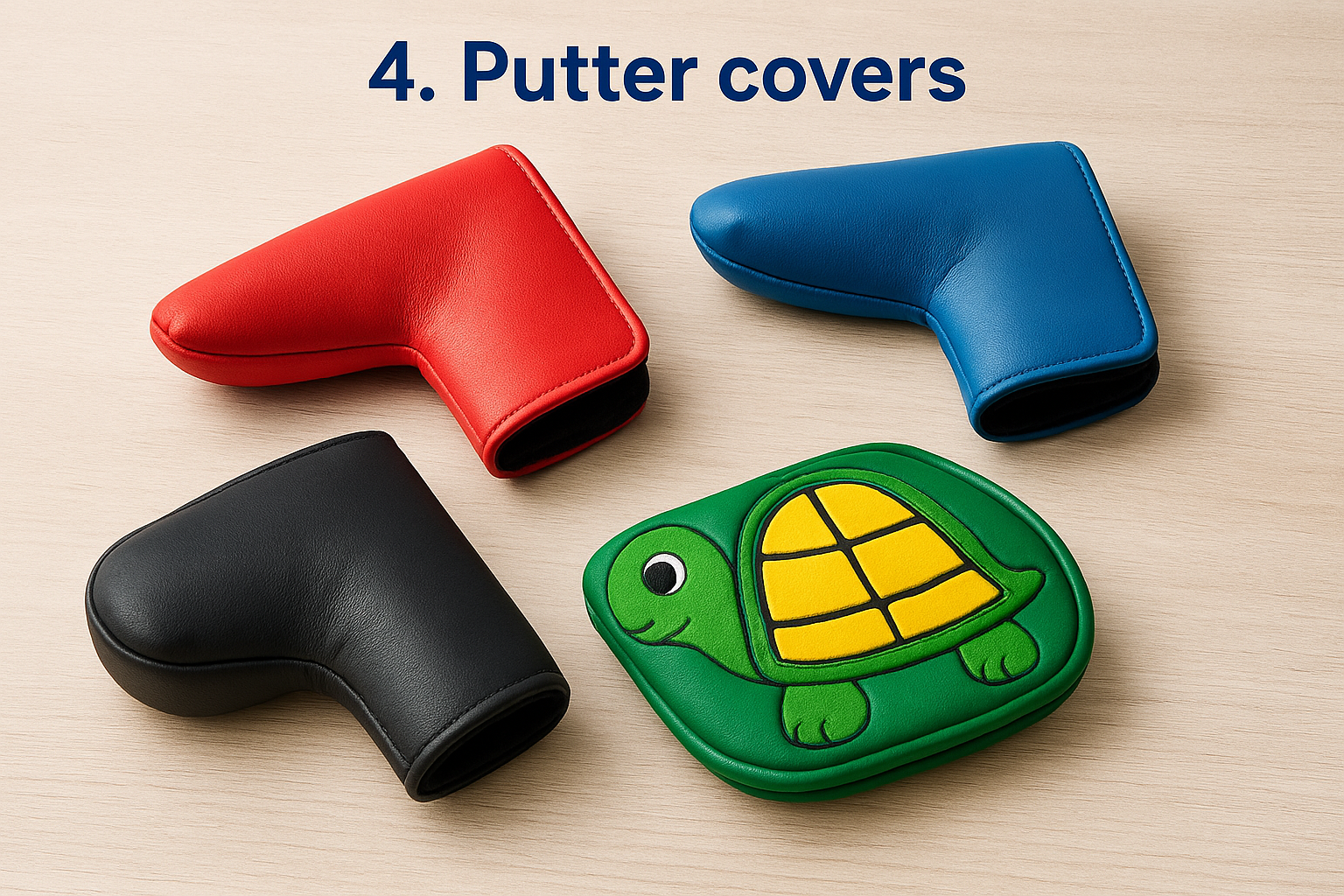
Putter covers come in shapes that match the putter, and the fit is far less forgiving than on woods. A blade putter cover is slim and narrow. A mallet cover is wide and deep. Centre-shafted mallets need a cover cut to let the shaft enter mid-head, so a standard mallet cover will not sit right. Most putter covers close with a magnet or Velcro, which keeps them on in the bag and off the face of the putter. Of all headcovers for golf clubs, putter covers are the ones where a wrong size shows immediately.
| Putter head | Cover shape | What to check |
|---|---|---|
| Blade | Slim, narrow | Width of the head and hosel position |
| Mallet | Wide, deep | Overall depth and any rear alignment features |
| Centre-shafted mallet | Mallet cover with a mid-head shaft opening | Shaft position |
Measure your putter head before you pick a design, because fit decides everything here.
Who it suits
Every golfer who owns a putter benefits, as a cover stops the face picking up dings from irons in the bag. It is also the easiest place to show some personality, since putter covers are the small, cheap way into novelty designs. Choose a magnetic closure for speed and quiet, or Velcro if you want to open it one-handed on the green.
What to check before buying
Compare your putter's width and depth against the product dimensions. Check the closure feels firm but not fiddly. Magnets can stiffen with a thick shell, and Velcro can collect grass and fluff over time. Make sure the opening is large enough to slide over a chunky grip-end without a wrestle.
5. Matched sets and brand-matched covers
What you get
A matched set gives you one design across the driver, fairway wood and hybrid covers, usually with interchangeable number tags. This is the neatest way to buy headcovers for golf clubs if you want a uniform bag. Brand-matched covers copy the look of the club manufacturer, so a replacement for a lost cover blends in with the rest. The tags let you identify the club at a glance without pulling it out of the bag.
| Club | Cover size | Typical tag |
|---|---|---|
| Driver | Largest, fits heads up to the 460cc limit | 1 or X |
| Fairway wood | Mid-size | 3, 5, 7 |
| Hybrid | Smallest | 3 to 6 or H |
A set looks best on the course and works best when each cover is sized for its own club.
Who it suits
Matched sets suit golfers who like a tidy bag, anyone who has just bought a new set of clubs, and buyers replacing a cover that has gone missing. If you play TaylorMade or Titleist, matching the brand keeps the bag consistent. Sets also simplify gift buying, because one box covers the whole bag.
What to check before buying
Make sure the set covers every club you carry. Some three-piece sets suit only a driver and two fairway woods, and a fourth club such as a hybrid is then left uncovered. Check that the tags can be swapped, and that the neck is long enough for your shaft length. Mesh necks let you see the shaft and spot damage, while solid necks protect better. For leather, knit or novelty variants of the same set, compare the lining before you buy.
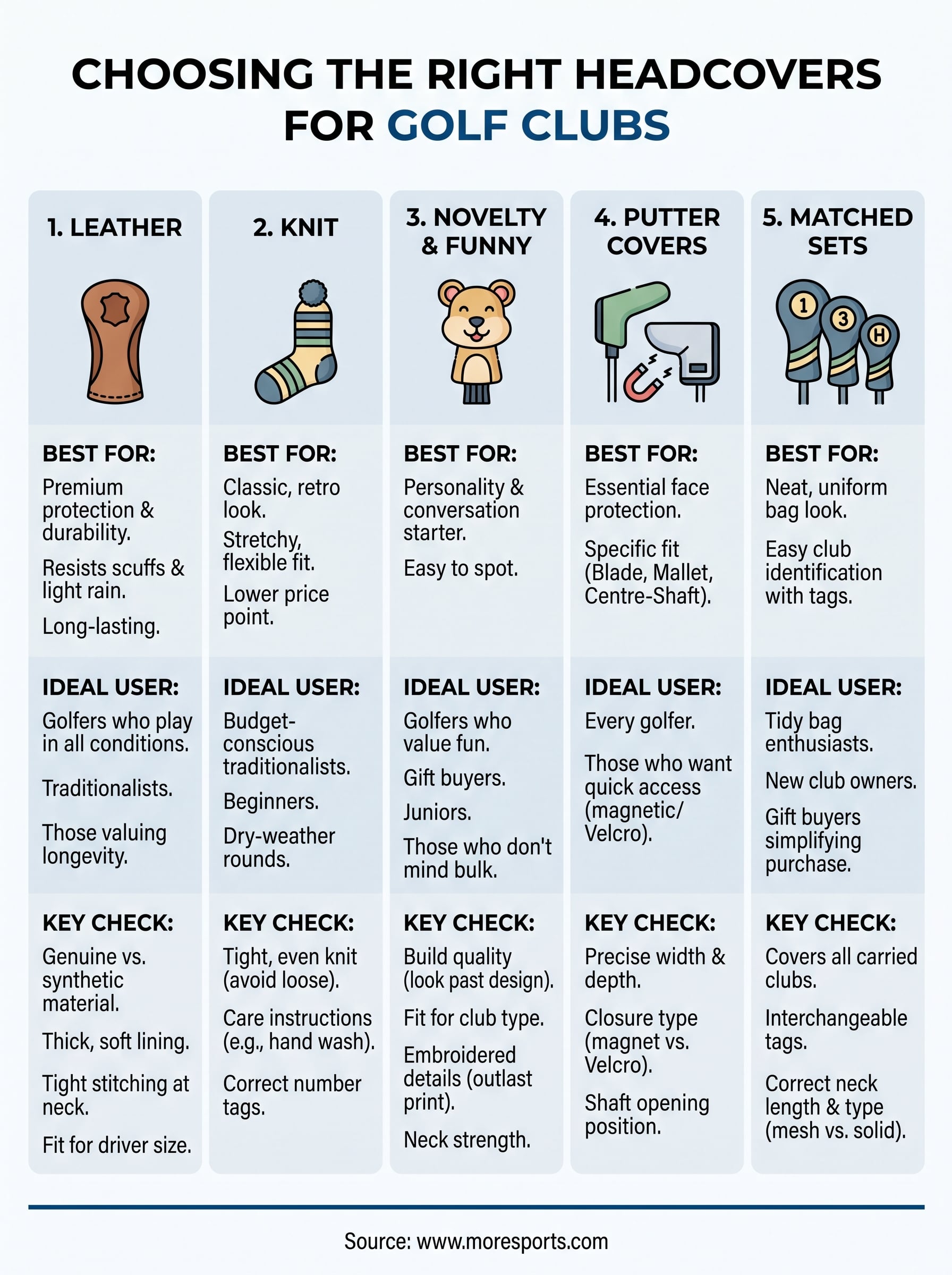
Choosing the right cover for your bag
Leather gives you protection that lasts, knit gives you flexible fit at a low price, and novelty designs give you personality. Putter covers need a precise fit, and matched sets keep the whole bag consistent. Whichever you choose, check head size, neck length and closure before you buy, because those three details decide how long a cover survives.
If you are also upgrading clubs or kit, browse the golf range at MoreSports, with free UK delivery over £25 and a 90-day returns window on unused items.