 No Duties or Customs Fees For EU & UK Customers
 Express Tracked UK Delivery On 1000s of Items
 90 Day Returns

How To Choose A Putter: Fit Your Stroke, Feel, And Length
RYYour putter accounts for roughly 40% of your strokes in a typical round, yet many golfers grab one off the rack without much thought. Getting the right fit matters more than you might expect. Understanding how to choose a putter that matches your stroke mechanics, preferred feel, and physical dimensions can shave strokes off your scorecard and boost your confidence on the greens.
This guide breaks down the key factors, head shape, balance type, shaft length, and grip size, so you can make an informed decision. Whether you're a beginner building your first bag or a seasoned player looking to upgrade, you'll learn exactly what to look for. At More Sports, we stock putters from leading brands like TaylorMade and MacGregor, giving you plenty of options once you've pinpointed the specifications that suit your game.
What matters when you choose a putter
You need to consider four main elements when selecting a putter: your stroke type, head design, physical specifications, and feel preferences. Each factor influences how the putter behaves through impact and how consistently you can repeat your stroke. Most golfers prioritise looks or brand loyalty, but matching technical specs to your natural motion produces better results on the green.
Stroke mechanics and head design
Your putting stroke arc determines which putter design suits you best. If you swing the putter in a pronounced curve (arc stroke), you need a toe-weighted head that naturally rotates through the ball. Straight-back-straight-through strokes pair better with face-balanced putters that resist twisting during the stroke. A simple test reveals your tendency: grip the putter shaft on one finger and see if the toe points down (toe hang) or the face stays square to the sky (face balanced).
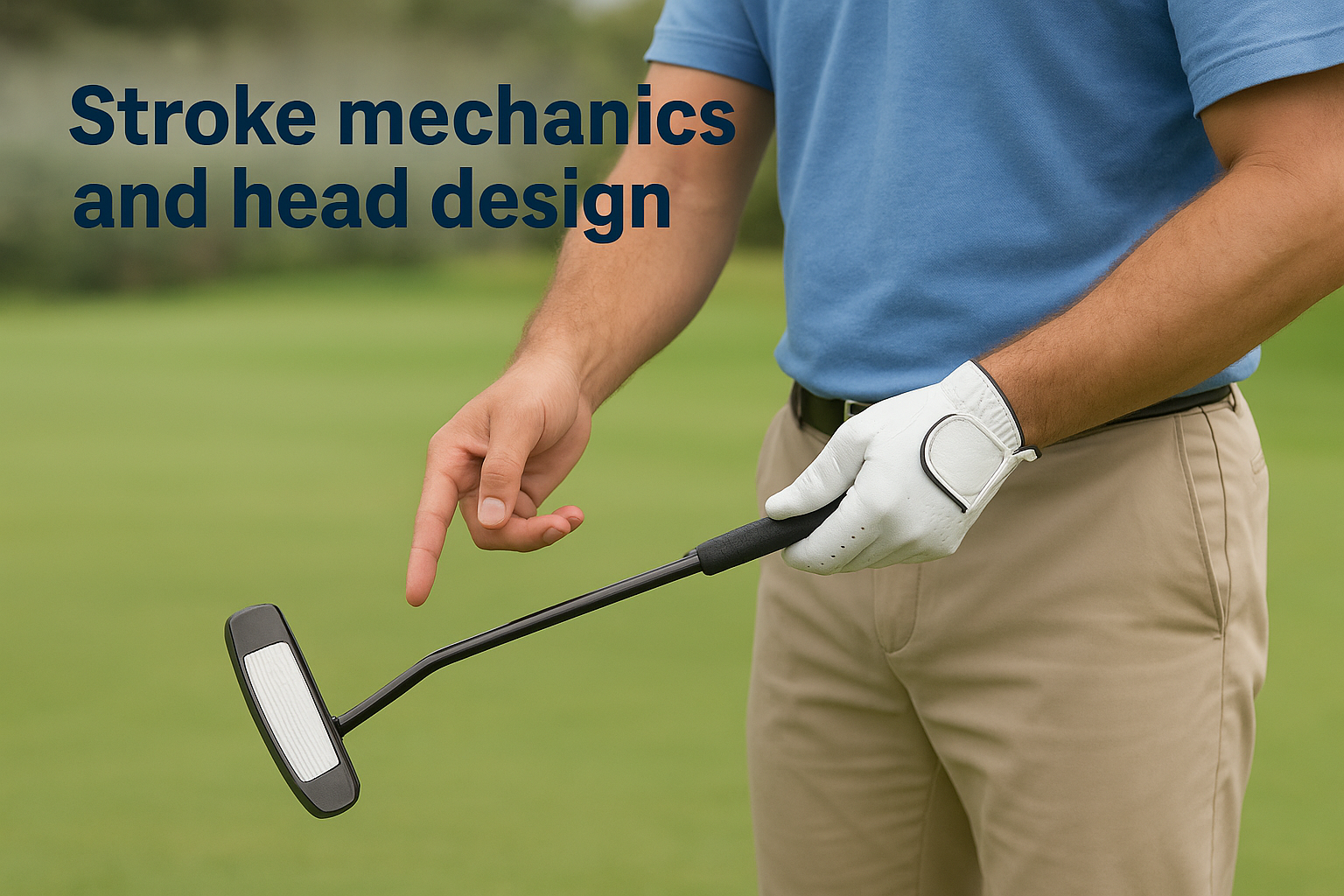
Match your putter balance to your natural arc, not the stroke you think you should have.
Physical specifications matter
Shaft length affects your posture and eye position over the ball. Standard putters measure 34 or 35 inches, but you might need shorter or longer depending on your height and arm length. The lie angle (the angle between shaft and ground) must allow the sole to sit flat at address. When the toe or heel lifts at setup, your aim suffers before you even start the stroke.
Weight distribution and feedback
Head weight and insert materials in the face both change how the putter feels and sounds at impact. Step 4 covers each in detail. Testing different weights and face materials helps you understand how to choose a putter that gives you confidence in distance control.
Step 1. Check your stroke and aim tendency
Understanding your natural putting motion forms the foundation for selecting the right putter. You need to identify whether you swing the clubhead in an arc pattern or move it straight back and through. This diagnosis takes five minutes and reveals which balance type will help you roll the ball more consistently. Most players fall somewhere between pure arc and pure straight, but knowing your tendency prevents you from fighting your putter on every stroke.
Run the gate test
Place two alignment sticks or tees about six inches apart on the putting green, creating a narrow gate. If you use golf alignment sticks, lay them flat on the turf rather than pushing them into the ground. Position the gate just outside your putter head at address. Make your normal stroke without hitting either stick. If the putter travels inside the gate on the backswing and through-swing, you have a straight-back-straight-through stroke. When the toe moves inside the gate line during the backswing, you demonstrate an arc stroke. Repeat this test from different distances to confirm your pattern holds true.
Observe your natural aim
Set up to a straight 10-foot putt and close your eyes. Make three practice strokes without a ball, then open your eyes and check where the putter face points at the end of your follow-through. Arc strokes naturally rotate the toe closed past impact, while straight strokes keep the face square to your target line longer. This simple drill shows you how to choose a putter that works with your instincts rather than against them.
Your natural stroke pattern matters more than any technical ideal you've read about.
Step 2. Match head style and balance
Your stroke pattern from Step 1 directly determines which putter head design and balance type will perform best in your hands. This matching process eliminates guesswork and narrows your options significantly. When you pair the right components with your natural motion, you gain instant feedback on mishits and improve your ability to square the face at impact.
Blade versus mallet designs
Blade putters feature a traditional heel-toe weighted design that suits arc strokes. The weight distribution near the ends of the clubhead allows natural rotation through the ball. Mallet putters spread weight around the perimeter and back, creating higher MOI (moment of inertia) that resists twisting on off-centre strikes. Players with straight strokes benefit from the stability mallets provide, while arc strokers find blades easier to release through impact. You can succeed with either style, but matching design to stroke reduces compensations.
Look at the alignment lines too. A single line on top of a blade suits players who like a clean, simple look. A mallet with a bold line or two dots helps if you struggle to see the target. Pick the one you can line up without thinking about it.
Face balance and toe hang specifics
Hold your putter horizontally by the grip end and watch where the face points. A face-balanced putter keeps the face pointing upward, making it ideal for straight-back-straight-through strokes. When the toe drops toward the ground (showing 45 degrees of toe hang or more), the putter naturally suits an arc stroke. Most blade designs exhibit toe hang, while many mallets come face balanced. This specification matters more than head shape when learning how to choose a putter that complements your mechanics.
Balance type must match your stroke arc, or you'll fight the putter throughout your round.
Step 3. Dial in length, lie, and setup
Physical specifications affect your posture, eye position, and consistency more than most golfers realise. A putter that measures one inch too long forces you to stand upright and misaligns your eyes relative to the ball. Getting these dimensions correct ensures you can repeat your setup without adjustments. Most retailers offer fitting services, but you can identify your needs with simple measurements before visiting the shop.
Determine proper shaft length
Measure from your wrist to the ground while standing in your natural putting posture (arms hanging relaxed, slight knee flex). This distance indicates your starting point for shaft length. Standard putters come in 33, 34, and 35 inches, with 34 being most common. Add one inch if you prefer a more upright stance, or subtract one inch for a pronounced forward bend. Test different lengths by gripping down on your current putter and noting where your stroke feels most controlled.
Wondering what length putter you need? Use this putter size chart as a starting point, then check it against your wrist-to-ground measurement:
| Your height | Putter length |
|---|---|
| Under 5ft 4in (163 cm) | 32 to 33 inches |
| 5ft 4in to 5ft 8in (163 to 173 cm) | 33 to 34 inches |
| 5ft 8in to 6ft (173 to 183 cm) | 34 to 35 inches |
| Over 6ft (183 cm) | 35 to 36 inches |
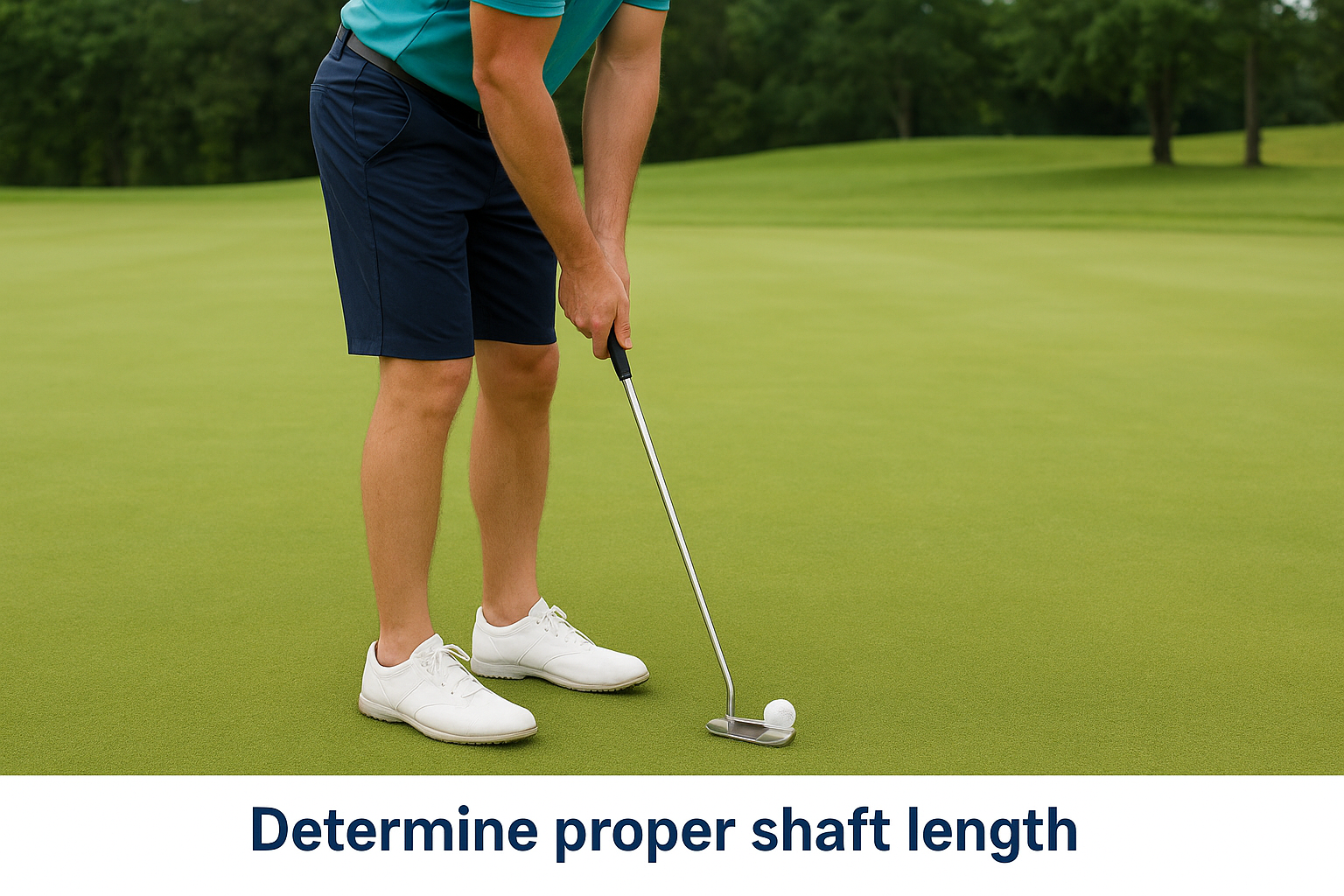
Proper length lets your arms hang naturally without reaching or crowding your body.
Check lie angle at address
Set your putter on the green in your normal address position. The sole should sit flat against the turf with the shaft angled naturally toward you. When the toe lifts, the lie angle is too upright for your setup. If the heel comes up, the putter is too flat. Standard lie angles range from 70 to 72 degrees. Knowing how to choose a putter includes verifying this spec, as incorrect lie angle pulls your aim left or right by several degrees before you even stroke the ball.
Step 4. Choose face feel, grip, and weight
The final layer of customisation involves sensory feedback and weight distribution that affect your confidence and distance control. These elements seem minor compared to stroke mechanics, but they directly influence how you perceive contact quality and adjust for green speed. Testing different combinations helps you understand how to choose a putter that feels like an extension of your hands rather than a foreign object.
Face insert and feedback
Milled steel faces provide firm feedback with a crisp sound at impact. You feel exactly where the ball contacts the face, making it easier to diagnose mishits. Soft polymer inserts (like Surlyn or elastomer) reduce vibration and produce a muted sound that many players find more comfortable. Aluminium inserts split the difference, offering moderate softness with clear feedback. Your preference depends on whether you want maximum feel or prefer a gentler response that reduces the sting from off-centre strikes.
Grip dimensions and texture
Standard putter grips measure 1.0 to 1.2 inches in diameter. Thicker grips (1.3+ inches) reduce wrist action by forcing you to use your shoulders and arms, which suits straight-back-straight-through strokes. Thinner grips allow more hand rotation for arc strokes. Tacky rubber grips provide secure hold in all conditions, while corded options work better in humid climates where sweat affects your grip pressure.
Grip thickness directly influences how much your wrists rotate during the stroke.
Head weight for conditions
Heavier heads (360-380 grams) suit fast, firm greens where you need less acceleration. Lighter options (340-355 grams) help on slower surfaces that require more energy through impact. Most players benefit from testing weight options on the practice green before committing to a purchase.
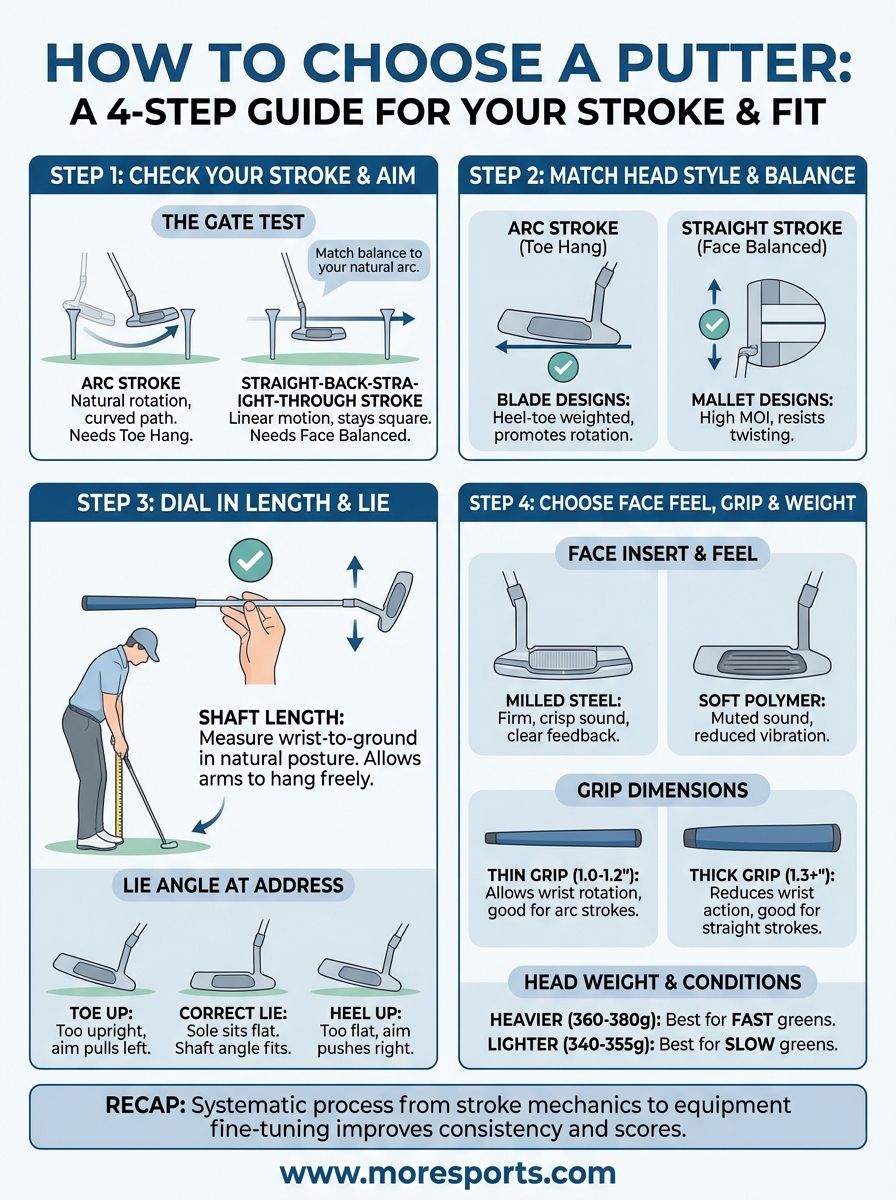
Quick recap
You now understand the four critical steps for selecting your ideal putter. Stroke analysis reveals whether you need toe hang or face balance. Head design (blade or mallet) must complement your natural arc or straight-back motion. Physical specs like shaft length and lie angle ensure proper posture and eye position over the ball. Finally, face material, grip size, and head weight fine-tune the feedback and performance you get on different green conditions.
Learning how to choose a putter transforms from guesswork into a systematic process when you follow these steps. Test multiple options using the gate drill and balance check before making your purchase. Your scores will reflect the difference when stroke mechanics and equipment work together instead of fighting each other.
Browse our full range of putters from TaylorMade, MacGregor, and other leading brands at More Sports. We ship worldwide with free UK delivery on orders over £25.