 No Duties or Customs Fees For EU & UK Customers
 Free UK Delivery On Orders Over £25
 90 Day Returns

How To Measure Golf Glove Size: Simple Steps & Fitting Guide
R YOrdering a golf glove online without knowing how to measure golf glove size leads to frustration. You receive a glove that's too tight and restricts your swing, or too loose and slides around during your backswing. Returns cost time and money, and ill-fitting gloves affect your grip and overall performance on the course.
You can determine your correct size at home with two simple measurements and a soft measuring tape. This process takes less than five minutes and gives you accurate sizing data to match against manufacturer charts. You'll know exactly which size to order, whether you're buying your first glove or switching brands.
This guide walks you through measuring your hand circumference and finger length, then shows you how to interpret sizing charts and check for proper fit. You'll learn what to look for when the glove arrives and how to ensure it feels comfortable from the first wear.
Why accurate sizing is crucial for golfers
Your golf glove serves as the primary connection between your hands and the club, making proper sizing essential for consistent performance. A glove that doesn't fit correctly disrupts your grip pressure, forcing you to compensate during your swing. This compensation creates unnecessary tension in your hands and forearms, which travels up through your shoulders and affects your entire swing plane.
Impact on grip pressure and control
Undersized gloves restrict your natural hand movement and create pressure points across your knuckles and palm. You'll feel the fabric pulling tight during your backswing, which causes you to loosen your grip unconsciously to relieve the discomfort. Oversized gloves create the opposite problem, sliding and bunching between your hand and the grip. You then squeeze harder to maintain control, leading to excess tension and reduced club head speed through impact.
The right fit allows you to maintain consistent grip pressure throughout your entire swing without adjustment.
Effects on your swing mechanics
Knowing how to measure golf glove size prevents you from developing compensatory swing habits that become difficult to correct. When your glove fits properly, you can focus on tempo and timing rather than constantly adjusting your grip. Ill-fitting gloves cause your hands to shift position at the top of your backswing, changing your club face angle and resulting in inconsistent ball striking. Professional golfers replace their gloves frequently because even slight stretching or wear affects the fit, demonstrating how critical proper sizing remains for anyone serious about improving their game.
Your choice of glove size also impacts hand fatigue during long practice sessions or 18-hole rounds. Gloves that fit correctly distribute pressure evenly across your palm and fingers, allowing you to maintain your grip without excessive effort.
Step 1. Measure your hand circumference
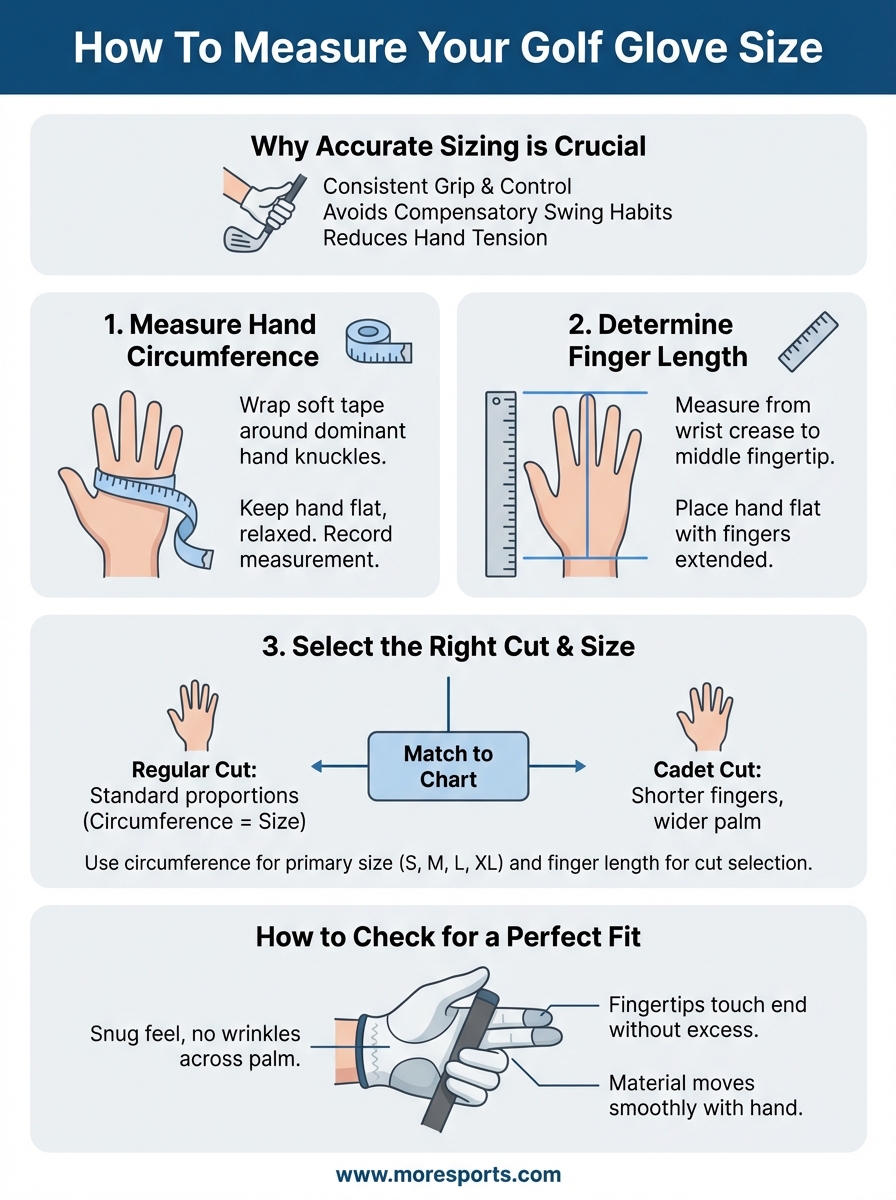
Measuring your hand circumference provides the primary sizing metric that manufacturers use for their glove charts. This measurement determines whether you need a small, medium, large, or extra-large glove, making it the most critical dimension when learning how to measure golf glove size. You'll measure around the widest part of your dominant hand, just below your knuckles where your fingers meet your palm.
Tools you'll need
Gather a soft measuring tape (the type used in sewing) rather than a rigid metal tape measure. The flexible tape conforms to your hand's contours and provides an accurate reading without gaps. You'll also want a pen and paper to record your measurement.
- Soft fabric measuring tape (at least 30cm long)
- Pen and paper for recording
- Mirror (optional, for checking tape position)
Taking the measurement
Wrap the measuring tape around your dominant hand at the knuckles, excluding your thumb. Keep your hand flat and fingers together but relaxed, not spread apart or clenched. The tape should sit snugly against your skin without compressing the flesh or leaving slack. Read the measurement where the tape overlaps, rounding to the nearest quarter inch or half centimetre. Most golfers measure between 18cm and 24cm (7 to 9.5 inches) in circumference.
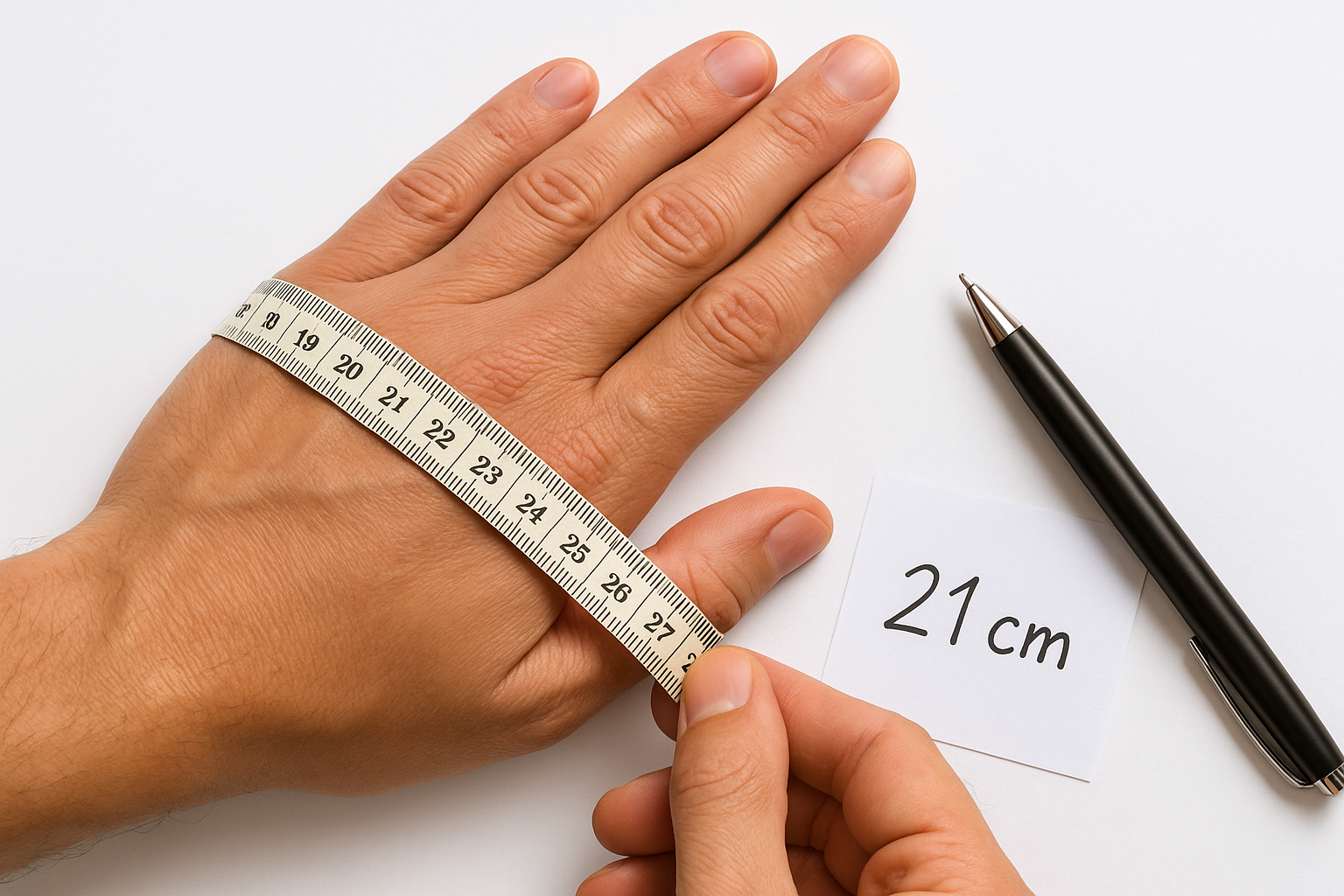
Record this number immediately, as it forms the basis for matching your hand to manufacturer sizing charts.
Step 2. Determine your finger length
Your finger length provides the second crucial measurement when determining how to measure golf glove size, as it affects how far the glove extends down your fingers. Manufacturers design gloves with different finger lengths to accommodate varying hand proportions, and this measurement helps you choose between regular, long, and short finger options. You'll measure from the base of your palm to the tip of your middle finger.
Measuring from wrist to fingertip
Place your hand flat on a table with your fingers extended and together. Position a ruler or measuring tape along the inside of your middle finger, starting from the crease where your palm meets your wrist. Measure straight up to the tip of your middle finger, keeping the measuring tool aligned with your finger's centre. Most golfers measure between 16cm and 21cm (6.5 to 8.5 inches) in finger length.
This measurement determines whether you need a glove with regular, long, or short fingers based on your proportions.
Record this number alongside your circumference measurement. Gloves sized for longer fingers prevent the material from riding up during your swing, while shorter finger options stop excess fabric from bunching at your fingertips and affecting your feel for the club.
Step 3. Select the right cut and size
Once you've recorded both measurements, match them against manufacturer sizing charts to find your correct glove size. Most brands use your circumference measurement as the primary size indicator, while finger length helps you choose between regular and cadet cuts. Different manufacturers may vary slightly in their sizing, so always check the specific brand's chart before ordering if you're trying a new glove for the first time.
Understanding sizing charts
Compare your circumference measurement to the size ranges provided by the manufacturer. A circumference of 20cm typically corresponds to a medium glove, while 22cm usually indicates large. Your finger length then determines whether you need a standard or modified cut. Brands typically list both measurements together, showing you exactly which combination matches your hand proportions when learning how to measure golf glove size.
Cross-reference both measurements on the chart to ensure you're selecting the correct size and cut combination.
Choosing between cadet and regular cuts
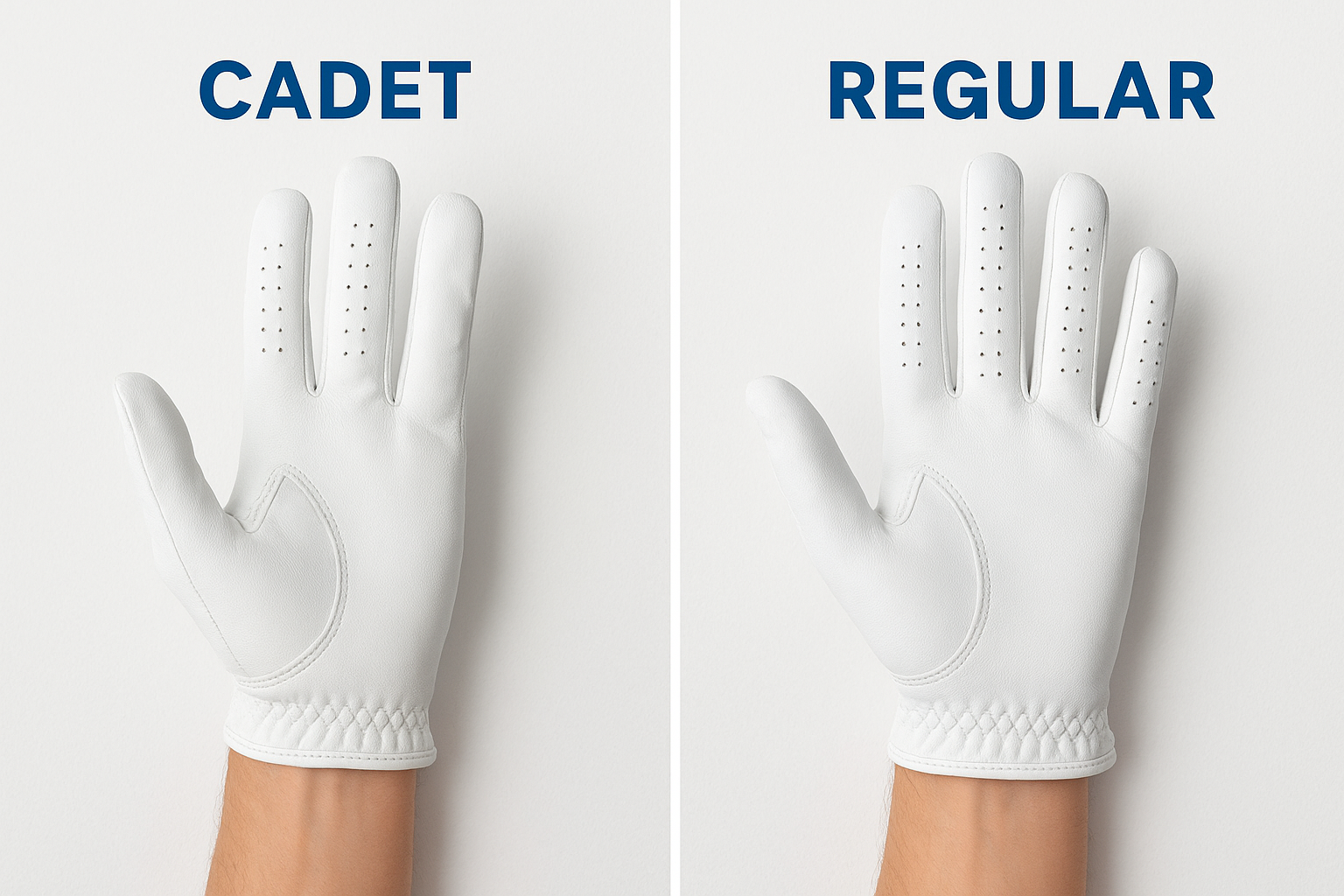
Cadet gloves feature shorter fingers and wider palms compared to regular cuts at the same size designation. Select a cadet cut if your finger length measures proportionally shorter than your circumference suggests. Regular cuts suit golfers whose finger length and circumference fall within standard proportions. This distinction prevents excess material at your fingertips or restricted movement across your knuckles.
How to check for a perfect fit
Once your glove arrives, you need to verify that your measurements translated into the correct practical fit. Put the glove on your dominant hand and check for several specific indicators that confirm you've chosen the right size. The glove should feel snug initially but not restrict movement, and you'll notice the fit improves after a few wears as the material conforms to your hand shape.
Visual and tactile checks
Examine how the glove sits across your knuckles and palm. The material should lie flat without wrinkles or bunching, and you shouldn't see any gaps between the fabric and your skin. Check your fingertips next, ensuring the glove extends to the base of your fingernails without excess material hanging past them. Pull gently at the wrist opening to confirm you can remove the glove easily but that it won't slide off during your swing.
A properly fitted glove looks like a second skin across your hand, with no loose fabric or tight spots.
Movement and grip tests
Make a fist and then spread your fingers wide to test the glove's flexibility and stretch. The material should move with your hand smoothly without fighting against your natural range of motion. Grip a club and take several practice swings, checking whether the glove stays in position or shifts around. Your understanding of how to measure golf glove size proves successful when you complete a full swing without needing to adjust the glove's position.
Find your ideal glove
You now have the complete process for determining your correct golf glove size without visiting a shop. Your circumference and finger length measurements eliminate guesswork from online ordering, and you can match these numbers against any manufacturer's chart with confidence in the results. The few minutes spent measuring your hand properly save you from dealing with returns, refunds, and the frustration of playing with ill-fitting gloves that compromise your performance.
Take your measurements today and compare them against sizing charts from different brands to find your ideal match. The right glove enhances your connection to the club and allows you to focus entirely on your swing mechanics rather than adjusting your grip mid-round. Understanding how to measure golf glove size means you'll never order the wrong size again, whether you're replacing worn gloves or trying a new brand for the first time.
Browse the complete selection of golf gloves at More Sports to find your perfect fit from leading brands.