 No Duties or Customs Fees For EU & UK Customers
 Express Tracked UK Delivery On 1000s of Items
 90 Day Returns

How To Wash A Fleece Jacket: Settings, Detergent & Drying
RYFleece jackets are brilliant for layering on the trail, wearing on the golf course, or throwing on over your workwear when temperatures drop. But if you've ever pulled one out of the wash only to find it matted, flat, or rough to the touch, you already know that learning how to wash a fleece jacket properly matters more than most people realise. The wrong settings or detergent can strip away the soft, insulating qualities that make fleece worth wearing in the first place.
The good news is that keeping your fleece in top condition doesn't take much effort, you just need to know the right steps. Getting the wash cycle, water temperature, and drying method right will help your jacket hold its shape and softness for years rather than months. At MoreSports, we sell fleece jackets and outdoor layers from brands like Craghoppers and Berghaus, so we know how much a quality fleece can cost, and how important it is to protect that investment.
This guide walks you through everything from checking the care label to choosing the right detergent, selecting the correct machine settings, and drying your fleece without causing damage. Whether it's a lightweight midlayer or a heavyweight outer fleece, these steps will keep it performing the way it should.
What you need before you wash your fleece
Before you even open the washing machine door, getting the right supplies together saves time and prevents damage. Fleece is a synthetic fabric, usually made from polyester, and it responds badly to the wrong detergent, too much heat, or contact with fabric softener. Having everything ready before you start means you won't be halfway through the process and realise you've used the wrong product.
The supplies you need
You don't need anything specialist to wash a fleece jacket properly, but a few specific items will make a real difference to the result. Using the right detergent is the single biggest factor, and you'll also want to think carefully about what else goes in the same load, since fleece picks up lint easily from certain fabrics.
Here's what to gather before you start:
- A gentle, liquid detergent designed for synthetics or technical fabrics (avoid powder detergents, which can leave residue in the fibres)
- A mesh laundry bag to protect the fleece from snagging or pilling during the cycle
- No fabric softener - it coats the fibres and reduces the fleece's ability to trap warm air
- No dryer sheets for the same reason
- A clean, dry towel or a drying rack for after the wash
Fabric softener is one of the most common reasons fleece loses its softness over time - skip it every single wash, not just occasionally.
Check what else is going in the machine
Fleece should not go in with items that shed heavy lint, such as towels, cotton sweatshirts, or thick wool garments. Lint from other fabrics bonds to the fleece surface during the wash and is almost impossible to remove fully afterwards. Washing your fleece with similar synthetic midlayers, or simply on its own, gives you a much cleaner and better result.
Also check that the machine drum is clean before you start. Residue from previous washes, particularly from heavily soiled workwear or items washed with strong biological detergents, can transfer to your fleece and affect both its smell and texture. Running a quick drum clean cycle once a month is a sensible habit if you regularly wash different fabric types together.
Why preparation matters for fleece specifically
Understanding how to wash a fleece jacket properly starts before the machine is even switched on. Fleece fibres are fine and tightly knit together, which is what makes them so effective at trapping warmth, but that same structure makes them vulnerable to heat, agitation, and chemical damage from the wrong products. A few minutes of preparation before each wash adds up to a fleece that stays softer and more effective for far longer than one that gets thrown in without any thought.
The goal at this stage is straightforward: right products, right load, clean drum. Once those three things are in place, the actual washing process becomes much more manageable, and the results will speak for themselves.
Step 1. Check the care label and identify the fleece
Before you touch the machine controls, take two minutes to read the care label inside your jacket. Most fleece jackets carry a sewn-in label at the back neck or along the inner side seam, and the symbols on it tell you exactly what the manufacturer recommends. Skipping this step and guessing is one of the most common ways people accidentally damage a fleece they've spent good money on.
Reading the care label symbols
The label uses international laundry symbols that apply consistently across all clothing brands. Once you know what each symbol means, you can check any fleece jacket quickly and confidently. Here are the key symbols to look for:

| Symbol description | What it means |
|---|---|
| Washtub with number (e.g. 30 or 40) | Maximum wash temperature in Celsius |
| Washtub with hand | Hand wash only |
| Washtub with single line underneath | Gentle or delicate machine cycle |
| Square with circle inside | Tumble drying permitted |
| Square with circle and X | Do not tumble dry |
| Triangle with X | Do not bleach |
| Iron with X | Do not iron |
If the label says "hand wash only," treat that as a firm instruction rather than a suggestion - machine washing that jacket, even on a delicate cycle, carries a real risk of distorting the fabric.
Identifying your fleece type
Different fleece constructions need slightly different handling, so it's worth knowing what you're working with before you learn how to wash a fleece jacket correctly. Standard polar fleece, the most common type, is a flat, smooth-faced fabric used in most general-purpose jackets from brands like Craghoppers. Sherpa fleece has a looped, textured surface on one side and needs extra care to avoid matting.
Bonded fleece, which has a woven or softshell backing fused to the fleece layer, is less flexible and more prone to damage if washed too aggressively. Check whether your jacket has a single-layer or bonded construction by looking at the inside face of the fabric. If it feels firm and structured rather than soft on both sides, treat it as bonded fleece and stick strictly to the care label guidance.
Step 2. Prep the jacket and sort the wash load
Getting the jacket ready before it goes in the machine takes less than five minutes and directly affects how the fleece comes out. Skipping this prep is one of the main reasons fleece jackets come out of the wash looking worse than they went in.
Empty pockets and close all zips
Start by emptying every pocket completely. Forgotten items like tissues, receipts, or coins can damage the drum or leave debris stuck in the fleece fibres. Once the pockets are clear, fasten all zips fully from top to bottom. Open zips act like abrasive edges during the wash cycle and create small pulls and snags across the fleece surface, which leads to pilling over time.
Turn the jacket inside out before placing it in the mesh laundry bag. This simple step protects the outer face of the fabric from direct contact with the drum walls and reduces friction against other items in the load. If your jacket has Velcro fastenings, press them closed firmly so they don't attach to the fleece and tear at the fibres during agitation.
Sort your wash load correctly
Knowing how to wash a fleece jacket well means thinking carefully about what else goes in the machine at the same time. Fleece picks up lint during washing, so the items you pair it with matter.
Washing your fleece alone, or with similar synthetic layers only, gives you the cleanest and safest result every time.
Here are the key sorting rules to follow:
- Wash with: other lightweight synthetic jackets, running tops, or technical midlayers
- Avoid washing with: towels, cotton hoodies, wool items, or any fabric that sheds significant lint
- Check the load size: a half-full drum gives the fleece enough room to move freely without excessive friction
- Use a mesh laundry bag: place the jacket inside one to reduce direct contact with the drum throughout the entire cycle
A balanced, well-sorted load protects the fleece structure and stops you from dealing with a lint-covered jacket that needs extra work to restore.
Step 3. Pick the right detergent and machine settings
The detergent you choose and the machine settings you select are two of the most important decisions in how to wash a fleece jacket without causing damage. Getting either one wrong can leave your jacket feeling rough, smelling stale, or permanently flattened. Both decisions are straightforward once you know the specific values to aim for.
Choose your detergent carefully
Use a liquid detergent designed for synthetic or technical fabrics. Liquid products dissolve fully in cold water and leave no powdery residue trapped in the fleece fibres, which is a persistent problem with powder-based detergents. Specialist products like Nikwax Tech Wash or Grangers Performance Wash are formulated specifically for technical fabrics, but any gentle liquid detergent labelled as suitable for synthetics will clean your fleece effectively without causing harm.
Never use biological detergent on fleece - the enzymes are designed to break down organic material and will gradually deteriorate synthetic fibres over repeated washes.
Avoid fabric softener entirely. It may seem like it would help maintain softness, but fabric softener coats the individual fibres and blocks the tiny air pockets that trap warmth. On jackets with moisture-wicking or water-resistant finishes, softener also degrades those technical properties faster than normal wear would.
Set the machine correctly
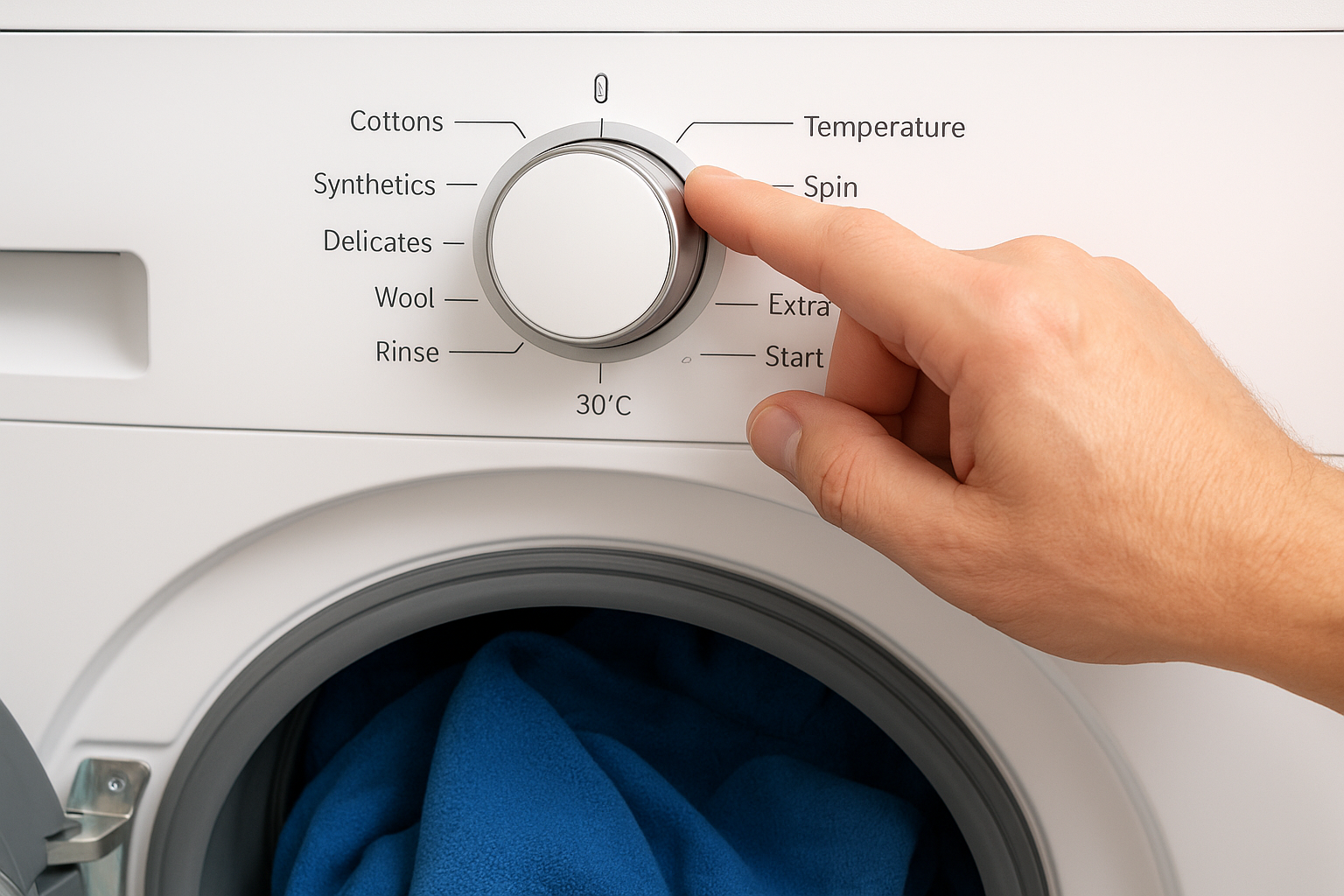
Temperature and spin speed are the two settings that cause the most damage when used incorrectly. High heat shrinks and mats synthetic fibres together, and a fast spin physically distorts the fabric structure. Use the settings in the table below as your standard starting point for every wash:
| Setting | Recommended value |
|---|---|
| Temperature | 30°C (cold wash) |
| Cycle type | Delicate or gentle |
| Spin speed | 800 RPM or lower |
| Detergent amount | Half the standard dose |
| Fabric softener | None |
Measure out half the recommended detergent dose rather than a full cap. Fleece traps detergent in its fibres easily, and too much product leaves a residue that makes the jacket feel stiff and heavy once dry. A reduced amount still cleans effectively while preventing build-up that shortens the life of the fabric.
Step 4. Wash, rinse well, and avoid common mistakes
With your jacket prepped, your settings confirmed, and your detergent measured out, you're ready to run the cycle. This step covers what to watch for while the machine runs and what to avoid so the fleece comes out clean without any of the common damage that catches people out.
Running the wash cycle
Once you've loaded the jacket into the drum inside its mesh laundry bag, add your half-dose of liquid detergent to the dispenser drawer and select the delicate cycle at 30°C. Start the machine and let it run through without interruption. One important point: do not add extra rinse cycles automatically, since an additional rinse on a delicate setting is fine, but piling on multiple cycles increases agitation time and puts more stress on the fleece fibres than necessary.
A single delicate cycle at 30°C with a reduced detergent dose cleans a fleece jacket thoroughly without putting unnecessary strain on the fabric.
When the cycle finishes, remove the jacket promptly rather than leaving it sitting in a damp drum. Fleece left sitting wet for an extended period develops a stale smell that is difficult to remove without washing the jacket all over again.
Mistakes that damage fleece most often
Understanding how to wash a fleece jacket properly means recognising the errors that consistently produce poor results. Most damage happens not during the wash itself but because of one of the following specific mistakes:
| Mistake | Why it causes damage |
|---|---|
| Washing at 40°C or above | Heat mats synthetic fibres together and causes shrinkage |
| Using powder detergent | Leaves residue lodged in the fleece pile |
| Adding fabric softener | Blocks the fibre structure and reduces warmth |
| Washing with lint-heavy items | Lint bonds permanently to the fleece surface |
| High spin speed (above 1000 RPM) | Distorts the fabric and creates permanent creasing |
| Leaving the jacket in the drum wet | Causes a persistent stale odour |
Checking this list before each wash takes less than a minute and will consistently protect the quality of your jacket over time.
Step 5. Dry it properly and bring back softness
How you dry your fleece jacket matters just as much as how you wash it. High heat during drying is the most common cause of matted, flat fleece, and it causes the same kind of fibre damage whether it comes from a tumble dryer or a radiator. Getting this stage right is the final step in how to wash a fleece jacket without harming the fabric.
Air dry when possible
The safest method is to lay the jacket flat on a clean, dry towel or hang it on a drying rack away from any direct heat source. Reshaping the jacket while it is still damp helps the fabric dry evenly and keeps the seams aligned. Avoid hanging it on a thin wire hanger when wet, since the weight of the damp fabric can pull and stretch the shoulder seams permanently out of shape.
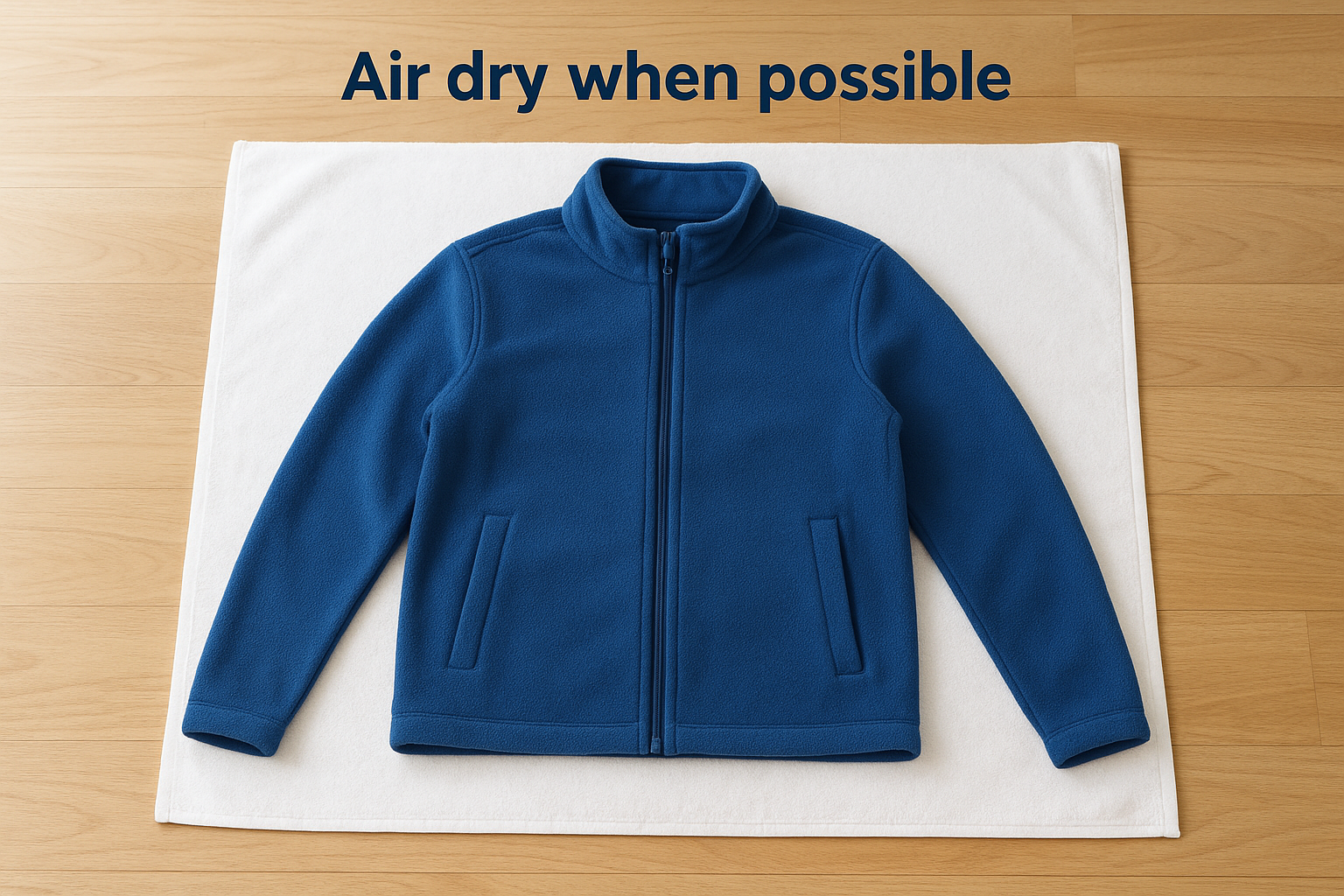
Never dry fleece on a radiator or directly in front of a fan heater - concentrated heat damages the fibres in the same way a hot wash does.
Make sure the jacket dries in a well-ventilated space rather than a closed room or damp utility area. Poor airflow slows drying time significantly and can leave a stale smell in the fabric even after a clean wash. Allow four to six hours for a standard fleece to dry fully at room temperature.
Tumble drying safely
If your care label permits tumble drying, use the lowest heat setting available or an air-only cycle. Keep the cycle short, around 10 to 15 minutes, and check the jacket regularly to avoid overdrying. Adding two or three clean tennis balls to the drum helps lift the fleece pile as it dries and stops the fibres from clumping flat.
Remove the jacket while it still feels very slightly damp rather than completely dry. Overdrying in a tumble dryer flattens the pile and makes the surface feel rougher than it should. Finish the process by laying it flat for the final 20 to 30 minutes.
Restore the texture after drying
Once the jacket is fully dry, shake it out firmly to loosen the fibres. Then rub the surface gently in a circular motion with your hand, or run a soft-bristled clothes brush lightly across the fabric to lift the pile back up and bring the soft feel back.
Step 6. Fix stains, odours, and pilling
Even with regular careful washing, you'll occasionally deal with a stubborn stain, a jacket that smells damp after drying, or a surface that has started to pill. Knowing how to wash a fleece jacket through routine cycles is one thing, but targeted fixes for these specific problems extend the life of your jacket considerably further.
Treating stains before washing
Tackle stains before placing the jacket in the machine, not after. Apply a small amount of liquid detergent or a gentle stain remover directly onto the affected area and work it in softly with your fingertip or a soft cloth. Leave it to sit for five to ten minutes, then rinse the spot with cold water before washing the jacket as normal.
Never scrub a stain aggressively on fleece - rubbing breaks down the surface fibres and causes permanent matting that no wash can fix.
For oil-based stains such as sun cream or food grease, apply a small amount of washing-up liquid to the stain before pre-treating with detergent. This cuts through the oil and lifts it from the fibres before the main cycle begins.
Removing persistent odours
If your fleece still smells after a standard wash, the cause is usually detergent build-up or insufficient rinsing rather than dirt. Add a second rinse cycle to the next wash to flush out any trapped product. For a musty or damp odour, add 50ml of white wine vinegar to the drum alongside your normal detergent dose. Vinegar neutralises odour-causing bacteria without damaging the fibres or leaving its own smell once the jacket is dry.
Dealing with pilling
Pilling appears as small knotted fibre clusters on the surface of the fabric, most often across the chest and underarms where friction is highest. Remove existing pills with a fabric shaver or lint remover, working slowly across the surface in short strokes. Reduce future pilling by always using a mesh laundry bag and keeping your spin speed at or below 800 RPM on every wash.
A quick wrap-up
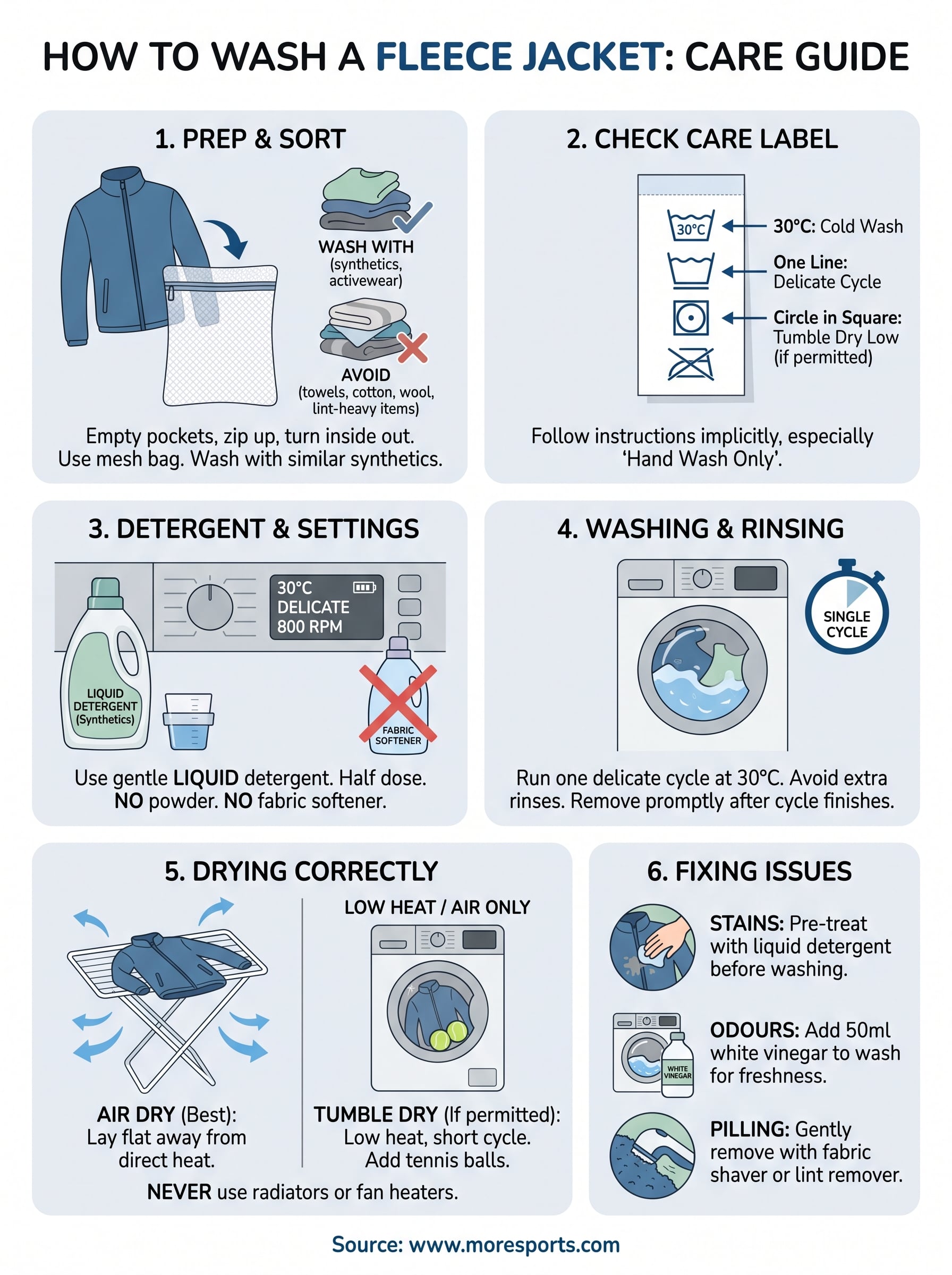
Knowing how to wash a fleece jacket correctly comes down to a handful of consistent habits: cold water, a gentle cycle, liquid detergent, no fabric softener, and low heat or air drying. Each step in this guide builds on the last, and following them together is what keeps your fleece soft, warm, and performing the way it should through repeated washes.
Stains, odours, and pilling are all fixable when you catch them early and use the right approach. Pre-treating stains before washing, rinsing thoroughly, and using a mesh laundry bag will solve the majority of problems most people run into. Your fleece jacket is built to last, and the way you wash it determines how long that actually holds true.
If you're looking for a new fleece or want to replace one that's past its best, browse the full range of outdoor jackets and midlayers at MoreSports.