 No Duties or Customs Fees For EU & UK Customers
 Free UK Delivery On Orders Over £30
 90 Day Returns

Leather vs Synthetic Golf Gloves: Which Is Better For You?
RYChoosing between leather vs synthetic golf gloves comes down to what you value most on the course. Some golfers swear by the soft, natural feel of leather. Others prefer synthetic materials for their durability and weather resistance. Both have genuine strengths, and genuine trade-offs.
The right glove affects your grip, your comfort, and ultimately your confidence over every shot. Yet many golfers grab whatever's cheapest on the shelf without understanding how each material actually performs across different conditions, budgets, and playing frequencies.
At MoreSports, we stock golf gloves from brands like FootJoy, TaylorMade, and Under Armour in both leather and synthetic options, so we've seen first-hand what our customers prefer and why. This guide breaks down the key differences in feel, durability, price, and weather performance so you can make a decision that genuinely suits your game. We'll cover who each type works best for and when it makes sense to have both in your bag.
Why golf glove material matters
Your golf glove does more than protect your hand from blisters. The material it's made from directly shapes your grip pressure, swing feel, and how the club behaves through impact. Choosing the wrong material forces you to grip harder to compensate, which creates tension in your forearms and disrupts your swing. Getting this decision right matters far more than most golfers acknowledge before they buy.
Grip and feel through impact
The material of your glove determines how much tactile feedback travels from the club to your hands. Leather transmits this sensation naturally, letting you hold the club with a light grip and still feel in full control. Synthetic materials have improved significantly over the years and now offer competitive grip performance across a wider range of conditions.
When you compare leather vs synthetic golf gloves side by side, feel is typically the first difference you notice. A glove that reads the club well reduces unnecessary grip tension, which is one of the most common causes of inconsistency among amateur golfers.
A glove that improves your feel can do more for your swing than many equipment upgrades.
Durability and how often you play
How frequently you play is a major factor in which material actually suits your game. A golfer playing multiple rounds per week needs a glove that holds up under repeated wear, sweat, and general use. Different materials respond to this kind of wear in distinct ways:
- Leather wears faster but delivers a premium, natural feel while it lasts
- Synthetic holds its shape longer and suits high-frequency players well
- Cabretta leather (a common premium leather type) is particularly sensitive to moisture and needs careful drying between rounds
Understanding your own playing habits helps you match the right material to your routine before spending a penny.
Leather golf gloves explained
Leather golf gloves are made from natural animal hide, with cabretta leather (sourced from hair sheep) being the most popular premium option. This material is thin, supple, and moulds to your hand over time, creating a personalised fit that most synthetic gloves struggle to match.
The feel and fit of leather
Natural leather transmits grip pressure and club feedback more precisely than most alternatives, which is why many tour professionals wear it. The glove essentially becomes an extension of your hand, giving you real-time information about how the club sits in your grip throughout the swing.
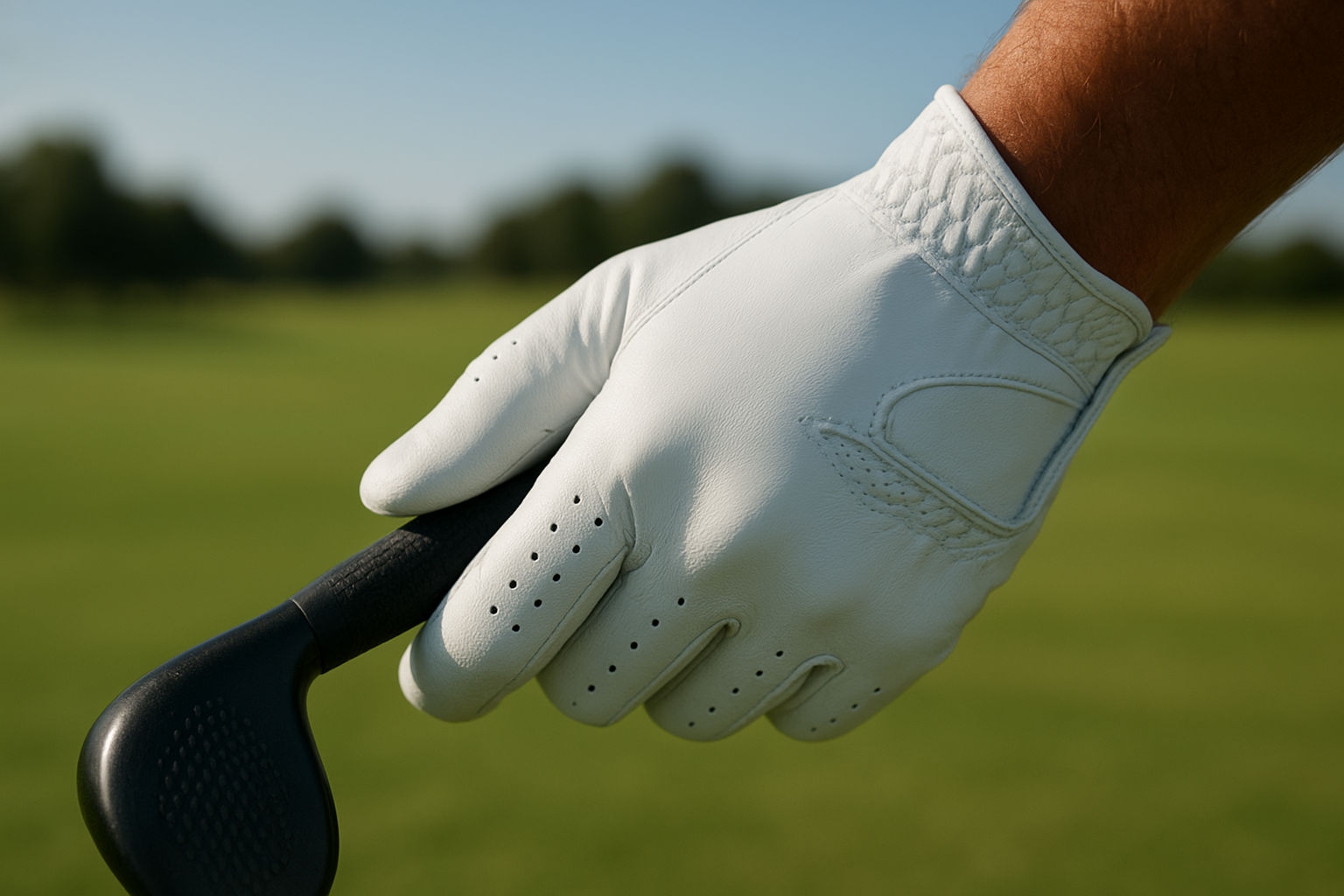
A well-fitted leather glove can feel like a second skin after just a few rounds of wear.
When you compare leather vs synthetic golf gloves on pure feel alone, leather wins for most golfers who prioritise touch over everything else.
The limitations of leather
Moisture is leather's biggest weakness. Rain, sweat, and humidity cause it to stretch, lose grip, and deteriorate faster than synthetic options. You also need to replace leather gloves more frequently, which adds up over a full season of regular play:
- Rain and sweat quickly soften and stretch the material
- Shorter lifespan means higher costs for frequent players
- Careful storage is essential to prevent cracking between rounds
Synthetic golf gloves explained
Synthetic golf gloves are made from man-made materials such as microfibre, polyester blends, or various nylon composites. These materials are engineered to resist moisture, maintain grip in wet conditions, and withstand repeated use without breaking down as quickly as natural leather. They tend to cost less, which makes them a popular starting point for newer golfers building their kit.
The benefits of synthetic
Synthetic gloves perform consistently across a wider range of weather conditions than leather, making them a practical choice for UK golfers who deal with rain and cold regularly. When you compare leather vs synthetic golf gloves in wet conditions specifically, synthetic often wins outright. They also dry faster and require less maintenance between rounds.
If you play two or three times a week in variable weather, a synthetic glove will likely outlast a leather one by several months.
The limitations of synthetic
Synthetic materials tend to sacrifice some feel and sensitivity in exchange for their durability benefits. The grip is reliable, but the feedback through impact is less precise than leather, which some experienced golfers find frustrating. Consider these common trade-offs:
- Thicker construction reduces tactile feedback from the club
- Less personalised fit since synthetic stretches differently to leather
- Feel plateaus quickly regardless of how much you wear it in
Leather vs synthetic: the key differences
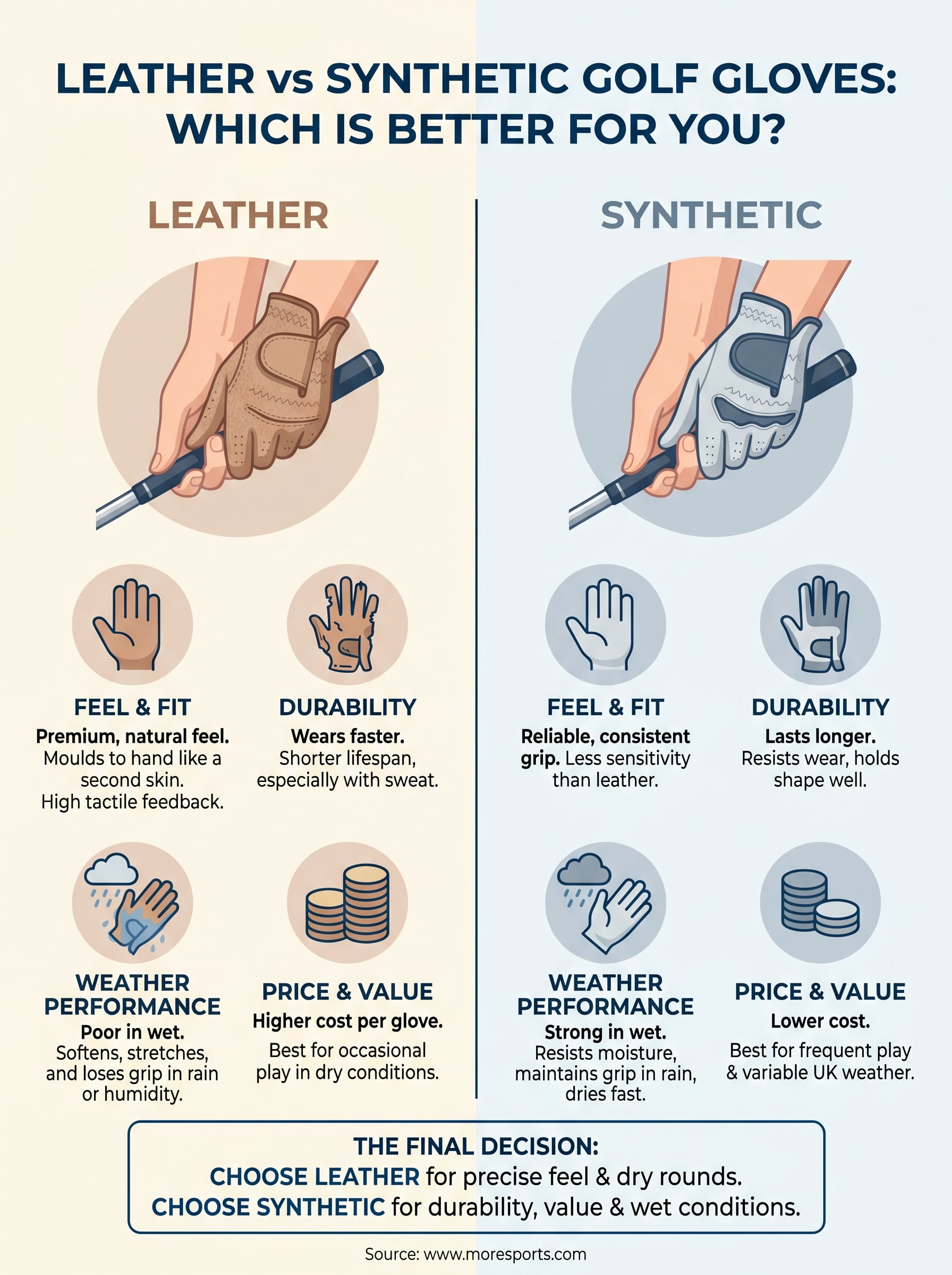
Side by side, the two materials show distinct strengths and clear weaknesses. Understanding where they diverge across feel, durability, price, and weather performance helps you match the right glove to your actual game rather than guessing at the shop.
Your playing conditions and how often you play should drive this decision more than brand or price alone.
Feel and feedback
Leather transmits grip pressure and club feedback more precisely, which is why lower-handicap golfers tend to prefer it. Synthetic gloves grip reliably but deliver less tactile information through impact, which suits players who want consistency without obsessing over touch.
The feel gap narrows significantly in wet weather, where leather loses its advantage quickly and synthetic becomes the more controlled choice. Your priority between sensitivity and reliability is the real deciding factor here.
Durability, price, and weather
When you compare leather vs synthetic golf gloves on practical terms, the differences sharpen further:
| Factor | Leather | Synthetic |
|---|---|---|
| Durability | Wears faster | Lasts longer |
| Price per glove | Higher | Lower |
| Wet weather grip | Poor | Strong |
| Feel quality | Premium | Reliable |
Synthetic gloves offer better long-term value for frequent players, while leather rewards golfers who play less often and want premium feel every round.
How to choose the right glove for your game
The leather vs synthetic golf gloves decision comes down to how often you play and what weather you regularly face. Answer both honestly and the right material becomes clear without overthinking it.
Consider your playing frequency
Golfers playing once a week or less get genuine value from leather before it wears out, with the feel justifying the cost. Players getting out twice a week or more will save meaningful money over a full season by going with synthetic instead.
If you burn through gloves quickly, synthetic is the more economical option without a significant drop in grip performance.
- Once weekly or less: choose leather for the premium feel
- Twice weekly or more: choose synthetic for durability and cost savings
Match the glove to your conditions
UK golfers playing through autumn and winter should lean toward synthetic. Rain and damp degrade leather quickly and strip away its feel advantage, leaving you with a glove that underperforms precisely when reliable grip matters most.
Drier conditions and summer rounds favour leather, where its sensitivity and personalised fit reward you every time you play. Your typical playing conditions are the clearest shortcut to making the right call.
Final takeaway
The leather vs synthetic golf gloves debate has no single right answer, but it does have a right answer for you. Leather suits golfers who play occasionally and want precise feel and a glove that fits like a second skin. Synthetic suits players who get out regularly, deal with wet UK weather, and want a glove that holds up without constant replacement.
Your playing frequency and typical conditions are the two factors that matter most. If you play through rain and cold regularly, synthetic wins. If you play dry summer rounds and care deeply about feel, leather is worth the extra cost. Some golfers keep both in the bag and switch based on the weather, which is a perfectly sensible approach.
Whichever material suits your game, you can find quality options from FootJoy, TaylorMade, and Under Armour at MoreSports, with competitive prices and free UK delivery over £25.