 No Duties or Customs Fees For EU & UK Customers
 Express Tracked UK Delivery On 1000s of Items
 90 Day Returns

Proper Fit in Outdoor Gear – Why Comfort Matters
BLGEvery serious hiker in the United Kingdom knows the difference a properly fitted jacket or pair of boots can make on a rugged trail. Fit goes far beyond numbers on a label and directly shapes your comfort, confidence, and safety outdoors. Recent research from the University of Manchester and Aston University reveals that proper fit is about matching your unique body shape and ensuring precise alignment with your gear. Discover how expert fitting advice can help you enjoy longer days and greater performance on the hills.
Table of Contents
- What Proper Fit Means In Outdoor Gear
- Types Of Outdoor Gear Fit And Sizing Systems
- How Fit Affects Comfort And Performance
- Health, Safety, And Injury Prevention
- Common Sizing Mistakes And How To Avoid Them
Key Takeaways
| Point | Details |
|---|---|
| Importance of Proper Fit | Proper fit in outdoor gear is crucial for comfort, performance, and safety, going beyond mere numerical sizing to accommodate individual body shapes. |
| Impact of Gear Fit on Performance | Incorrectly fitting gear can hinder mobility, increase energy expenditure, and create safety risks in challenging outdoor environments. |
| Advanced Sizing Systems | Modern sizing systems, including digital 3D body mapping, provide more personalised fit options, enhancing comfort and performance. |
| Avoiding Sizing Mistakes | To ensure optimal fit, consider individual body measurements, specific movement requirements, and potential layering when selecting outdoor gear. |
What Proper Fit Means in Outdoor Gear
Proper fit in outdoor gear extends far beyond simply selecting the right numerical size. It represents a nuanced interaction between the garment and an individual’s unique body shape, ensuring maximum comfort, performance, and safety during outdoor activities.
Research from the University of Manchester reveals that body shape critically influences garment fit experiences. A proper fit means not just matching a standard size chart, but achieving precise body alignment that accommodates individual physical characteristics.
Key aspects of proper fit include:
- Unrestricted range of motion
- Minimal internal friction against skin
- Even weight distribution
- Appropriate thermal regulation
- Minimal excess fabric or unnecessary compression
Protective outdoor equipment requires especially meticulous fit considerations. A groundbreaking study from Aston University demonstrated that proper fit in safety gear involves maintaining a uniform, minimal distance between the equipment and body, ensuring comprehensive coverage and optimal functionality.
When assessing outdoor gear fit, consider these critical factors:
- Shoulder and chest measurements
- Arm and leg length proportions
- Movement flexibility requirements
- Intended activity intensity
- Expected environmental conditions
Performance hinges on precision. Ill-fitting gear can compromise mobility, introduce chafing risks, and potentially create dangerous scenarios in challenging outdoor environments.
Pro tip: Always try gear on with the specific base layers and undertake mobility tests before purchasing to ensure comprehensive fit compatibility.
Types of Outdoor Gear Fit and Sizing Systems
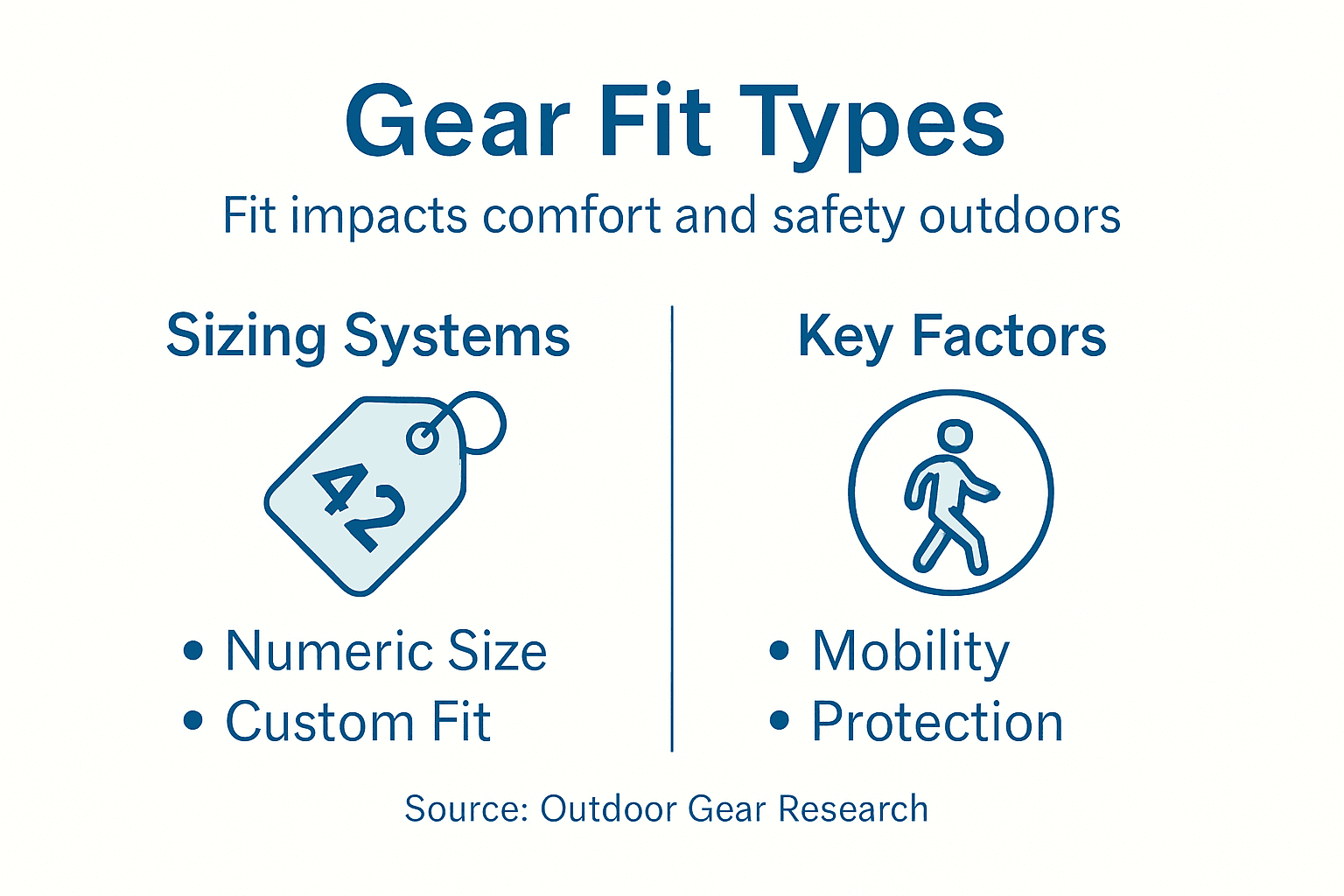
Outdoor gear sizing systems have evolved significantly beyond traditional measurement approaches, recognising the complex variations in human body shapes and movement requirements. Advanced body scanning techniques now enable manufacturers to develop more precise and personalised sizing solutions that accommodate diverse physical characteristics.
Key outdoor gear sizing systems include:
- Standard numerical sizing (S, M, L, XL)
- Anthropometric measurement systems
- Performance-based sizing models
- Digital 3D body mapping approaches
- Adaptive compression fit technologies
Traditional sizing methods often fail to account for individual body nuances. Research demonstrates that simple numerical sizes cannot adequately represent the intricate relationship between garment dimensions and human physiology, particularly in high-performance outdoor equipment where precise fit is crucial.
Here is a comparison of key outdoor gear sizing systems and their unique advantages:
| Sizing System | Personalisation Level | Common Use Cases | Key Limitation |
|---|---|---|---|
| Standard numerical sizing | Low | Basic jackets, general clothing | Ignores body shape variations |
| Anthropometric measurement | Moderate | Technical clothing, helmets | Relies on average population models |
| Digital 3D body mapping | High | Bespoke fit, high-performance gear | Requires advanced scanning equipment |
| Adaptive compression fit | Adjustable | Compression wear, protective layers | May not suit all body types |
Outdoor gear manufacturers increasingly utilise sophisticated computational methods to analyse fit. A groundbreaking study from Aston University highlighted the importance of computational fit analysis in designing equipment that provides optimal safety and comfort across varied body types.
Specific considerations in outdoor gear sizing include:
- Range of motion requirements
- Thermal regulation needs
- Activity-specific movement patterns
- Weight distribution characteristics
- Potential layering combinations
Precision matters. Ill-conceived sizing systems can compromise performance, comfort, and potentially safety in challenging outdoor environments.
Pro tip: Consult manufacturer-specific size charts and consider trying multiple sizes to find your ideal performance fit.
How Fit Affects Comfort and Performance
The relationship between gear fit and performance is far more complex than most outdoor enthusiasts realise. Performance directly correlates with body shape alignment, demonstrating that proper fit is not just about comfort, but fundamentally about maximising physical capabilities during outdoor activities.
Key performance impacts of incorrect gear fit include:
- Restricted muscle movement
- Increased energy expenditure
- Potential chafing and skin irritation
- Reduced thermal regulation
- Compromised safety in challenging environments
Research consistently shows that poorly fitted gear creates multiple performance barriers. The additional physical effort required to compensate for ill-fitting equipment can significantly drain an athlete’s energy reserves, potentially reducing overall endurance and effectiveness during outdoor pursuits.
Safety considerations are equally critical. Computational fit analysis reveals that incorrect equipment fit can dramatically reduce protection levels, especially in high-risk activities like hiking, climbing, and extreme sports.
The following table summarises how incorrect outdoor gear fit can impact comfort, safety, and overall performance:
| Fit Issue | Comfort Impact | Safety Consequence | Performance Effect |
|---|---|---|---|
| Too tight | Causes irritation | Limits movement, may restrict circulation | Raises energy expenditure |
| Too loose | Creates instability | Slips, exposes vulnerable areas | Reduces efficiency and protection |
| Incorrect alignment | Uneven pressure on body | Incomplete coverage | Inhibits natural movement |
Performance degradation occurs through multiple mechanisms:
- Increased muscular tension
- Reduced range of motion
- Mental distraction from physical discomfort
- Inefficient body temperature regulation
- Heightened risk of injury
Precision engineering matters. Every millimetre of gear fit can translate directly into performance outcomes.
Pro tip: Invest time in professional fitting and always test gear under realistic conditions before committing to long expeditions.
Health, Safety, and Injury Prevention
Outdoor gear plays a critical role in protecting users from potential risks and injuries during challenging activities. Protective equipment fit directly influences safety outcomes, with poorly fitted gear potentially compromising an individual’s ability to prevent or mitigate potential hazards.
Key safety considerations in outdoor gear include:
- Impact protection capabilities
- Stability during movement
- Consistent coverage of vulnerable body areas
- Ability to withstand environmental stressors
- Maintaining structural integrity during sudden movements
Research demonstrates that incorrectly fitted protective equipment can create significant risks. The additional mental and physical strain caused by unstable or uncomfortable gear can distract users, potentially increasing the likelihood of accidents in already challenging environments.
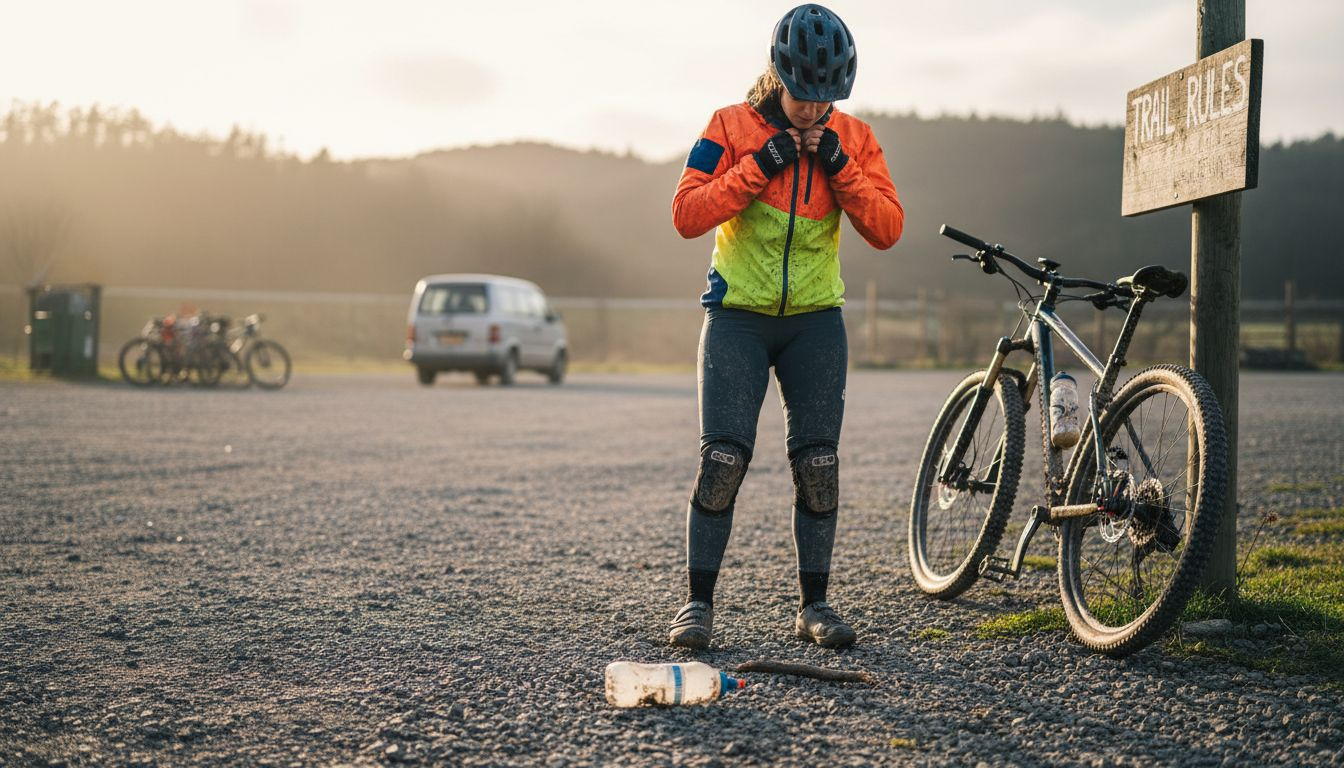
Computational fit analysis techniques reveal critical insights into how gear performance directly impacts injury prevention. Proper fit ensures that protective elements remain precisely positioned to absorb and distribute potential impact forces.
Injury prevention strategies involve:
- Selecting gear with adjustable fit mechanisms
- Regular equipment inspection
- Understanding specific activity risk profiles
- Matching gear to individual body mechanics
- Replacing worn or damaged protective elements
Precision protects. Every millimetre of gear alignment can mean the difference between safety and serious injury.
Pro tip: Always prioritise professional fitting and conduct thorough equipment checks before engaging in high-risk outdoor activities.
Common Sizing Mistakes and How to Avoid Them
Choosing the right gear size involves more complexity than simply matching numbers on a size chart. Body shape variations significantly impact fitting accuracy, challenging traditional sizing approaches and requiring a more nuanced understanding of individual physiology.
Common sizing mistakes include:
- Relying exclusively on standard numerical sizes
- Ignoring body shape differences
- Overlooking activity-specific movement requirements
- Neglecting layering considerations
- Assuming universal sizing across brands
Many outdoor enthusiasts fall into predictable sizing traps that compromise their equipment’s performance and comfort. Protective gear design often fails to consider individual body variations, leading to ill-fitting equipment that can reduce effectiveness and potentially increase safety risks.
Effective sizing strategies require:
- Comprehensive body measurements
- Understanding brand-specific sizing variations
- Considering intended activity type
- Accounting for potential layering
- Allowing range of motion testing
Precision matters. Every centimetre can dramatically influence gear performance and comfort.
Pro tip: Always prioritise trying gear on and performing mobility tests rather than relying solely on numerical size recommendations.
Discover Outdoor Gear That Fits Perfectly for Unmatched Comfort and Performance
Finding the right fit in outdoor gear is essential to avoid discomfort, restricted movement, and safety risks highlighted in the article. At MoreSports, we understand how proper fit means more than just a size. It is about achieving optimal body alignment for peak performance and protection during your outdoor adventures.
Explore our wide selection of premium hiking apparel, workwear, and safety boots designed with precise sizing and adaptability in mind. Whether you need gear that offers unrestricted motion, excellent thermal regulation, or dependable impact protection, MoreSports provides trusted brands that meet these exacting standards. Don’t compromise your comfort or safety — visit MoreSports now and take advantage of free UK delivery on orders over £25, flexible returns, and expert UK-based support to ensure you get the perfect fit the first time.
Frequently Asked Questions
What does a proper fit in outdoor gear mean?
A proper fit in outdoor gear means more than matching numerical sizes. It ensures maximum comfort, performance, and safety by accommodating individual body shapes and providing unrestricted motion, minimal friction, and appropriate thermal regulation.
Why is fit important for outdoor safety?
Proper fit in outdoor gear is critical for ensuring safety, particularly in high-risk activities. Ill-fitting gear can increase the likelihood of accidents by limiting mobility, reducing stability, and compromising protective coverage.
How does gear fit impact outdoor performance?
Correctly fitting gear enhances performance by ensuring ease of movement, optimising energy expenditure, and preventing discomfort that can distract the user. Poorly fitting equipment can result in muscle restriction and increased fatigue.
What should I consider when choosing outdoor gear size?
When selecting outdoor gear, consider factors like your shoulder and chest measurements, arm and leg lengths, intended activity type, and whether you need layering options. Always test the gear with base layers and perform mobility tests to ensure a proper fit.