 No Duties or Customs Fees For EU & UK Customers
 Free UK Delivery On Orders Over £25
 90 Day Returns

Stand Bag vs Cart Bag: Compare Weight, Storage, And Comfort
RYChoosing between a stand bag vs cart bag affects every round you play. It's not just about aesthetics, the wrong bag type can leave you uncomfortable on the course or frustrated with limited storage space.
Walking golfers need lightweight options with sturdy retractable legs, while those who prefer riding in a buggy want maximum organisation and stability. The decision ultimately comes down to how you actually play, not what looks good in the pro shop.
This guide breaks down the key differences in weight, storage, and comfort between both bag types. At More Sports, we stock golf bags from leading brands like TaylorMade, Titleist, and MacGregor, so we've put together this comparison to help you find the right fit for your game.
What makes stand bags and cart bags different
The stand bag vs cart bag debate centres on two fundamentally different designs. Stand bags feature built-in retractable legs that deploy automatically when you set the bag down, keeping your clubs upright and accessible during walking rounds. Cart bags, on the other hand, have a flat, stable base designed to sit securely on trolleys or buggies without any leg mechanism.
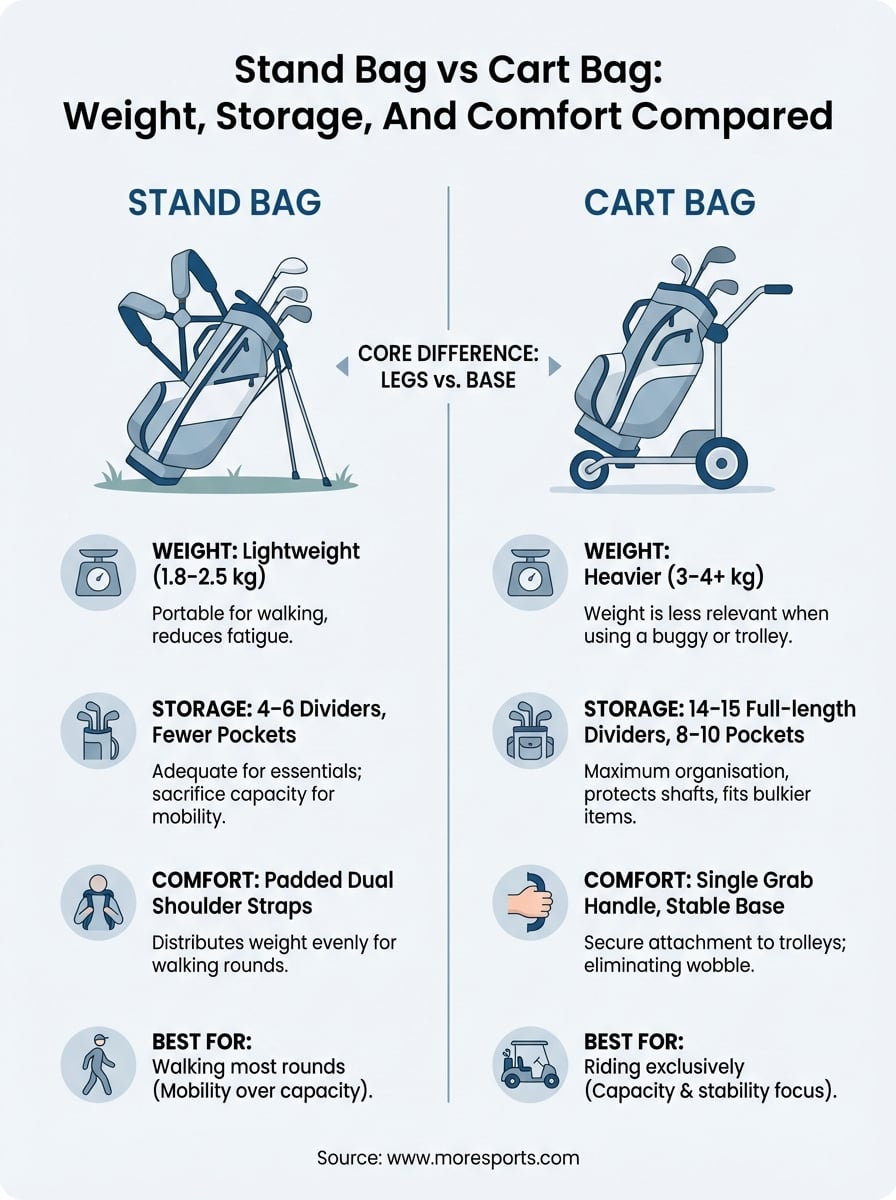
Your playing style dictates which design serves you better. Stand bags typically weigh between 1.8 to 2.5 kilograms, making them significantly lighter than cart bags, which can reach 3 to 4 kilograms or more. The weight difference matters when you're carrying your bag across 18 holes, but it becomes less relevant if you're using a pushcart or riding in a buggy for every round.
Stand bags sacrifice some storage capacity for portability, while cart bags offer maximum organisation at the expense of weight.
Stand bags are built for walking
Stand bags use dual shoulder straps that distribute weight evenly across your back and shoulders, reducing fatigue during long rounds on foot. The retractable leg system activates when the bag tilts forward, providing instant stability on any terrain without you needing to lean it against your trolley or a tree.
Most stand bags include four to six dividers in the top section, which gives you enough club organisation without adding unnecessary bulk. You'll find fewer pockets compared to cart bags, typically around four to six compartments for balls, tees, waterproofs, and small accessories. The streamlined design keeps everything you need within reach without weighing you down.
Cart bags prioritise storage and stability
Cart bags feature 14-way or 15-way full-length dividers that separate each club from top to bottom, preventing shaft damage and making club selection effortless. The flat base sits flush against your trolley or buggy, eliminating any wobble during your round and keeping your equipment secure on uneven paths.

Storage capacity sets cart bags apart from their lighter counterparts. You get eight to ten dedicated pockets for everything from extra layers and umbrellas to rangefinders and snacks. The additional space means you can bring more gear without strategic packing, though you'll feel the extra weight if you ever need to carry the bag between the car park and first tee.
Why the right bag choice matters on the course
Your bag choice directly impacts your physical comfort and performance throughout every round. Using the wrong type creates unnecessary strain, slows your pace, and can even limit which courses or competitions you can access without hassle.
Physical strain adds up over 18 holes
Carrying a heavy cart bag designed for trolleys forces your body to support extra weight that walking-specific designs eliminate. You'll feel the difference in your shoulders, back, and legs by the turn, particularly on hilly courses where every kilogram matters. Stand bags distribute weight more efficiently through dual shoulder straps, reducing fatigue and keeping you fresh for better shots on the back nine.
The wrong bag type can compromise your swing mechanics when accumulated fatigue affects your posture and balance.
Course requirements may restrict your options
Some championship courses and competitions prohibit pushcarts or require walking-only rounds, making cart bags impractical for serious players. You need a proper stand bag if you plan to enter club tournaments or play traditional links courses where carts aren't permitted. Similarly, if you exclusively ride in buggies, the stand bag vs cart bag decision becomes straightforward since carrying a lightweight option with minimal storage makes little sense.
Rental pushcarts aren't always available at every course, and relying on them limits your flexibility. Your bag choice should match how you actually play most often, not just special occasions, so you're never caught struggling with unsuitable equipment mid-round.
Weight, storage, and comfort compared side by side
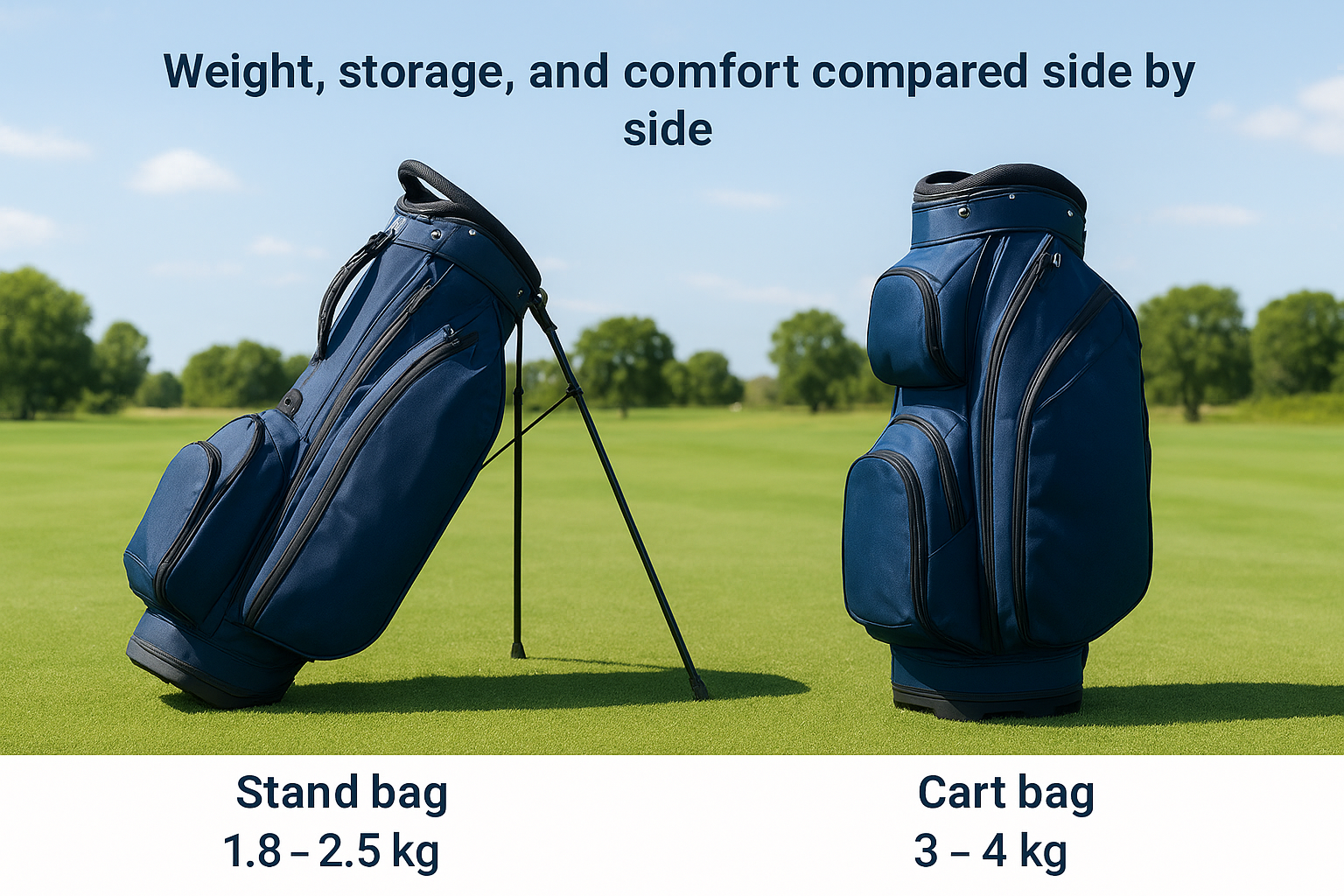
The stand bag vs cart bag comparison reveals clear trade-offs across three critical areas. Stand bags deliver portable lightweight performance at around 1.8 to 2.5 kilograms, while cart bags range from 3 to 4 kilograms but compensate with superior organisation and capacity.
Weight differences affect your carrying experience
Stand bags keep you mobile with minimal bulk, making them ideal when you're walking 18 holes or navigating stairs between car parks and clubhouses. The reduced weight means less strain on your shoulders and back, particularly during summer rounds when you're already carrying extra layers and waterproofs. Cart bags add 1 to 2 kilograms extra, which becomes noticeable only when you need to carry them for extended distances between holes or to your vehicle.
Every kilogram counts when you're walking five to six miles across undulating terrain.
Storage capacity determines what you can bring
Cart bags offer 14 to 15 full-length dividers that protect each club individually, plus eight to ten pockets for everything from spare gloves to full rain suits. Stand bags typically include four to six dividers and fewer pockets, requiring you to pack selectively and leave non-essential items at home. You'll fit balls, tees, a waterproof jacket, and small accessories comfortably in both types, but cart bags accommodate umbrellas, extra shoes, and bulkier items without struggle.
Comfort features vary between designs
Stand bags use padded dual shoulder straps that distribute weight evenly across your body, reducing pressure points during walking rounds. Cart bags rely on single grab handles since you're not carrying them for long stretches, focusing instead on secure attachment points for trolleys and stable bases that prevent tipping.
How to choose based on how you actually play
Your typical round determines which stand bag vs cart bag design serves you best. Assess your last ten rounds honestly to identify patterns in how you transport your clubs, the courses you frequent, and whether you walk or ride more often.
Walking most rounds demands a stand bag
Choose a stand bag if you walk at least half your rounds without a pushcart or trolley. The lighter weight prevents shoulder fatigue across 18 holes, whilst the retractable leg system gives you instant stability on every tee box and fairway. You'll appreciate the portability when carrying your bag between the car park and first tee, particularly at courses with steep terrain or limited trolley access.
Stand bags suit golfers who prioritise mobility over carrying extra equipment they rarely use during rounds.
Riding exclusively calls for a cart bag
Select a cart bag when you always use a buggy or trolley for every round. The additional weight becomes irrelevant since you're not carrying it, and the expanded storage capacity lets you bring spare shoes, extra layers, and bulkier accessories without compromise. You'll benefit from the 14-way dividers that protect club shafts and simplify club selection throughout your round.
Split your play between walking and riding
Pick a stand bag with adequate storage if you alternate between walking and riding depending on the course or weather. Modern stand bags from brands like TaylorMay include enough pockets for essential gear whilst maintaining the lightweight design you need for walking rounds. Avoid cart bags unless you walk fewer than two rounds per month, as the extra weight creates unnecessary strain when you do carry your clubs.
Key features to check before you buy
Inspecting specific features before purchasing helps you avoid buyer's remorse and ensures your bag performs well for years. Focus on practical elements that directly impact your experience during rounds rather than cosmetic details that add cost without function.
Divider system and club protection
Check how many dividers the bag includes and whether they run full length from top to bottom. Full-length dividers prevent club shafts from tangling and reduce scratching, particularly important for expensive graphite shafts. Stand bags typically offer 4 to 6-way tops, whilst cart bags provide 14 or 15 individual slots that keep each club completely separated throughout your round.
Dividers that extend the full depth of the bag deliver superior protection compared to top-only separation systems.
Strap design and carry comfort
Examine the shoulder strap system carefully if you plan to walk with your bag. Look for padded dual straps with adjustable length settings that accommodate your height and build. The padding should extend across your entire shoulder area, not just narrow strips that create pressure points. Cart bags need secure attachment straps for trolleys, but carry comfort matters less since you won't shoulder them frequently.
Pocket layout and weather resistance
Count the pockets and assess their accessibility when the bag sits on your trolley or stands upright. You want waterproof pockets for valuables like your phone and wallet, plus easy-reach compartments for balls and tees. Quality water-resistant fabrics and reinforced bases prevent damage during wet rounds, extending your bag's lifespan regardless of whether you choose the stand bag vs cart bag option.
Quick wrap-up
The stand bag vs cart bag decision ultimately depends on how you transport your clubs during most rounds. Walking golfers need the lightweight portability and retractable legs that stand bags deliver, whilst those who consistently ride in buggies benefit from cart bags' superior storage capacity and trolley stability. Your typical playing style dictates which design serves you best throughout the season.
Weight, storage, and comfort features all matter when selecting the right bag. Stand bags keep you mobile at under 2.5 kilograms with adequate pockets for essentials, whilst cart bags offer maximum organisation through 14-way dividers and expanded compartments for bulkier items. Both designs serve their specific purposes effectively when properly matched to your actual needs on the course.
Browse our golf bag collection at More Sports to find options from TaylorMade, Titleist, and MacGregor that suit your playing style, with free UK delivery available on all orders over £25.