 No Duties or Customs Fees For EU & UK Customers
 Express Tracked UK Delivery On 1000s of Items
 90 Day Returns

Vintage Golf Clothing: What It Is and Where to Buy It
RYGolf fashion keeps looping back on itself. Argyle jumpers, plus-fours, and bold colour-blocked polos that once filled 1970s clubhouses are turning up again on fairways and in feeds. If you've been searching for vintage golf clothing and finding either overpriced eBay listings or fast-fashion knockoffs that miss the details, you're not alone.
This article explains what actually counts as vintage or retro golf clothing, from original decades-old pieces to modern brands that recreate that classic look with proper fit and fabric. You'll learn how to spot genuine vintage garments, tell them apart from retro-inspired reissues, and understand which eras and styles define the look, whether that's 1920s tweed or 1980s pastel polos.
We'll also point you towards where to actually buy it, covering specialist vintage sellers, marketplaces, and brands doing strong mens vintage golf clothing collections right now, along with what to check before you spend money on a vintage golf clothing for sale listing. Whether you want a full retro outfit for a themed round or just one standout piece, you'll leave knowing exactly what to look for and where to find it, and how it fits alongside UK golf dress codes.
Why vintage golf clothing is back in fashion
Golf style has spent the last decade borrowing heavily from skate and streetwear culture, and that shift has pulled vintage golf clothing along with it. Brands like Palace, Malbon, and Eastside Golf have made loud knits and boxy polos cool again, and that's sent shoppers hunting for the real thing from the decades that inspired them. What was once dismissed as "dad golf gear" is now showing up on Instagram feeds and in golf shop windows as a deliberate style choice rather than a hand-me-down.
Retro golf fashion isn't nostalgia for nostalgia's sake, it's a rejection of the plain, performance-fabric look that dominated golf for twenty years.
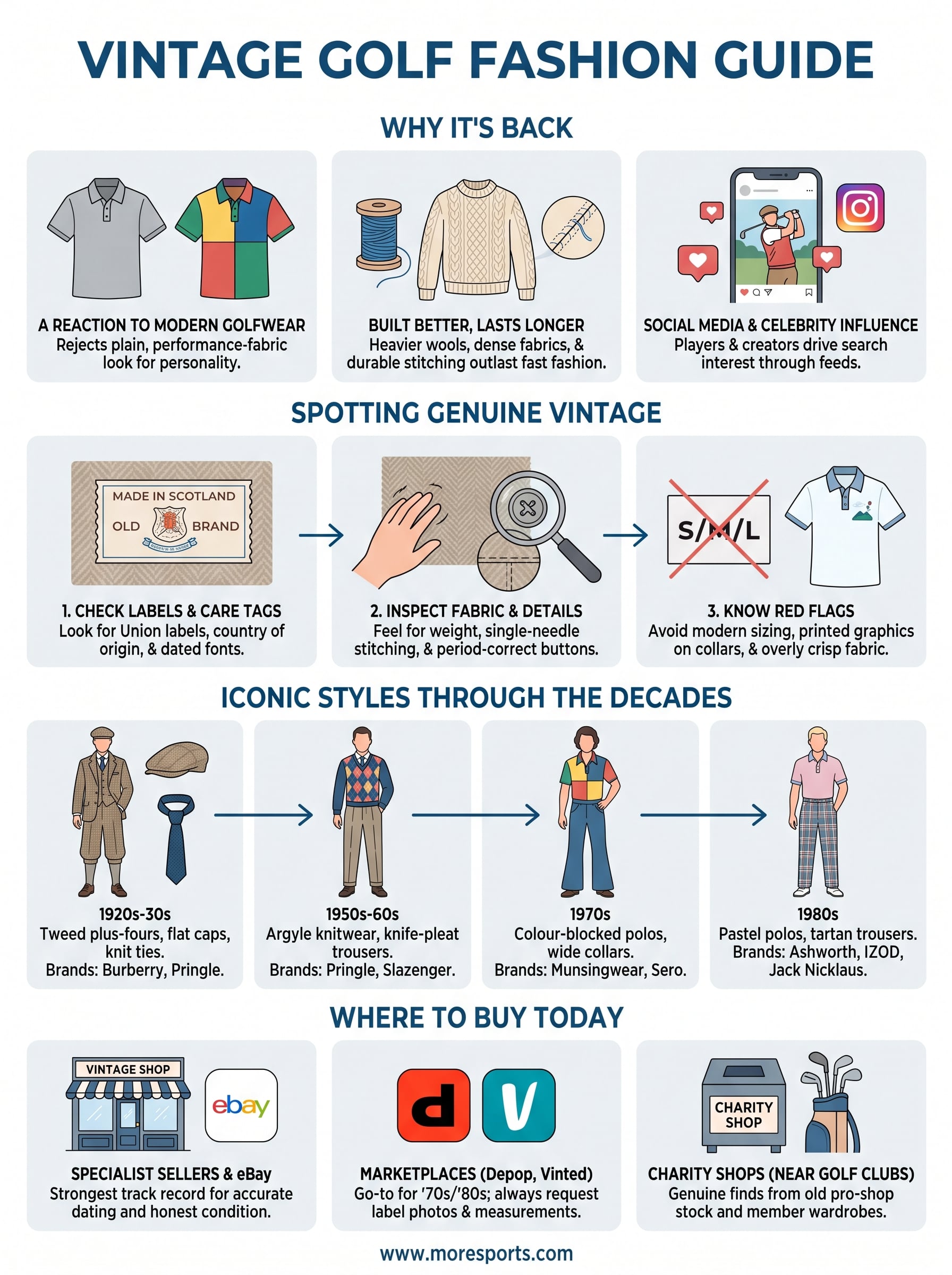
A reaction to modern golfwear
Much of mainstream golf apparel over the past two decades has leaned on the same formula: tailored, monochrome, technical fabric, subtle logo. It performs well but says very little. Retro golf clothing offers the opposite: colour blocking, bold patterns, wide collars, and shapes that stand out on the course. For golfers bored of looking identical to everyone else on the tee, a 1970s argyle jumper or a pair of plus-fours is an easy way to bring personality back into the round.
Built better, and it shows
There's also a practical argument. Garments from the 1960s through to the 1980s were often made with heavier wool blends, thicker cotton piqué, and proper stitching that simply outlasts a lot of modern fast fashion. Shoppers who've been burned by polos that bobble after three washes are increasingly drawn to pieces built when clothing was made to last a season of hard wear, not a single trend cycle. That durability is a big part of why golf vintage clothing holds its value and why original pieces from certain decades still turn up in wearable condition fifty years later.
Social media and celebrity influence
Players and creators showing up to casual rounds in throwback gear have accelerated the trend further. When a well-known golfer posts a round in a 1980s pastel polo or a pair of tartan trousers, search interest in that look spikes within days. Golf media has followed suit, running features on archive collections and vintage pro-shop finds, which keeps pushing new audiences towards vintage golf clothing for sale listings rather than the latest performance line. If you're building out a wardrobe with that look in mind, browsing MoreSports' golf equipment and clothing range alongside genuine vintage pieces is a good way to mix authentic finds with modern fits that nod to the same era.
How to spot genuine vintage golf pieces
Once you start looking, it's easy to confuse a genuinely old garment with a modern reproduction styled to look retro. Telling the two apart matters if you're paying vintage prices, so knowing what separates authentic vintage golf clothing from a clever reissue saves you from overpaying for something made last year.
A real vintage garment tells its age through details you can't fake: the label, the stitching, and the wear pattern.
Check the labels and care tags
Start with the label design, since brand logos and typefaces change over decades and older tags often list a union label, a specific country of manufacture, or a wash symbol style that fell out of use years ago. A care tag reading "Made in England" or "Made in Scotland" on a wool jumper, paired with a dated logo, is a strong sign you've found an original rather than a modern nod to the era.
Inspect fabric, stitching, and buttons
Feel the fabric weight before anything else. Genuine pieces from the 1960s to 1980s tend to use heavier wool blends or dense cotton piqué that feels noticeably thicker than today's stretch polyester blends. Stitching is another giveaway: look for single-needle tailoring, metal shank buttons, and hand-finished hems rather than the overlocked seams common on cheap reissues.
Know the common red flags
Before buying, run through a quick checklist:
- Overly crisp, unworn fabric on a listing claiming 40+ years of age
- Modern sizing labels (like "S/M/L") instead of period-accurate numeric sizing
- Printed graphics instead of embroidered logos on collared shirts
- Zips or fastenings using materials that weren't common until decades later
Getting comfortable with these checks turns buying mens vintage golf clothing from guesswork into something you can judge confidently, even from a photo.
Iconic vintage golf styles and brands to know
Every decade of golf vintage clothing has its own signature, and recognising them helps you buy pieces that actually match the era you're after rather than a vague "old golf jumper" look. The 1920s and 30s gave us tweed plus-fours and flat caps, ancestors of today's golf trousers for men, the 1950s brought argyle knitwear into the mainstream, and the 1970s and 80s pushed colour blocking and bold prints further than golf fashion had gone before or since.
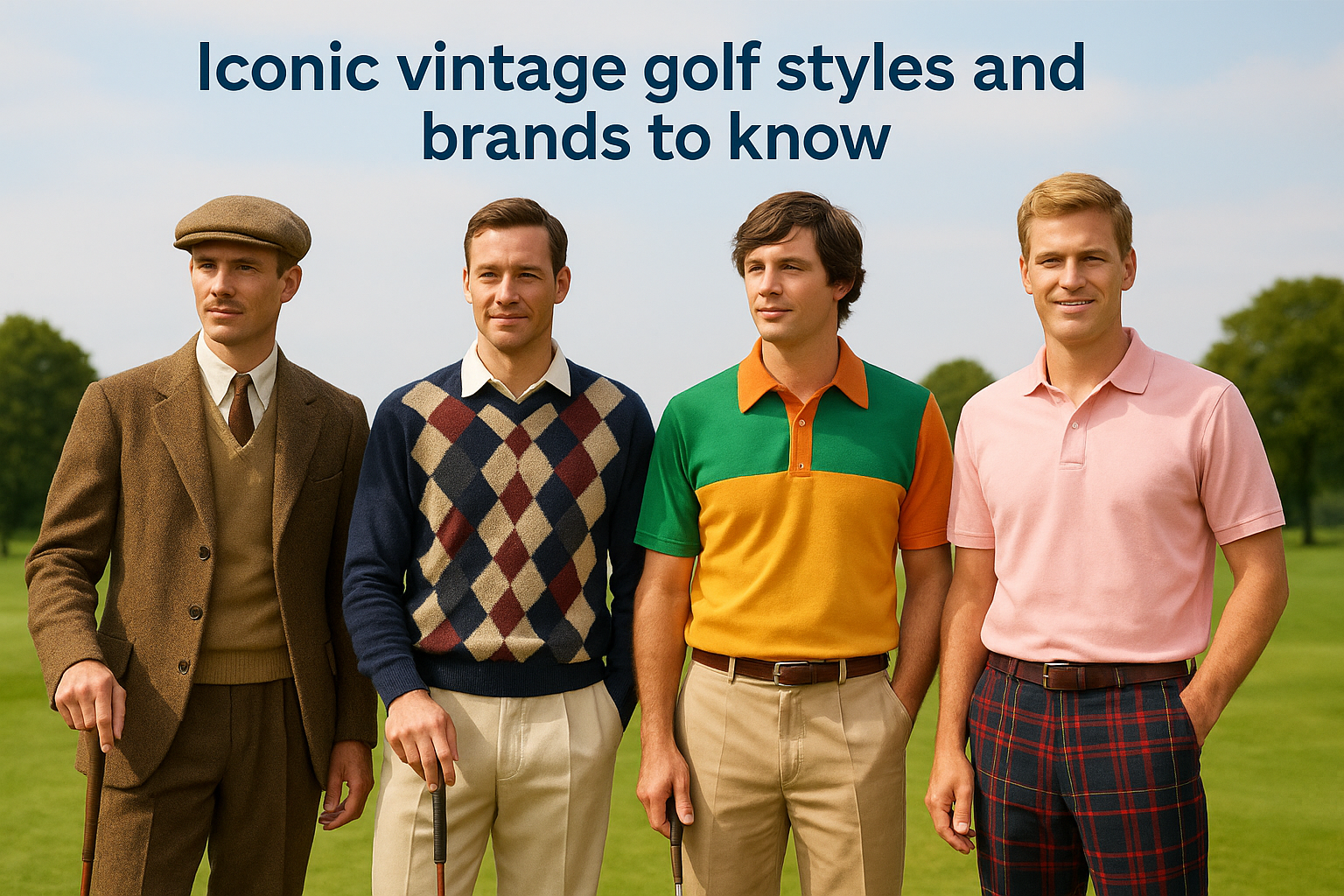
| Decade | Signature style | Brands to look for |
|---|---|---|
| 1920s-30s | Tweed plus-fours, flat caps, knit ties | Burberry, Pringle of Scotland |
| 1950s-60s | Argyle jumpers, knife-pleat trousers | Pringle, Slazenger |
| 1970s | Colour-blocked polos, wide collars | Munsingwear, Sero |
| 1980s | Pastel polos, tartan trousers | Ashworth, IZOD, Jack Nicklaus |
Pringle of Scotland deserves special mention, since its argyle knitwear practically defined retro golf clothing for decades and remains one of the most faked patterns on resale sites. Munsingwear's penguin logo polos from the 1970s are another benchmark piece, prized for their boxy cut and heavyweight cotton piqué, a cut modern polo shirts for golf still borrow from.
If you only learn one brand history before buying, learn Pringle's, since its argyle pattern is the single most imitated design in vintage golf clothing.
Spotting these names on a label, alongside the fabric and stitching checks covered earlier, gives you real confidence when searching for vintage golf clothing for sale, and a useful benchmark against the golf brands available today. It also helps you decide which era suits your own build and colouring, since a 1920s silhouette sits very differently on the body than a boxy 1980s polo.
Where to buy vintage golf clothing today
Sourcing genuine vintage golf clothing takes more effort than a single search, since the best pieces rarely sit in one place. Specialist vintage clothing sellers, whether independent shops or dedicated eBay stores, tend to have the strongest track record for accurate dating and honest condition notes, and many photograph labels and stitching up close so you can apply the checks covered earlier before you buy.
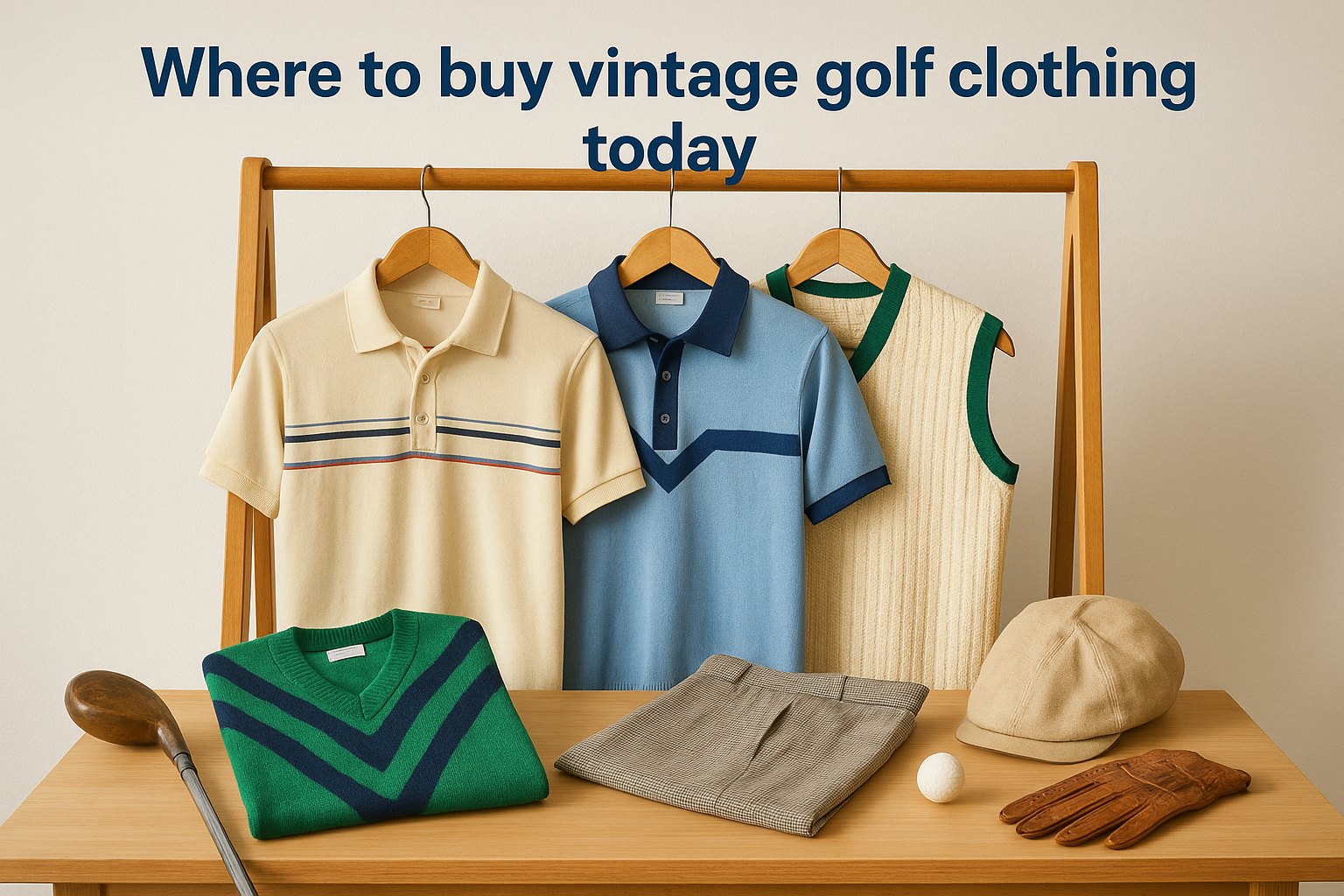
Depop and Vinted have become go-to marketplaces for vintage golf clothing for sale, particularly for 1970s and 1980s polos, though listings vary wildly in accuracy, so message the seller directly if a label photo isn't included. Charity shops near golf clubs are a genuine goldmine too, since donated pro-shop stock and old member wardrobes often turn up pieces with no online competition driving the price up.
The sellers worth trusting are the ones who photograph the label, not just the outfit.
Brand archive sales and vintage-focused pop-ups, often tied to golf events or heritage brand collaborations, are worth watching if you want something rarer than the usual resale rotation, while the best online golf shops in the UK cover everything else. A quick pre-purchase checklist keeps things simple:
- Ask for close-up photos of labels, buttons, and any wear or repairs
- Confirm measurements rather than relying on the listed size
- Check return policy before paying, since vintage sales are often final
- Compare the price against recent sold listings for the same brand and decade
If you'd rather build a retro-inspired look without the hunt, MoreSports stocks modern golf clothing that leans on those same silhouettes and colourways, giving you a reliable middle ground between chasing rare originals and wearing something that captures the same spirit off the shelf.
Finding your own vintage golf style
Good vintage buying comes down to patience, not luck. Check labels, feel the fabric, and compare prices against recent sold listings before you commit, and you'll avoid the overpriced or fake pieces that put so many shoppers off vintage golf clothing in the first place. Whether you land on 1920s tweed, 1950s argyle, or a loud 1980s polo, pick the era that actually suits your build and your golf, not just what's trending this month.
Start small if you're new to this: one genuine piece worn well beats a full costume that misses the details. And if the hunt for original garments feels like too much effort right now, there's no shame in filling gaps with modern pieces that nod to the same look. Browse MoreSports for men's golf clothing that captures that retro spirit without the guesswork of buying second-hand.