 No Duties or Customs Fees For EU & UK Customers
 Express Tracked UK Delivery On 1000s of Items
 90 Day Returns

9 Best Walking Shoes For Flat Feet In The UK (2026)
RYFlat feet change everything about how a shoe should fit. Without a proper arch, your foot rolls inward with every step, and the wrong pair leaves you with sore heels, aching knees, or shin pain after a few miles. If you're hunting for walking shoes for flat feet, you already know that generic trainers won't cut it. You need proper arch support built into the structure, not just a soft insole.
This guide gets straight to the point: nine walking shoes that genuinely support flat, overpronating feet, based on stability features and materials rather than marketing claims. Each pick includes firm midsoles, structured heel counters, and motion control designed to stop your foot collapsing inward, so you can walk further without paying for it later.
We've pulled together options across price points and styles, from lightweight trail shoes to everyday walkers, all available through UK stockists with sizing that suits British and Irish feet. Whether you're managing plantar fasciitis, breaking in new orthotics, or simply tired of shoes that wear unevenly, you'll find a pair here that fits your feet properly, not just your budget.
1. What flat feet mean for your walking shoes
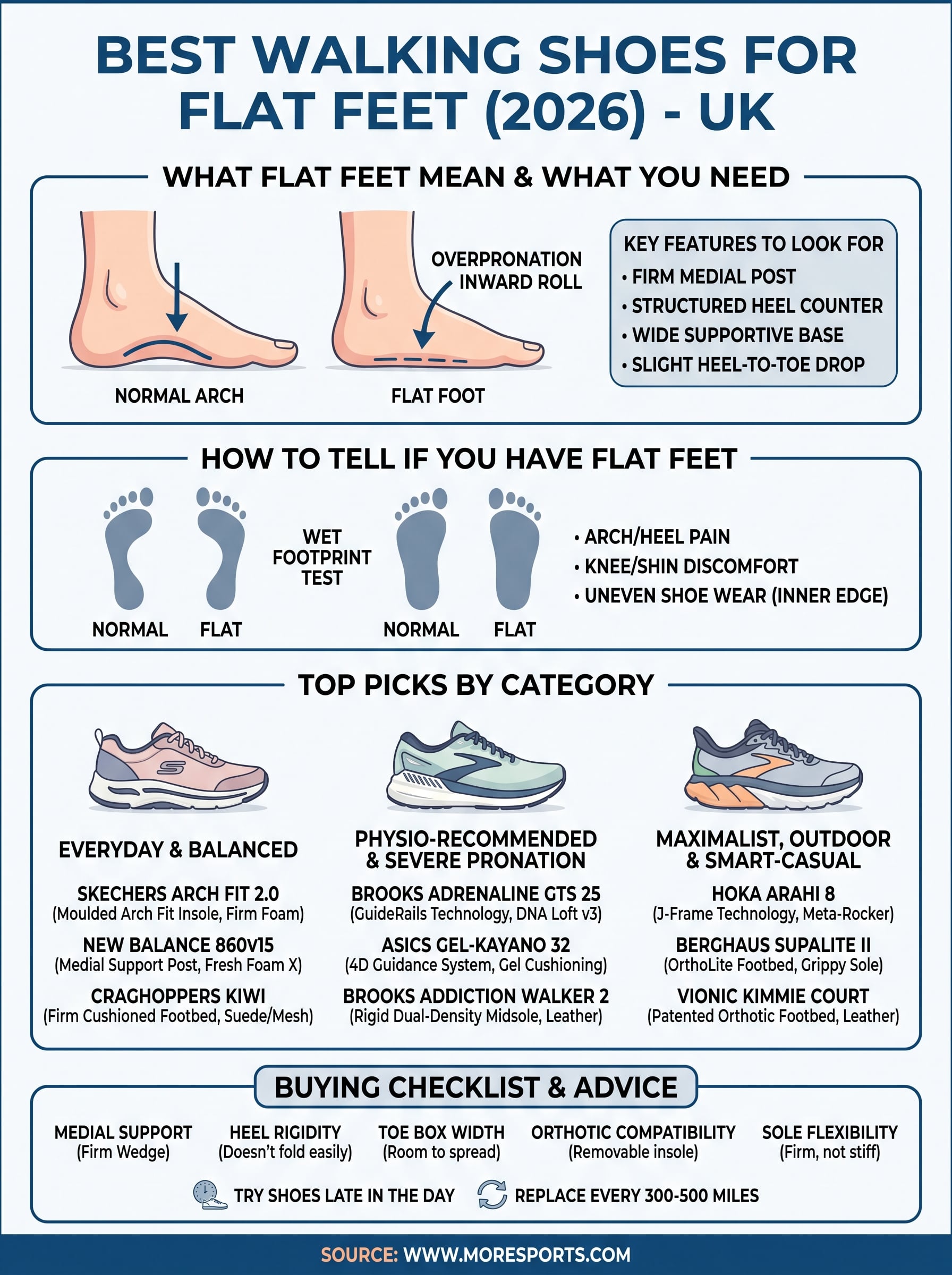
Flat feet occur when the arch on the inside of your foot sits low or collapses completely when you stand. Instead of a curved gap between your foot and the ground, the whole sole makes contact, which changes how force travels through your leg with every step. This flattening usually pairs with overpronation, where your ankle rolls inward past the point it should stop. That inward roll doesn't stay isolated in your foot either; it works its way up through your shins, knees, and hips, which explains why so many people with flat feet end up with pain far from where the actual problem starts.
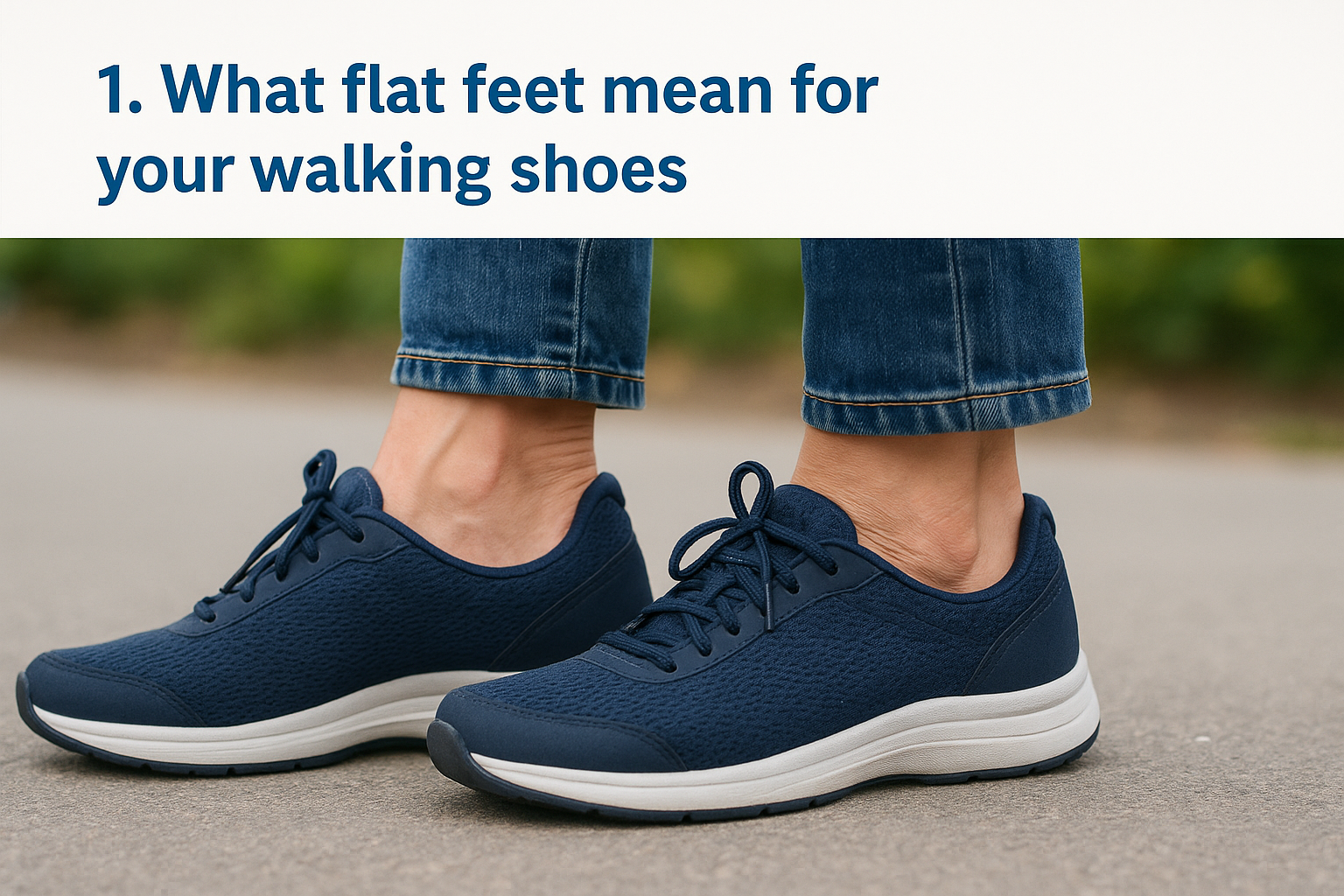
Ordinary trainers are built around a neutral foot that rolls slightly inward and then stabilises. Flat feet skip that stabilising step, so a neutral shoe leaves your arch and ankle to do all the stopping work themselves, step after step, mile after mile. What you actually need is structural support built into the midsole and heel, not a cushioned insole that compresses within a few weeks. A shoe with real arch support redistributes pressure away from the collapsed area and gives your foot something firm to push against, rather than letting it fold inward unchecked.
Flat feet need a shoe that stops the roll before it starts, not one that just cushions the landing.
The features that make the biggest difference for flat feet include:
- A firm medial post, a denser wedge of foam on the inner side of the midsole that resists compression and limits inward rolling
- A structured heel counter, the rigid cup around your heel that keeps your foot aligned as it strikes the ground
- A wider, more supportive base, which spreads your weight more evenly and reduces strain on the arch
- A slight heel-to-toe drop, since a flatter shoe can sometimes increase strain on already-stretched arch tissue
These aren't cosmetic extras. Skip them, and you're relying entirely on your own soft tissue to do a job it's already struggling with.
Understanding this matters because plenty of shoes marketed as "comfortable" or "cushioned" do nothing for overpronation. Soft foam feels good in the shop but compresses under load, giving your arch even less resistance than before. Walking shoes for flat feet need the opposite approach: firmer materials placed precisely where your foot needs backup. Without that support, common problems like plantar fasciitis, shin splints, and knee pain tend to flare up after longer walks, particularly on hard pavement or uneven trails. Getting this right isn't about buying the most expensive shoe on the shelf; it's about matching the shoe's construction to how your foot actually behaves when it hits the ground.
2. How to tell if you have flat feet
Before you buy anything, confirm you actually have flat feet rather than a different foot shape causing similar symptoms. The quickest check is the wet footprint test: wet the sole of your foot, step onto a piece of paper or a dry patch of pavement, and look at the shape left behind. A high arch leaves a thin sliver connecting heel and toes. A neutral foot shows a moderate curve. A flat foot leaves almost the entire sole visible, with little or no gap along the inner edge.
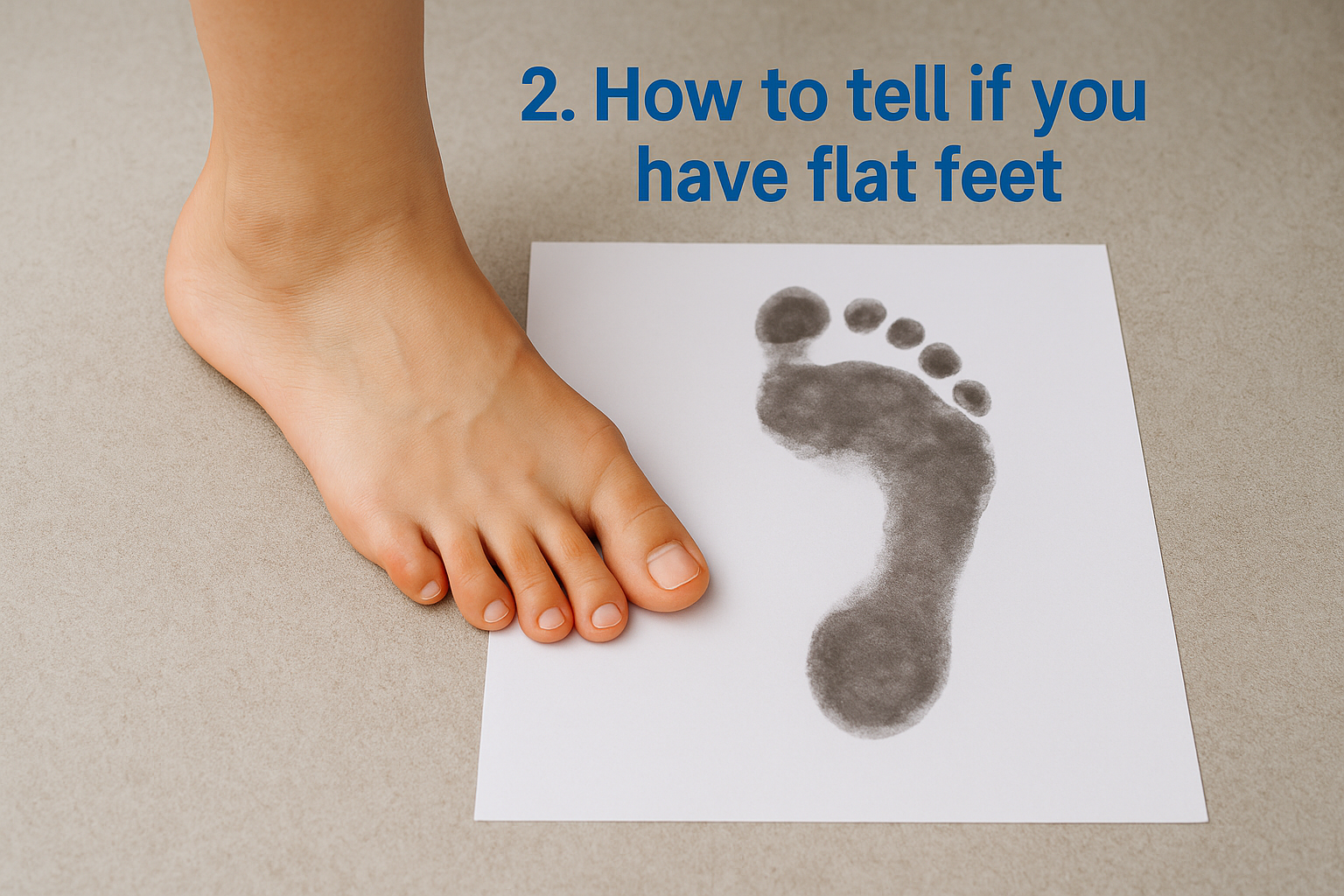
Worn-out shoes tell their own story too. Pull out an old pair and check the sole. If the inner edge of the heel and forefoot is worn down noticeably more than the outer edge, that's a strong sign of overpronation, the inward roll that usually accompanies flat feet. You can also stand barefoot in front of a mirror and look at your ankles from behind; if they tilt inward while your feet point straight ahead, that's another indicator worth noting.
If your footprint shows almost no arch and your old shoes wear thin on the inside edge, you've got your answer.
Physical symptoms matter just as much as visual checks. Watch for these patterns:
- Arch pain or fatigue after standing for long periods, even without walking far
- Heel pain, often linked to plantar fasciitis, especially first thing in the morning
- Knee or shin discomfort on longer walks, caused by the inward roll travelling up the leg
- Uneven shoe wear, concentrated on the inner sole rather than spread evenly
If several of these apply to you, flat feet are the likely cause. That said, a home test only gets you so far. A podiatrist assessment can confirm the degree of arch collapse and rule out related issues like posterior tibial tendon dysfunction, which needs different treatment entirely. The NHS offers guidance on when foot pain warrants a professional check rather than a shop-bought insole, and it's worth reading if your symptoms persist beyond a few weeks. Once you know what you're dealing with, choosing the right shoe becomes far more straightforward.
3. Skechers Arch Fit 2.0
Skechers built the Arch Fit range specifically around podiatrist-designed contouring, and the 2.0 update refines that formula with a firmer midsole and a wider forefoot. It's one of the few mainstream walking shoes that treats arch support as the main event rather than an afterthought, which makes it a genuine contender for flat feet rather than a marketing exercise.
Why it works for flat feet
The standout feature is the moulded Arch Fit insole, a rigid, cupped footbed that cradles the entire underside of your foot rather than just propping up the middle. Combined with a supportive heel counter, it stops your ankle rolling inward on contact, which is exactly what a collapsed arch needs. The midsole uses Skechers' Ultra Go foam, firm enough to resist compression on longer walks but not so hard that it feels punishing underfoot.
A shoe that cradles the whole foot, not just the arch, does more for flat feet than any add-on insole.
Who it's best for
This shoe suits people who spend hours on their feet daily, whether that's retail work, hospital shifts, or long weekend walks on pavement. The wide toe box also makes it a solid option for anyone dealing with bunions alongside flat feet, since narrow shoes tend to aggravate both issues at once.
Price and value
Expect to pay around £70 to £85 depending on colourway and retailer stock. That puts it below most specialist running-brand stability shoes while still delivering genuine structural support rather than a soft, generic footbed.
| Feature | Detail |
|---|---|
| Price range | £70 to £85 |
| Best for | All-day standing and walking |
| Key support | Moulded Arch Fit insole |
| Toe box | Wide fit available |
For the price, it's hard to find a shoe that does more for a collapsed arch without stepping into specialist orthopaedic territory.
4. Brooks Adrenaline GTS 25
Brooks has run the Adrenaline GTS line for over two decades, and the GTS itself stands for "Go-To Support", which tells you exactly why it belongs on this list. The 25th version keeps the guiderail system that's made this shoe a staple recommendation from podiatrists and physios treating overpronation, while adding a softer top layer of foam so it doesn't feel clinical underfoot.
Why it works for flat feet
Brooks builds this shoe around GuideRails technology, a pair of firm foam rails positioned along the outer and inner edges of the midsole that only engage when your foot rolls too far inward. Rather than forcing your stride into a fixed motion, the rails act like bumpers, correcting excess movement at the ankle and knee without restricting a natural gait. Underneath, a DNA Loft v3 midsole adds cushioning without collapsing under repeated load, which matters for anyone walking several miles at a stretch.
Guiderails that only step in when your foot rolls too far give you support without locking your stride into place.
Who it's best for
The Adrenaline GTS 25 suits walkers who've been told by a physio to look for a stability shoe but don't want something that feels rigid or medical. It's also a strong choice if you're recovering from shin splints or plantar fasciitis, since the structured heel and guiderail combination reduces the inward strain that aggravates both conditions.
Price and value
Pricing typically sits between £120 and £140 at UK retailers, placing it firmly in the mid-to-premium bracket. That's more than the Skechers option above, but you're paying for a shoe engineered by a running brand with genuine biomechanical research behind it.
| Feature | Detail |
|---|---|
| Price range | £120 to £140 |
| Best for | Physio-recommended stability |
| Key support | GuideRails technology |
| Midsole | DNA Loft v3 |
Given the engineering involved, it's a fair price for a shoe built to correct movement rather than just cushion it.
5. ASICS Gel-Kayano 32
The Gel-Kayano has been ASICS' flagship stability shoe for over 30 years, and the 32nd edition refines rather than reinvents the formula. It's aimed squarely at overpronators, which makes it one of the most reliably recommended shoes for flat feet among physios and podiatrists alike, not just a running-shop favourite that happens to work for walking too.
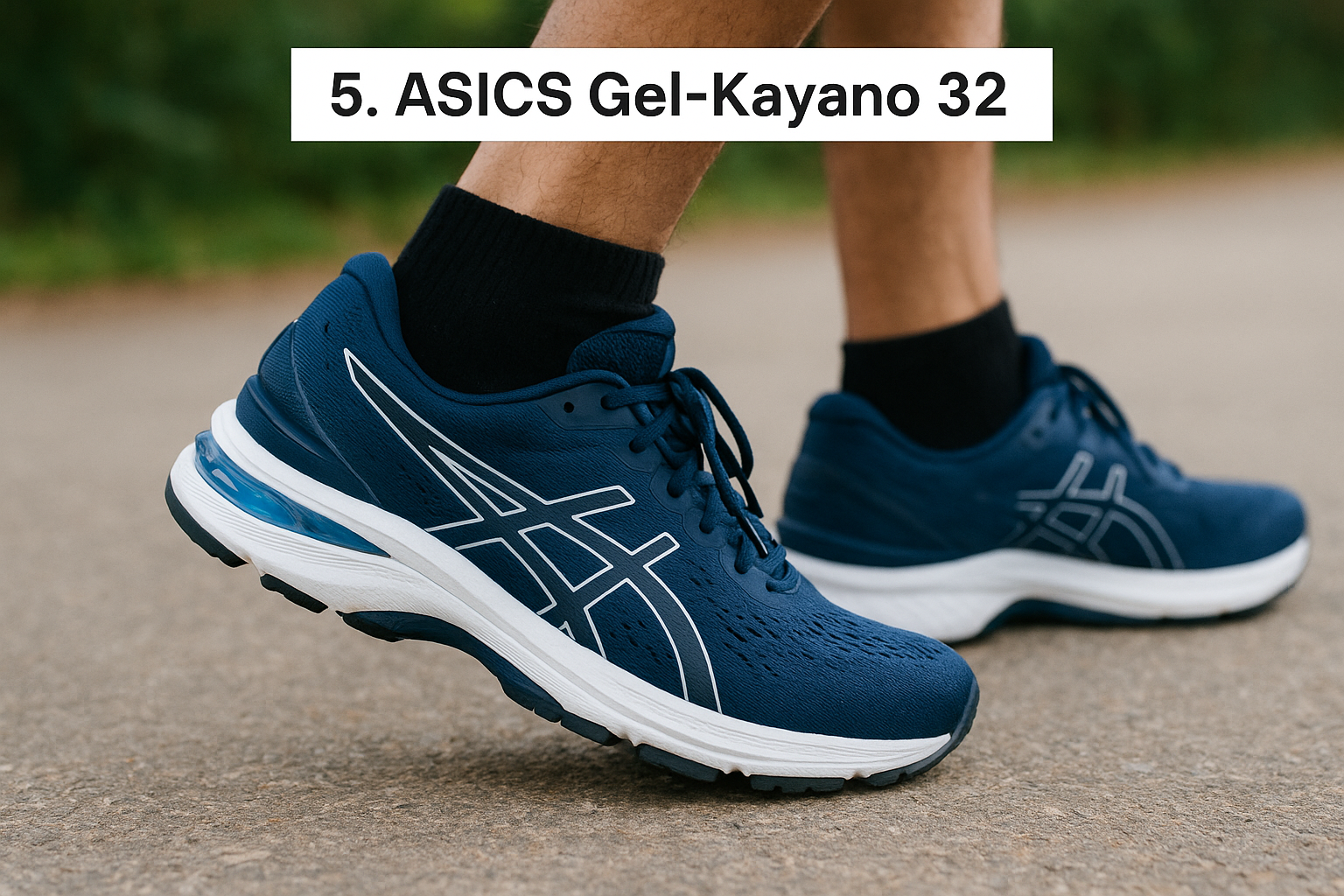
Why it works for flat feet
ASICS builds this shoe around a 4D Guidance System, a dynamic support structure that adjusts to your gait in real time rather than applying a fixed correction. Underneath, a firmer medial section of the midsole resists the inward collapse that defines flat feet, while the redesigned Gel cushioning in the heel absorbs impact without going soft under repeated load. The upper also wraps more securely around the midfoot in this version, which keeps your foot centred over the sole instead of sliding sideways as the arch flattens.
A support system that adapts to your stride beats a rigid one that fights against it.
Who it's best for
This shoe suits walkers who log serious daily mileage, whether that's commuting on foot, hiking flat trails, or working a job that keeps you moving for hours. It's also a strong pick if you've been fitted with custom orthotics, since the roomy, structured interior accommodates inserts without crowding your toes or lifting your heel out of the shoe.
Price and value
Expect to pay between £140 and £160 through UK stockists, making it one of the pricier options on this list. That said, the Gel-Kayano's durability and biomechanical research justify the cost for anyone walking multiple miles most days rather than occasional short strolls.
| Feature | Detail |
|---|---|
| Price range | £140 to £160 |
| Best for | High daily mileage |
| Key support | 4D Guidance System |
| Orthotic-friendly | Yes |
It's a premium price, but the shoe earns it through decades of refinement aimed specifically at overpronation.
6. New Balance 860v15
New Balance has built the 860 line for years as its dedicated stability shoe, and the 15th version keeps that reputation intact while trimming some of the bulk that made older editions feel heavy. It's a solid middle-ground pick between the clinical firmness of the Adrenaline GTS and the softer, cushier feel of the Skechers Arch Fit, which makes it worth considering if neither of those extremes suits your foot.
Why it works for flat feet
Central to this shoe is New Balance's Medial Support Post, a firmer wedge of foam built into the inner midsole that resists the inward collapse typical of flat feet without feeling like a hard block underfoot. Layered on top, the Fresh Foam X cushioning softens impact through the heel and forefoot, so you get structural correction and comfort in the same shoe rather than one at the expense of the other. The wider base at the heel also adds lateral stability, keeping your foot centred as it strikes the ground rather than tipping outward once the arch gives way.
Structural support and genuine cushioning rarely sit well together, but the 860v15 manages both without compromising either.
Who it's best for
This shoe suits walkers who want stability but find firmer options like the Kayano or Adrenaline too rigid for daily comfort. It's also a sensible pick for anyone transitioning from a worn-out neutral shoe into their first proper stability shoe, since the ride feels familiar rather than clinical.
Price and value
UK pricing typically runs between £110 and £130, sitting comfortably in the mid-range bracket alongside the Adrenaline GTS.
| Feature | Detail |
|---|---|
| Price range | £110 to £130 |
| Best for | Balanced support and cushioning |
| Key support | Medial Support Post |
| Cushioning | Fresh Foam X |
For walkers wanting stability without a harsh ride, the 860v15 hits a sensible middle ground worth trying on.
7. HOKA Arahi 8
HOKA built its reputation on maximalist cushioning, but the Arahi line takes that same thick midsole and adds structured support for overpronators. The eighth version keeps the brand's signature rockered sole while sharpening the stability features that make it genuinely useful for flat feet rather than just another soft, oversized trainer.
Why it works for flat feet
The Arahi 8 relies on HOKA's J-Frame technology, a firmer strip of foam that runs along the inner and outer edges of the midsole without adding bulk through the centre. This targeted firmness catches your foot as it rolls inward, similar in concept to Brooks' guiderails but built directly into the foam rather than layered on top. A wide base and HOKA's early-stage Meta-Rocker shape also help roll your foot forward through each stride, reducing the time your arch spends under load at the point it's weakest.
Firm foam placed exactly where your foot rolls does more than a thick sole ever could.
Who it's best for
This shoe suits walkers who want serious cushioning underfoot but still need genuine correction for overpronation, particularly those covering long distances on pavement or gravel paths. It also works well for heavier walkers, since the wide, stable base handles extra load without the midsole collapsing sideways.
Price and value
UK prices typically sit between £140 and £155, putting it near the top of this list alongside the ASICS Gel-Kayano.
| Feature | Detail |
|---|---|
| Price range | £140 to £155 |
| Best for | Long distances, heavier walkers |
| Key support | J-Frame technology |
| Ride | Maximalist cushioning with rocker shape |
It's a premium price, but you're getting a genuinely different feel from the firmer stability shoes above, without sacrificing the correction flat feet actually need.
8. Brooks Addiction Walker 2
The Addiction Walker 2 isn't a running shoe repurposed for walking, it's built from the ground up as a dedicated walking shoe, and that focus shows in every part of the construction. Brooks aimed this one at people on their feet all day, particularly in workplaces where motion control and durability matter more than looking sporty.
Why it works for flat feet
This shoe uses a rigid dual-density midsole, with a firmer layer positioned along the inner edge to resist the inward collapse that defines flat feet. It's a motion control shoe rather than a lighter stability shoe, meaning the correction is more pronounced and better suited to severe overpronation. A leather upper wraps the midfoot securely, keeping your foot locked in place rather than shifting as the arch flattens, while a wide, extended heel counter adds extra rear-foot stability that lighter shoes on this list don't offer.
Severe overpronation needs a firmer hand than most stability shoes provide, and motion control fills that gap.
Who it's best for
The Addiction Walker 2 suits anyone standing on hard floors for long shifts, including nurses, retail staff, and warehouse workers who need proper support built into workwear-style footwear. It's also worth considering if you've been told by a podiatrist that your overpronation is severe enough to need motion control rather than standard stability, since lighter shoes often don't provide enough correction for that level of collapse.
Price and value
UK pricing generally runs between £110 and £130, comparable to the New Balance 860v15 and Adrenaline GTS above.
| Feature | Detail |
|---|---|
| Price range | £110 to £130 |
| Best for | Severe overpronation, all-day standing |
| Key support | Rigid dual-density midsole |
| Upper | Leather, secure midfoot wrap |
For genuinely severe flat feet, this is one of the few shoes on the list built specifically to handle that level of correction without feeling like an orthopaedic device.
9. Berghaus Supalite II
Berghaus built the Supalite II as an outdoor walking shoe rather than a fitness trainer, and that distinction matters if you spend more time on trails and towpaths than pavement. It's a lighter, lower-cut alternative to a full hiking boot, but it still carries the outdoor construction that generic walking shoes lack, including a grippy sole unit designed for mixed terrain rather than just tarmac.
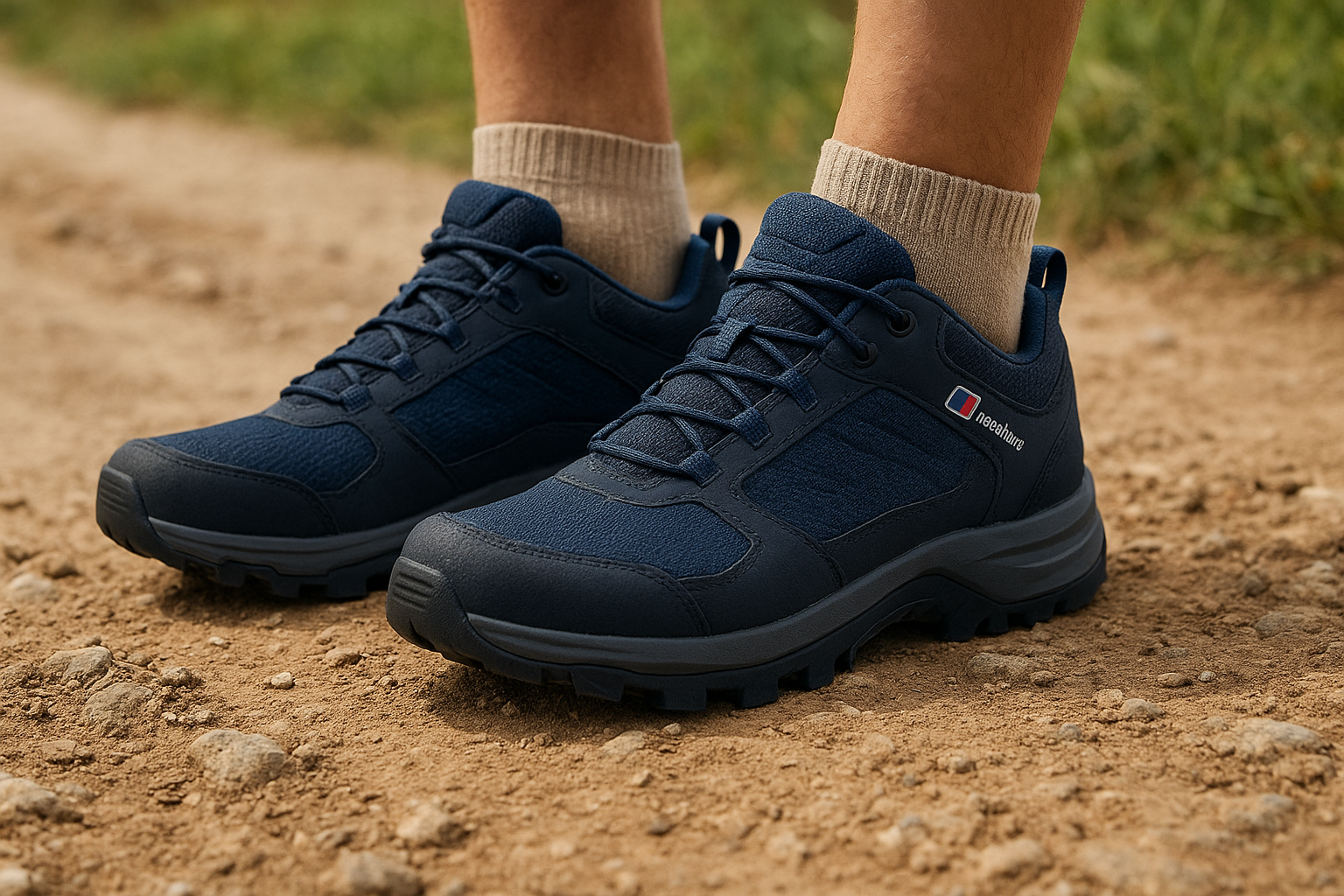
Why it works for flat feet
Underpinning this shoe is Berghaus's own OrthoLite footbed, a contoured insole that adds genuine arch support rather than flat, generic cushioning. Paired with a firm, supportive midsole, it resists the inward collapse typical of flat feet while still flexing naturally through uneven ground. A protective toe bumper and reinforced heel add structure that keeps your foot aligned on rougher paths, where ankle stability matters as much as arch support.
Outdoor terrain punishes weak arches faster than pavement ever will, so the support needs to work harder.
Who it's best for
This shoe suits walkers who split their time between countryside paths and everyday errands, wanting one pair that handles both without switching shoes. It also works well for anyone with flat feet who finds trail shoes generally too soft, since the OrthoLite footbed gives noticeably more structure than most lightweight hiking shoes on the market.
Price and value
UK pricing typically sits between £60 and £75, making it one of the more affordable options on this list.
| Feature | Detail |
|---|---|
| Price range | £60 to £75 |
| Best for | Mixed terrain, everyday and trail use |
| Key support | OrthoLite contoured footbed |
| Sole | Grippy, multi-terrain outsole |
Value-wise, it's hard to beat if your walks involve more mud and gravel than city streets.
10. Craghoppers Kiwi Walking Shoe
Craghoppers built its reputation on practical outdoor clothing, and the Kiwi Walking Shoe carries that same sensible, no-nonsense approach into footwear. It's not a running-brand stability shoe with clever midsole tech, it's a straightforward, well-built walking shoe aimed at people who want reliable arch support for everyday walks rather than marathon training sessions.
Why it works for flat feet
The Kiwi relies on a firm, cushioned footbed that sits flatter and denser than most sports-brand insoles, giving your arch consistent resistance rather than a soft surface that compresses within weeks. A supportive heel cup keeps your foot centred as it strikes the ground, reducing the inward roll that flat feet naturally produce. The suede and mesh upper also wraps snugly around the midfoot, which stops your foot sliding sideways inside the shoe as the arch flattens under load, something looser walking shoes often get wrong.
A dense, flat footbed beats a soft one every time your arch needs something firm to push against.
Who it's best for
This shoe suits casual walkers who want dependable support for countryside strolls, dog walks, or errands, rather than serious daily mileage. It's also a sensible choice for anyone who finds sports-brand stability shoes too clinical looking and wants something that passes for everyday footwear while still managing overpronation reasonably well.
Price and value
UK pricing typically sits between £45 and £60, making it the most affordable option on this list by a clear margin.
| Feature | Detail |
|---|---|
| Price range | £45 to £60 |
| Best for | Casual walks, everyday wear |
| Key support | Firm cushioned footbed |
| Upper | Suede and mesh |
For light, occasional use, it's genuinely good value, though anyone walking serious distances should look further up this list for firmer correction.
11. Vionic Kimmie Court
Vionic built its whole brand around podiatrist-designed arch support, and the Kimmie Court proves you don't need a chunky sports shoe to get proper correction. It looks like a casual leather trainer, the sort you'd wear with jeans rather than gym kit, but underneath sits the same biomechanical support you'd expect from a specialist orthopaedic brand. That combination makes it a genuinely different option from everything else on this list.
Why it works for flat feet
Every pair includes Vionic's patented orthotic footbed, a deep, contoured shape that cups the heel and supports the arch far more aggressively than a standard shoe insole. The dense EVA base underneath resists compression, so the support doesn't flatten out after a few months like softer cushioning does. A roomy toe box and low, stable heel also keep your foot from tipping forward, which matters when your arch has already collapsed and needs help staying centred.
An orthotic-grade footbed hidden inside a normal-looking leather shoe is rare, and that's exactly what makes this one stand out.
Who it's best for
This shoe suits anyone who wants genuine arch support without wearing something that looks sporty at work or on a night out. It's a strong pick for office workers, teachers, or retail staff who are on their feet all day but need footwear that fits a smart-casual dress code.
Price and value
UK pricing generally sits between £85 and £100, placing it above the Skechers and Craghoppers options but below the premium running-brand shoes further up this list.
| Feature | Detail |
|---|---|
| Price range | £85 to £100 |
| Best for | Smart-casual, all-day wear |
| Key support | Patented orthotic footbed |
| Style | Leather, low-heel casual shoe |
For anyone who's been told to wear supportive shoes but refuses to give up looking presentable, this is one of the few genuinely good compromises available.
12. What to look for in walking shoes for flat feet
After comparing nine shoes, some patterns become obvious. Arch support is only useful if it's built into the midsole, not bolted on as an aftermarket insole. Every shoe on this list earns its place through structural features like guiderails, medial posts, or dual-density foam, not marketing language about "comfort" or "cushioning". If you're shopping outside this list, check the midsole construction before you check the price tag.
Fit matters just as much as technology. A shoe that squeezes your midfoot forces your arch to work against the upper rather than the sole, which undoes whatever support the midsole provides. Look for a secure heel counter that stops your foot sliding sideways as the arch flattens under load, paired with enough width through the forefoot that your toes aren't cramped. Narrow shoes and flat feet rarely get along, since a collapsed arch often widens the foot slightly compared to a neutral one.
The best shoe for flat feet is the one that supports your specific arch, not the one with the most impressive spec sheet.
Before buying, run through this checklist:
- Medial support, a firmer wedge or rail on the inner midsole that resists inward collapse
- Heel counter rigidity, tested by squeezing the back of the shoe; it shouldn't fold easily
- Toe box width, enough room to spread your toes without pinching
- Orthotic compatibility, a removable insole if you already use custom inserts
- Sole flexibility, firm underfoot but not so stiff it fights your natural stride
Don't ignore how a shoe performs after 20 minutes of walking rather than 20 seconds of standing in a shop. Soft foam that feels pleasant on first contact often compresses fastest, leaving your arch unsupported by the time you're a mile in. If you can, walk around the shop or your home before committing, and check the NHS guidance on foot health if you're unsure whether your symptoms need more than a shoe change.
13. Frequently asked questions about flat feet and footwear
A few questions come up again and again once people start shopping for walking shoes for flat feet, so it's worth answering the most common ones directly.
Can insoles fix flat feet without buying new shoes?
Insoles help, but they can't compensate for a shoe that lacks a firm base. Dropping a rigid orthotic into a soft-soled trainer often just shifts the pressure point rather than solving it, since the midsole beneath still collapses under load. If your current shoes have a decent structure, a good insole can extend their life. If the midsole is already soft or worn, replace the shoe first.
Do flat feet get worse with age?
Often, yes. Tendons and ligaments lose elasticity over time, particularly the posterior tibial tendon that helps hold your arch up. This is why adults sometimes develop flat feet later in life even without a childhood history of them. Supportive footwear won't reverse that process, but it slows the strain that makes symptoms worse.
Ageing tendons make firm support more important, not less, as the years go on.
Are barefoot or minimalist shoes ever suitable?
Generally, no. Minimalist shoes remove the structure your foot relies on, which is the opposite of what a collapsed arch needs. Some people build up tolerance gradually under professional guidance, but this isn't something to attempt casually if you're already dealing with pain.
How often should I replace walking shoes for flat feet?
Check the midsole every 300 to 500 miles, roughly every six to nine months for regular walkers. Support structures degrade faster than the outer sole shows wear, so a shoe can look fine while offering far less correction than when new.
Should I see a podiatrist before buying?
If pain persists beyond a few weeks, yes. A podiatrist can rule out tendon dysfunction and confirm whether standard stability shoes are enough or whether custom orthotics are needed.
Choosing the right pair for your feet
Flat feet don't respond well to guesswork, and the nine shoes above prove that proper support comes from structure, not marketing. Whether you land on the firm correction of the Adrenaline GTS or the podiatrist-designed footbed inside the Vionic Kimmie Court, the deciding factor should always be how your specific arch behaves under load, not which shoe has the flashiest name.
Getting there means testing, not assuming. Try shoes later in the day when your feet have naturally spread, walk around properly before buying, and don't ignore persistent pain just because a shoe looks supportive on paper. Your feet, your mileage, and your daily routine will always tell you more than a spec sheet.
Rather than settle for the first pair that fits, browse the full range of stability and walking shoes at MoreSports and find the support your flat feet actually need.