 No Duties or Customs Fees For EU & UK Customers
 Express Tracked UK Delivery On 1000s of Items
 90 Day Returns

What Is A Golf Glove Used For? Grip, Comfort & Control
RYPick up any golf glove and you'll notice the textured palm, the snug fit across the fingers, the thin yet durable material. None of that is accidental. So what is a golf glove used for, exactly? At its core, it's a piece of equipment designed to improve your grip on the club, especially when your hands get sweaty or the weather turns against you.
Beyond grip, a golf glove helps prevent blisters and calluses that build up from repeated swings, something newer players feel quickly and experienced golfers never want to deal with again. It also gives you a more consistent hand-to-club connection, which directly affects control and confidence through your swing.
At MoreSports, we stock golf gloves from brands like FootJoy, TaylorMade, and Under Armour, so we know what makes a good glove worth wearing. In this article, we'll break down exactly why golfers wear a glove, which hand it goes on, and how to pick one that actually suits your game. Whether you're buying your first glove or replacing a worn-out favourite, this guide covers everything you need to know.
Why golfers wear a glove in the first place
A golf club generates significant force through impact, and your hands are the only contact point between your body and the club. Without a glove, that force travels into bare skin, creating friction, heat, and real discomfort over time. A glove distributes pressure more evenly across your palm and fingers, so you can swing with confidence rather than squeezing the grip just to feel secure.
The physics behind grip and swing
When you swing a club, your lead hand does most of the directional work. It guides the clubface through the ball and controls the angle at impact, which determines where your shot goes. A glove adds friction between your hand and the grip, letting you hold the club at a natural, relaxed pressure rather than squeezing too hard. Gripping too tightly restricts your wrist hinge and timing, directly costing you accuracy and distance.
If you're wondering what is a golf glove used for at its most fundamental level, it's about maintaining a reliable connection between your hand and the club throughout the entire swing, not just at the moment of impact.
When grip becomes a problem
Sweat is the most obvious enemy of a clean grip. Warm weather, nerves, or simply a long round can leave your hands slippery by the back nine, making it hard to trust your hold on the club. Leather and synthetic gloves are both designed to absorb moisture or channel it away from your palm, keeping the grip surface firm and predictable even when conditions are not ideal.
Rain gloves take that a step further, performing better when wet rather than deteriorating. If you play in the UK, where damp mornings and light rain are a regular part of the game, having a dedicated rain glove in your bag is a practical choice rather than an optional extra.
How a golf glove improves grip and club control
A golf glove works by increasing friction between your palm and the club grip. That extra friction means you don't need to squeeze as hard to feel secure, which keeps your forearms relaxed and your swing mechanics intact. Tension in your hands travels up through your arms and into your shoulders, so reducing that grip pressure directly improves your swing.
Friction and contact area
The textured palm and finger panels on a glove maximise surface contact with the grip. More contact means more friction, which means less movement between your hand and the club during the swing. Without a glove, smooth skin on a rubber or cord grip gives you far less to work with, especially as moisture builds up through a round.
Consistency from first swing to last
One underrated answer to what is a golf glove used for is swing consistency over 18 holes. Your grip at the first tee should feel the same on the 18th green. A glove keeps that connection stable by managing sweat and maintaining friction even as your hands fatigue.
A reliable grip removes one variable from your swing, letting you focus on technique rather than whether the club is slipping.
Comfort, blister prevention and moisture control
A glove does more than secure your grip. Repeated swings generate friction between your hand and the grip, and without protection, that friction creates hot spots and blisters, particularly on the inside of your index finger and across your palm. If you're new to golf and playing regularly, bare hands will tell you quickly. A glove spreads that pressure across a wider surface area, reducing the localised rubbing that causes skin to break down.
Understanding what is a golf glove used for goes beyond grip. Protecting your skin through a full round keeps you comfortable enough to focus entirely on your game.
Managing sweat and weather conditions
Moisture is a comfort issue as well as a grip issue. A damp hand inside a club grip feels unstable and uncomfortable, which leads to compensating movements in your swing. Most gloves use breathable materials or perforated panels across the back of the hand to let heat and sweat escape, keeping your hand cooler through a round.
Leather gloves offer natural breathability and mould to your hand shape over time, making them a popular choice for dry conditions. Synthetic gloves often add mesh zones for ventilation and tend to hold up better in light rain, giving you more flexibility depending on the weather you play in most.
Which hand to wear a golf glove on and why
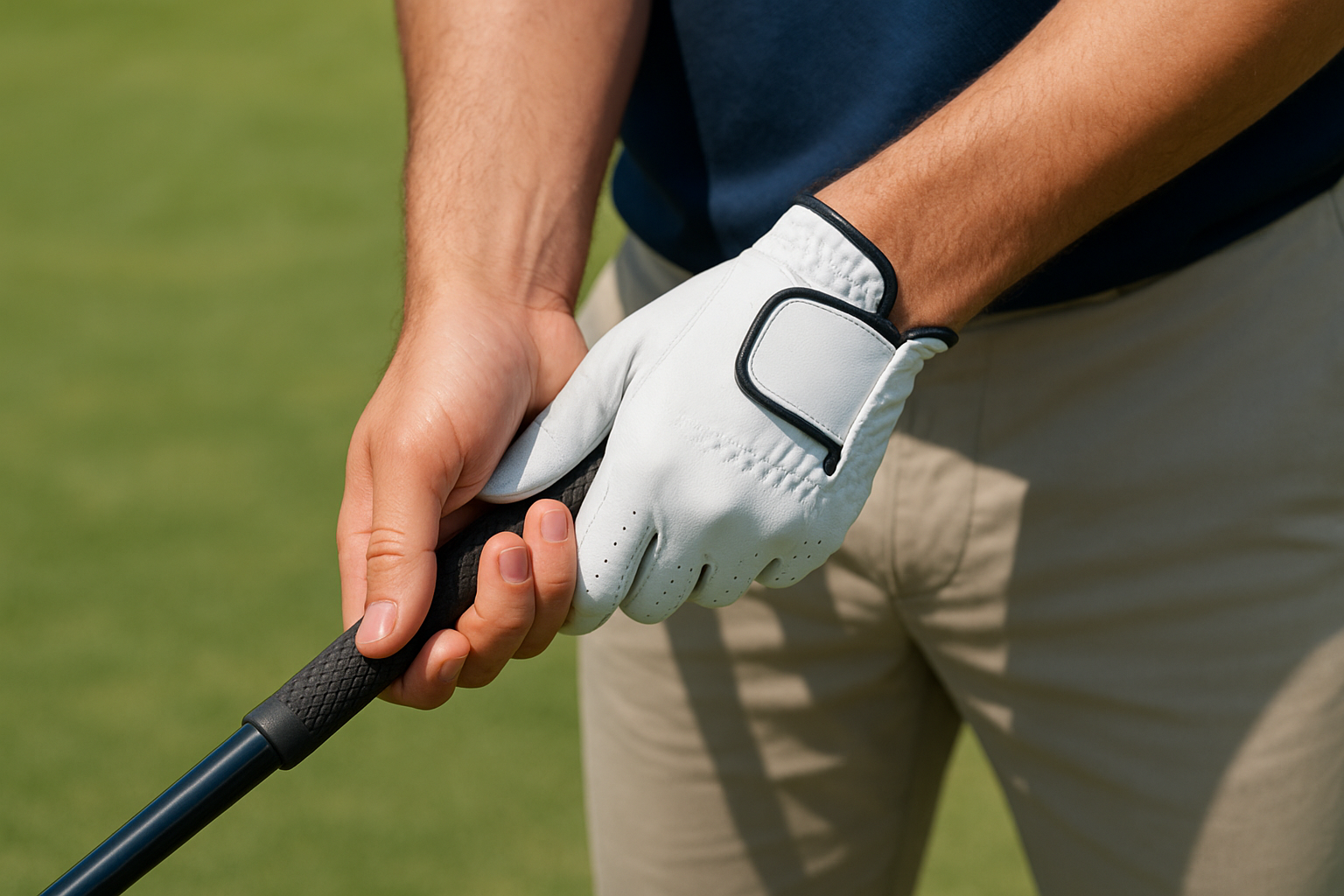
Most golfers wear a single glove on their lead hand, which is the left hand for right-handed players and the right hand for left-handed players. Your lead hand sits at the top of the grip and does the most directional work through the swing. Wearing the glove here gives you maximum friction and control exactly where the club is guided.
The lead hand rule
Your lead hand experiences the greatest movement and pressure against the grip during a swing, making it the priority for both protection and stability. If you consider what is a golf glove used for in terms of hand placement, the answer is straightforward: it goes where friction and wear are highest. Your trailing hand sits lower on the grip, moves less, and generates less friction, so most golfers leave it bare throughout the round.
Wearing your glove on the correct hand ensures you get the full benefit of improved grip and blister prevention rather than placing it where it makes little practical difference.
What about wearing two gloves?
Some golfers, particularly those playing in heavy rain or very humid conditions, choose to wear gloves on both hands. This approach is less common on dry days but becomes a practical option when your bare trailing hand struggles to maintain its hold on a wet grip.
How to choose the right glove for your game
Choosing the right glove comes down to three things: fit, material, and the conditions you play in most. A glove that fits well sits snug across your palm and fingers without bunching or pulling, and you should be able to close your hand naturally without any restriction.
Fit and material
Leather gloves offer a precise, comfortable fit that moulds to your hand over time, making them ideal for dry, warm conditions. Synthetic gloves tend to be more durable and weather-resistant, handling light rain and humidity better than leather. If you're still working out what is a golf glove used for in practical terms, the material you choose determines how well it performs the job across different conditions.
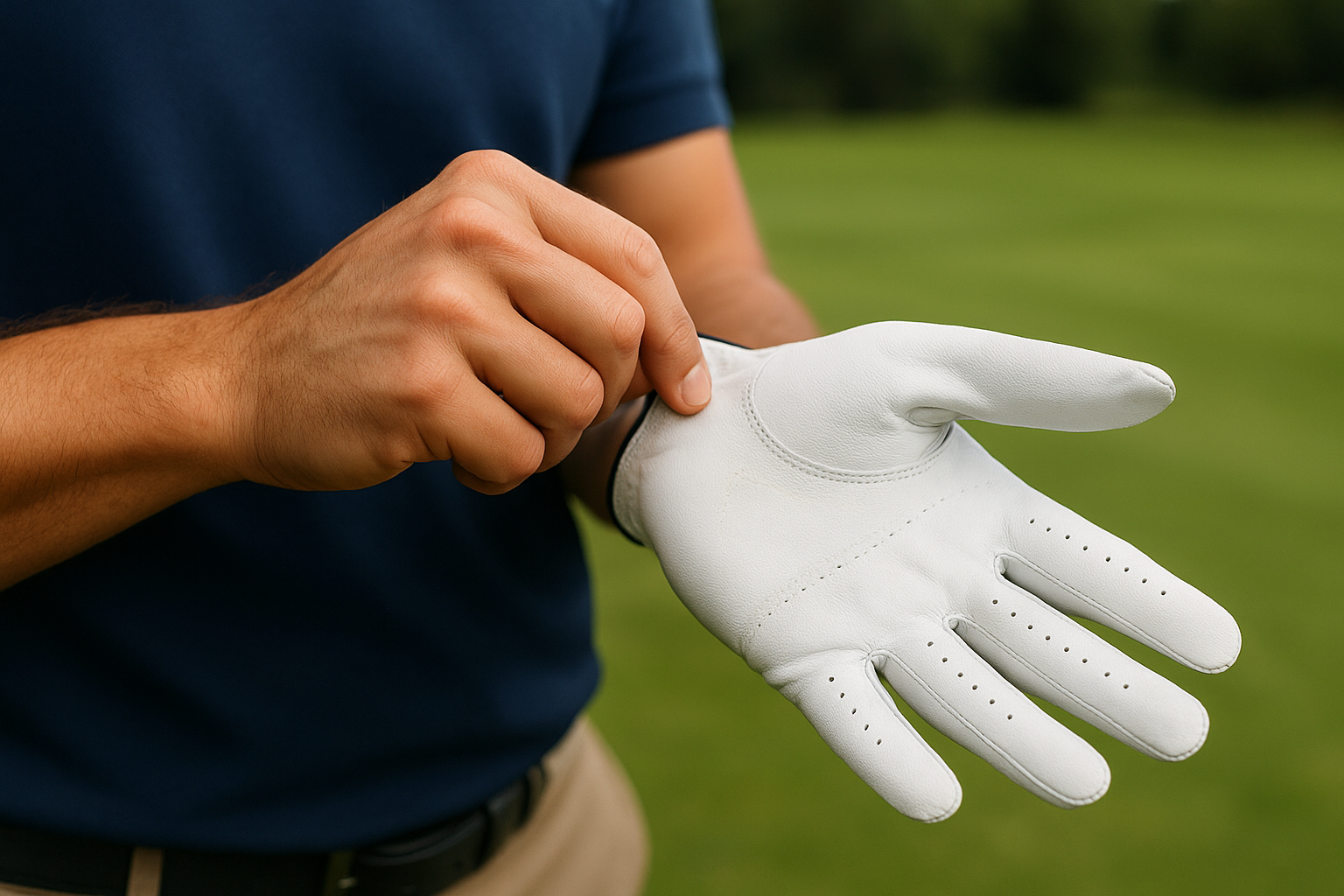
The best glove for your game is one that fits correctly and suits the weather you play in most often.
Sizing and when to replace
Gloves come in standard sizing from small to extra-large, with cadet options for shorter fingers. Replace your glove when the palm starts to wear thin or the grip surface loses its texture, as a worn glove gives you little more protection than bare skin and defeats the purpose of wearing one in the first place.
Quick wrap-up
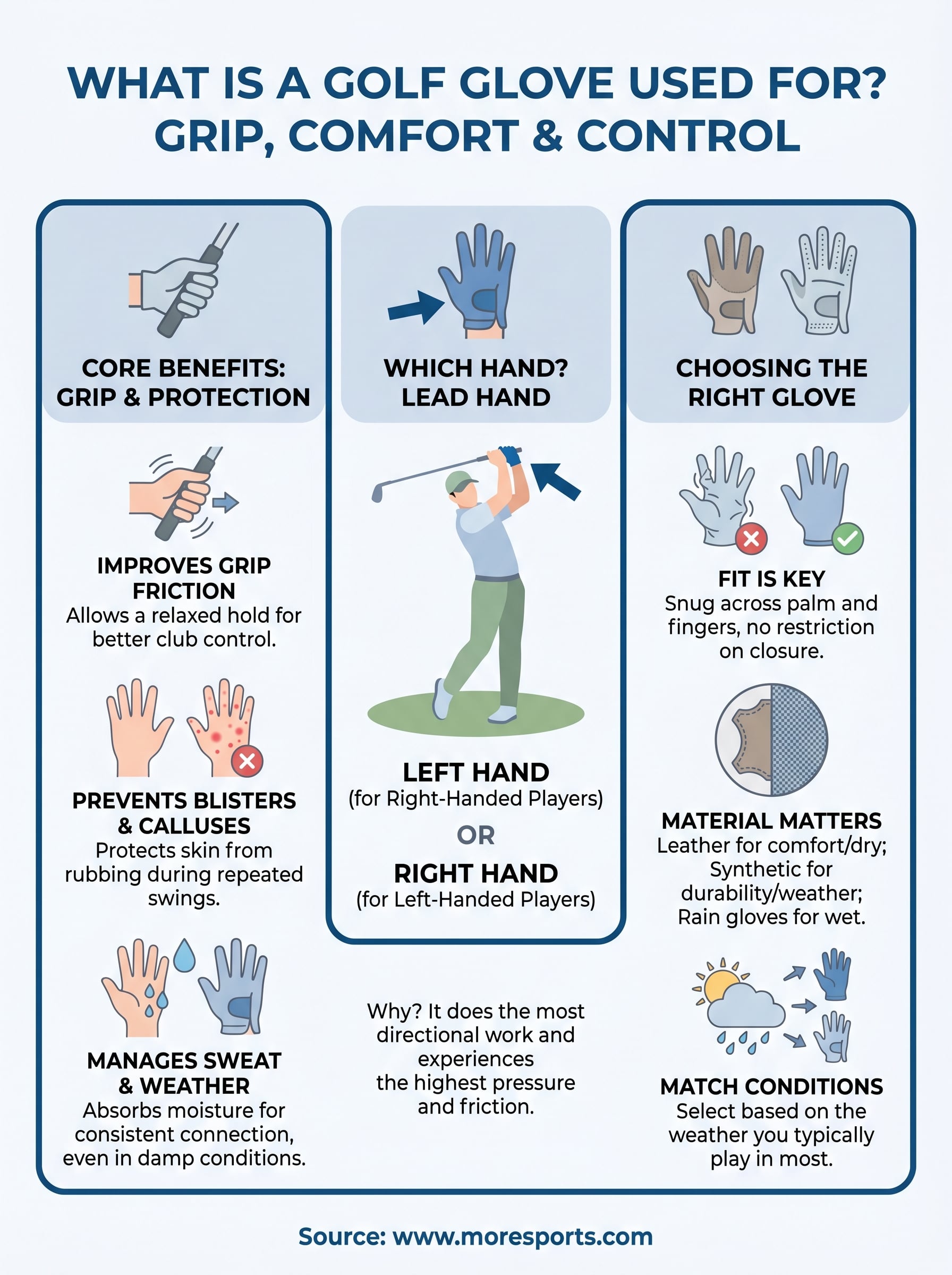
If you've been asking what is a golf glove used for, the answer covers more ground than most people expect. A glove gives you a reliable grip on the club, protects your skin from blisters and friction across a full round, and keeps your hand-to-club connection stable whether the weather is dry, humid, or outright wet. It belongs on your lead hand, fits snugly without restricting movement, and needs replacing once the palm wears thin.
None of this requires expensive equipment or overthinking. The right glove for your game is one that fits well, suits the conditions you play in most, and comes from a brand with a track record of quality. Whether you're picking up your first glove or replacing a worn-out one, getting that choice right makes a genuine difference to your comfort and control out on the course. Browse the full range of golf gloves at MoreSports and find the right fit for your game.