 No Duties or Customs Fees For EU & UK Customers
 Free UK Delivery On Orders Over £30
 90 Day Returns

What Size Golf Bag Do I Need? Types, Tops & Dividers Guide
RYIf you've ever stood in front of a wall of golf bags and thought "what size golf bag do I need?", you're not alone. Between stand bags, cart bags, tour bags, and everything in between, the options can feel overwhelming, especially when you factor in divider configurations, top sizes, and physical dimensions.
The right bag depends on how you play, how you get around the course, and how many clubs you actually carry. A bag that's too small limits your setup; one that's too big becomes dead weight. Getting this decision right makes a genuine difference to your comfort and organisation on the course.
At MoreSports, we stock golf bags from brands like TaylorMade, Titleist, and MacGregor, so we know the range inside out. This guide breaks down every bag type, top style, and divider option so you can match the right bag to your exact needs before you buy.
What "size" means in golf bags
When most people ask what size golf bag do I need, they're thinking purely about whether a bag looks big or small. In reality, bag size covers three distinct measurements: physical dimensions, top size, and divider count. Each affects how the bag performs in a different way, and knowing all three helps you make a smarter buying decision.
Physical dimensions: height and diameter
Golf bags vary quite a bit in how tall they stand and how wide the top opening is. Most stand bags sit between 34 and 38 inches tall, while cart and tour bags tend to run taller, often reaching 38 to 42 inches. The top opening diameter typically ranges from 8.5 inches for lighter stand bags up to 10.5 inches or more for full cart bags.
A wider opening gives you easier access to your clubs during a round, especially if you carry a full set of 14. Taller bags tend to protect shafts better but can be awkward to load into smaller car boots, so always check the bag dimensions against your car and trolley before you buy.
A bag's physical size determines whether it fits your trolley, your car boot, and a travel cover, so treat these figures as essential checkpoints before anything else.
Top size and how dividers work
The top of a golf bag is the divided opening where clubs sit upright. Divider layouts vary from basic 4-way options to full individual-slot systems, and the right layout depends entirely on how many clubs you carry and how often you want to reach in and grab one quickly.
| Divider layout | Best for |
|---|---|
| 4-way / 6-way | Lighter carry setups, fewer clubs |
| 8-way / 9-way | Mixed use on trolley or carrying |
| 14-way | Full 14-club sets, dedicated cart bag users |
A 14-way top gives every club its own slot, which eliminates tangling and speeds up play. A 6-way top is lighter and simpler but suits golfers who carry fewer clubs or prefer a more minimal setup. More dividers generally means more structure, but a heavier and bulkier bag overall.
Step 1. Choose the right bag type for how you play
Before you worry about dividers or dimensions, you need to nail down which bag type matches your game. The type of bag you pick determines the weight you carry, the storage you get, and whether the bag works properly with your setup on the course.
The four main bag types
Each bag type is built for a different playing style. Use this table to see which one fits how you actually play:
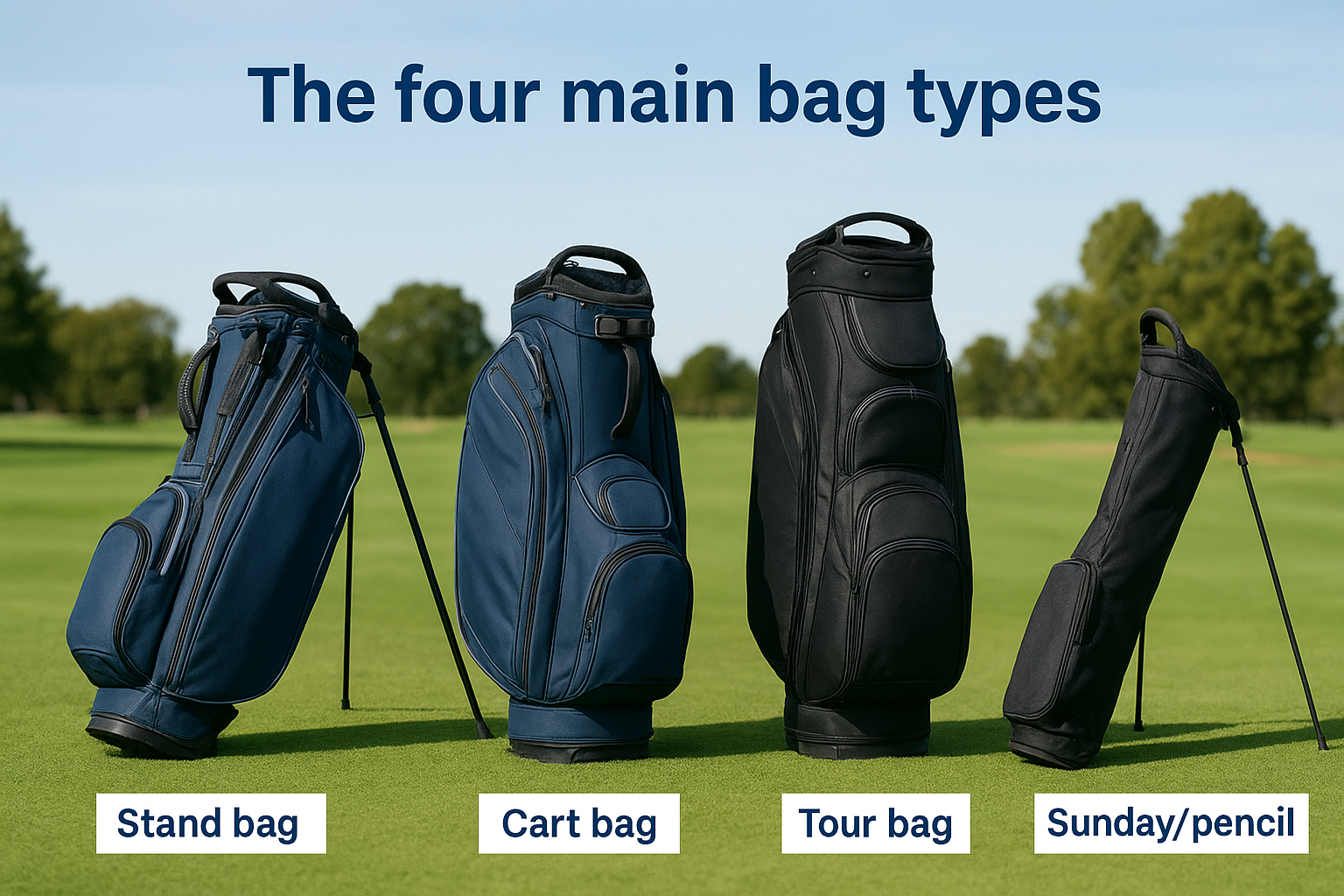
| Bag type | Best for | Typical weight |
|---|---|---|
| Stand bag | Walking the course | 1.5 to 2.5 kg |
| Cart bag | Trolley or buggy users | 2.5 to 4 kg |
| Tour bag | Competition players, caddies | 4 to 6 kg |
| Sunday / pencil bag | Short practice rounds | Under 1 kg |
Matching the bag to your game
If you walk and carry your bag, a stand bag is the clear choice. The built-in legs keep it upright when you set it down, and the lighter build reduces fatigue over 18 holes. If you use an electric or push trolley, a cart bag gives you more storage, a larger top opening, and better stability when mounted on the trolley frame.
A tour bag is built for caddies and competition play, not recreational rounds. Unless you compete at a high level, the extra weight is not worth it.
Tour bags weigh significantly more and offer maximum storage, but most club golfers find a cart bag covers every need without the added bulk. Thinking through this step first makes every other part of the "what size golf bag do I need" decision much simpler.
Step 2. Pick the right top size and divider layout
Once you know your bag type, the next thing to sort out is the top size and divider layout. This choice affects how quickly you can pull a club, how tidy your bag stays during a round, and how well shafts and grips hold up over time.
How divider count affects your game
The number of dividers in a golf bag top directly controls how much organisation you get and how easy it is to find the right club under pressure. Fewer dividers mean clubs share slots, which leads to tangling; more dividers keep everything separated and damage-free.
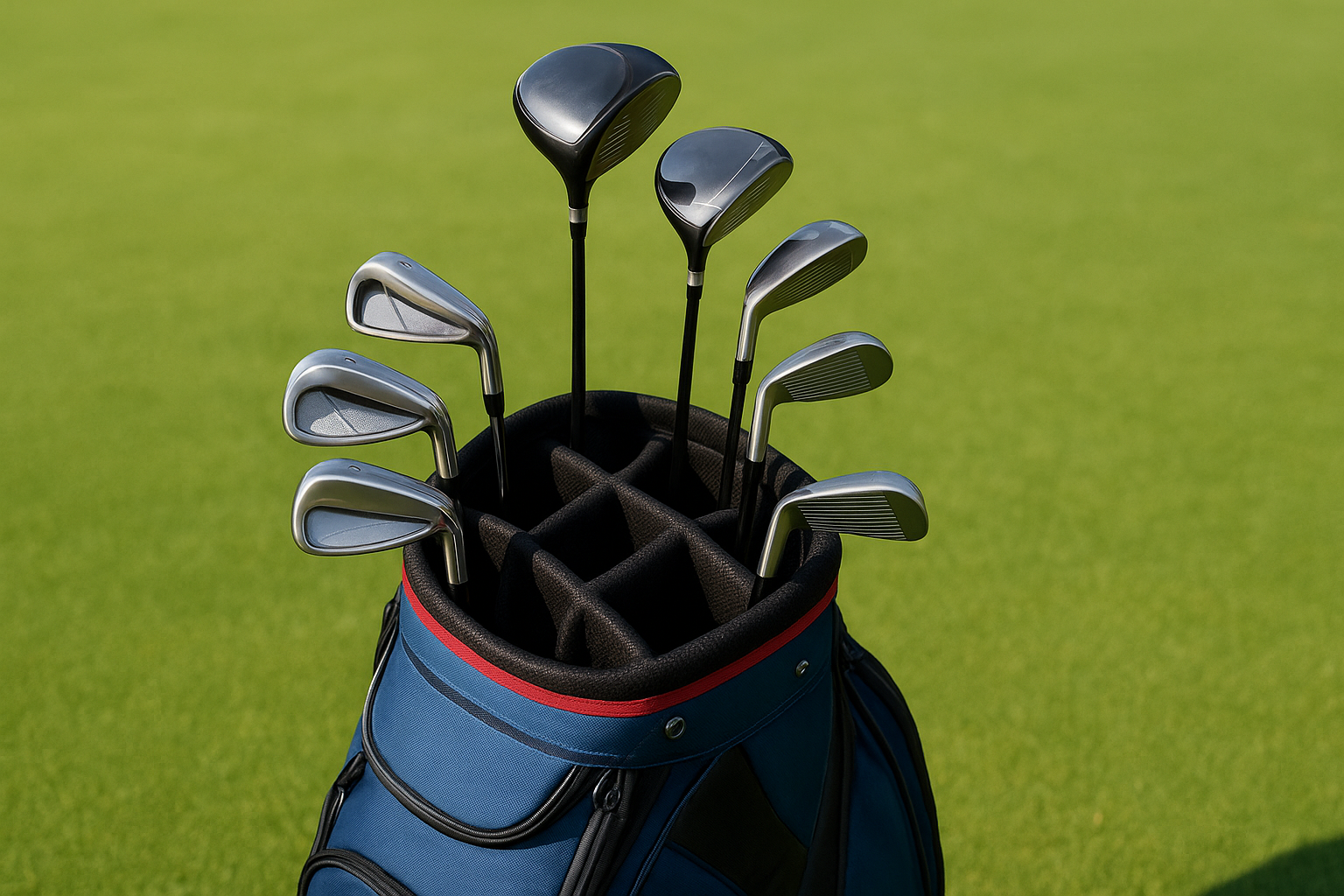
If you carry a full set of 14 clubs, a 14-way top is worth the extra weight because it removes tangling completely.
Use this reference to match divider count to your typical setup:
| Divider count | Clubs carried | Ideal setup |
|---|---|---|
| 4-way / 6-way | 5 to 9 clubs | Lightweight carry rounds |
| 8-way / 9-way | 10 to 12 clubs | Mixed trolley and carry use |
| 14-way | Full 14 clubs | Dedicated cart or trolley bag |
Choosing the right top diameter
Top diameter is a detail many golfers overlook when asking what size golf bag do I need. A wider top opening (9.5 inches or above) makes it much easier to reach in and pull clubs during a round, particularly if you use oversized grips.
A narrower top, typically 8.5 inches or below, suits lightweight carry bags and keeps overall weight down. It works well if you carry fewer clubs, but can feel restrictive once you load in a full set of irons, woods, and a putter.
Step 3. Check weight, pockets, and weather protection
Getting the right bag type and divider layout answers most of what size golf bag do I need, but weight, pocket count, and weather protection can make or break how comfortable the bag is to use across a full season. These details are easy to overlook in a showroom but impossible to ignore once you're out on the course.
How bag weight affects your round
Bag weight matters far more if you carry than if you use a trolley. A stand bag between 1.5 and 2 kg keeps fatigue low over 18 holes, while a cart bag pushing 4 kg is fine mounted on a trolley but punishing if you lift it repeatedly. Always check the bag's empty weight before you commit, because adding 14 clubs, balls, and rain gear puts another 4 to 5 kg on top.
If you walk the course more than three times a week, shaving even half a kilogram off your bag weight makes a noticeable difference by the back nine.
Pockets and weather protection
Storage and weather resistance are practical details that affect every round. Use this checklist to make sure the bag you choose covers the essentials:
- Clothing pocket: large enough for a full waterproof jacket
- Valuables pocket: fleece-lined to protect your phone and keys
- Ball and tee pockets: at least two, easily accessible mid-round
- Insulated pocket: keeps drinks cool during summer rounds
- Waterproof zips and base: prevents clubs and gear getting soaked in heavy rain
A bag with waterproof zips and a sealed base is a worthwhile investment in the UK, where wet rounds are simply part of the game.
Step 4. Make sure it fits your trolley, car, and travel
The final piece of the what size golf bag do I need puzzle is compatibility. A bag might tick every box for clubs and storage, but if it doesn't fit your trolley frame or car boot, it creates a genuine problem every time you head out for a round.
Trolley and buggy compatibility
Most electric and push trolleys accept bags with a base diameter between 7 and 10.5 inches, but you should always check your trolley's specification before buying. Cart bags typically lock in securely because of their flat, stable base, while some stand bags can shift if the base is too round or narrow for the trolley cradle. If you use a specific trolley brand, check the manufacturer's stated bag compatibility or look for bags labelled as trolley-compatible.
Measure your trolley's base cradle width before you shop, so you can rule out any bag that won't sit securely during a round.
Use this quick checklist when assessing fit:
- Top strap loops: confirm they line up with your trolley's upper support arm
- Base width: check against your trolley's minimum and maximum cradle size
- Bag height: tall tour bags can exceed the upper arm reach on compact trolleys
Car boot and travel covers
Standard cart and stand bags up to 38 inches fit comfortably in most UK hatchback and estate boots when laid flat. If you travel to courses by air, check that your bag fits a travel cover rated for its length, as cover sizing is listed in inches and matched directly to bag height. Buying a bag that works for your transport setup from day one saves you from an unnecessary replacement after a single season.
Quick recap and what to do next
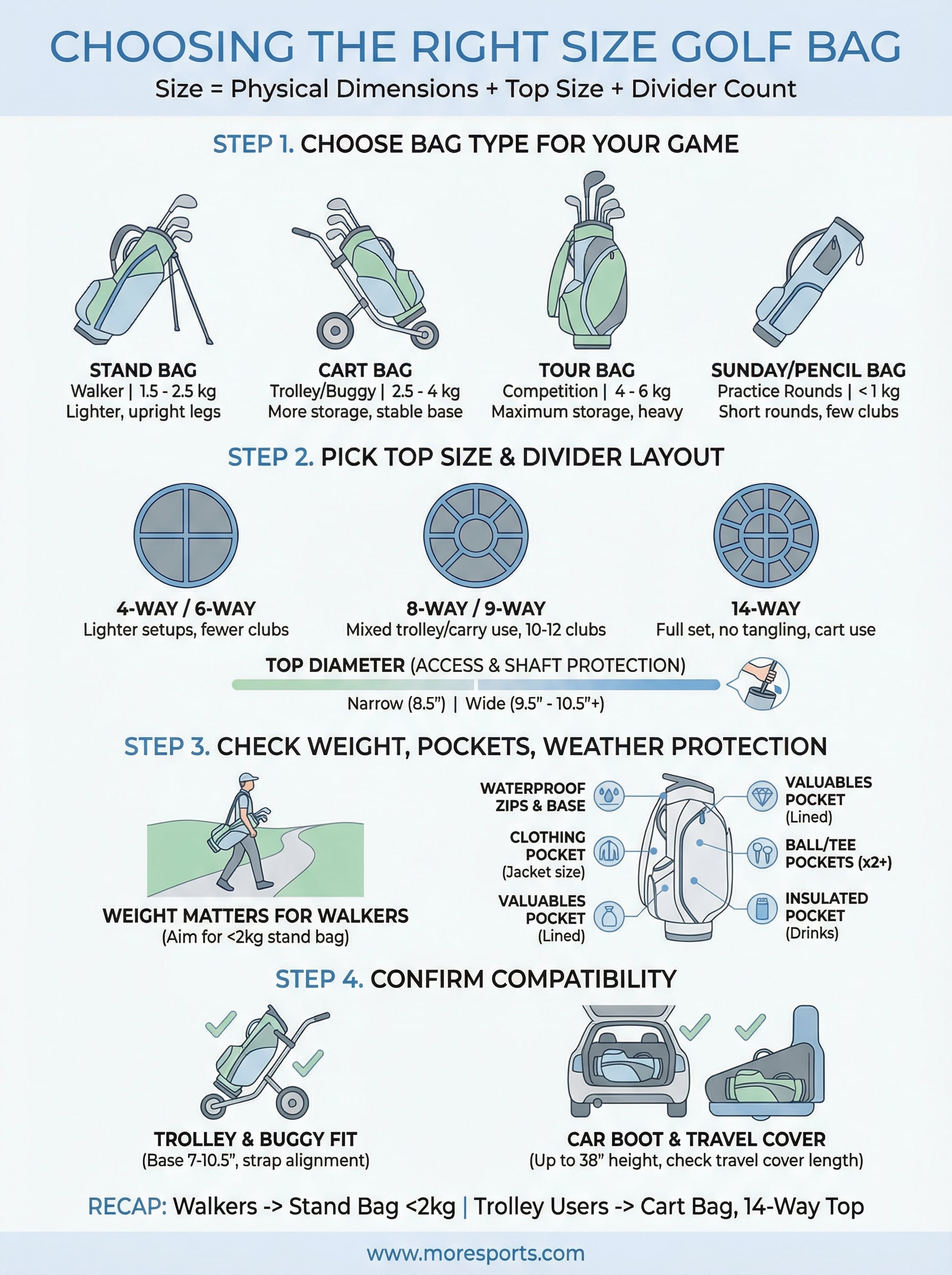
Answering what size golf bag do i need comes down to four clear steps. Pick the right bag type for how you play, choose a top size and divider layout that matches the clubs you carry, check the weight and pocket setup against your typical round, and confirm it fits your trolley and car. Work through these steps in order and you'll rule out the wrong bags quickly rather than relying on guesswork at the point of purchase.
Start with your playing style. If you walk, go for a stand bag under 2 kg with a 6-way or 8-way top. If you use a trolley, a cart bag with a 14-way top gives you the organisation and storage to cover every round. Once you know your type, the dimensions and dividers fall into place naturally. Browse the full range at MoreSports Golf Bags and filter by bag type to find the right fit for your game.