 No Duties or Customs Fees For EU & UK Customers
 Express Tracked UK Delivery On 1000s of Items
 90 Day Returns

What To Wear Golfing In The Rain: 6 Essentials To Stay Dry
RYRain doesn't have to mean the end of your round. Some of the best golf gets played in less-than-perfect weather, but only if you're dressed for it. Knowing what to wear golfing in the rain makes the difference between a miserable slog and a round where you actually play well and stay comfortable from the first tee to the eighteenth green.
The problem is, a lot of golfers either overdress and overheat, or underdress and end up soaked through by the third hole. Getting it right means choosing the correct layers, waterproof gear, and accessories that keep you dry without restricting your swing. It's a balance, and the wrong kit can hurt your game just as much as the weather itself.
At MoreSports, we stock waterproof golf clothing and gear from brands like Stuburt, Under Armour, and FootJoy, so we know what actually performs when the heavens open. Below, we've put together 6 rain golf essentials based on what our customers buy and what we'd grab ourselves before heading out in a downpour. Whether you're facing drizzle or a full washout, this guide will help you stay dry, warm, and ready to play.
1. Waterproof jacket and trousers
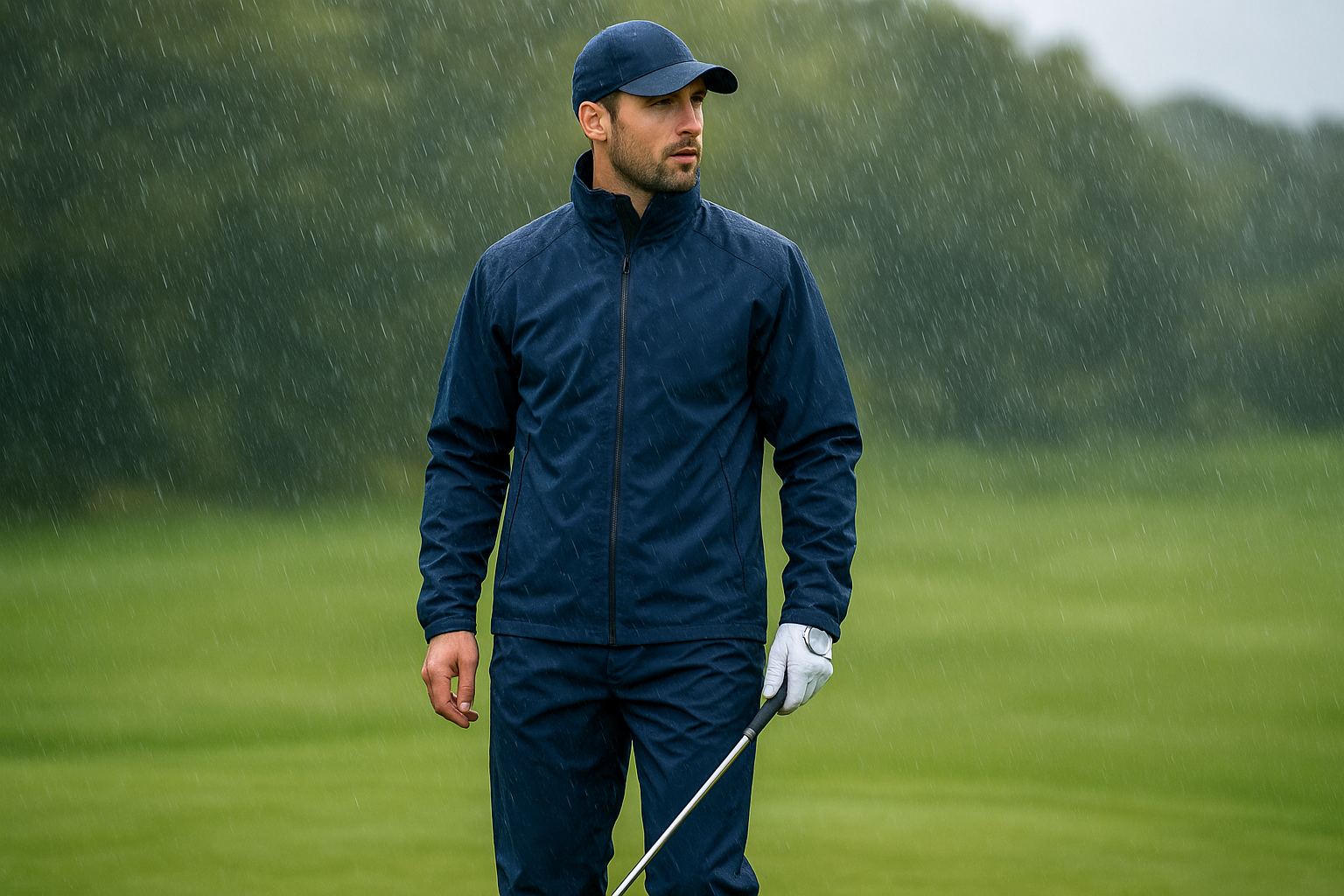
Your waterproof jacket and matching trousers are the single most important part of any wet-weather golf kit. Get these two items right, and everything else you layer underneath stays dry and effective. Get them wrong, and no glove or base layer will save you from a miserable round.
Why this set matters most in the rain
A fully waterproof top and bottom creates a complete barrier against the elements. Rain soaks through standard golf trousers within minutes, and once your legs are wet and cold, your movement and concentration both drop sharply. A matched set gives you full coverage from shoulders to ankles.
Waterproof vs water-resistant and what to choose
Waterproof fabrics use a bonded membrane, such as Gore-Tex or a brand-specific equivalent, that physically blocks water. Water-resistant or "shower-proof" treatments only cope with light drizzle and fail quickly in sustained rain. Always check the product label and look for a confirmed waterproof rating rather than a vague water-resistant claim.
If you're only buying one piece of rain kit, make it a fully waterproof jacket with sealed seams rather than a shower-proof layer.
Key features to look for in rain gear
Prioritise fully taped or welded seams, a waterproof zip with a storm flap, and either a high collar or an integrated hood. A breathable membrane is equally important because a jacket that traps your body heat and sweat will leave you just as damp from the inside, especially during a full 18 holes.
Fit tips so your swing stays free
Fit is critical when deciding what to wear golfing in the rain. Your jacket must give you enough room across the shoulders and chest to complete a full backswing and follow-through without pulling. Look for stretch panels, raglan sleeves, or articulated construction in the product description before you buy.
When to add rain trousers and when to skip them
In light drizzle, water-repellent golf trousers may hold up well enough on their own. In persistent or heavy rain, waterproof over-trousers are essential. Most pack down into a compact bag, so keep a pair in your golf bag all season regardless of the forecast.
2. Moisture-wicking base layers and warm mid-layers
Your waterproof shell only does half the job. What you wear underneath matters just as much, because sweat and trapped moisture chill you fast once you stop moving between shots.
How layering keeps you warm without feeling clammy
A proper layering system pulls moisture away from your skin and traps warm air close to your body. Think of it as two separate jobs: the base layer moves sweat, the mid-layer holds heat. When both work together, you stay comfortable and dry from the inside out.
Best base-layer fabrics for wet weather
Choose fabrics that move moisture efficiently rather than absorb it. Your best options are:
- Polyester or nylon: dries quickly and wicks sweat away from skin
- Merino wool: regulates temperature and resists odour during long rounds
- Avoid cotton entirely: it absorbs moisture and stays wet against your skin
Mid-layer options for different temperatures
In mild wet weather, a lightweight fleece or thermal golf top is usually enough. In colder conditions, a quilted or insulated gilet adds core warmth without restricting your arms through the swing.
How to stop overheating when the rain eases
When the weather lightens, remove your mid-layer first rather than unzipping your waterproof jacket. This keeps your outer shell in place while letting your body regulate temperature more effectively between shots.
Common layering mistakes that make you colder
Wearing too many thin layers creates bulk without meaningful warmth. Choosing a cotton base layer is the most common error when planning what to wear golfing in the rain, and it will leave you cold and clammy within a few holes regardless of what else you have on.
The base layer is the foundation of your whole wet-weather system, so never skip it, even in light rain.
3. Waterproof golf shoes and the right socks
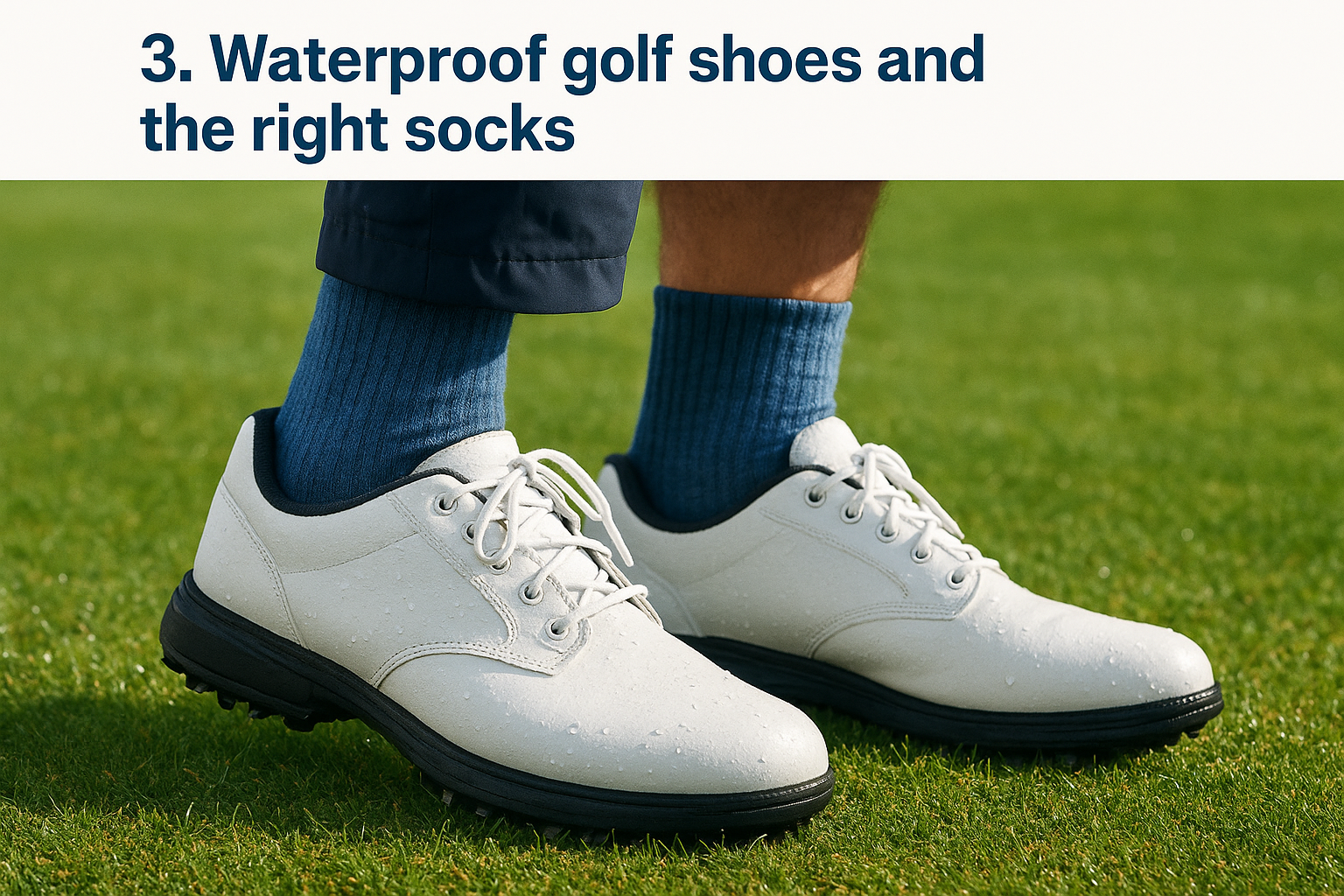
Wet feet destroy your focus faster than almost anything else on the course. The right waterproof golf shoes paired with the correct socks protect your feet for the full round, not just the opening holes.
What makes a golf shoe truly waterproof
Look for shoes built with a waterproof membrane, such as Gore-Tex, bonded directly to the upper. Shoes treated with only a water-resistant spray will soak through in heavy or persistent rain within 30 minutes, leaving you squelching from the third hole onwards.
A confirmed waterproof guarantee from brands like FootJoy or Stuburt is a strong signal of genuine waterproof construction rather than a basic surface treatment.
Spiked vs spikeless traction on wet turf
Spiked shoes give you better grip on sodden turf, particularly on slopes and at the point of impact. Spikeless designs perform well in light rain on firmer ground but can slip if the outsole tread is too shallow for the conditions.
Fit and stability tips to prevent slipping
Your shoes should feel snug around the heel with no lift through your swing. A loose fit on wet ground increases the chance of sliding at impact, which disrupts both accuracy and balance.
Socks that keep feet warm when shoes get damp
Choose merino wool or synthetic thermal socks over cotton. Cotton absorbs moisture and stays cold against your skin, which is one of the key things to avoid when planning what to wear golfing in the rain.
Quick care tips to keep waterproofing working
After each wet round, clean your shoes and allow them to dry naturally away from direct heat sources. Reapply a specialist waterproofing spray every few months to keep the membrane performing at its best.
4. Rain gloves and a plan to keep hands working
Your hands are your only connection to the club, so losing grip control in wet weather directly hurts every shot you play. A clear plan for managing your hands through a wet round is one of the most overlooked parts of knowing what to wear golfing in the rain.
Why grip fails in the rain and how gloves fix it
Water on your skin and on the grip causes the club to twist or slip at impact, costing you both power and accuracy. Standard leather gloves lose all traction when wet, making a dedicated rain glove a necessity rather than an optional extra.
How rain gloves work and when to wear them
Rain gloves use textured synthetic or microfibre materials that grip better when damp rather than worse. Put them on as soon as the rain starts, not after your hands are already cold and slippery.
Wearing rain gloves on both hands rather than just the lead hand gives you significantly better control in heavy or sustained rain.
Bringing spares and rotating pairs between shots
Pack at least two pairs in your bag and rotate them between holes. Keeping one pair under your jacket while the other is in use lets each pair dry slightly before its next turn.
Keeping hands warm between swings
Hand warmers in your pockets give you a quick heat source between shots. Cold hands increase grip pressure and reduce feel, which damages both accuracy and touch around the greens.
Extra grip tips for wet grips and wet towels
Keep a dry microfibre towel sealed in a zip-lock bag so it stays usable all round. Wipe your grips before each shot to remove surface water and maintain consistent contact through impact.
5. Waterproof headwear and eye protection
Rain hitting your face between shots breaks your concentration and makes it harder to read putts and judge distances. Sorting your headwear before you head out is a small detail that pays off on every single hole.
Keeping rain off your face so you can focus
A well-fitted cap or hat with a firm, forward brim deflects rain away from your eyes and keeps your vision clear at address. This is one of the most underrated parts of planning what to wear golfing in the rain, yet it costs very little to get right.
Waterproof caps vs bucket hats in wind and heavy rain
Waterproof caps work well in moderate rain and sit low enough that they don't interfere with your swing. In heavy rain or wind, a bucket hat with a wider brim offers better coverage all round, including protection for your ears and the back of your neck.
In strong wind, a bucket hat can catch gusts and pull your head, so choose a design with a chin cord or a lower profile.
What to do if you wear glasses
Water-repellent lens spray helps rain bead off your lenses between shots. Positioning your cap brim low enough to shield your glasses from overhead rain makes a bigger difference than most golfers realise.
Neck and ear warmth without bulk
A thin merino neck gaiter adds meaningful warmth around your ears and neck without adding bulk under your jacket collar.
Preventing water from running into your collar
Pull your jacket collar up over your base layer before you put your headwear on, so rain tracks down the outside of your jacket rather than funnelling straight inside.
6. Bag protection and rain-day accessories
Knowing what to wear golfing in the rain covers your body, but your equipment needs protection too. A wet bag left unprotected means soaked grips, damp headcovers, and ruined scorecards before you even reach the turn.
Umbrella essentials and how to use it effectively
A large double-canopy golf umbrella of at least 60 inches stays open in wind without inverting. Use it to cover yourself and your bag between shots rather than leaving it strapped to the trolley while you walk away exposed.
Towel system that stays usable all round
Keep two microfibre towels in your bag: one clipped to the outside for grips and club faces, and one sealed in a zip-lock bag to stay completely dry. Rotate them so you always have a usable dry surface when it matters most.
A wet towel does more harm than good, so the zip-lock system is one of the best small adjustments you can make for a rain round.
Bag rain cover vs waterproof bag
A waterproof bag cover fits most standard bags and keeps the interior dry at low cost. For a more permanent solution, a fully waterproof golf bag offers better protection if you play regularly in wet conditions without needing to remember to fit a cover each time.
Keeping valuables, scorecard and phone dry
Store your phone, cards, and scorecard in a zip-lock bag inside your bag pocket. Most golf bags include a fleece-lined pocket, which helps but is not fully waterproof on its own in sustained rain.
The spare-kit checklist for the boot or locker
Pack a dry change of clothes and a spare pair of shoes in your car boot so you can change immediately after your round rather than driving home wet and cold.
Final checklist before you tee off
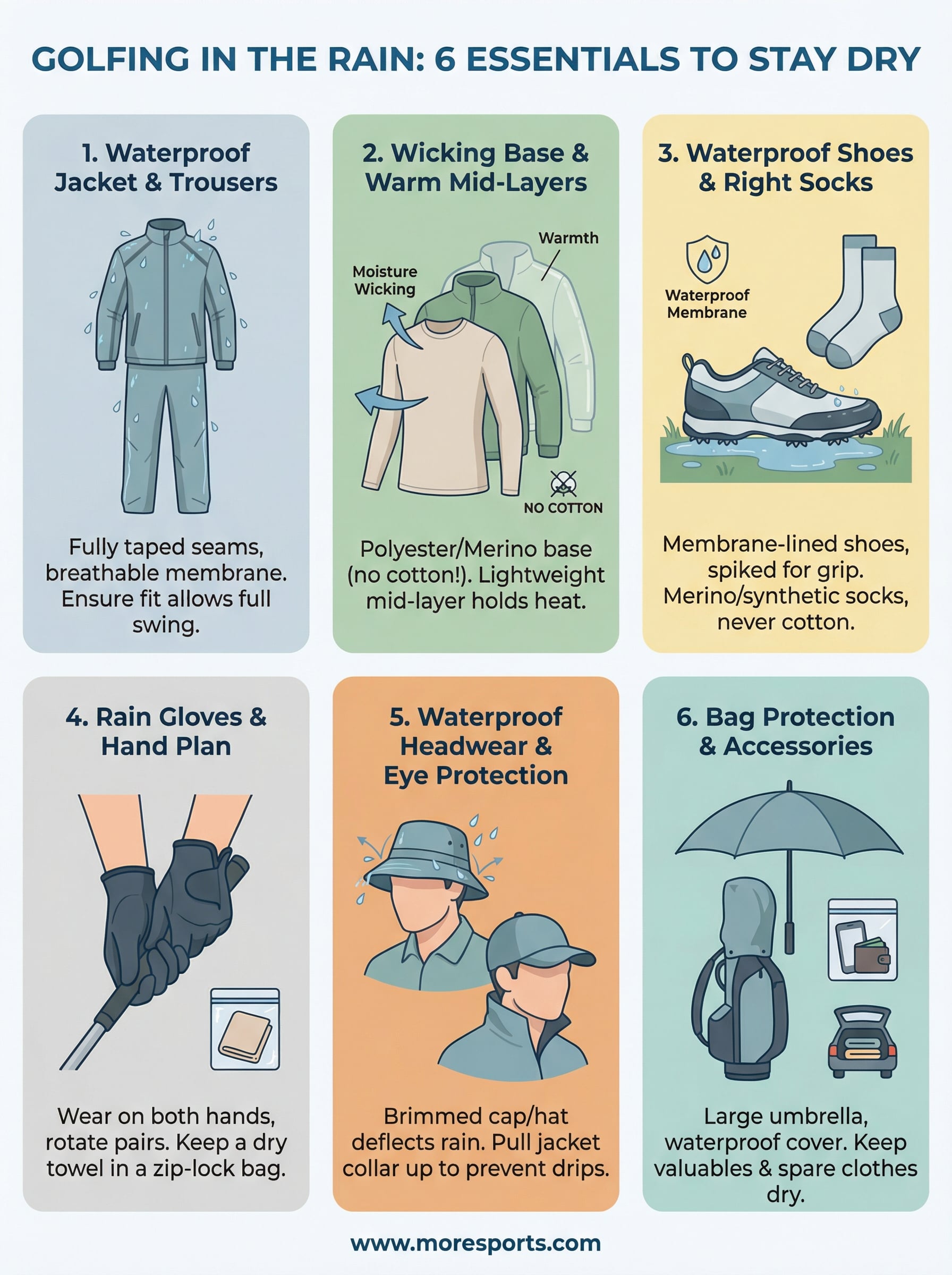
You now have everything you need to plan what to wear golfing in the rain from head to toe. Before you leave for the course, run through this quick checklist: waterproof jacket and trousers with taped seams, a moisture-wicking base layer, a warm mid-layer, waterproof golf shoes with the right socks, at least two pairs of rain gloves, waterproof headwear, a large umbrella, and a dry towel sealed in a zip-lock bag. Pack a spare set of clothes in your car boot so you can change after your round without sitting in wet kit on the drive home.
Getting the right gear makes a genuine difference to both your comfort and your scorecard, and none of it needs to be complicated or expensive. Browse our full range of waterproof golf clothing and accessories at MoreSports and find the brands and styles that suit your game and your budget.