 No Duties or Customs Fees For EU & UK Customers
 Express Tracked UK Delivery On 1000s of Items
 90 Day Returns

5 Best Dart Shafts For Every Playing Style (2026)
RYYour grouping's tight but your darts keep falling out the board, or your shafts snap every time you clip the flight. Nine times out of ten, that's down to the shaft, not your throw. Picking the best dart shafts matters more than most players realise, because the wrong length or material changes your dart's balance, flight stability, and how often you're replacing broken stems.
This guide cuts through the nylon versus aluminium versus titanium debate and tells you exactly which shaft suits your style. If you throw a heavy grouping game, you need something that resists snapping under constant contact. If you're chasing tighter arrows, weight distribution and flight retention matter more than durability. We've tested each material against real playing conditions, not just spec sheets.
Below you'll find five shafts we rate for 2026, covering budget nylon options through to premium titanium builds, plus what separates a decent stem from one that'll cost you matches. Whether you're kitting out a beginner set or upgrading a competition arrow, you'll know which dart shafts to buy by the end of this.
1. Nylon dart shafts
Nylon shafts are the workhorse of the dart world. They're moulded from a flexible plastic that gives slightly on impact rather than snapping outright, which is exactly why they've stayed popular for decades despite flashier metal alternatives showing up. If you've ever bought a starter dart set, the shafts fitted were almost certainly nylon, and there's a reason manufacturers default to this material for new players.
How it performs
The flex in nylon is both its strength and its weakness. When another dart clips your stem, nylon shafts bend or crack cleanly instead of shattering into fragments that scatter across your board surround. That flex does add a touch of instability compared to rigid materials though, so your flight sits with slightly more wobble mid-flight. For casual games this barely matters, but tight groupers chasing maximum arrows will notice the difference in consistency.
Nylon shafts trade a little flight precision for the durability that keeps beginners playing instead of buying replacements every week.
Who it suits
Beginners and social players get the most from nylon. If you're still building your grouping technique, you'll clip shafts constantly, and nylon absorbs that punishment without costing you a fortune in replacements. Pub league players and anyone practising at home with mates will find nylon holds up fine, since the durability outweighs the minor flight instability at this stage of your game. Competition players chasing consistent doubles usually move on once their technique tightens up.
Price range
Nylon sits at the bottom of the price ladder, and that's part of the appeal:
- Basic sets: £1 to £3 for a pack of shafts
- Branded nylon (Harrows, Winmau): £3 to £6
- Bulk multi-packs: often the cheapest per-shaft cost, ideal if you're kitting out a home set for regular guests
2. Polycarbonate dart shafts
Polycarbonate sits between nylon and metal, offering a stiffer plastic that holds its shape better under repeated contact. It's the same material used in safety goggles and riot shields, so you're getting genuine impact resistance rather than marketing spin. Manufacturers like Harrows use polycarbonate as their step-up option for players who've outgrown basic nylon but aren't ready to commit to metal shafts yet.
How it performs
The added rigidity in polycarbonate shafts gives you a noticeably steadier flight path than nylon, since there's less bend to throw off your dart's trajectory mid-air. It still absorbs clips reasonably well, cracking rather than shattering, though it's less forgiving than nylon when another dart hits it dead centre.
Polycarbonate gives you a real step up in flight stability without the price jump or snap risk of metal shafts.
Who it suits
Improving club players sit right in the target zone here. You've got consistent enough grouping to want steadier flights, but you're still clipping shafts often enough that durability matters more than shaving grams off your dart weight.
Price range
Expect to pay:
- Standard packs: £3 to £7
- Branded sets: £6 to £10
3. Aluminium dart shafts
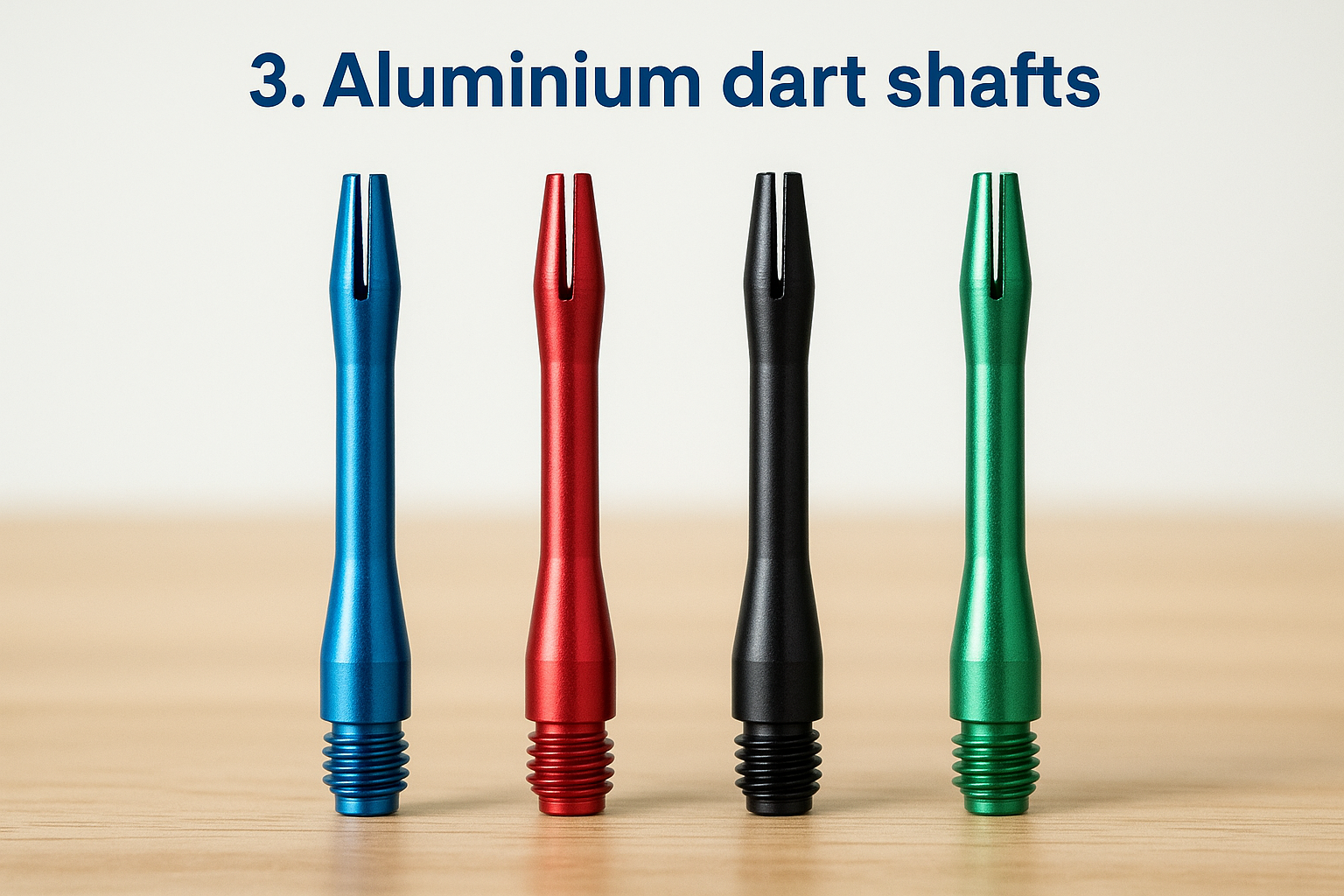
Aluminium marks the jump from plastic to metal, and it's where most serious players end up first. These shafts are machined rather than moulded, giving you a rigid stem that holds its shape shot after shot. Aluminium dart shafts come anodised in colours too, so you can colour-code your set without relying on flights alone.
How it performs
Rigidity is the whole point here. There's no flex to wobble your flight mid-air, so your groupings tighten up noticeably compared to nylon or polycarbonate. The trade-off is brittleness under direct hits. Aluminium doesn't crack cleanly like plastic, it bends or the threading strips, and a bent shaft throws your dart off no matter how good your release is.
Aluminium buys you flight precision, but a single bad clip can bend it permanently and wreck your grouping.
Who it suits
Club and county players who've nailed their grouping technique get the most from aluminium. You're not clipping shafts constantly anymore, so the durability trade-off makes sense once precision matters more than surviving contact.
Price range
Typical costs run:
- Standard aluminium sets: £4 to £9
- Branded/anodised colours: £8 to £14
4. Titanium dart shafts
Titanium sits at the top of the shaft hierarchy, and the price tag reflects that. These shafts are machined from aircraft-grade metal, giving you the strength of steel at a fraction of the weight, which means you can push more mass into the barrel and tip without your dart feeling front-heavy. Titanium dart shafts are the choice for players who've already dialled in every other variable in their setup.
How it performs
Strength is the headline here. Titanium shrugs off direct hits that would bend aluminium or shatter plastic outright, so your shaft keeps its shape throw after throw. That rigidity translates into the tightest flight consistency of any material on this list, with almost zero wobble once the dart leaves your hand.
Titanium survives contact that would ruin any other shaft, which is exactly why serious players pay the premium.
Who it suits
Competitive and county-level players who rarely miss their intended grouping benefit most. If you're already hitting consistent doubles and trebles, titanium removes shaft failure as a variable entirely, letting you focus purely on technique.
Price range
Expect premium pricing across the board:
- Standard titanium sets: £10 to £18
- Branded/limited editions: £15 to £25 plus
5. Integrated flight-shaft systems
Integrated flight-shaft systems ditch the separate flight and stem setup entirely, moulding both into one piece. Brands like Winmau's Fusion or Harrows' Supergrip build the flight directly onto a rigid shaft body, so there's nothing to unscrew, no flight slipping loose mid-game, and no stem snapping off while the flight stays intact in the board. Integrated flight-shaft systems are less about material choice and more about eliminating failure points altogether.

How it performs
Consistency is the main draw here. Since the flight can't shift or twist relative to the shaft, you get identical flight behaviour throw after throw, which matters if you're chasing repeatable arrows. The downside is customisation. You can't swap a damaged flight without replacing the whole unit, and flight retention issues mean one snapped tip on impact costs you the entire piece, not just a shaft.
One-piece systems remove the shaft-flight mismatch that ruins consistency, but you lose the freedom to mix and match.
Who it suits
Players who hate fiddling with kit mid-match suit this best, particularly those who've had flights loosen or spin during league play. It's also handy for anyone travelling to tournaments who wants fewer parts to lose.
Price range
- Standard sets: £5 to £10
- Premium branded systems: £10 to £16
Finding the right shaft for your throw
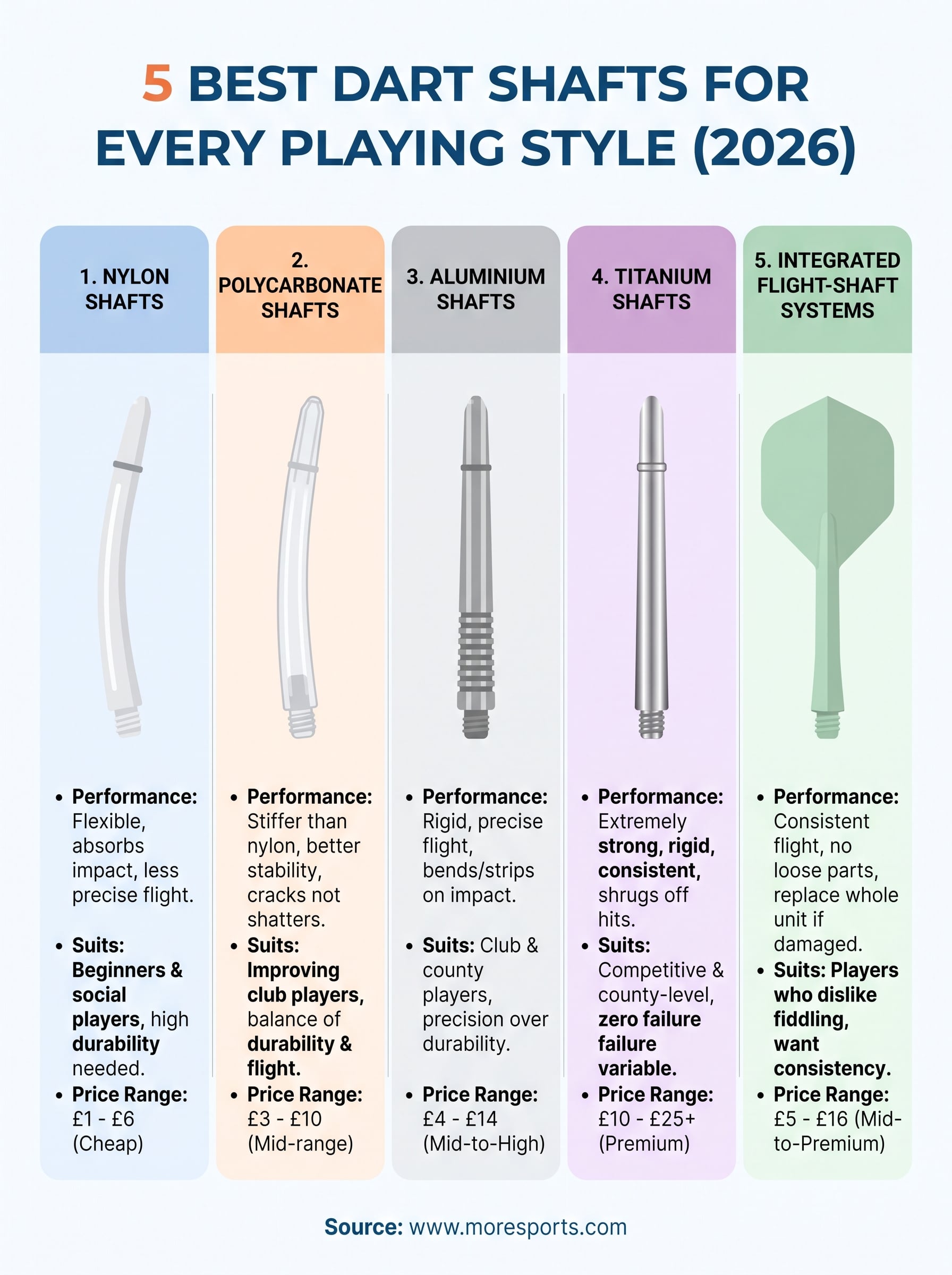
There's no single best dart shaft for every player, only the right one for where you are right now. Nylon and polycarbonate keep beginners on the board without draining your wallet, aluminium sharpens up groupings once your technique settles, and titanium rewards players who've already eliminated every other variable from their game. Integrated systems solve a different problem entirely, cutting out the loose parts that cost you consistency mid-match.
Grab a few different materials and test them against your own throw before committing to a full set. What works for your mate's stacked grouping might bend within a week under yours. Once you've narrowed down the material and length that suits your style, stock up properly rather than replacing single shafts every fortnight.
Browse the full range of shafts, flights, and complete dart sets at MoreSports and get your setup sorted before your next match.