 No Duties or Customs Fees For EU & UK Customers
 Free UK Delivery On Orders Over £60
 90 Day Returns

Golf Club Fitting Explained: The Complete Step-By-Step Guide
RYMost golfers spend hours researching drivers, irons, and putters, then buy them straight off the shelf in standard specs. It's a bit like buying a suit without trying it on and hoping it fits. That's exactly the problem golf club fitting explained in practical terms can solve. A proper fitting matches your clubs to your unique swing, body measurements, and playing style, so every shot has the best chance of going where you want it to.
Whether you're a beginner wondering if fitting is worth the time or an experienced player looking to shave strokes off your handicap, understanding the fitting process removes the guesswork from one of the most important investments in your game. The right shaft flex, lie angle, loft, and grip size can make a measurable difference to both distance and accuracy.
At MoreSports, we stock golf equipment and apparel from brands like TaylorMade, Titleist, and FootJoy, so we know how much the right gear matters. This guide walks you through every stage of a club fitting session, from the initial assessment to the final specifications, so you'll know exactly what to expect and why it's worth doing. We'll cover who benefits most from fitting, what data gets measured, and how to make the most of your appointment.
Why golf club fitting matters
When you pick clubs off a shelf, you're buying equipment built around an average golfer who almost certainly doesn't swing like you. Standard specifications assume a particular swing speed, height, and posture that may not match your own. Playing with mismatched clubs forces you to compensate during your swing, and those compensations become ingrained habits that hold your game back no matter how much you practise or how many lessons you take.
Golf club fitting explained in the simplest terms is this: a professional fitter uses data from your actual swing to identify the exact specifications that help you hit the ball straighter, further, and more consistently. The process removes guesswork and replaces it with objective measurements, so every decision about shaft flex, loft, lie angle, and grip size is grounded in real evidence rather than educated assumption.
The real cost of playing with the wrong specs
Most golfers assume their swing is entirely to blame when shots go wrong, but the equipment is often a significant contributing factor. A shaft that's too stiff for your swing speed will cost you distance and produce a low, weak ball flight. A lie angle that's too upright will send your iron shots left of the target consistently, even when your swing path is technically sound.
Off-the-shelf clubs in standard specifications are estimated to suit roughly 30% of golfers, meaning the majority of players are using equipment that actively works against them.
These issues aren't just about feel. They translate directly into higher scores and genuine frustration on the course. Golfers who switch to properly fitted clubs regularly report hitting more greens in regulation and dropping their handicap within a matter of months, not because their swing transformed overnight, but because their equipment finally matched how they naturally move through the ball.
How fitting improves consistency and distance
Consistency is arguably more valuable than raw distance, and a fitting session targets both at the same time. When your clubs are built to your measurements, your natural swing produces a predictable, repeatable ball flight every time you make solid contact. You stop second-guessing which way the ball will drift, and you start building real confidence standing over every shot.
Distance gains from a fitting come mainly from optimising the shaft flex and loft combination for your specific swing speed and attack angle. A shaft that loads and releases in time with your natural tempo delivers maximum energy transfer to the ball at impact. A driver loft matched to your angle of attack means you launch the ball at the optimal trajectory rather than fighting against your own swing mechanics.
Fitting also pays dividends in your short game. Wedge loft gapping, for instance, determines whether you carry consistent yardage differences between your 50, 54, and 58-degree wedges, or whether you have awkward overlapping distances that leave gaps in your game. Proper gapping means fewer difficult half-swing shots and more chances to attack pins with a full, confident swing.
Why fitting matters at every level
A widespread misconception is that fitting only benefits low-handicap players who have already grooved a consistent swing. In reality, higher-handicap golfers often gain the most from fitting because they're frequently the furthest from standard specifications and the most affected by compensating for equipment that doesn't suit them. A beginner who starts with correctly fitted clubs builds better movement patterns from the outset, rather than ingraining compensations that can take years to correct.
More experienced players benefit from fitting because fine-tuning specifications at a higher level can unlock the final few strokes that separate a solid round from a genuinely great one. Whether you're currently shooting in the 90s or competing around par, playing with clubs built specifically for your swing gives you the best possible platform to perform at your actual ceiling rather than constantly falling short of it.
What happens in a fitting session
A fitting session typically lasts 60 to 90 minutes, though a full-bag fitting can run considerably longer. Your fitter begins with a short conversation covering your current clubs, your typical ball flight, and any consistent misses you notice on the course. This initial chat gives the fitter the context they need before any data is collected, and it directly shapes which specifications they focus on throughout the appointment.
The initial assessment
Before you hit a single ball, your fitter takes a set of physical measurements that influence several key equipment decisions. Your wrist-to-floor distance helps determine the correct club length and lie angle for your build, while your hand size guides grip thickness selection. These numbers anchor the fitting in your specific physical reality from the start, rather than relying on assumptions built around a generic golfer.
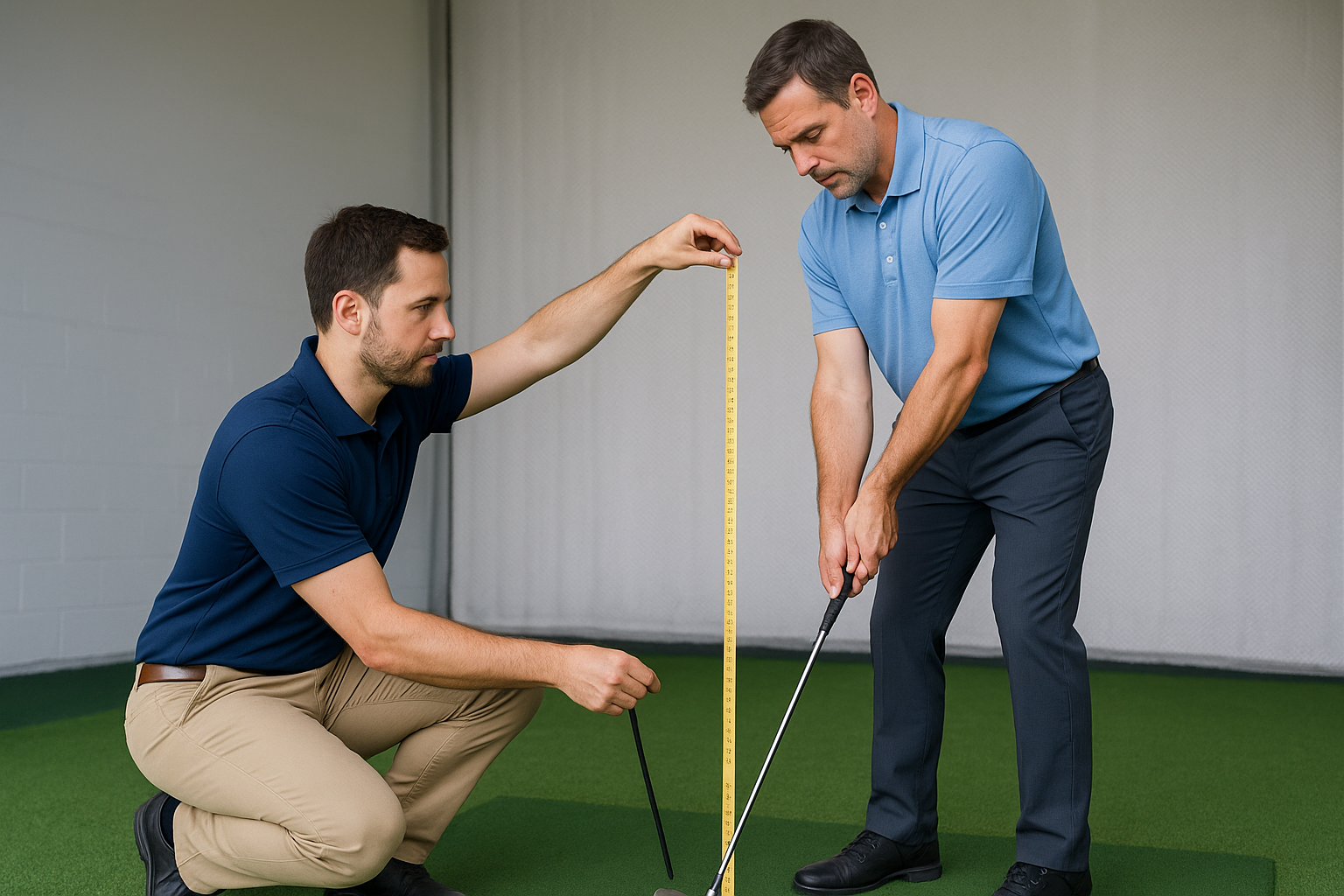
The measurements typically taken at this stage include:
- Height and wrist-to-floor distance
- Hand size and finger length for grip fitting
- Posture and stance observations relevant to lie angle
Hitting shots and collecting data
The core of any fitting session is hitting balls, and your fitter uses a launch monitor to capture data from every swing. You'll work either outdoors on a driving range or indoors inside a simulator bay, depending on the facility. Golf club fitting explained in practical terms comes down largely to this stage: the fitter watches your swing and reads the numbers simultaneously, building a picture of your shot patterns across multiple strikes rather than reacting to any single good or bad contact.
A good fitter always bases their decisions on your most common ball flight, not your best shot of the day.
You'll normally start by hitting your current clubs so the fitter can establish a clear baseline for comparison. From there, they introduce alternative shafts, heads, and grip options one variable at a time, measuring how each change affects your key numbers and your overall confidence through impact.
The final recommendation
Once the fitter has gathered sufficient data, they walk you through their recommended specifications in straightforward terms. You'll see a direct comparison between your current performance and what the fitted options produced across carry distance, shot dispersion, and ball flight shape. The fitter explains the reasoning behind every decision clearly, so you finish the session with a complete understanding of what was changed, why it suits your swing, and what realistic improvement you can expect once you start playing with the fitted equipment.
The key measurements and launch monitor data
Understanding what data gets collected during your fitting helps you engage with the process rather than just standing there hitting balls. A fitting session generates two distinct types of information: physical measurements taken before you swing and launch monitor data captured during every shot. Together, these give the fitter a complete picture of what your body and your swing actually require from your equipment.
The physical measurements your fitter takes
Your fitter records several body measurements before any ball-striking begins, because these numbers directly influence the starting point for shaft length and lie angle selection. Wrist-to-floor distance is the most important single measurement, taken while you stand naturally in your shoes on a flat surface. Combined with your height, this figure tells the fitter whether standard-length clubs will position your hands correctly at address or whether you need something longer or shorter.
Hand size measurements determine your ideal grip thickness, which affects how your hands release through impact. A grip that's too thin encourages excessive wrist action and can promote a hook, while a grip that's too thick restricts your release and tends to produce a fade or push. Getting this right from the start means the rest of your fitting builds on a solid foundation.
The key physical measurements recorded during a session typically include:
- Wrist-to-floor distance and height
- Hand size and middle finger length
- Glove size as a cross-reference for grip selection
- Posture and stance angle observations
What the launch monitor tracks
Once you start hitting balls, the launch monitor captures data from every single swing in real time. Modern launch monitors used in professional fitting bays measure both the ball and the club simultaneously, giving the fitter precise numbers rather than visual estimates.
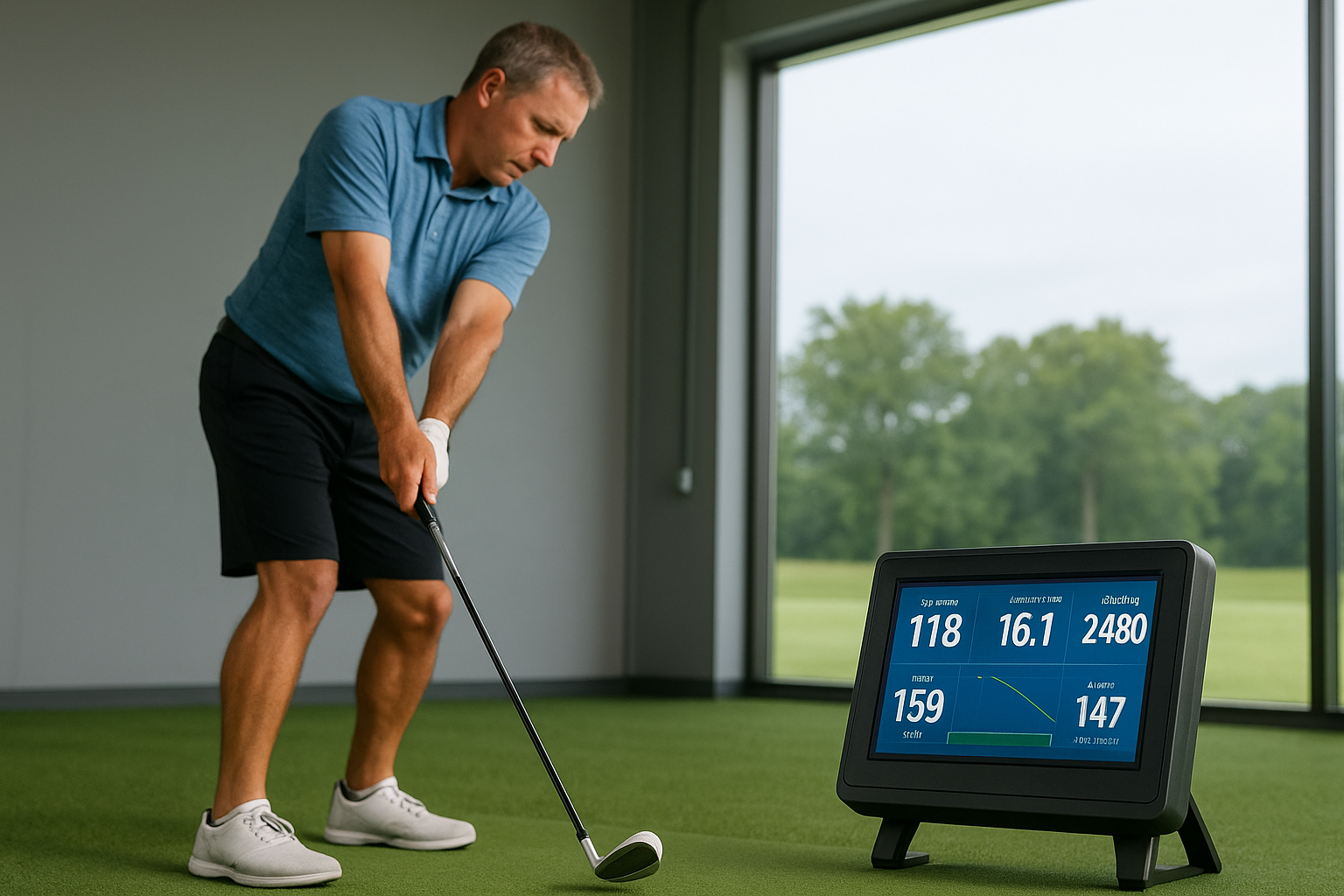
The most important metrics to focus on are ball speed, launch angle, spin rate, and shot dispersion, because these four figures directly determine how far and how accurately your shots travel.
Smash factor, which is the ratio of ball speed to club head speed, tells the fitter how efficiently you're transferring energy at impact. A low smash factor often points toward a shaft that doesn't suit your tempo rather than a fundamental swing problem. Golf club fitting explained through data like this makes it clear that the numbers remove subjectivity from the process entirely. Your fitter uses these figures across multiple shots to identify patterns in your ball flight rather than reacting to outliers, ensuring every specification change is tested against your genuine swing tendencies.
How fitters choose clubheads, shafts and grips
Every specification decision a fitter makes traces back to the launch monitor data and physical measurements collected earlier in your session. Golf club fitting explained through this lens is essentially a process of elimination and confirmation: the fitter narrows down the options by testing each variable against your actual swing data until the numbers show a clear improvement in ball speed, spin rate, and shot dispersion. Nothing gets recommended without objective evidence to back it up.
Selecting the right shaft
The shaft is the single most influential component in any club, and it's where most fitters spend the greatest portion of their time. Your swing speed and tempo are the two primary factors that guide shaft selection. A faster swing generates more load on the shaft during the downswing, so it requires a stiffer profile to return the clubface to square at impact. A smoother, more rhythmic swing benefits from a softer flex that loads more gradually and releases its stored energy efficiently.
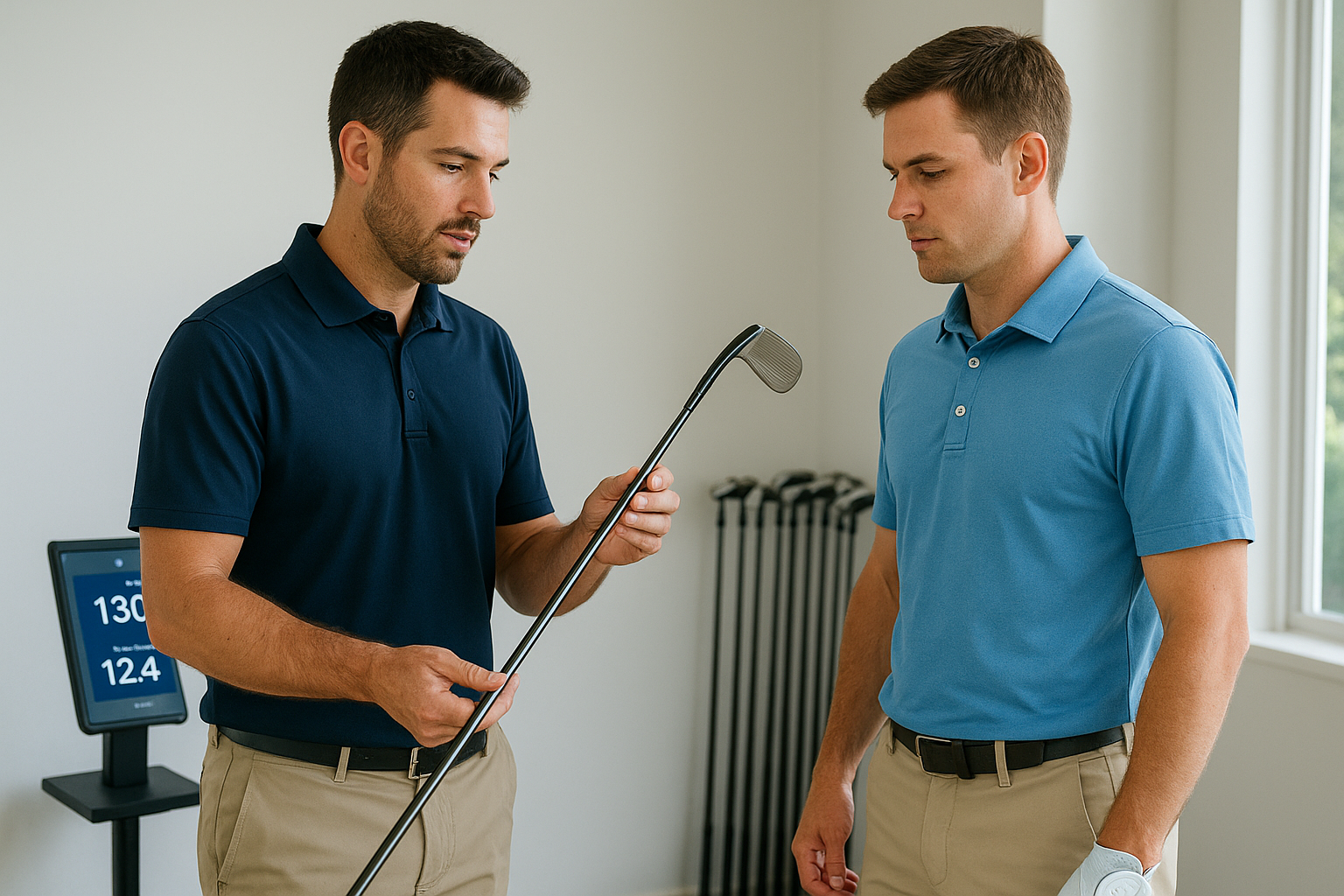
The shaft is often described as the engine of the club because it controls how and when energy transfers from your hands to the ball at impact.
Beyond flex, your fitter also evaluates shaft weight and kick point, which affect launch angle and spin. A lower kick point tends to produce a higher launch, which suits golfers with moderate swing speeds who need help getting the ball airborne. Heavier shafts generally improve accuracy for faster swingers by reducing unwanted movement during the swing.
Matching the clubhead to your swing
Once the shaft profile is confirmed, your fitter shifts attention to the clubhead design that best complements your swing characteristics. Players who regularly strike the ball towards the heel or toe benefit from a larger clubhead with a higher moment of inertia, which resists twisting on off-centre strikes and keeps missed shots much closer to the target line.
Your typical attack angle and ball flight shape also influence which clubhead suits you. A golfer who naturally draws the ball may benefit from a neutral or slightly open-face design to balance out the shot shape, while someone who tends to fade the ball might need a draw-biased head to straighten their flight.
Getting grip thickness right
Grip selection often gets the least attention from golfers, but thickness directly affects how your hands rotate through impact. Your fitter matches grip size to your hand measurements, then confirms the recommendation by having you hit shots with different thicknesses to verify the data matches how each option feels under pressure.
Grip material and texture also factor into the final decision, particularly if you play in wet conditions regularly, where a more aggressive surface pattern maintains better control throughout the round.
The most common fitting options and timings
Golf club fitting explained across a single session doesn't always mean getting every club in your bag assessed on the same day. Most fitting facilities offer several distinct session types at different price points and durations, so you can choose the level of detail that matches your current priorities and budget without committing to a full-bag overhaul straight away.
Types of fitting sessions available
The most popular entry point is a single-club or single-category fitting, where you focus on one area of your bag, typically your driver or your irons. A driver fitting runs around 45 to 60 minutes and concentrates entirely on maximising your distance and accuracy off the tee. An iron fitting follows a similar format but evaluates the full set from long irons through to short irons, paying close attention to loft gapping so your yardage increments are consistent from club to club.
A wedge fitting is often overlooked, but optimising loft gaps and shaft weight through your scoring clubs can have a bigger impact on your handicap than any driver upgrade.
A full-bag fitting covers every club in one extended session, usually lasting three to four hours. This option suits golfers who are building a new set from scratch or who want a comprehensive review after a significant swing change. Putter fittings are also available as standalone sessions, focusing on length, lie angle, and head style to match your stroke path and tempo on the greens.
Common fitting session types and their approximate durations:
| Session type | Typical duration |
|---|---|
| Driver fitting | 45 to 60 minutes |
| Iron fitting | 60 to 90 minutes |
| Wedge fitting | 45 to 60 minutes |
| Putter fitting | 30 to 45 minutes |
| Full-bag fitting | 3 to 4 hours |
When to book your fitting
The best time to book a fitting is before you purchase any new clubs, not after. Buying first and fitting later means you may end up paying for adjustments to equipment you've only just bought, or discovering that off-the-shelf specifications don't suit your swing at all. Booking your fitting before spending any money means every pound goes toward exactly the right specification from day one.
Your fitting also carries more value if you've recently had a course of lessons, because any swing changes you've been working on are already reflected in your ball-striking patterns. This gives your fitter accurate, current data to work from rather than specs based on a swing you're actively trying to change.
How to prepare and what to bring
A little preparation before your fitting session makes a significant difference to the quality of data your fitter collects. The goal is to arrive in a condition that reflects your typical game on the course, not your best-case scenario after an unusually good warm-up. Turning up tired, stiff, or wearing the wrong shoes affects your swing mechanics, which can skew the data and lead to specifications that don't truly represent how you play.
Arriving well-rested and properly warmed up gives your fitter the most accurate snapshot of your natural swing, which directly determines how reliable the final specifications will be.
Bring your current clubs and golf accessories
Your existing clubs give your fitter a clear starting baseline before any changes are made. Seeing exactly what you're currently playing tells the fitter where the gaps are and provides a direct comparison point when they introduce alternative shafts and heads. If you've had any custom work done previously, such as re-gripping or shaft replacements, mention this at the start so the fitter can factor it into their assessment.
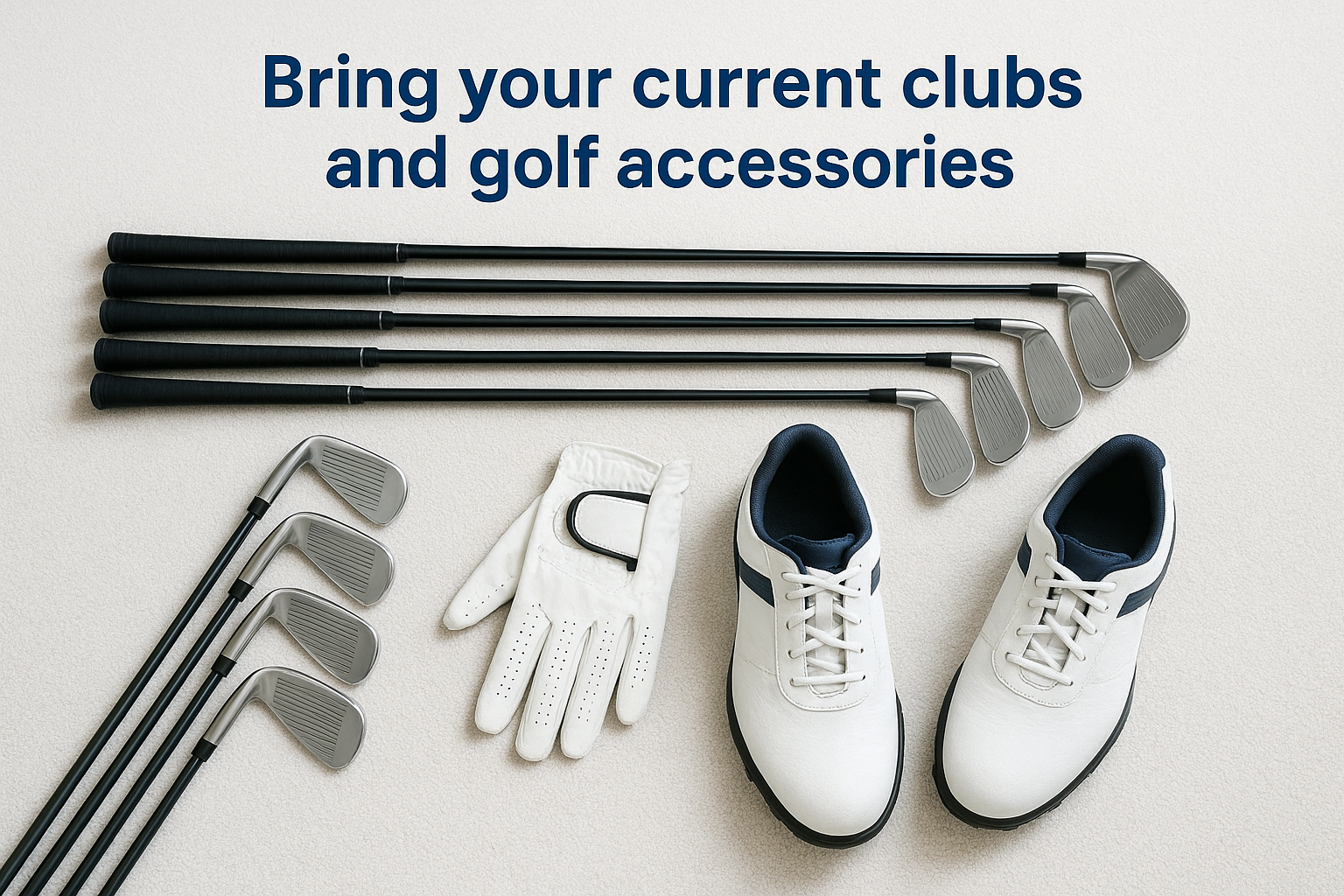
Bringing your most recently used glove and your regular golf shoes is equally important. Your glove size acts as a useful cross-reference for grip thickness selection, and your golf shoes ensure your posture and ground contact at address reflect exactly what you experience during a round. Wearing trainers instead of golf shoes changes how you load the ground during your swing and introduces variables that don't belong in the data.
A quick checklist of what to bring to your fitting:
- Your full current set of clubs, including wedges and putter
- Your most recently used golf glove
- Golf shoes you regularly play in
- Any notes on consistent misses or ball flight tendencies
What to wear and how to warm up beforehand
Wear comfortable clothing that doesn't restrict your shoulder turn or hip rotation, ideally the same type of outfit you'd wear on the course. Tight jeans or heavy layers affect your mobility through impact, which introduces swing characteristics that aren't representative of your actual game.
Golf club fitting explained as a process produces the most useful data when your body is ready to move freely from your very first swing. Spend 10 to 15 minutes warming up before you arrive, whether that's some light stretching, a short walk, or a few practice swings at home. Arriving cold means your early shots won't represent your natural swing, and those early shots form part of the baseline data your fitter relies on to make every specification decision.
Common fitting mistakes and how to avoid them
Even a well-run fitting session can produce the wrong specifications if you walk in with certain habits or assumptions. Understanding where golfers most commonly go wrong means you can sidestep those pitfalls entirely and get genuinely useful data from every swing you hit during your appointment.
Trying to swing your best instead of your most typical
One of the most common mistakes in any fitting is treating the session like a performance review. When golfers feel the pressure of being watched and measured, they tighten up and attempt to swing harder or more technically correctly than they normally would on the course. This produces data that doesn't represent your real game, and the fitter ends up building specifications around a swing you rarely reproduce outside the fitting bay.
Golf club fitting explained properly is about matching clubs to your most common swing, not the swing you wish you had on your best day.
Your job in the fitting is simply to swing as naturally and consistently as you do mid-round, including your typical miss. The fitter needs your honest swing patterns, not an audition.
Letting brand preference override the data
Plenty of golfers arrive at a fitting with a firm idea of which brand they want to walk out with. Brand loyalty is understandable, but insisting on a particular manufacturer before the data is collected can lead your fitter to work within an unnecessary constraint. If the launch monitor clearly shows one shaft or head outperforming another, the numbers matter more than the badge on the club.
Go in with an open mind about the final specification, and let your fitter present the data objectively before you make any decisions based on aesthetics or personal preference.
Booking a fitting immediately after changing your swing
If you're currently mid-way through a block of lessons, your swing is still in a state of active change. Getting fitted during this window means the specifications get built around a transitional movement pattern that your coach is actively working to alter. The clubs you order today could be poorly suited to the swing you'll be making in six months once the changes fully bed in.
Wait until your coach confirms your new swing pattern is consistent and reliable before booking your fitting. This gives your fitter stable, representative data to work from, and it ensures the equipment you order serves your game for years rather than becoming a mismatch before the grips are even worn in.
What to do after your fitting
Once your fitting session ends, you walk away with a set of precise specifications that represent the best equipment match for your swing. The steps you take immediately after that appointment determine whether those specs actually translate into improved performance on the course, or whether the data sits unused while you revert to buying clubs off the shelf. Golf club fitting explained as a single session misses the point; the value comes from acting on the information you've been given.
Review your fitting report carefully
Most fitters provide a written summary of your recommended specifications before you leave, covering shaft model, flex, weight, clubhead model, loft, lie angle, and grip details. Take time to read through this document carefully rather than treating it as a receipt to stuff in your bag. Understanding why each specification was recommended reinforces your confidence in the process and ensures you don't accidentally order the wrong options when you place your purchase.
If anything in your fitting report is unclear, contact your fitter directly before ordering, because a single misread specification can undermine the entire process.
Place your order without unnecessary delay
Your swing characteristics don't remain static indefinitely, particularly if you're still taking regular lessons or playing frequently. Ordering your clubs within a reasonable window after your fitting, typically within a few weeks, means the specifications still accurately reflect your current ball-striking patterns. Waiting too long introduces the risk that gradual changes in your swing make some of the recommended specs slightly less relevant by the time the clubs arrive.
When you place your order, double-check every detail against your fitting report line by line before confirming. Pay particular attention to shaft model and flex designation, as these are the most frequently misread details when ordering online or in-store.
Keep your fitting specs on file
Store a digital copy of your fitting report somewhere you can easily retrieve it in the future. Your specifications become a useful reference point whenever you add a club to your bag, replace a worn shaft, or consider upgrading a specific category. Knowing your preferred shaft weight, flex, and grip size means future purchase decisions take minutes rather than hours, and you avoid the frustration of discovering a new club doesn't match the rest of your set because you bought it without checking your established spec sheet.
Your fitting data also gives any future fitter an immediate head start if you book another session later, because they can see exactly what you were playing and build on it rather than starting from scratch.
How to buy clubs online using your fitting specs
Once you have your fitting report in hand, buying clubs online becomes a far more straightforward process than scrolling through product pages and guessing at specifications. Your fitting specs act as a precise shopping list, removing every variable except finding the right retailer at the right price. Golf club fitting explained as a process ultimately delivers the most value at this stage, because the data your fitter collected now guides every click you make.
Matching your specs to product listings
When you search for clubs online, match every element of your fitting report to the product listing before adding anything to your basket. The three details that most commonly get missed are shaft model, flex designation, and lie angle, particularly when a club is sold in multiple configurations and the default listing shows standard specs. Filter specifically by the shaft and flex your fitter recommended rather than accepting whatever the page defaults to.
Buying the correct head but the wrong shaft undoes every benefit the fitting produced, so check the full specification breakdown on each product page carefully.
Many online listings present drop-down menus for flex, loft, and grip options rather than listing every variant as a separate product. Take your time working through each menu and compare every selected option against your fitting report before confirming your order.
Ordering the right quantity and configuration
Iron sets sold online typically come in standard loft configurations, which may not match the individual loft adjustments your fitter recommended. If your fitter specified a lie angle that differs from the manufacturer's standard, check whether the retailer offers custom or adjusted builds before placing your order, or contact their customer service team to confirm whether the clubs can be bent to your spec after delivery.
Shaft options available online don't always include every model your fitter tested, particularly for more specialised or tour-level profiles. If your exact shaft isn't listed, contact the retailer directly and ask whether they can source the correct build. A good specialist retailer will either stock it or help you find the right alternative rather than pushing you toward whatever happens to be available.
When you shop at MoreSports, you'll find a wide selection of clubs from TaylorMade, Titleist, and other leading brands, with product pages that clearly list the available configurations. Browse the full golf equipment range at MoreSports to match your fitting specifications to the right clubs at competitive UK prices, with free delivery on orders over £25.
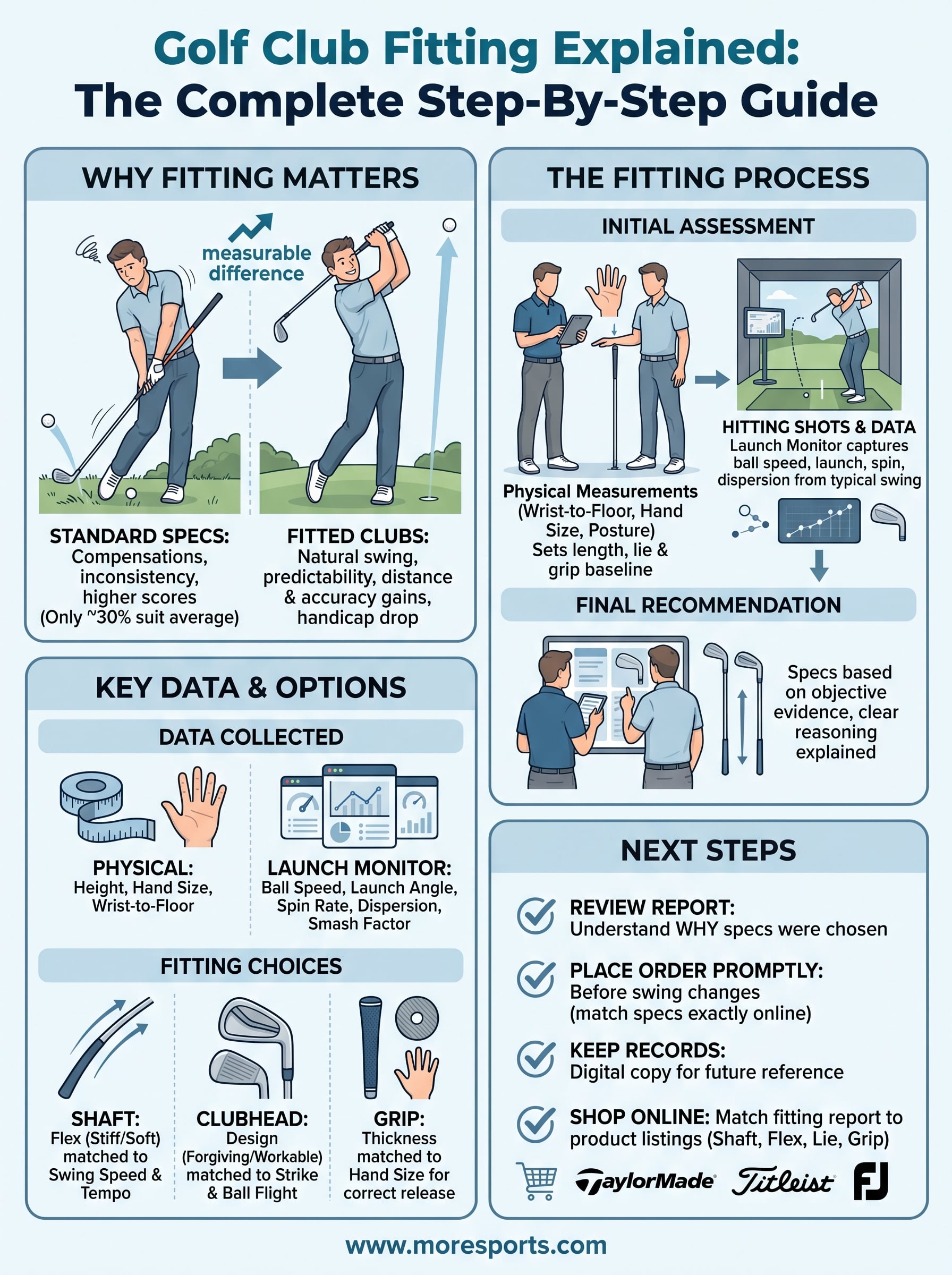
Next steps
Golf club fitting explained across this guide comes down to one practical conclusion: the right specifications make a measurable difference to your scores, and getting them right starts with booking a proper fitting rather than guessing at the counter. You now know what data gets collected, why each specification matters, and how to act on your fitting report once the session ends.
Your immediate priority is straightforward. Book your fitting before your next club purchase, bring your current set and golf shoes, and swing naturally throughout the session. Once you have your specifications, match them precisely to your order and keep a copy of the report for future reference.
When you're ready to purchase, browse the full range of golf clubs and equipment from TaylorMade, Titleist, and more at MoreSports, where you'll find competitive UK prices and free delivery on orders over £25.