 No Duties or Customs Fees For EU & UK Customers
 Free UK Delivery On Orders Over £60
 90 Day Returns

How Long Do Golf Trolley Batteries Last? Lifespan & Cycles
RYIf you've invested in an electric golf trolley, or you're thinking about it, one question matters more than most: how long do golf trolley batteries last? It's a fair question. A battery replacement can cost anywhere from £50 to over £200, so knowing what to expect in terms of lifespan and performance helps you budget and plan ahead.
The short answer is that most golf trolley batteries last between 2 and 5 years, depending on the type, how often you play, and how well you look after them. But there's more to it than that. Lithium and lead-acid batteries behave very differently on the course and over time, and your charging habits play a bigger role than you might think in how many rounds you'll get before a replacement is needed.
At MoreSports, we supply electric golf trolleys and accessories from brands like MacGregor and more through our online store and our shop in Coleraine, Northern Ireland. We hear these questions regularly from golfers who want to get the most out of their kit. This guide breaks down real-world battery life by type, explains how many holes you can expect on a single charge, and covers the maintenance steps that genuinely extend battery longevity, so you can spend less time worrying about power and more time on the course.
What affects how long golf trolley batteries last
Battery lifespan isn't just about the type you buy. How you use it, where you store it, and how you charge it all influence the number of rounds you'll get before performance drops. Understanding these factors helps you make smarter choices from day one, and gives a more accurate picture of how long do golf trolley batteries last in real playing conditions.
Usage frequency and course conditions
The more rounds you play, the faster your battery cycles through its rated capacity. Most batteries are rated for a set number of charge cycles, and each full discharge counts as one. Play twice a week during the season and you'll exhaust those cycles much faster than a golfer who plays fortnightly.
Hilly courses and rough terrain draw more power from the motor than flat layouts, which depletes the battery faster per round. Accessories such as GPS devices and umbrella holders add a small but consistent drain over 18 holes, especially on more demanding courses.
Reducing unnecessary load on your trolley during hilly rounds is a simple way to extend battery life across a full season.
Temperature and storage
Extreme temperatures are one of the most damaging factors for both lithium and lead-acid batteries. Storing a battery in a cold garage or car boot over winter accelerates chemical breakdown and reduces overall capacity. Heat causes a similar effect on lithium cells.
Keeping your battery at room temperature during the off-season and avoiding a full discharge for extended periods protects the cells. Lead-acid batteries left fully flat develop sulphation, which permanently reduces capacity. Lithium batteries handle partial charging better but still suffer if stored at a very low charge level for several months at a time.
Lithium vs lead-acid: lifespan and cycle life
The type of battery you choose is the single biggest factor in how long do golf trolley batteries last. Lithium and lead-acid batteries differ significantly in cycle life and long-term value, so understanding both helps you make the right call before you spend.
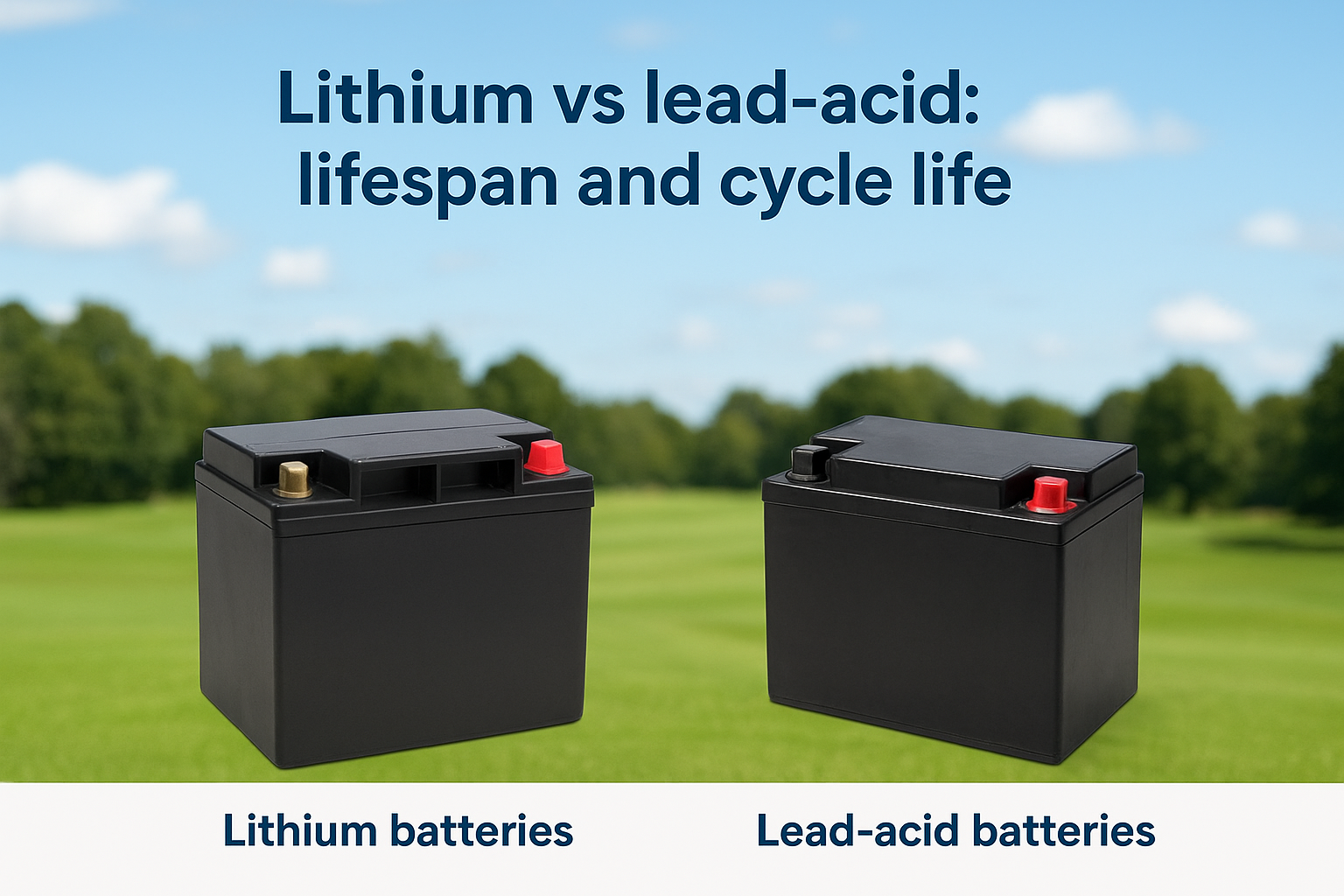
Lithium batteries
Lithium batteries typically last 300 to 500 charge cycles, which translates to roughly 4 to 5 years of regular play. They handle partial charging well, so you don't need to drain them fully before plugging in.
Lithium batteries cost more upfront but often work out cheaper over several years when you factor in fewer replacements and lower maintenance.
Your trolley motor also benefits from the considerably lighter weight of lithium packs, as less strain on the motor supports a longer overall lifespan for both battery and trolley.
Lead-acid batteries
Lead-acid batteries offer around 200 to 300 cycles and last roughly 2 to 3 years with regular use. They're more sensitive to deep discharge, meaning leaving them flat permanently damages the cells through a process called sulphation.
Despite the lower purchase price, the shorter lifespan and stricter care requirements make lead-acid a less cost-effective choice for golfers who play frequently throughout the season.
How many holes per charge for 18 and 36
A single charge should comfortably cover 18 holes on most modern electric trolleys, but how far that extends depends on battery type and course terrain. This is one of the most practical aspects you need to consider when thinking about how long do golf trolley batteries last in everyday use.
18 holes
Both lithium and lead-acid batteries handle a standard 18-hole round without issue when they're in good condition. A fully charged lithium battery typically retains 50 to 60% of its capacity after 18 holes on a flat course, leaving plenty of reserve. On a hilly course, expect closer to 60 to 70% depletion, which still keeps you safely within range.
Always check your battery indicator before you head out, not midway through the back nine.
36 holes
Lithium batteries are the only reliable choice if you plan to play 36 holes in a single day. A healthy lithium pack on a flat course will manage the full distance without a recharge. Lead-acid batteries, by contrast, struggle beyond 18 holes and risk deep discharge if pushed, which permanently damages the cells and shortens the battery's overall life considerably.
How to charge and store your battery safely
Your charging and storage habits have a direct impact on how long do golf trolley batteries last in real-world use. Small, consistent mistakes, like leaving a battery flat for weeks or storing it in a cold outbuilding, can cut years off its rated lifespan without you realising it.
Charging correctly
Always charge your battery as soon as possible after a round, before the charge level drops too low. For lead-acid batteries, a full charge after every use is essential to prevent sulphation building up in the cells. Lithium batteries are more forgiving, but they still benefit from being charged promptly rather than left sitting at a low level for extended periods.
Never leave either battery type on the charger for several days at a time, as overcharging shortens cell life faster than most people expect.
Key charging rules to follow every time:
- Charge after every round, not just when the battery feels low
- Use only the charger supplied with your trolley
- Disconnect once fully charged to avoid overcharging
Storing between rounds and over winter
Room temperature storage is the safest option year-round. Avoid garages, car boots, or sheds where temperatures drop sharply in winter. Before putting your battery away for the off-season, charge a lithium battery to around 50 to 70%, or fully charge a lead-acid battery, then check and top it up every four to six weeks as needed.
When to replace your golf trolley battery
Knowing when to replace your battery saves you from being stranded mid-round with a dead trolley. Most batteries give clear warning signs before they fail completely, so paying attention to performance changes during play helps you act before the problem becomes urgent. This is a practical part of understanding how long do golf trolley batteries last in your specific situation.
Signs your battery is failing
Your battery is likely reaching the end of its life if range drops noticeably compared to when it was new. If a battery that once covered 18 holes comfortably now struggles past the 12th, the cells have degraded significantly.
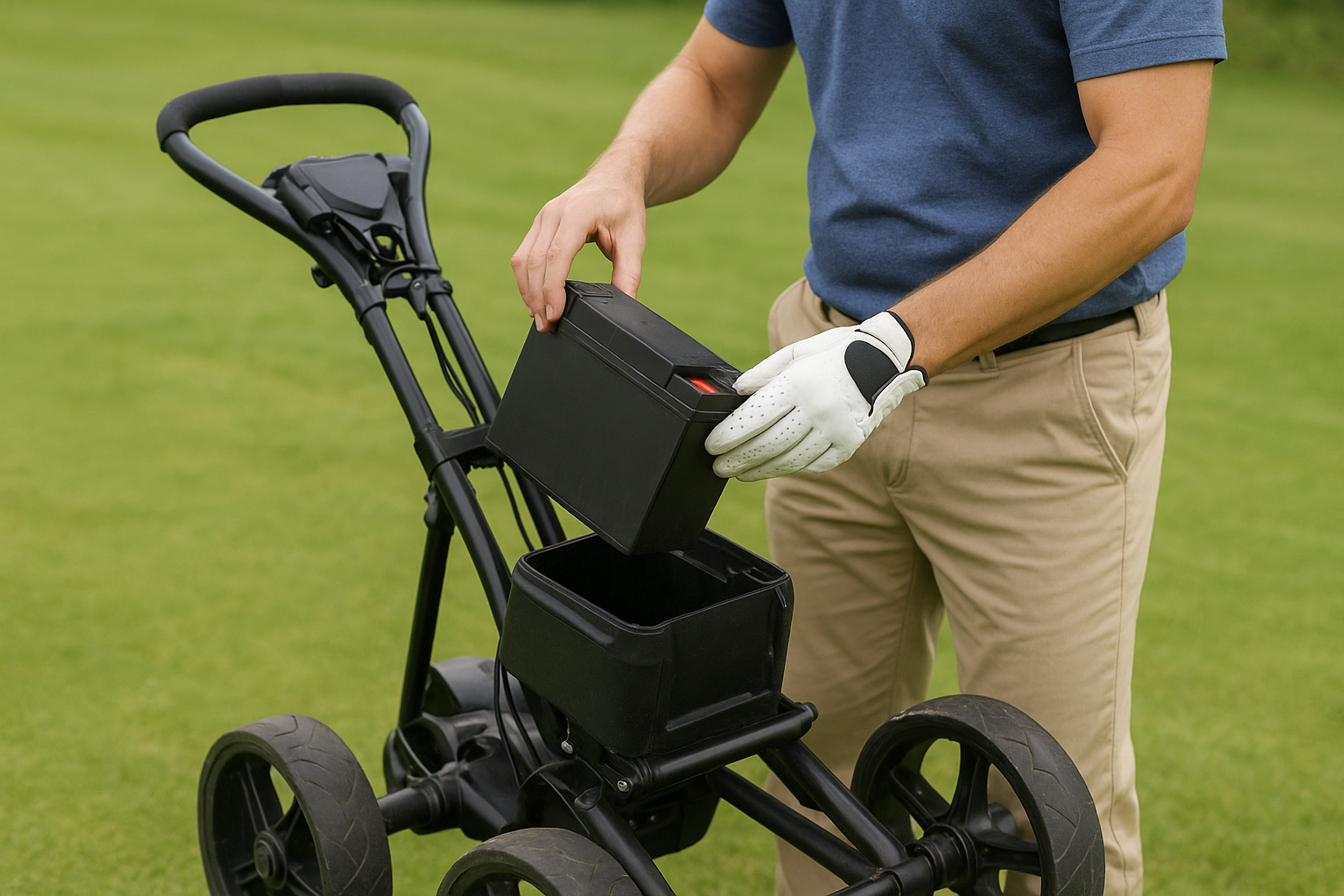
A battery that takes much longer to charge than usual, or feels warm during charging, is telling you it needs replacing soon.
Other warning signs to watch for:
- The trolley slows down on gradients it previously handled without issue
- Charge level drops rapidly within the first few holes
- The battery case is visibly swollen or damaged
How to test battery health
A simple voltage test using a multimeter after a full charge gives you a reliable reading of remaining capacity. If the voltage sits well below the manufacturer's rated figure, replacement is the most practical next step. Lead-acid batteries rated at 12V should read around 12.6V or above when fully charged; anything consistently below 12V signals significant degradation.
Quick recap
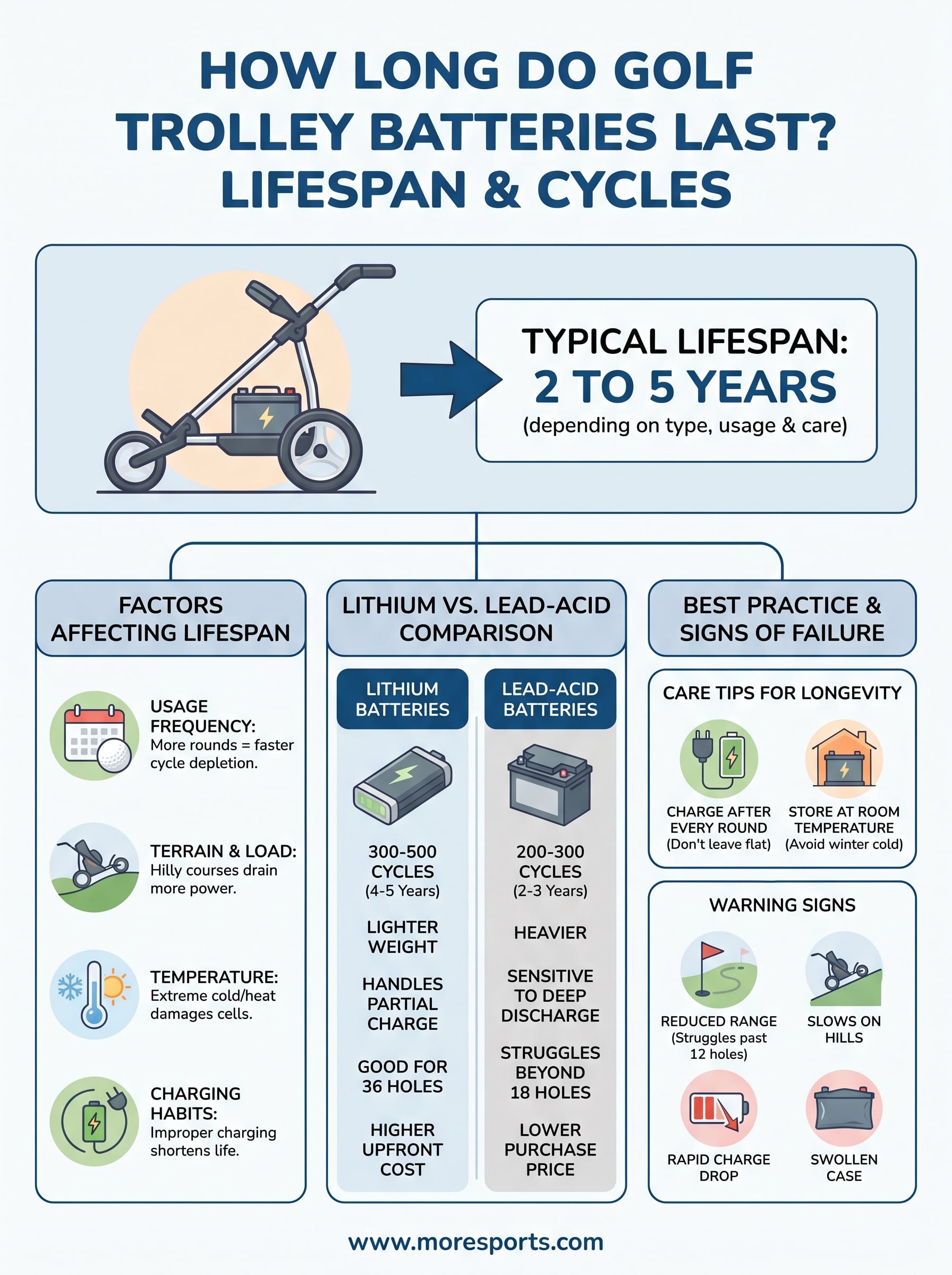
Understanding how long do golf trolley batteries last comes down to a handful of factors you can actually control. Lithium batteries outperform lead-acid in almost every category, offering 300 to 500 cycles against 200 to 300, and they handle 36 holes comfortably where lead-acid falls short. Both types need attention after every round, and temperature-controlled storage over winter makes a genuine difference to how many seasons you get before a replacement is due.
Watch for early warning signs like reduced range, rapid charge loss in the first few holes, or a trolley that slows on hills it used to handle without issue. Catching these early lets you plan a replacement before it disrupts a round. Most golfers get 2 to 5 years from a battery, but proper charging habits and careful storage push that figure toward the higher end. If you're ready to upgrade, browse our full range of electric golf trolleys and accessories at MoreSports.