 No Duties or Customs Fees For EU & UK Customers
 Express Tracked UK Delivery On 1000s of Items
 90 Day Returns

8 Best Walking Shoes For Overpronation In The UK (2026)
RYIf your shoes wear down faster on the inside edge, or your ankles ache after a long walk, you're likely dealing with overpronation. It's when your foot rolls inward too much on each step, and the wrong footwear makes it worse over time, leading to shin splints, knee pain, and sore arches. Finding proper walking shoes for overpronation isn't about buying the priciest pair on the shelf, it's about getting the right stability structure for your gait.
This guide cuts through the marketing and points you towards shoes that actually deliver motion control support and a firmer midsole where you need it most. We've looked at options built for everyday walking, longer trail sessions, and standing on your feet all day, so you can match the shoe to how you actually use it.
Below you'll find our pick of 8 shoes, covering trusted names like Adidas and Under Armour alongside dedicated stability shoe brands, all chosen for genuine arch support rather than gimmicks. Each one is available through MoreSports with free UK delivery over £25 and 90-day returns, so you can try a pair at home and send them back if the fit isn't right for your feet.
1. Understanding overpronation and how to spot it
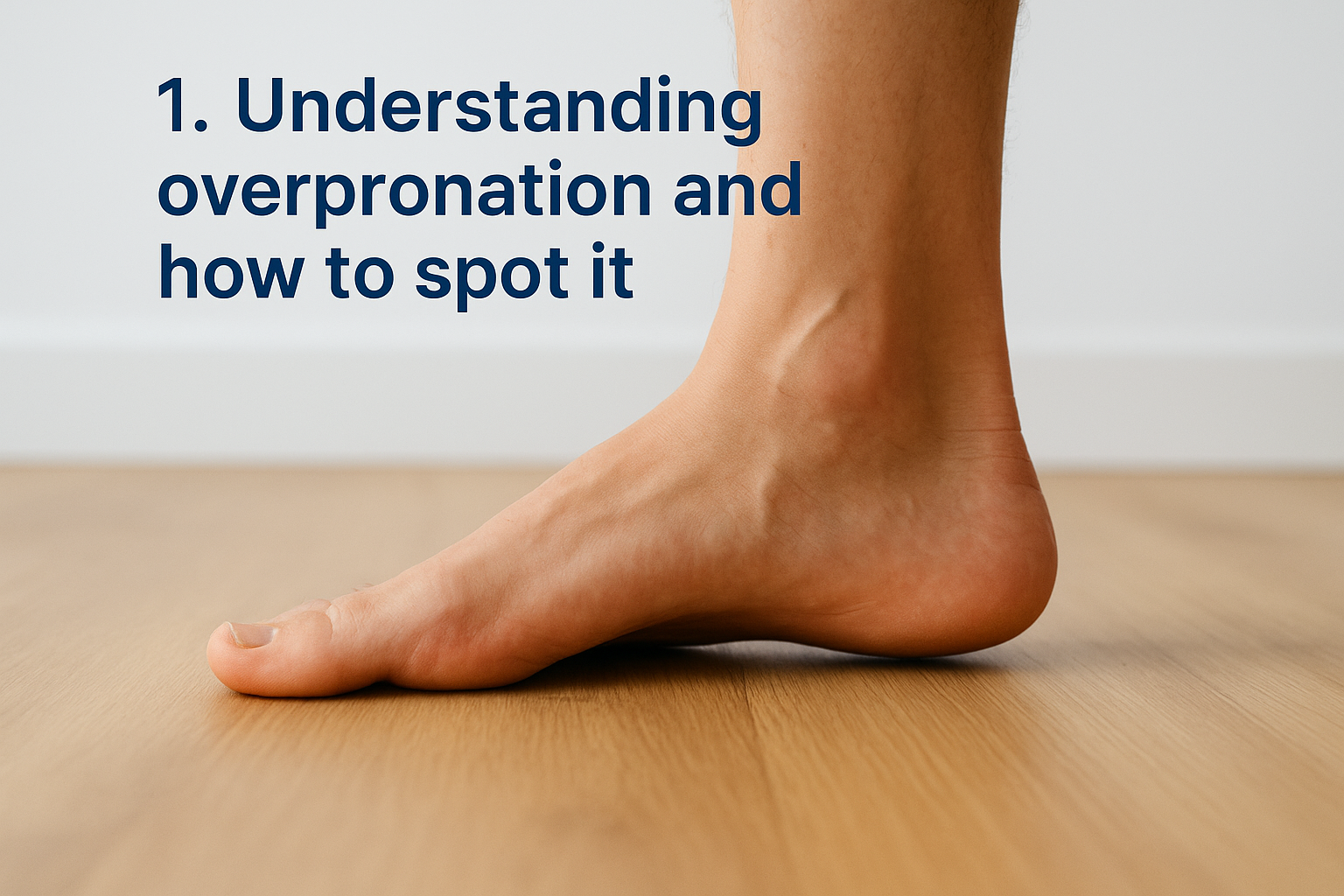
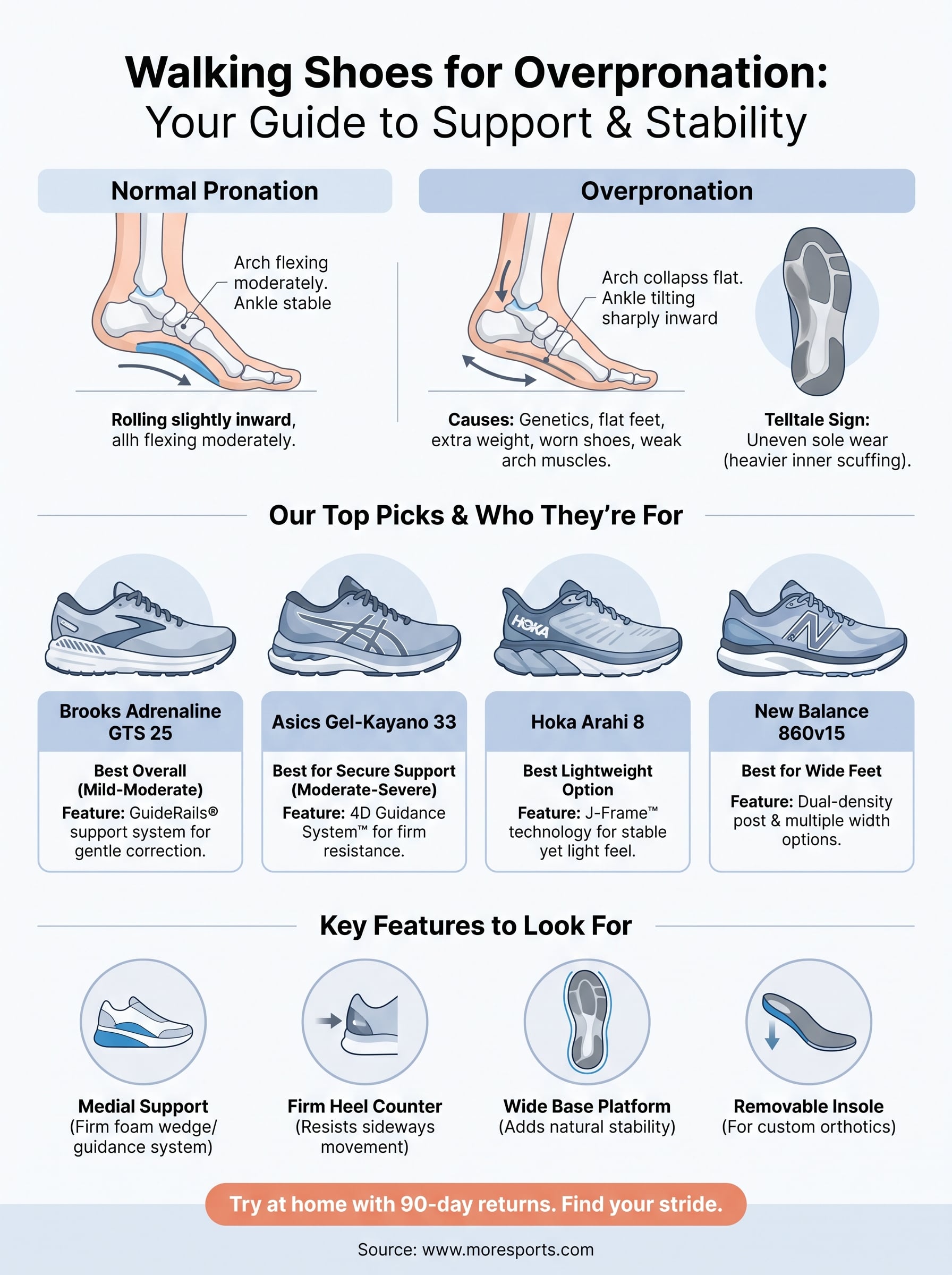
Your foot is meant to roll inward slightly with each step, this is normal pronation and it helps absorb shock as you walk. Overpronation happens when that inward roll goes too far, so your arch collapses more than it should and your ankle tilts inward past the point where your foot can support your body weight properly. Over time, this shifts stress up the chain, straining your knees, hips, and lower back, not just your feet.
What causes overpronation
Genetics play a big role, flat feet or low arches make overpronation far more likely, but it's not the only factor. Carrying extra weight, standing or walking for long stretches on hard surfaces, and worn-out footwear all add to the problem. Weak arch muscles, often from years spent in unsupportive shoes, let the arch flatten further with every stride. Pregnancy and ageing also loosen the connective tissue in your feet, which is why overpronation often becomes more noticeable later in life even if you never had issues before.
Telltale signs in your shoes and your body
Check the soles of your current shoes before anything else, the wear pattern tells you most of what you need to know. If the inside edge of the heel and forefoot is worn down noticeably more than the outside, that's a strong signal something needs to change.
- Uneven sole wear: heavier scuffing on the inner edge of your heels
- Shoes that lean inward when placed on a flat surface, even when new
- Pain in your arches, shins, or knees after walking distances that never used to bother you
- Flattened arches visible when you stand barefoot and look at your footprint
- Ankles that ache or feel unstable on uneven ground
If your shoes wear down on the inside edge faster than anywhere else, that's your body telling you it needs more support underfoot.
How to check your own gait
Try the simple wet footprint test at home: wet the sole of your foot, then step onto a dry, flat surface like cardboard or a dark tile. A normal arch leaves a print with a moderate inward curve. If you see almost the entire sole, including most of the arch area, filled in, you're very likely overpronating. Alternatively, look at an old pair of trainers on a flat surface from behind; if they tilt inward at the heel rather than sitting upright, that confirms it too.
None of this replaces a proper gait assessment. Many physiotherapists and specialist footwear shops offer video gait analysis for a small fee, and it's worth doing once if you've had recurring pain or you're unsure how severe your overpronation is. Once you know your degree of pronation, mild, moderate, or severe, you can match it to the right level of stability shoe rather than guessing, which is exactly what the rest of this guide will help you do.
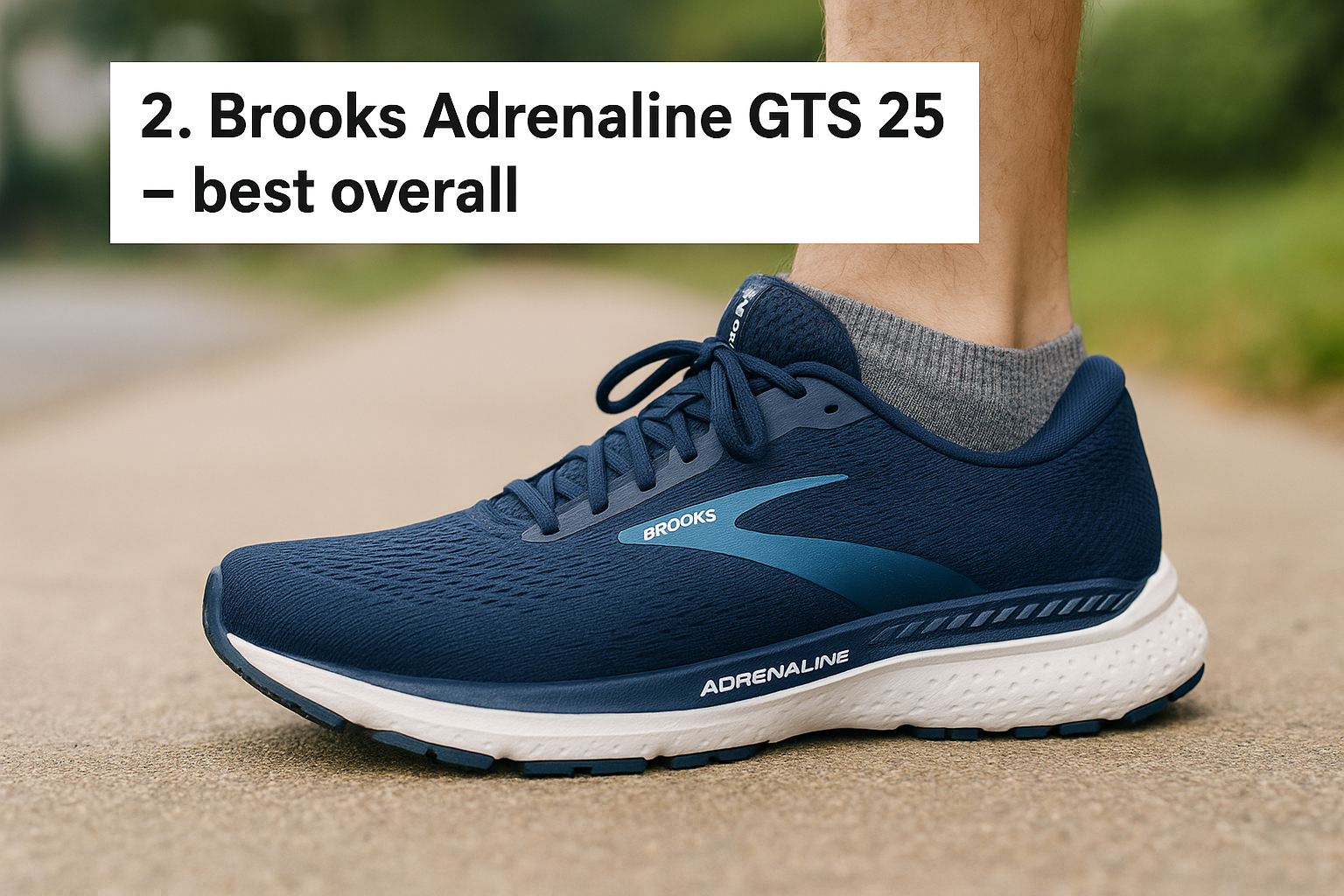
2. Brooks Adrenaline GTS 25 – best overall
The Brooks Adrenaline GTS 25 has been the go-to recommendation from podiatrists for years, and the latest version keeps that reputation intact. GTS stands for "Go To Support", and that's exactly what you get: a shoe built specifically for mild to moderate overpronation without feeling clinical or heavy underfoot. It works equally well for daily walks around town, dog walking on uneven paths, or long shifts where you're on your feet for hours.
Support and stability
Brooks uses its GuideRails support system rather than a traditional dense wedge of foam on the inner side. Instead of just propping up your arch, GuideRails act at the hip and knee level, gently nudging your leg back into alignment only when it moves too far off track. This means the shoe corrects excess inward roll without restricting your natural stride the way older-style motion control shoes tend to.
The Adrenaline GTS 25 corrects your stride only when it drifts too far, rather than forcing your foot into one fixed position.
Comfort and fit
Underfoot, the DNA LOFT v3 cushioning feels soft on landing but firms up through the midstance, so your arch never feels like it's sinking into mush. The engineered mesh upper stretches where your foot needs room and holds firm around the midfoot, which suits both narrow and slightly wider feet. Sizing runs true, though if you have particularly wide feet, sizing up half a size gives the toe box a bit more breathing room over longer distances.
Price and value
Expect to pay around £140 to £150 for a pair, which sits at the upper end for a stability walking shoe, but the outsole holds up well past 400 miles before losing its support properties. Given how consistently this model performs across different foot types and how little the design changes year to year, it's a safe first purchase if you're new to stability shoes and want a proven option rather than a gamble.
3. Asics Gel-Kayano 33 – best for secure support
Asics built its reputation on the Gel-Kayano line long before "stability shoe" became a marketing term, and the 33rd version feels like the most refined take yet. Where the Brooks above nudges your stride gently, this shoe takes a firmer hand, making it a better match if your overpronation is moderate to severe rather than mild. It suits walkers who've tried softer stability shoes and still felt their arches collapsing by the end of a long day.
Support and stability
Underneath the foot sits Asics' 4D Guidance System, a dual-density structure that widens the base of support and resists the inward roll far more assertively than a standard medial post. Combined with the OrthoLite X-40 sockliner, which holds its shape rather than compressing flat within weeks, the shoe keeps your arch properly cradled even on longer, uneven routes. This makes it one of the more secure options here for anyone who needs correction they can actually feel underfoot.
If you've outgrown softer stability shoes and still feel your arch giving way, the Gel-Kayano 33's firmer guidance system is built for exactly that gap.
Comfort and fit
Despite the added structure, the PureGEL cushioning in the heel takes the edge off hard pavement impact, so the shoe never feels punishing even after a few hours on your feet. The engineered knit upper wraps snugly around the midfoot while leaving room to wiggle your toes, and the heel clutch keeps your foot locked in place without pressure points. Half sizes run accurate, though those with narrower heels may want to try the width in-store before committing.
Price and value
Pricing sits around £160 to £170, making it one of the pricier picks in this list, but the midsole retains its supportive properties for longer than most competitors, often past 500 miles of regular walking. If you need dependable, secure support and you're willing to pay for it, this is the pair worth the extra outlay over cheaper alternatives.
4. Hoka Arahi 8 – best lightweight option
Most stability shoes lean heavy, packing in foam and support structures until the shoe feels like a boot. The Hoka Arahi 8 breaks that pattern, delivering genuine motion control in a shoe that barely feels there once it's on your foot. It suits walkers who've been put off stability shoes in the past because of the bulk, or anyone covering longer distances where every extra gram in the shoe adds up by the end of the day.
Support and stability
Hoka's J-Frame technology replaces the traditional dense wedge with a firmer strip of foam that wraps from the heel through to the medial side of the midsole, cradling your foot without adding weight or bulk elsewhere in the shoe. It guides your stride back in line as your foot rolls inward, working similarly to the Brooks GuideRails above but with a noticeably lower stack height, so the correction feels closer to the ground rather than propped up on a thick platform.
The Arahi 8 proves that stability doesn't have to mean heavy, it corrects your stride while staying light enough to forget you're wearing a support shoe at all.
Comfort and fit
The early-stage Meta-Rocker in the sole shifts your weight forward smoothly with each step, which takes pressure off your arch during toe-off and makes longer walks feel less tiring on your calves. The breathable engineered mesh upper runs true to size and suits narrower to medium feet best, though the padded tongue and heel collar stop any hot spots from forming even without a roomier fit. If you've got wider feet, it's worth trying the shoe in-store first, as the toe box runs slightly snug compared with the Brooks and Asics options above.
Price and value
You'll find the Arahi 8 priced around £130 to £140, sitting comfortably in the middle of this list, and the lightweight build doesn't come at the cost of durability, with most walkers getting well past 350 miles before the J-Frame loses its supportive edge. It's a strong pick if you want stability without the weight penalty, particularly for anyone who walks daily and notices tired legs from heavier shoes by the afternoon.
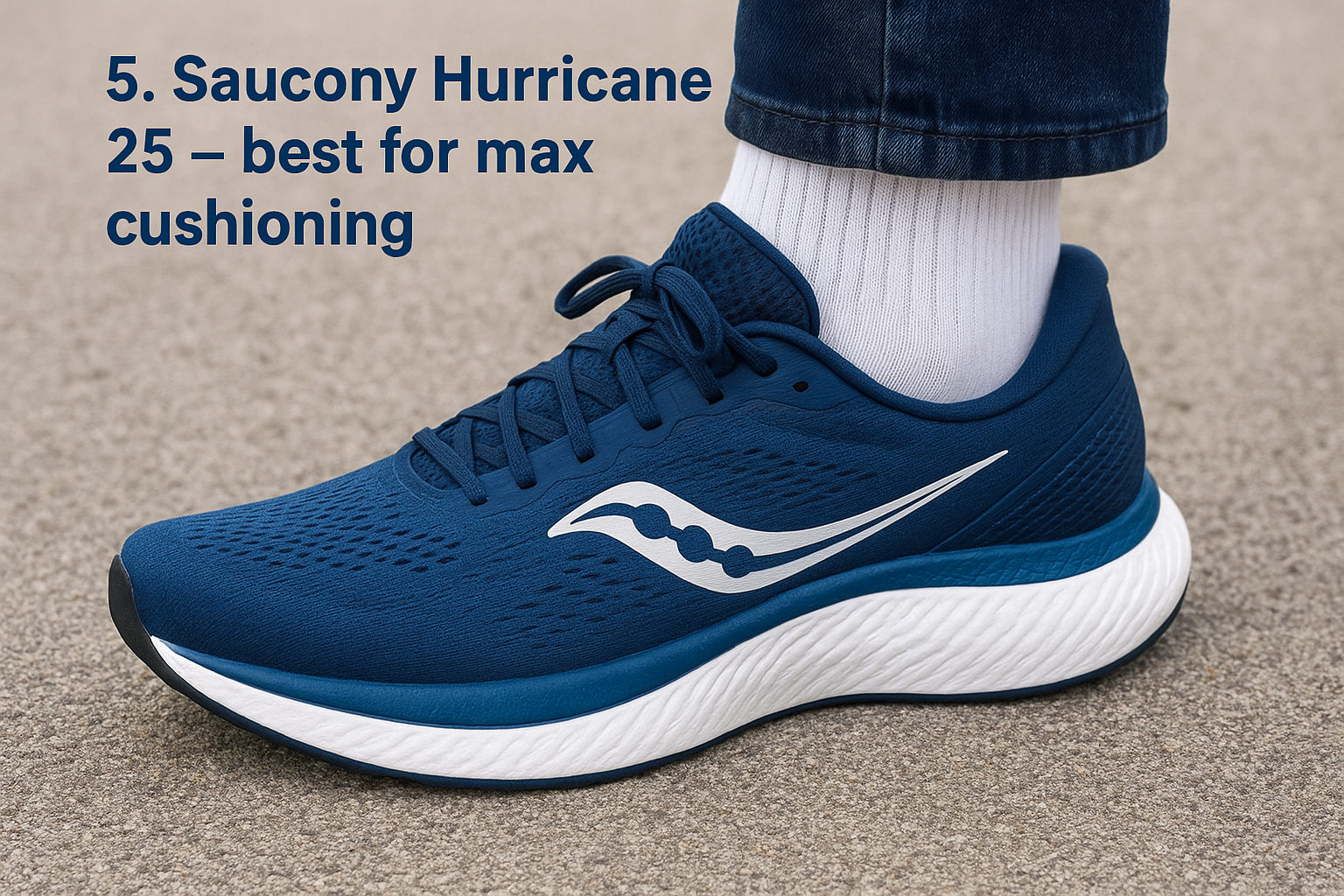
5. Saucony Hurricane 25 – best for max cushioning
If your feet ache from the ground up after even a short walk, the Saucony Hurricane 25 tackles that problem with more cushioning than almost anything else on this list. Saucony built this shoe for overpronators who need serious shock absorption alongside correction, particularly if you're heavier-set or spend most of your day on concrete or tiled floors. It suits anyone who's tried firmer stability shoes and found them too harsh underfoot, especially older walkers managing joint pain alongside their pronation issues.
Support and stability
Saucony's PWRRUN+ cushioning pairs with a wide medial post that runs the full length of the midsole, giving you a broad, stable platform rather than a narrow strip of support. This construction resists inward roll firmly, making it suitable for moderate to severe overpronation, while the TPU heel counter keeps your heel locked centrally so it can't slide sideways as you walk.
When cushioning and correction usually pull in opposite directions, the Hurricane 25 manages to deliver both without one compromising the other.
Comfort and fit
Underfoot, the shoe feels noticeably plusher than the Brooks or Asics options above, closer to a recovery shoe than a typical stability trainer, yet the support structure stops that softness from turning into instability. The engineered mesh upper stretches generously across the forefoot, making this one of the more forgiving fits for wider or swollen feet by the end of a long day. Sizing runs slightly large, so most walkers find their usual size, or even a touch smaller, works best.
Price and value
Expect to pay around £150 to £160, placing it near the top of the price range in this guide, though the extra cushioning volume means the midsole takes longer to compress and lose its supportive feel, often lasting close to 450 miles. If comfort matters as much as correction to you, particularly if you're managing existing joint pain, this is worth the higher price over lighter, firmer alternatives.
6. New Balance 860v15 – best for wide feet
Finding a stability shoe that fits properly gets harder once you need extra room across the forefoot, and this is where the New Balance 860v15 pulls ahead of most rivals on this list. New Balance has always led on width options, offering this model in narrow through to extra-wide fittings, so you get proper stability support without cramming your toes into a shoe built for average-width feet. It suits walkers with wider feet, bunions, or swelling later in the day who've struggled to find a stability shoe that doesn't pinch.
Support and stability
A medial post runs through the midsole to resist inward roll, paired with New Balance's dual-density foam that firms up on the inner edge while staying softer through the rest of the shoe. This setup handles mild to moderate overpronation confidently, and the wider platform underneath adds a stability benefit of its own, since a broader base naturally resists tipping inward compared with a narrower shoe. The external heel counter keeps your foot centred, stopping any sideways drift as your foot lands.
A wider platform doesn't just fit wider feet comfortably, it also gives overpronators a more stable base to push off from.
Comfort and fit
The Fresh Foam X midsole feels smooth and consistent underfoot, without the firmer edge you'll notice in the Asics or Saucony options above, making this a good choice if you want gentle correction rather than an assertive one. Available in standard, wide, and extra-wide fittings, the engineered mesh upper stretches to match without ever feeling loose around the heel. Most walkers find true-to-size fits comfortably, though those between widths should size up in the standard fitting before jumping to wide.
Price and value
Pricing sits around £120 to £130, making it one of the more affordable stability shoes here, and the width options mean you're less likely to need a second pair for work versus weekend wear. Durability holds up reasonably well past 350 miles, and given how few brands offer this range of widths in a proper stability shoe, it's the clear pick if fit has been your biggest obstacle so far.
7. Saucony Guide 19 – best for long walks
Distance is where most stability shoes start to show their weaknesses, either the cushioning packs down or the support structure starts digging in uncomfortably. The Saucony Guide 19 is built specifically to avoid that fade, holding its shape and support mile after mile, which makes it the pick here for anyone racking up serious daily step counts rather than short strolls. Hikers, warehouse workers, and dedicated daily walkers tend to get the most out of this model, since its benefits only really show up once you're several miles into a walk.
Support and stability
Saucony fits the Guide 19 with its PWRRUN cushioning alongside a medial guidance system that resists inward roll without the harder, more clinical feel you get from some rivals on this list. It's tuned for mild to moderate overpronation, giving you consistent correction that doesn't loosen up as the miles add up, which is exactly where cheaper stability shoes tend to let you down. The wide base platform underneath adds extra steadiness on uneven pavements or gravel paths, useful if your long walks take you off smooth tarmac.
A stability shoe is only as good as its support on mile ten, not just mile one, and the Guide 19 is built with that gap in mind.
Comfort and fit
The engineered mesh upper breathes well over longer sessions, stopping your feet from overheating on warmer days, and the padded collar avoids rubbing even without socks that are particularly thick. Fit runs true to size for most walkers, with a roomy toe box that gives your toes space to splay naturally as they swell later in the walk. Compared with the Hoka Arahi 8 above, this shoe sits slightly heavier, but that trade-off buys you noticeably more durability underfoot.
Price and value
Expect to pay around £125 to £135, putting it firmly in the mid-range for this list, with most walkers reporting the support holding firm past 400 miles before any real drop-off. If your walking routine regularly stretches past an hour, this is one of the better walking shoes for overpronation you'll find for balancing long-distance durability with genuine correction, without paying premium pricing for it.
8. Brooks Addiction Walker 2 – best leather shoe
Some workplaces demand a smarter look than mesh trainers allow, and the Brooks Addiction Walker 2 fills that gap without sacrificing the correction you need. Built with a full-grain leather upper, this shoe suits nurses, retail staff, and anyone in a uniform-strict role who's on their feet for eight-hour shifts on hard flooring. It also works well for anyone who simply prefers a more polished shoe for everyday walking rather than something that screams sportswear.
Support and stability
Brooks fits this model with a dual-density medial post that runs the full length of the midsole, giving firm, consistent resistance against inward roll from heel strike through to toe-off. It's built for moderate overpronation and holds its shape reliably under sustained standing, which matters if you're static for long stretches rather than constantly moving. The rollbar support system adds another layer of control at the heel, limiting excess rotation as your foot lands, which is particularly useful on unforgiving surfaces like tiled or concrete floors.
A leather stability shoe built for standing all day proves correction and durability don't need to come from a running shoe silhouette.
Comfort and fit
Underfoot, the shock-absorbing midsole cushions each step without feeling soft or unstable, and the extra-depth design leaves room for orthotics if you already use them. The leather upper takes a short while to break in compared with mesh alternatives, but once it does, it moulds closely to your foot shape and holds that fit for years rather than months. Sizing runs true, though those with high insteps should size up slightly, since the leather doesn't stretch as generously as engineered mesh.
Price and value
Expect to pay around £110 to £120, making this one of the more affordable options on this list despite its premium materials. The leather construction and reinforced sole mean it easily outlasts mesh stability shoes under heavy daily wear, often pushing well past 500 miles before showing real signs of breakdown. If your day involves standing more than walking and you need a smarter shoe, this is the clear pick over anything built primarily for athletic use.
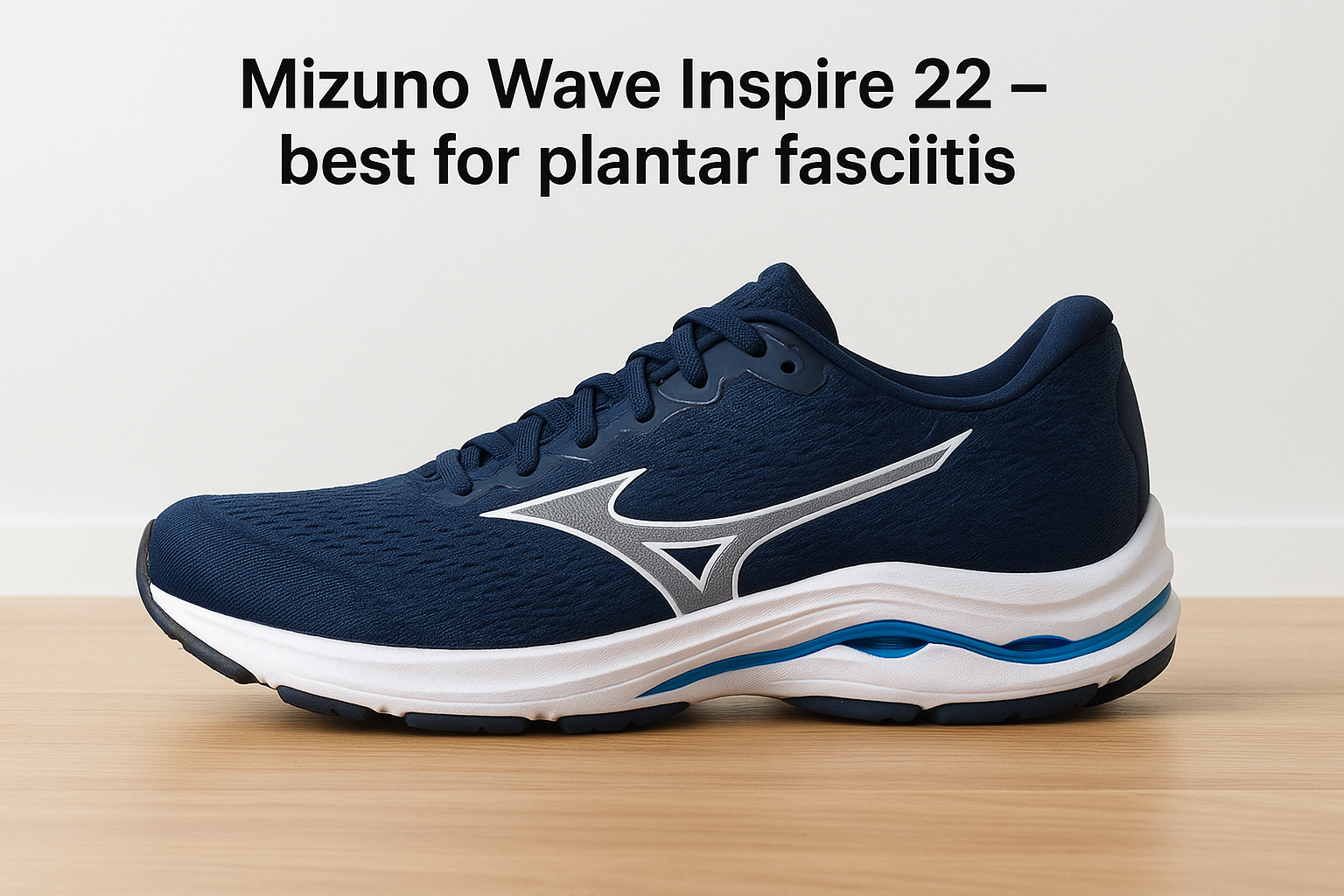
9. Mizuno Wave Inspire 22 – best for plantar fasciitis
Heel pain first thing in the morning often points to plantar fasciitis, and the Mizuno Wave Inspire 22 is built with that specific problem in mind. Mizuno designed this shoe for overpronators whose arch strain has already tipped into heel and arch pain, rather than just the early warning signs. It suits walkers managing plantar fasciitis, Achilles tightness, or general arch fatigue who need correction and recovery-focused cushioning in the same shoe.
Support and stability
Mizuno's Wave plate technology sits within the midsole rather than bolted on as a separate wedge, spreading impact forces sideways across the whole plate instead of concentrating them under your arch. This construction handles mild to moderate overpronation confidently while reducing the repetitive strain that aggravates plantar fasciitis with every step. A dual-density collar around the ankle keeps your foot centred, stopping the sideways drift that often makes heel pain worse over the course of a day.
Spreading impact across a wave plate rather than concentrating it under one point is exactly what tired, inflamed arches need most.
Comfort and fit
Underfoot, the U4ic midsole foam feels notably softer at heel strike than the Brooks or Saucony options above, cushioning the exact area where plantar fasciitis pain tends to flare up first. The engineered mesh upper stretches generously through the forefoot while holding the heel snugly, and the removable sockliner leaves room to fit orthotics or heel cups if your podiatrist has prescribed them. Sizing runs true for most walkers, though half a size up suits anyone planning to wear the shoe with orthotic inserts.
Price and value
Expect to pay around £125 to £135, sitting in the same mid-range bracket as the Saucony Guide 19 above. The wave plate keeps its supportive shape well past 400 miles, and given how specifically this shoe targets heel and arch pain rather than overpronation alone, it's worth the outlay if plantar fasciitis is your main concern alongside finding proper walking shoes for overpronation.
10. Key features to look for in stability shoes
Once you've narrowed down a shortlist, checking the shoe against a few core features stops you buying on brand name alone. Every shoe on this list does the basics well, but knowing what to look for means you can judge any future pair with confidence, even ones we haven't covered here.
Medial support is the first thing to check, whether that's a firm foam wedge, a guidance system like Brooks GuideRails, or a dual-density midsole like the New Balance 860v15. Look for a visibly denser or differently coloured section running along the inner edge of the sole, since that's usually where the correction actually happens. Without it, a shoe might feel cushioned but won't do anything to slow your foot's inward roll.
A shoe can feel comfortable and still do nothing for overpronation if it's missing proper medial support underfoot.
A firm heel counter matters just as much, since it stops your heel sliding sideways the moment it strikes the ground. Press the back of the shoe between your fingers; if it collapses easily, your heel won't stay centred for long walks.
Quick checklist before you buy
- Medial post or guidance system on the inner midsole, not just soft cushioning throughout
- Firm heel counter that resists being squeezed flat
- Wide base platform for a naturally more stable stance
- Breathable upper that still holds your midfoot securely
- Removable insole if you use orthotics or heel cups
- Half-size or wide fitting options if your feet are wider than average
| Feature | Why it matters |
|---|---|
| Medial support | Slows excess inward roll of the foot |
| Firm heel counter | Keeps the heel centred on impact |
| Wide base | Adds stability without extra weight |
| Removable insole | Allows custom orthotics if needed |
Finally, don't ignore outsole grip. A shoe with excellent support but a worn, smooth sole still leaves you unstable on wet pavements or loose gravel, undoing much of the correction built into the midsole above it.
Picking the right pair for your stride
The right walking shoes for overpronation come down to matching the shoe to your actual gait, not chasing the biggest name on the shelf. If you're new to stability shoes, start with the Brooks Adrenaline GTS 25 or New Balance 860v15, both forgiving choices while you work out how much correction your feet genuinely need. If pain has already crept in, whether that's plantar fasciitis, arch fatigue, or long shifts on hard floors, pick the model built around that specific problem rather than a generic bestseller.
Whatever you choose, don't skip the wear-testing period. Walk in your new pair around the house first, checking for hot spots or pinching before wearing them properly outdoors. With 90-day returns on every order, you've got room to get the fit right without guessing. Browse the full range of stability and support footwear at MoreSports and find the pair that actually suits your stride.