 No Duties or Customs Fees For EU & UK Customers
 Express Tracked UK Delivery On 1000s of Items
 90 Day Returns

Workwear Selection Guide for Reliable Safety and Comfort
BLGFinding dependable workwear can be a challenge when every shift brings new hazards and unpredictable conditions. For construction and manufacturing professionals across the United Kingdom, safety and comfort are non-negotiable, with Health and Safety Executive regulations demanding thorough hazard assessments and proper protective gear. This guide highlights the most reliable approaches for choosing high-quality workwear and safety boots, ensuring you stay protected without compromising on durability or ease of movement.
Table of Contents
- Step 1: Identify Workplace Hazards And Requirements
- Step 2: Assess Materials And Durability For Daily Tasks
- Step 3: Select Leading Brands For Maximum Reliability
- Step 4: Choose Correct Sizes And Fit For Comfort
- Step 5: Verify Compliance With Uk Safety Standards
Quick Summary
| Key Point | Explanation |
|---|---|
| 1. Identify workplace hazards systematically | Conduct thorough hazard assessments to understand risks like physical, chemical, biological, ergonomic, and psychosocial factors. |
| 2. Assess workwear materials carefully | Evaluate fabric composition, abrasion and chemical resistance, tensile strength, and breathability to ensure optimal protection and comfort. |
| 3. Choose reputable workwear brands | Prioritise manufacturers known for safety compliance, material innovation, and sustainable practices to ensure staff protection. |
| 4. Ensure proper sizing and fit | Accurate sizing improves comfort and safety, allowing workers to perform their tasks without restrictions or hazards. |
| 5. Verify compliance with safety regulations | Ensure all workwear meets UKCA marking and safety standards, maintaining comprehensive documentation for accountability. |
Step 1: Identify workplace hazards and requirements
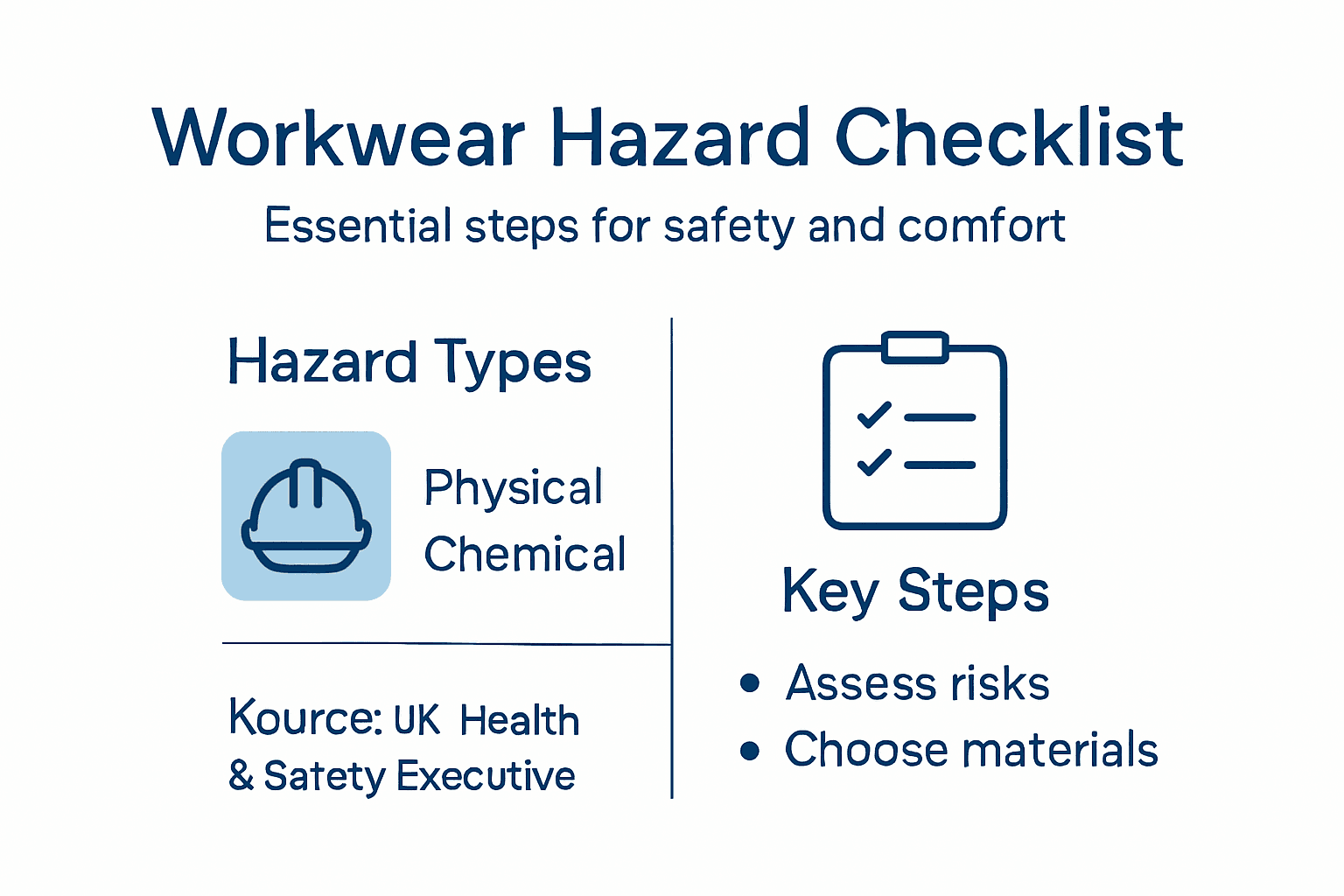
Navigating workplace safety demands a systematic approach to understanding potential risks that could compromise worker health. Health and Safety Executive regulations require employers to conduct comprehensive hazard assessments, ensuring workers remain protected across diverse work environments.
Effective hazard identification involves examining multiple risk categories systematically. These typically encompass:
- Physical hazards such as moving machinery, falling objects, or electrical equipment
- Chemical risks involving exposure to toxic substances or corrosive materials
- Biological threats including potential pathogen or bacteria transmission
- Ergonomic challenges related to workplace design and potential strain injuries
- Psychosocial factors involving workplace stress and mental health considerations
Careful assessment requires thoroughly examining each workspace, understanding unique operational characteristics, and documenting potential risks comprehensively. Employers must evaluate specific job roles, equipment interactions, and environmental conditions that might compromise worker safety. British Safety Council guidelines recommend creating detailed risk profiles that capture both obvious and subtle workplace dangers.
Here’s a summary comparing key workplace hazard types and their possible impacts:
| Hazard Type | Typical Examples | Potential Impact on Workers |
|---|---|---|
| Physical | Moving machinery, sharp objects | Cuts, bruises, broken bones |
| Chemical | Solvents, acids, cleaning agents | Burns, respiratory irritation |
| Biological | Mould, contagious illnesses | Infections, allergic reactions |
| Ergonomic | Repetitive movements, poor design | Strain injuries, musculoskeletal pain |
| Psychosocial | High workload, conflict | Burnout, increased absenteeism |
Top tip: Always involve workers directly in hazard identification, as frontline employees often recognise risks management might overlook.
Step 2: Assess materials and durability for daily tasks
Choosing the right workwear requires a strategic approach to understanding material performance and durability under challenging workplace conditions. Your selection must balance protection, comfort, and longevity to ensure optimal workplace safety and professional functionality.
When assessing workwear materials, consider these critical evaluation criteria:
- Fabric composition including cotton, polyester, aramid, and synthetic blends
- Abrasion resistance measuring fabric’s ability to withstand friction and wear
- Chemical resistance for environments with potential liquid or chemical exposure
- Tensile strength indicating material’s capacity to withstand mechanical stress
- Breathability ensuring worker comfort during extended physical activities
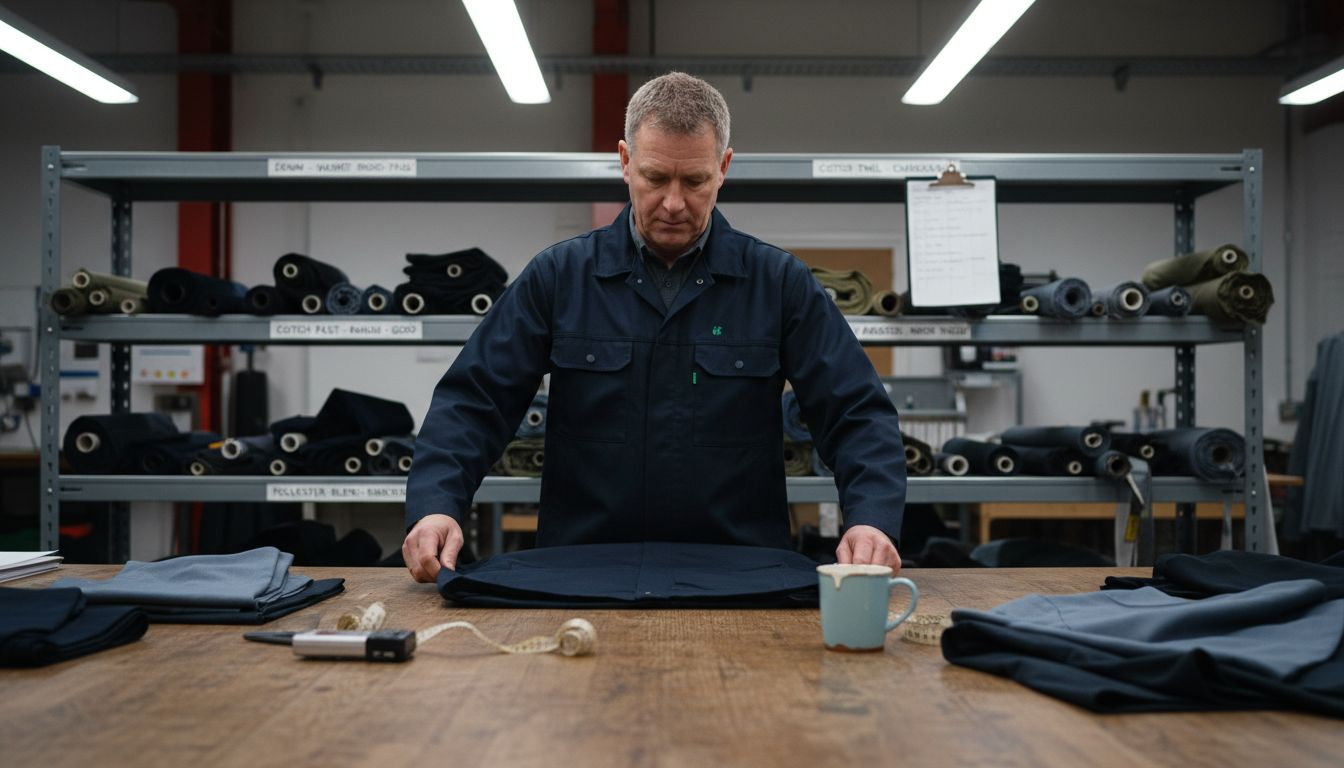
Detailed material assessment involves understanding the specific demands of your work environment. Heavy industrial settings require robust materials with high tear resistance, while precision manufacturing might prioritise lightweight, flexible fabrics that allow intricate movements. Examining fabric weight, weave density, and technical specifications will help you determine the most appropriate workwear for your specific professional requirements.
The following table contrasts workwear material choices for different professional uses:
| Material Type | Best Suited Environments | Key Strengths |
|---|---|---|
| Cotton | Light industrial, warm settings | Comfort, breathability |
| Polyester | Outdoor, high-activity roles | Durability, easy care |
| Aramid | Electrical, fire-risk tasks | Flame resistance, high strength |
| Blended | Versatile, all-round workwear | Balanced performance, flexibility |
The right material isn’t just about protection – it’s about empowering workers to perform at their best.
Professional suggestion: Request fabric samples and conduct practical workplace trials to validate material performance before making large-scale workwear investments.
Step 3: Select leading brands for maximum reliability
Choosing the right workwear brands requires strategic evaluation of manufacturers renowned for delivering consistent quality and safety standards. Top UK workwear manufacturers offer comprehensive solutions that balance protection, durability, and professional appearance across diverse working environments.
When selecting workwear brands, prioritise those demonstrating robust characteristics:
- Safety compliance with current UK workplace regulations
- Material innovation showcasing advanced fabric technologies
- Range versatility covering multiple industrial sectors
- Sustainability credentials indicating responsible manufacturing
- Technical performance proven through independent testing
UK workwear brands like Arco, Alexandra Workwear, and Ballyclare Limited consistently deliver high-performance garments tailored to specific workplace demands. These manufacturers understand that workwear isn’t merely about clothing but represents a critical safety investment for professional teams.
Selecting the right brand means protecting your most valuable asset: your workforce.
Professional suggestion: Request comprehensive product catalogues and request sample garments to conduct thorough on-site evaluations before making bulk purchasing decisions.
Step 4: Choose correct sizes and fit for comfort
Precision sizing is crucial when selecting workwear that supports both safety and performance. Your goal is finding garments that provide unrestricted movement while maintaining professional protection across different body types and workplace demands.
When determining the ideal fit, consider these critical measurement strategies:
- Body measurements including chest, waist, inseam, and shoulder width
- Range of motion testing garment flexibility during typical work movements
- Layer compatibility ensuring room for thermal underwear or additional protective gear
- Adjustability features like drawstrings, elastic waistbands, and expandable panels
- Specific job requirements accounting for tasks involving climbing, bending, or heavy lifting
Effective sizing goes beyond simple numerical measurements. Different brands offer varied cutting patterns, so trying multiple sizes and performing practical movement tests becomes essential. A properly fitted garment should allow complete range of motion without bunching, restricting, or creating potential safety hazards.
Comfort isn’t a luxury in workwear – it’s a fundamental safety requirement.
Professional suggestion: Always request size charts from manufacturers and conduct physical trials before committing to bulk workwear purchases.
Step 5: Verify compliance with UK safety standards
Ensuring your workwear meets stringent safety regulations is a critical responsibility for protecting workplace personnel. Understanding and implementing UKCA marking requirements becomes fundamental in navigating UK safety compliance landscape.
When verifying workwear safety standards, focus on these essential criteria:
- Regulatory documentation demonstrating conformity with UK health and safety guidelines
- UKCA certification confirming product meets official performance standards
- Technical assessment indicating comprehensive safety testing
- Manufacturer declarations providing detailed compliance evidence
- Independent verification from recognised safety assessment bodies
Thorough compliance verification involves more than superficial checks. Detailed technical documentation must accompany each workwear item, providing transparent evidence of safety assessments, material testing, and regulatory adherence. This systematic approach protects both employers and workers by ensuring protective equipment meets rigorous British safety standards.
Safety compliance isn’t a checkbox – it’s a continuous commitment to workforce protection.
Professional suggestion: Maintain a comprehensive compliance file for each workwear item, including certification documents, testing reports, and manufacturer declarations.
Find the Perfect Workwear for Reliable Safety and Comfort Today
Selecting workwear that meets strict UK safety standards while delivering comfort and durability can be challenging. The article highlights crucial factors such as material durability, correct sizing, and compliance with UKCA regulations to ensure both protection and performance. At MoreSports, we understand these key concerns and offer a broad range of premium workwear designed to meet diverse professional needs. Our collection balances strength and comfort, helping you safeguard your workforce without sacrificing mobility or style.

Explore our carefully chosen workwear selection at MoreSports and benefit from competitive prices, flexible returns, and free UK delivery on orders over £25. Let us help you take the guesswork out of workwear shopping with reliable brands and expert advice. Visit our workwear section now and equip your team with gear that keeps safety and comfort at the forefront.
Frequently Asked Questions
How do I identify workplace hazards when selecting workwear?
To identify workplace hazards, conduct a systematic assessment of your work environment, considering physical, chemical, biological, ergonomic, and psychosocial risks. Engage with frontline employees, as they often recognise risks that may be overlooked. Document these hazards to inform your workwear selection process.
What factors should I consider when assessing workwear materials for durability?
When assessing workwear materials, prioritise factors like fabric composition, abrasion resistance, chemical resistance, and breathability. Examine the specific demands of your environment, such as heavy industrial conditions needing robust materials, to ensure optimal performance. Evaluate fabric specifications carefully to support your selection.
How can I ensure I choose the correct size and fit for comfort in workwear?
To ensure comfort, take accurate body measurements, including chest, waist, and inseam. Test the range of motion to confirm that the garment allows full flexibility during typical work tasks. Consider features like adjustability and layer compatibility to accommodate various job requirements.
What steps should I follow to verify compliance with UK safety standards for workwear?
To verify compliance, check for regulatory documentation that demonstrates conformity with UK health and safety guidelines. Ensure that each workwear item has UKCA certification and independent verification from recognised safety assessment bodies to guarantee adherence to safety standards.
Why is it important to involve workers in the hazard identification process?
Involving workers in hazard identification is essential because they have firsthand experience and knowledge of potential risks in their environment. Engaging employees can lead to more comprehensive risk assessments and promote a safer workplace culture. Schedule regular discussions with staff to review and update your hazard assessments.