 No Duties or Customs Fees For EU & UK Customers
 Express Tracked UK Delivery On 1000s of Items
 90 Day Returns

Forged vs Cast Irons: Differences, Feel, And Who They Suit
RYChoosing between forged vs cast irons is one of the most common decisions golfers face when upgrading their bag. Both types look similar at address, but they're made using completely different processes, and that affects everything from how they feel at impact to how forgiving they are on mishits. Getting this choice right can genuinely change how you play.
The problem is, there's a lot of vague advice out there. Some golfers assume forged irons are automatically "better," while others stick with cast irons without ever understanding what they're giving up, or gaining. The truth sits somewhere in the middle, and it depends largely on your skill level, your priorities, and your budget. Neither option is universally superior; they're built for different players.
In this guide, we break down how each type is manufactured, how they differ in feel and performance, and which one suits your game. At MoreSports, we stock irons from brands like TaylorMade, MacGregor, and more, in both forged and cast options, so we'll help you make sense of the specs before you buy. Whether you're a single-figure player chasing precision or a mid-handicapper who needs forgiveness on off-centre strikes, you'll find your answer here.
Why the forged vs cast choice matters
The type of iron you play affects every aspect of your game at the point of contact. The construction method determines how the weight is distributed across the clubhead, which directly influences how much margin for error you get on each swing. Getting this decision wrong means either fighting a club that punishes you too often, or playing with one that limits your ability to shape shots as your game develops.
Your skill level changes what you need
When you look at the forged vs cast irons debate through the lens of handicap, the differences become immediately practical. A high-handicapper typically needs a larger sweet spot and more perimeter weighting to get consistent distance and direction even on slightly mis-hit shots. Cast irons, with their cavity-back designs, tend to deliver exactly that.
The iron that helps you score well now is worth more than the iron that suits the player you hope to become.
Lower-handicap and scratch players often prioritise workability and feedback over forgiveness. They want to feel exactly where on the face they made contact, and they want the ability to move the ball deliberately left or right when the course demands it. That is where forged irons earn their reputation.
Why this decision affects your long-term progression
Your irons don't just affect your current round; they shape your habits and technique over time. If you're playing a highly forgiving cast iron as you improve, you may find the transition to a more demanding club difficult later on. Equally, jumping into blade-style forged irons too early can damage your confidence if your ball-striking isn't consistent enough to get the best from them.
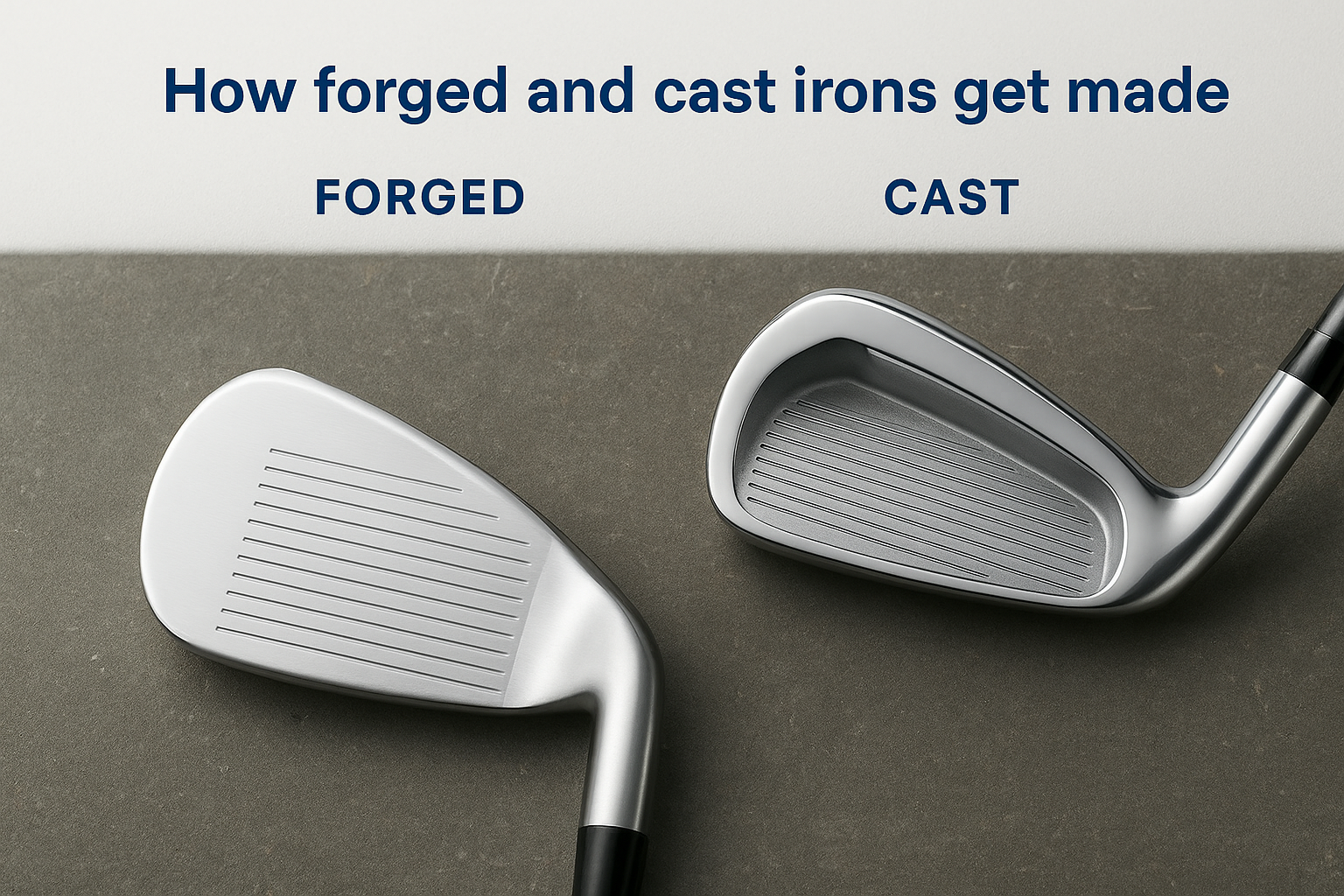
How forged and cast irons get made
The manufacturing process is where forged vs cast irons truly diverge, and understanding it explains why they feel and perform so differently on the course. Each method produces a structurally different clubhead, and those differences go deeper than marketing copy suggests.
Forged irons: shaped under pressure
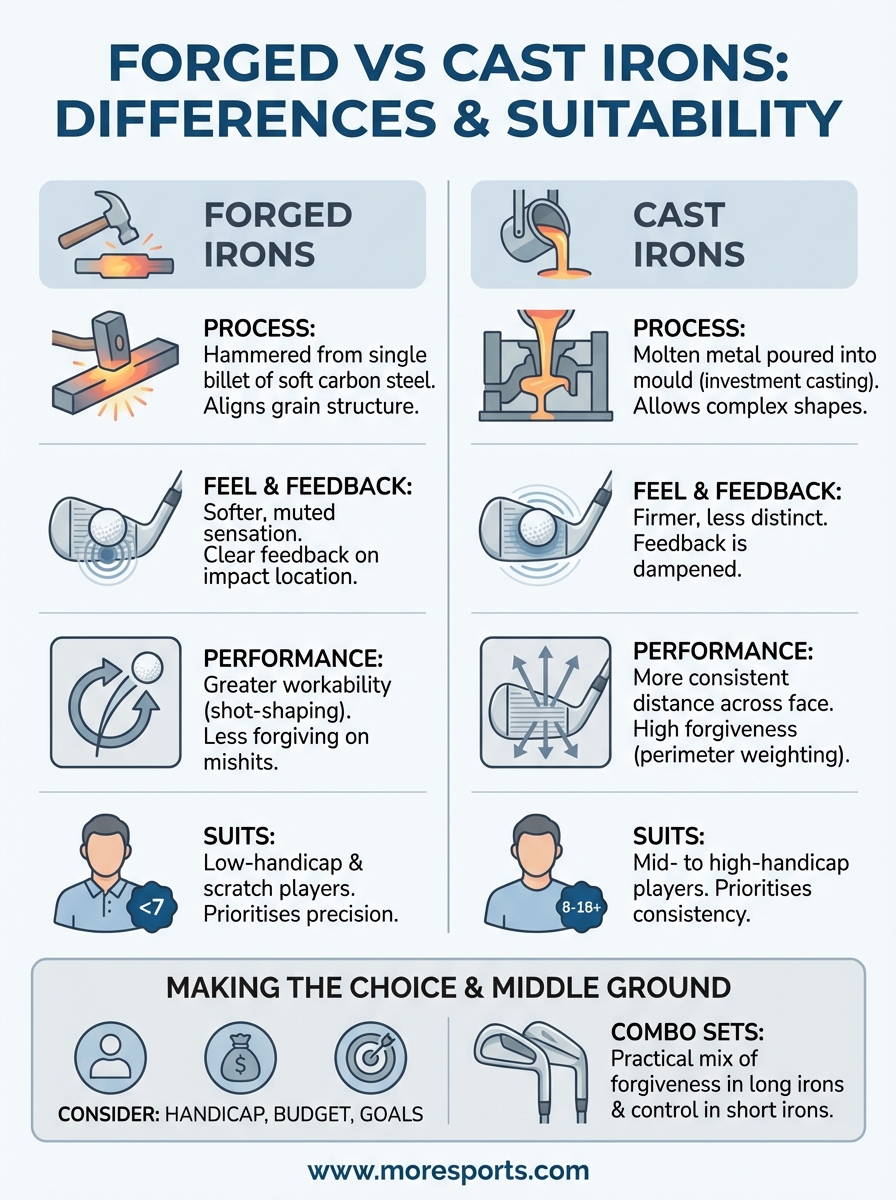
Forged irons start as a single billet of soft carbon steel, typically 1020 or 1025 grade. That billet is heated and then hammered into shape using high-pressure dies. The repeated compression aligns the grain structure of the metal, producing a denser face with a softer feel at impact. Because the process limits design freedom, forged heads are usually simpler shapes, most often muscle-backs or blades.
Key characteristics of forged irons:
- Soft carbon steel construction
- Dense, consistent grain structure
- Limited shaping options compared to cast
Cast irons: poured into shape
Cast irons are made through investment casting, where molten metal is poured into a pre-formed ceramic mould and left to cool.
Investment casting allows for complex shapes that forging cannot achieve, which is why virtually every game-improvement iron on the market uses this process.
This method gives designers far greater freedom to move weight around the perimeter and sole, creating the cavity-back designs that dominate the mid and high-handicap market.
How they differ in feel and performance
Once you understand how each iron is built, performance differences become easier to predict. The forged vs cast irons choice ultimately comes down to two questions: how much feedback do you want, and how much forgiveness do you need?
Feel at impact
Forged irons produce a softer, more muted sensation at impact because of the dense grain structure in the carbon steel. When you strike the ball cleanly, feedback travels clearly through the shaft to your hands, telling you exactly where on the face you connected. Cast irons feel slightly firmer and less distinct at the point of contact.
If you struggle to read your ball-striking, a forged iron will tell you far more about your swing than a cast one ever will.
Distance and workability
Cast irons deliver more consistent distance across the face because perimeter weighting keeps mishits from losing speed dramatically. This is why so many mid-handicappers favour them for reliable yardage gaps between clubs.
Forged irons reward precise contact with greater shot-shaping ability. You can fade or draw the ball more easily, but off-centre hits cost you more distance than the same strike with a cavity-back cast iron would.
How to choose the right irons for your game
Knowing how forged vs cast irons differ is useful, but applying that knowledge to your specific game and handicap is what actually moves the decision forward. Start with honesty about your current ball-striking consistency, not where you hope to be in a year.
Consider your handicap first
Your handicap is the most reliable starting point when choosing irons. Use this as a guide:
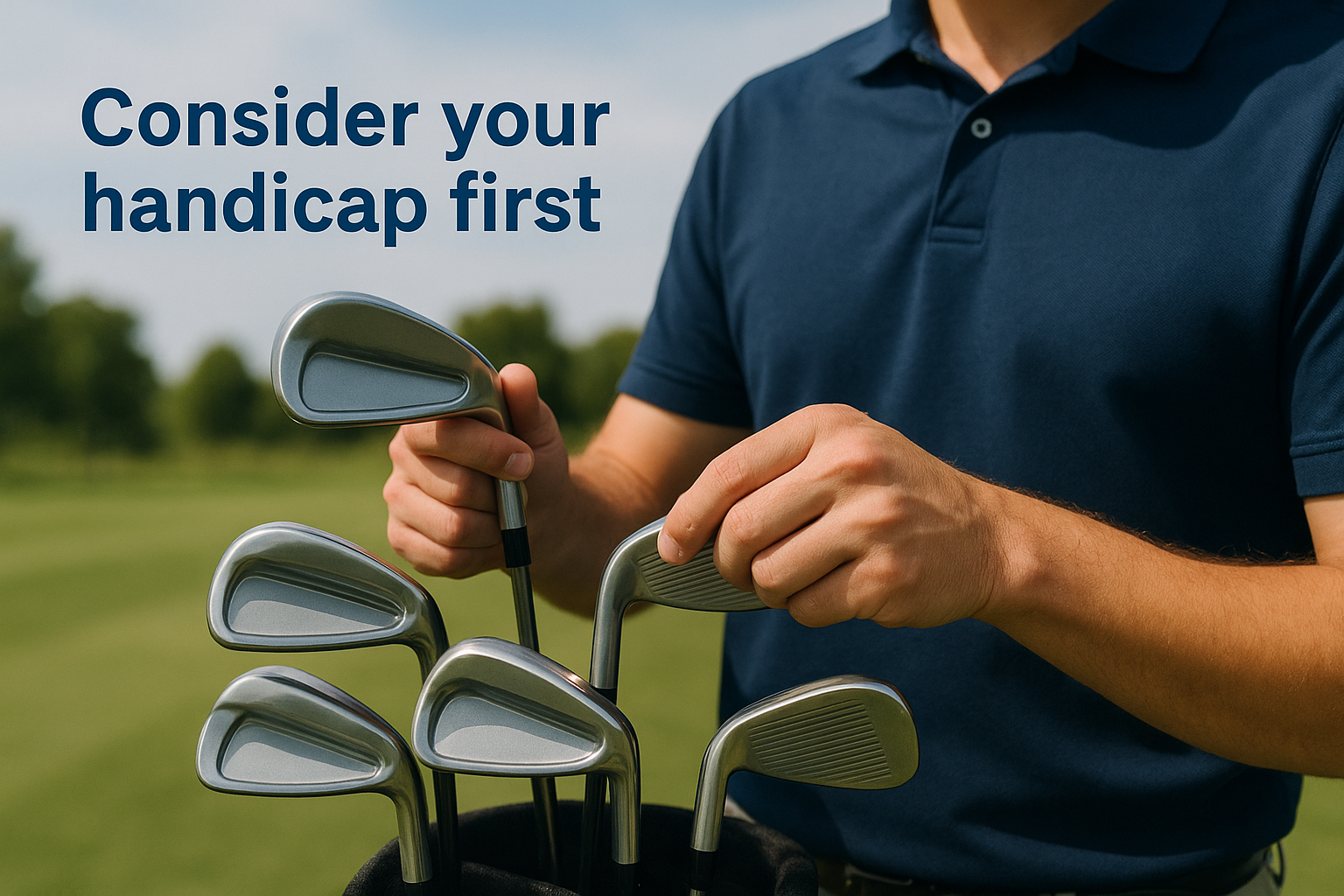
- 18 and above: cavity-back cast irons for maximum forgiveness and consistent distance
- 8 to 15: a players' distance or blended iron with partial forgiveness
- 7 and below: forged irons for workability and precise shot feedback
If you're a single-figure player, forged irons will reward your ball-striking and give you the control to attack pins more directly.
Think about your budget and goals
Forged irons typically cost more due to the labour-intensive manufacturing process, so your budget plays a real role in this decision. If you're still improving and plan to reinvest in new clubs within a couple of seasons, a quality cast iron set at a lower price point makes practical sense right now.
Your longer-term goals matter too. If you're committed to developing your technique and want irons that grow with you, investing in a forged set earlier can prevent you from buying again in two years.
Common myths, hybrids, and what to try next
The forged vs cast irons debate carries plenty of misinformation that pushes golfers toward the wrong purchase. Before you decide, it's worth clearing up the most persistent myths so your money ends up on the right set.
Forged irons are not always better
Many golfers assume forged automatically means superior, but the right iron is always the one that suits your current game, not the one with the most prestige attached to it. A well-designed cast iron from TaylorMade or MacGregor will outperform a forged blade in the hands of a 20-handicapper every single time.
Buying the wrong iron because it sounds more advanced is one of the most common and expensive mistakes recreational golfers make.
Combo sets offer a practical middle ground
Blended or combo iron sets pair forged long irons with cast short irons, giving you workability where you need it and forgiveness where that matters more. This construction means you're not forced into a full compromise on either end of the performance scale.
This approach suits mid-handicap players who are improving steadily and want a single set that keeps pace with their development. Browse the iron range at MoreSports to compare specs across both forged and cast options and find the right fit for your game today.
Final takeaway
The forged vs cast irons debate has a clear answer once you apply it to your own game. Forged irons reward consistent ball-strikers who want precise feedback and shot-shaping control, while cast irons give mid and high-handicappers the forgiveness and distance consistency they need to score well right now. Neither construction is universally superior; the right iron is simply the one that matches your current skill level and priorities.
Your handicap, your budget, and your long-term goals all point toward one type over the other. If you're still building consistency in your ball-striking, a cavity-back cast iron will serve you far better than a blade ever could. If your game is already sharp, a forged set gives you the control to take it further.
Browse the full range of golf irons at MoreSports to compare specs, brands, and prices across both types and find the set that suits your game.