 No Duties or Customs Fees For EU & UK Customers
 Express Tracked UK Delivery On 1000s of Items
 90 Day Returns

USGA Rangefinder Rules: What's Allowed (Slope, GPS, Apps)
RYRangefinders have become a staple in golf bags everywhere, but the USGA rangefinder rules still trip up plenty of players. Can you use slope mode in a competition? What about GPS watches or phone apps? The answers depend entirely on Rule 4.3 and the specific Local Rules your event committee adopts, and getting it wrong could mean a penalty or disqualification.
Whether you're preparing for a club medal, a regional qualifier, or just want to know where you stand before investing in a device, understanding what's actually permitted matters. At MoreSports, we sell rangefinders and GPS devices from leading golf brands, so we hear these questions regularly from customers shopping through our online store and Coleraine pro shop.
This guide breaks down the current USGA and R&A rules on distance-measuring devices, covers the slope debate, and explains exactly what you can and can't use during competitive and casual rounds.
What Rule 4.3 says about rangefinders
Rule 4.3 sits within the equipment rules and covers all artificial devices and unusual equipment during a round. The core principle is straightforward: you must not use any device or equipment in a way that gives an artificial advantage over a normal shot. Distance-measuring devices fall under this rule, and the USGA has issued specific guidance on exactly which capabilities are and aren't permitted.
The default position under the Rules of Golf
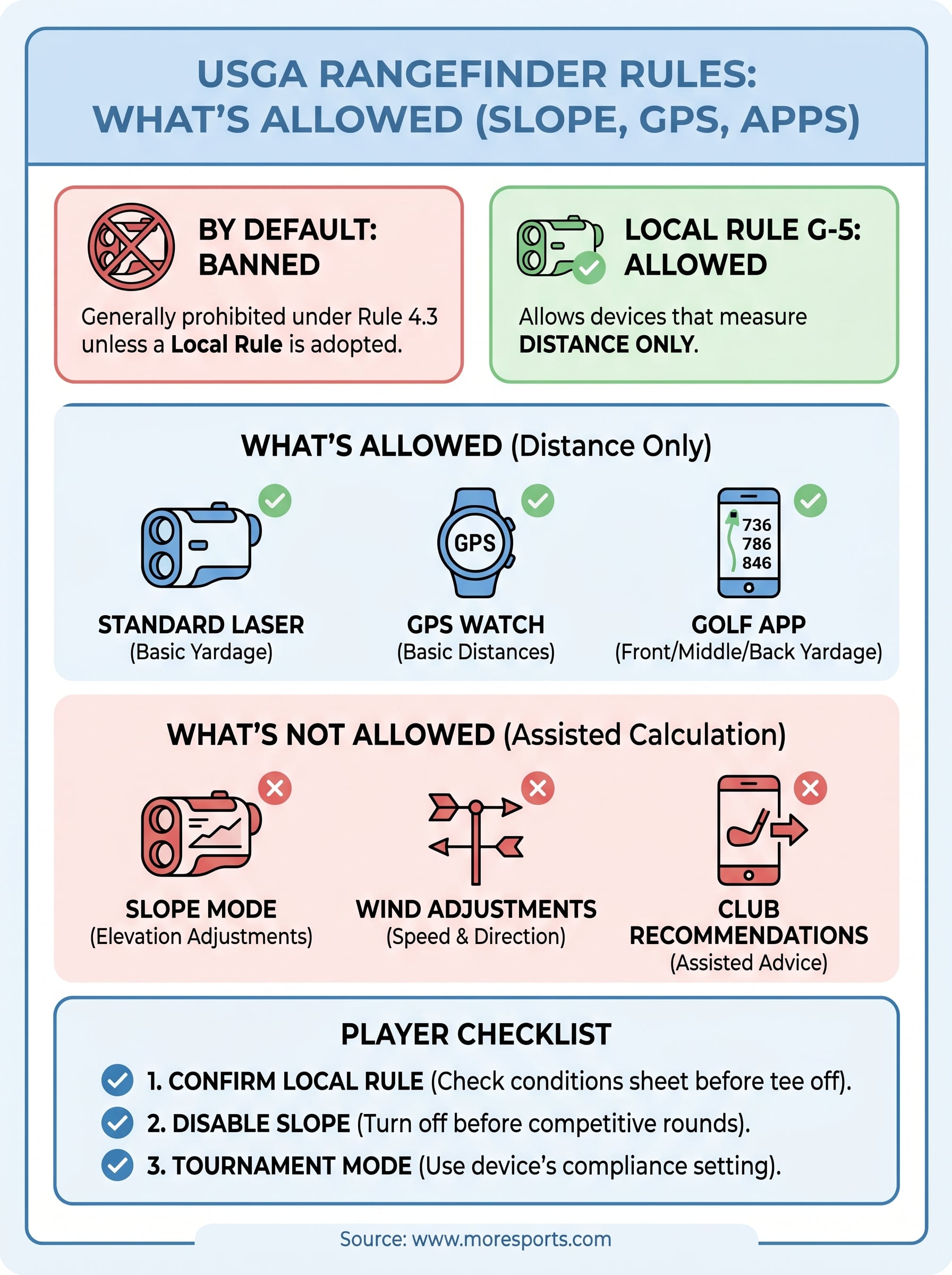
By default, the USGA rangefinder rules state that distance-measuring devices are not permitted in a round of golf. That was the baseline position for years. However, the 2019 revision to the Rules of Golf changed the framework significantly. Under the current rules, committees may now permit DMDs through a Local Rule, and most clubs and competitions choose to do exactly that. If no Local Rule exists explicitly banning DMDs, the committee must actively adopt a permission rule for them to be allowed.
If you're unsure whether your event allows a rangefinder, always check the competition conditions sheet before you tee off.
The Local Rule that changes everything
The official USGA Local Rule Model Local Rule G-5 is what most committees adopt to allow distance-measuring devices. When a committee puts this rule in place, players can use any device that measures distance only, such as a standard laser rangefinder or a GPS watch set to basic yardage mode. The rule is deliberately specific: it permits distance measurement but leaves all other assisted calculations outside the boundary of what's allowed. This is why the device itself isn't the issue. What the device does is what the rule is actually governing, and that distinction matters when you're choosing which features to rely on during a round.
Why some rangefinder features break the rules
The USGA rangefinder rules draw a clear line between measuring distance and calculating advantage. Distance measurement is permitted under Model Local Rule G-5. Any feature that processes that measurement and returns a recommendation crosses into the prohibited category, because you're no longer just measuring, you're receiving assisted decision-making.
Slope is the main offender
Slope mode on a rangefinder adjusts raw yardage to account for elevation change and returns a "plays like" distance. That adjusted figure is exactly what the rules prohibit. Your device is performing a calculation that influences club selection, and that constitutes an artificial advantage under Rule 4.3.
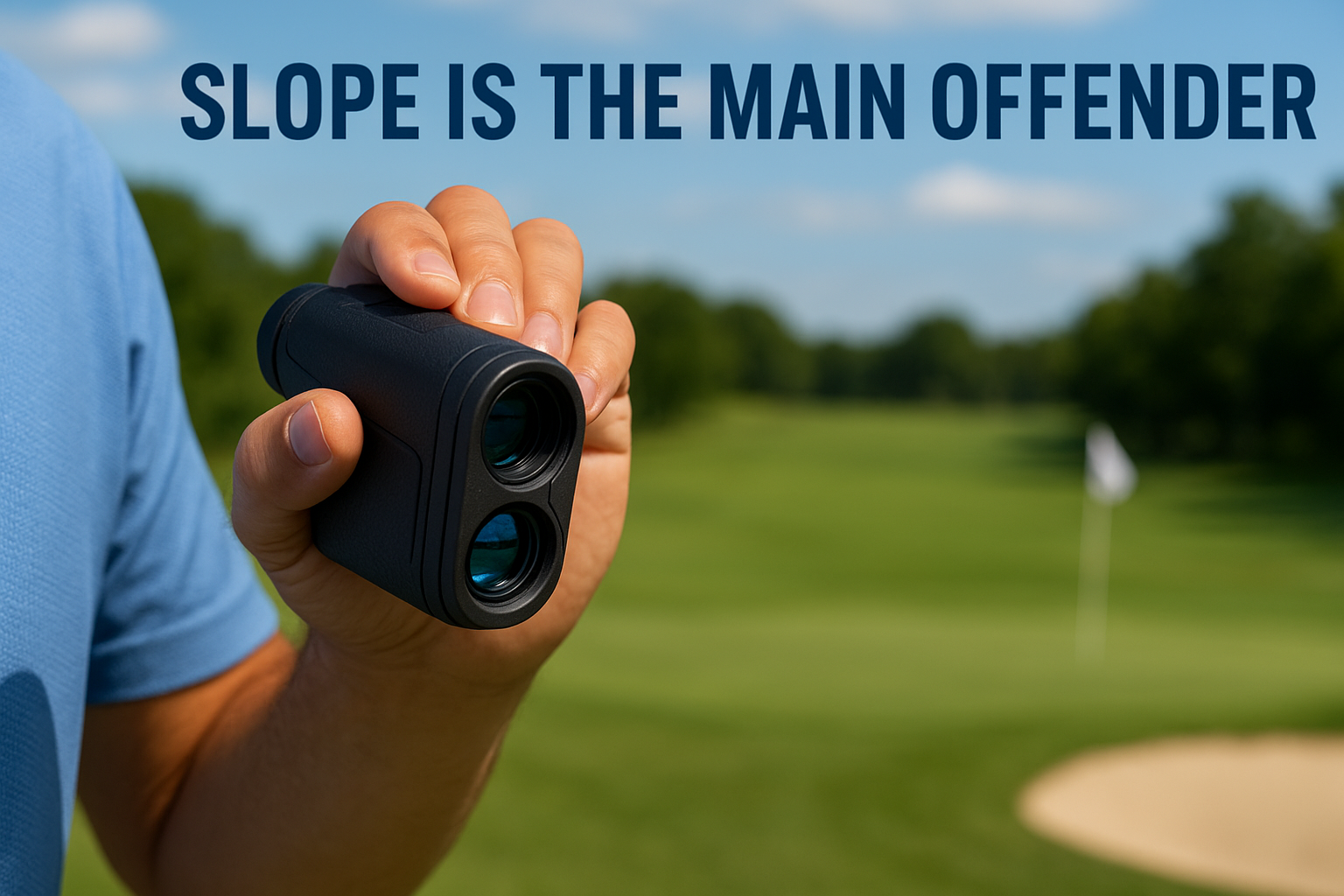
Using slope mode during a competition, even accidentally, can result in a two-stroke penalty for each hole where you relied on the adjusted figure.
Other features that cross the line
The same logic applies to several other capabilities you may find on modern devices. Any feature that moves beyond raw distance output puts you in breach of the rules during competitive play:
- Wind speed or wind direction adjustments
- Temperature and altitude corrections
- Recommended club suggestions based on your shot history
Your device doesn't have to combine all of these to create a problem. Using even one prohibited feature during a round is enough to put you in breach of the rules.
What you can use during a round
When Model Local Rule G-5 is in place, you have several solid options for measuring distance legally. The usga rangefinder rules permit any device that returns raw yardage without processed calculations, so your choice of tool is broader than many golfers realise.
Laser rangefinders
A standard laser rangefinder in basic yardage mode is the most common choice at club level. Point it at the flagstick or a fixed object on the course, and it returns a straight-line distance with no adjustments applied. As long as slope mode is switched off, you're fully within the rules. Many modern devices include a physical slope-disable switch or a tournament compliance mode built in for exactly this situation.
Check your device's manual before competition day to confirm you know how to disable slope and any other assisted features before you arrive at the first tee.
GPS devices and apps
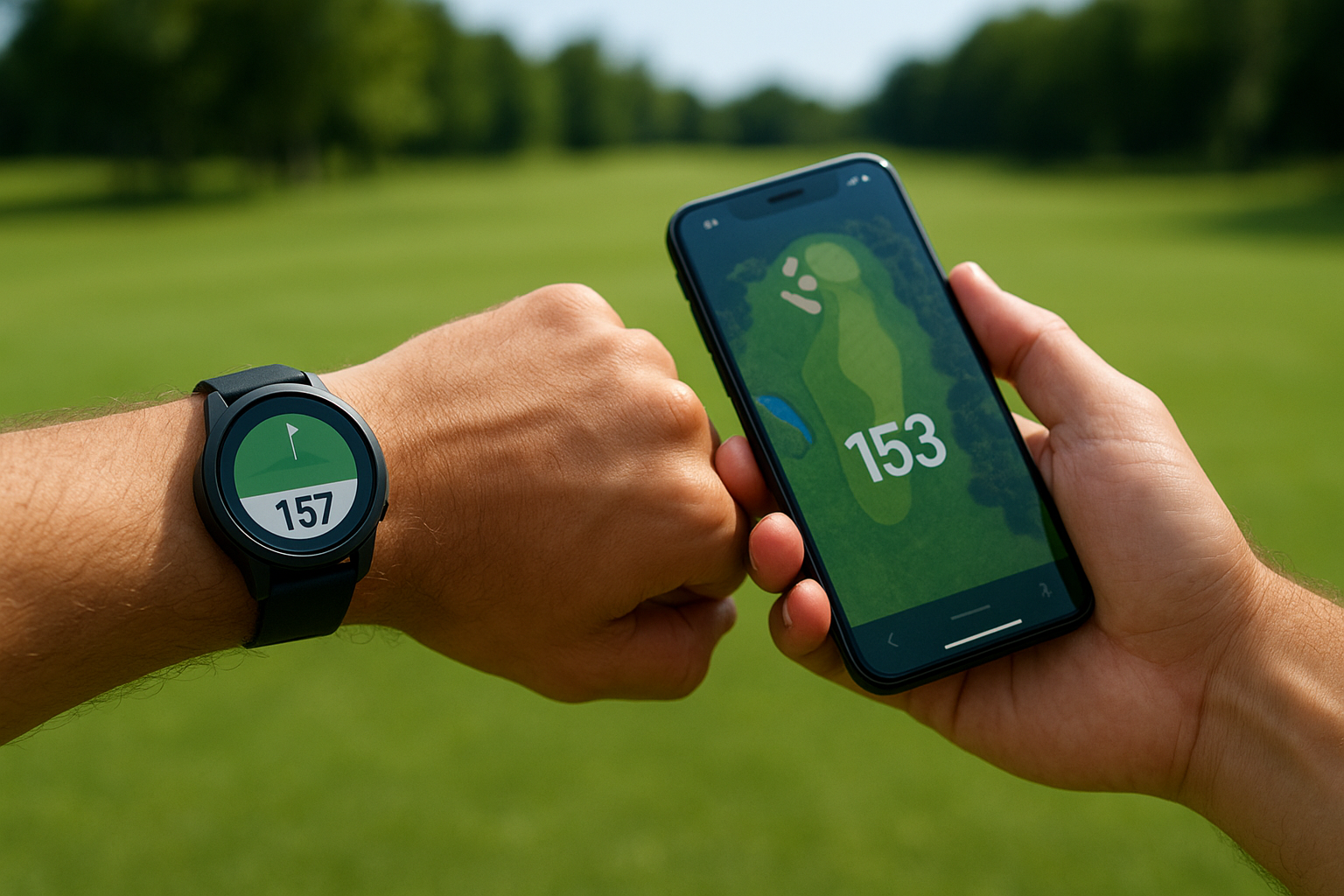
GPS watches and handheld GPS units are equally permitted when set to distance-only output. Your phone's golf app works the same way, provided it displays basic yardage to the green without layering in wind corrections or club suggestions. Front, middle, and back yardage figures are all straightforward and legal, so stick to those during your round.
What you must turn off or avoid using
The usga rangefinder rules are specific about which features create a breach, and the safest approach is to know your device thoroughly before your round starts. Switching off the wrong feature at the wrong time is one of the most common avoidable mistakes in amateur competition golf.
Slope mode and elevation features
Slope mode is the feature you most need to disable before a competitive round. Most modern rangefinders include a tournament mode switch that locks out slope, and many produce a visible indicator, such as a red or green light, to confirm the mode you're in. Check this before you leave the car park.
Never assume your device automatically disables slope because you're on a competition course. You are responsible for confirming it yourself.
Apps and features that calculate your shot
Golf apps on your phone can fall into a grey area. Any app that offers wind corrections, recommended clubs, or strokes gained analysis during play puts you in breach of the rules, even if the basic distance function is legal. Switch to a stripped-back display before teeing off, showing only front, middle, and back yardage figures.
Features to remove from active use during a round:
- Wind adjustment tools
- Club recommendation engines
- Altitude or temperature corrections
- Any real-time calculated overlays beyond basic yardage
How to stay legal in tournaments and handicaps
When you're playing in a handicap competition or a formal tournament, the usga rangefinder rules apply in full, and your World Handicap System score depends on following them correctly. A breach doesn't just risk a penalty stroke during the round; it can also invalidate your entire scorecard for handicap purposes.
Confirm the Local Rule before every event
Always read the competition conditions sheet or ask the committee directly whether Model Local Rule G-5 is in place before you tee off. Clubs vary in how they manage this, and some events still ban DMDs entirely. Never assume the rules are identical to last week's competition, because the committee has full authority to change the conditions for each event.
If you cannot confirm whether DMDs are permitted, leave your rangefinder in your bag until you've checked with an official.
Keep slope off for handicap rounds too
Handicap qualifying rounds follow the same equipment rules as any formal stroke play event. Using slope mode or any other assisted calculation feature during a qualifying round means your score cannot count toward your handicap index. Set your device to tournament mode before every round, not just the events that feel high-stakes.
Final check before you tee off
The usga rangefinder rules come down to one core principle: measure distance, nothing more. Before every round, confirm that slope mode is off, any wind or club recommendation features are disabled, and your device is set to tournament compliance mode. Check the competition conditions sheet to verify that Model Local Rule G-5 is in place, and never assume the rules match a previous event. Your scorecard and your handicap index both depend on getting this right.
Choosing the right device makes staying legal much simpler. A rangefinder with a clearly marked tournament mode removes the guesswork entirely, so you spend less time worrying about compliance and more time focusing on your game. Whether you're after a laser rangefinder, GPS watch, or handheld GPS unit, browse the full selection at MoreSports and find a device that keeps you legal and confident from the first tee to the last.