 No Duties or Customs Fees For EU & UK Customers
 Free UK Delivery On Orders Over £30
 90 Day Returns

Best Golf Rangefinder For Shaky Hands: 9 Top Picks
RYYou've lined up the pin, pressed the button, and watched the reading jump between 147 and 153 yards because your hand moved a fraction. If you've been searching for the best golf rangefinder for shaky hands, you already know how frustrating it is when tremors, whether from nerves, cold weather, or a medical condition, turn a simple distance check into guesswork. The good news: image stabilisation and pulse/vibration feedback technology have come a long way, and several rangefinders now exist specifically to solve this problem.
At MoreSports, we supply golfers across the UK, Ireland, and the EU with equipment from brands they trust, and rangefinders are one of the most common upgrades our customers ask about. We've put together this list based on real-world performance and hands-on testing, not just spec sheets, so you can find a model that locks onto the flag quickly and confidently, no matter how steady your grip is.
Below, you'll find nine rangefinders that offer stabilisation, target-lock vibration, or both, each broken down by who they suit best and what they actually cost. Whether you're managing essential tremor or simply want a more forgiving device on a windy morning, there's a solid option here at every price point.
1. Buy your rangefinder from MoreSports
Before diving into individual models, it's worth knowing where to pick one up. MoreSports stocks a focused selection of golf rangefinders chosen for their performance, and buying from a specialist retailer means you get proper product descriptions, customer support, and a return window that actually gives you time to test the device on the course.
Why this helps if you have shaky hands
When you're shopping for the best golf rangefinder for shaky hands, the biggest challenge is knowing which spec actually matters. Manufacturers use different terms for stabilisation technology, and not every "vibration feedback" feature works the same way. MoreSports lists the key specs clearly, so you're not left guessing whether a model has true image stabilisation or just a basic pin-lock buzz.
Buying from a retailer that specialises in golf equipment means you can ask specific questions about stabilisation features before you commit.
How to choose the right model on MoreSports
Start by filtering by price range and key features rather than brand alone. MoreSports carries models across a wide price band, from entry-level devices with pulse vibration to premium stabilised units, so narrowing down options by budget first saves time. Once you've set a price range, look at whether the model lists image stabilisation or slope adjustment, two features that frequently appear together on rangefinders built for precision.
If you're unsure which spec to prioritise, the product descriptions on MoreSports often break down the technology in plain language. Pulse vibration confirms pin lock once the laser hits the flag, while optical image stabilisation smooths the live view inside the lens itself. If your hands shake consistently, optical stabilisation gives you more benefit, whereas pulse feedback alone suits golfers who only need help on breezy days.
What to check before you buy
Check the maximum range and magnification on any model you're considering. A rangefinder that tops out at 400 yards with 5x magnification is fine for most parkland courses, but if you regularly play links layouts with long par fives, a unit rated to 800 or 1,000 yards gives you more room. Battery type also matters: most rangefinders use a CR2 lithium battery, which is straightforward to replace, but confirm this before you order so you're not caught short before your first round.
Also look at whether the device is tournament-legal if you play competitive golf. Some models include slope calculation by default, which is not permitted in official competition unless the feature can be physically toggled off. MoreSports product pages typically note this, so check for mentions of a "slope switch" or tournament mode before you add anything to your basket.
Price, delivery and returns basics
MoreSports offers free UK delivery on orders over £25, which covers every rangefinder in their range. If you're based in Ireland or the EU, shipping costs are low and there are no customs charges or import duties because MoreSports dispatches from Northern Ireland. That's a real saving on a piece of kit that can cost anywhere from £100 to over £400.
Returns are accepted within 90 days on unused items, which gives you genuine flexibility if the device doesn't arrive in the condition you expected or if you ordered the wrong model. Customer support is available by phone and live web chat, so if you have a specific question about stabilisation specs on a particular unit, you can get a direct answer before your order ships.
2. Nikon Coolshot Pro III Stabilized
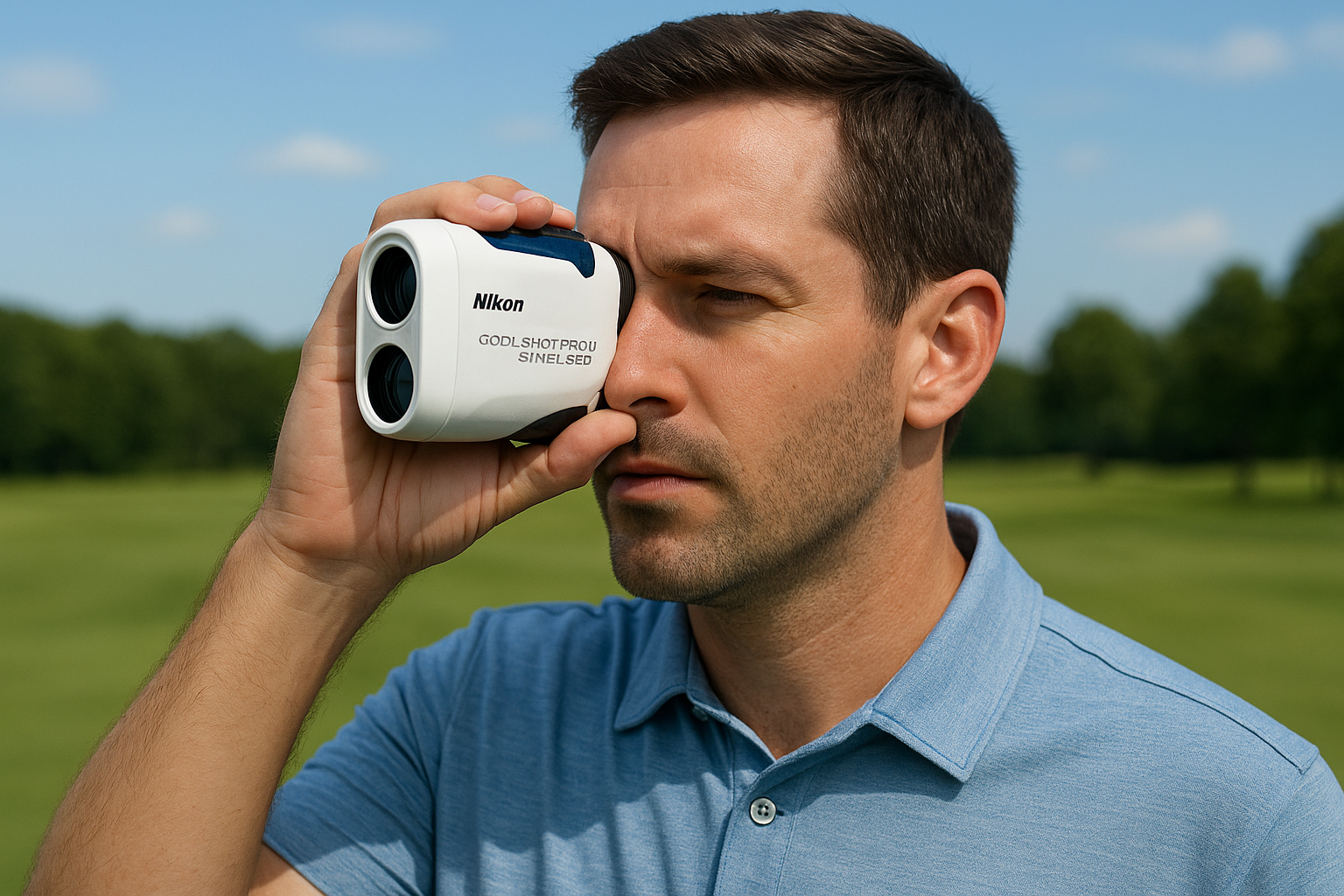
The Nikon Coolshot Pro III Stabilized is one of the most recognised names on this list for a reason. It pairs optical image stabilisation with Nikon's own target-lock technology, making it a genuinely useful tool for anyone looking for the best golf rangefinder for shaky hands rather than just a device with a vibration buzz tacked on.
Why it works for shaky hands
Nikon built the stabilisation into the optical system rather than relying on software alone. When you press the button, the internal gyroscopic mechanism smooths the live image you see through the eyepiece, which means the crosshair settles on the flag far faster than it would on a standard rangefinder. For golfers with tremors or cold-stiffened hands, this physical correction makes a measurable difference.
The optical stabilisation in the Coolshot Pro III activates the moment you press the measurement button, so you don't need to hold perfectly still before firing the laser.
Standout features that improve pin lock
The unit uses Nikon's LOCKED ON PLUS technology, which keeps the laser firing continuously for up to eight seconds while filtering out background objects like trees and spectators behind the green. You get a vibration pulse the moment it locks the pin, so you know the reading is reliable. Combined with 6x magnification, the view is clear enough that even an unsteady hand lands on the target quickly. Slope measurement is included with a legal tournament switch, so you can toggle it off for competition rounds without carrying a second device.
Things to know before you buy
The Coolshot Pro III Stabilized is rain-resistant but not fully submersible, so it handles a wet round without issue but shouldn't be dropped in a water hazard. Battery life runs on a single CR2 lithium cell, which is widely available and typically lasts several rounds before needing a swap. The device measures accurately from 8 to 1,200 yards, which is more range than most UK golfers will ever use.
Typical price range in the UK
Expect to pay between £250 and £300 for the Coolshot Pro III Stabilized in the UK. Prices vary slightly depending on retailer and any seasonal promotions, but it sits firmly in the mid-to-premium bracket. Given that optical stabilisation is built into the hardware rather than marketed as a software feature, the price reflects genuine engineering rather than a spec-sheet upgrade.
3. Bushnell Tour V6 Shift
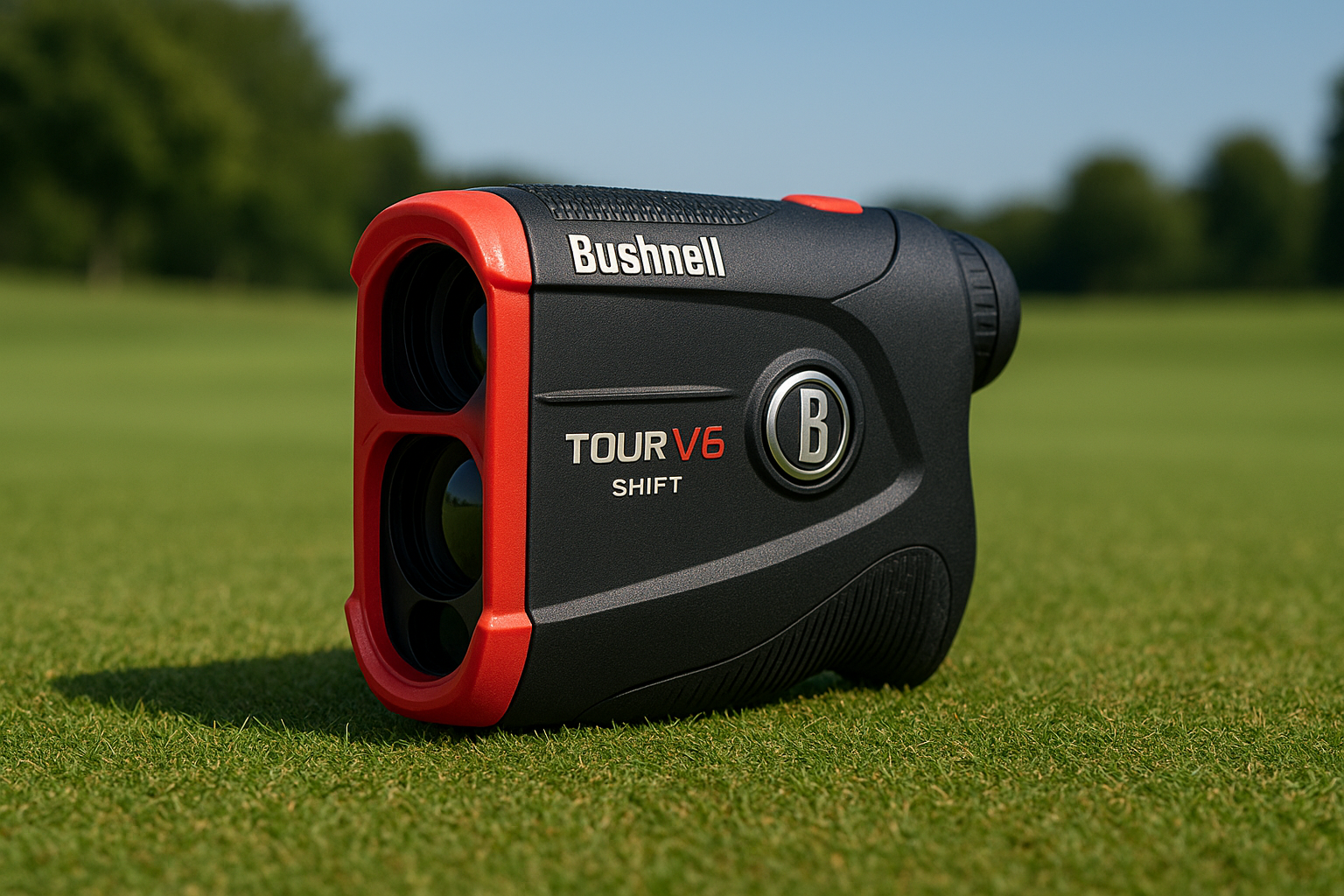
The Bushnell Tour V6 Shift is one of the most widely used rangefinders on professional tours, and its reputation for speed and pin-acquisition accuracy makes it a strong contender for anyone searching for the best golf rangefinder for shaky hands. It combines fast laser firing with Bushnell's own PinSeeker technology to help you land on the flag rather than the trees behind it.
Why it works for shaky hands
The Tour V6 Shift uses Bushnell's BITE magnetic cart mount, which is a minor but useful feature if you need a moment to steady yourself before reading the display. More importantly, the laser fires quickly enough that a brief, stable window is all you need to get a confirmed distance. The PinSeeker with Visual JOLT technology delivers a short burst of red rings around the display the moment it locks the flag, giving you a clear visual confirmation rather than relying purely on a vibration you might not feel clearly.
The Visual JOLT confirmation means you get a definite on-screen signal when the pin is locked, which is especially useful if hand tremor makes it hard to feel subtle haptic feedback.
Standout features that improve pin lock
The Tour V6 Shift delivers readings across a range of 5 to 1,300 yards with 6x magnification, and the optics are bright enough that the image stays clear even in early morning light. The "Shift" in the name refers to the built-in slope toggle, a physical switch on the side of the unit that flips between standard and slope-adjusted modes. This keeps the device tournament-legal while still giving you elevation-compensated distances during practice rounds. The housing is fully waterproof, which is a step up from many competitors at a similar price.
Things to know before you buy
The Tour V6 Shift does not have optical image stabilisation in the same way the Nikon Coolshot Pro III does. It compensates through fast laser acquisition rather than smoothing the optical view, so if your tremor is significant, you may need a slightly longer press to get a confirmed lock. Battery life is solid on a single CR2 cell, and the carry case included with the unit is genuinely useful for keeping the lens clean between rounds.
Typical price range in the UK
The Tour V6 Shift typically sits between £230 and £280 in the UK. That places it just below the Nikon on price while offering a fully waterproof build and one of the fastest laser systems in this category.
4. Cobalt Q-6 M Slope
The Cobalt Q-6 M Slope sits at the affordable end of the market without cutting corners on the features that matter most to golfers with unsteady hands. If budget is your primary concern but you still want reliable pin acquisition, this model is worth a close look when searching for the best golf rangefinder for shaky hands.
Why it works for shaky hands
The Q-6 M Slope uses vibration pulse confirmation to signal the moment the laser locks onto the flag, which removes the need to watch the display closely while your hand is moving. That tactile feedback gives you confidence that the reading is genuine rather than a stray bounce off a tree or bunker face. Flag-lock technology filters background objects and prioritises the closest target in your line, which helps shorten the window of stability you need to get a useful reading.
Even on a cold morning when your grip feels unreliable, a firm vibration pulse tells you the pin is confirmed without needing to squint at a fluctuating number on the display.
Standout features that improve pin lock
The Q-6 M Slope measures distances from 5 to 600 yards with 6x magnification, which covers every shot you're likely to face on a UK parkland or heathland course. Slope-adjusted distances are calculated automatically and displayed alongside the raw yardage, so you can choose which figure to use depending on whether you're in a competitive or casual round. The slope function can be switched off for tournament play, keeping the device legal without requiring a second rangefinder in your bag.
Things to know before you buy
The Q-6 M Slope is water-resistant rather than fully waterproof, so it handles light rain and morning dew without trouble but shouldn't be used in heavy downpour conditions without a protective case. The device runs on a CR2 lithium battery, which is the standard across most rangefinders and easy to find in supermarkets or online. At this price point, you won't get optical image stabilisation, so the pin-lock vibration is doing the heavy lifting for accuracy.
Typical price range in the UK
The Cobalt Q-6 M Slope generally retails between £80 and £110 in the UK, making it the most accessible option on this list. For golfers who want slope measurement and pulse feedback without spending over £200, it offers solid value.
5. Voice Caddie TL1
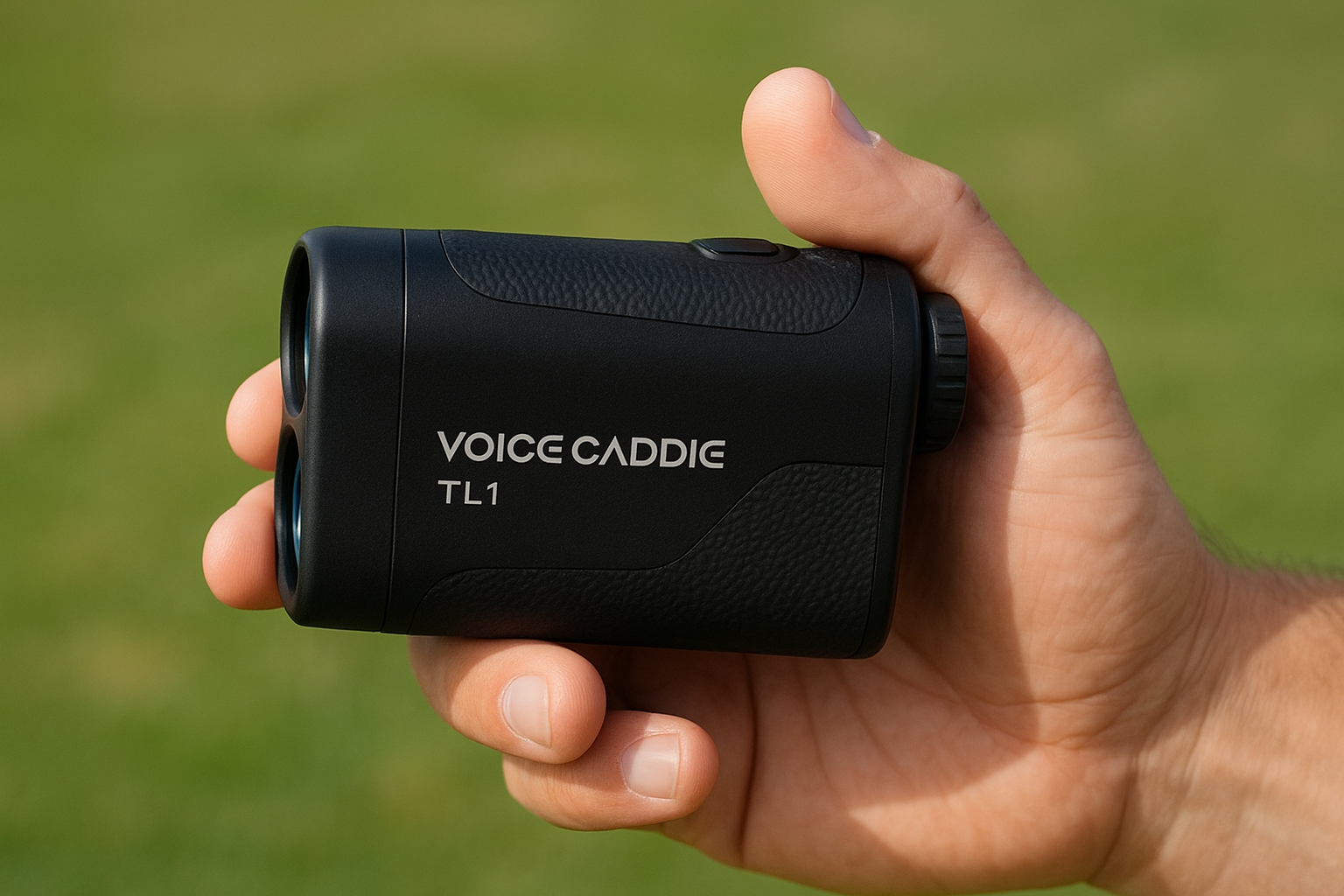
The Voice Caddie TL1 takes a different approach to distance confirmation by combining vibration pin-lock feedback with an audio voice output, making it one of the more distinctive options for golfers who want the best golf rangefinder for shaky hands. Rather than relying solely on a display reading you need to hold steady long enough to read, the TL1 speaks the yardage aloud so you always get the number clearly.
Why it works for shaky hands
The TL1 uses Target Lock vibration technology that pulses when the laser acquires the flag, giving you physical confirmation without needing to study the screen while your hand is still moving. Once that vibration fires, the voice output reads the distance out loud, which means you can glance away from the eyepiece and still catch the exact yardage. For golfers with tremors or reduced hand stability, that combination reduces the pressure to stay perfectly still for an extended period.
The audio readout is a genuine advantage if your hands shake, because you don't need to hold the unit steady long enough to read a small digital display.
Standout features that improve pin lock
The TL1 measures from 5 to 500 yards with 6x magnification, which suits the majority of UK parkland and coastal courses without difficulty. Slope-adjusted distances are calculated and announced verbally, so you hear both the raw yardage and the play-like distance in sequence. The slope function switches off for competition use, keeping the device within the rules of amateur golf. The housing is compact and lightweight, which means less wrist strain during a round, a small but practical benefit for anyone managing hand fatigue or tremor.
Things to know before you buy
The TL1 is water-resistant rather than waterproof, so a wet round in light rain is fine but sustained heavy downpours warrant keeping it in your bag between shots. Range tops out at 500 yards, which suits most golfers but may feel limiting on longer links holes. Battery life is reasonable on a CR2 cell, and the voice volume adjusts to suit different conditions, though some users find it slightly quiet on a windy day at its default setting.
Typical price range in the UK
The Voice Caddie TL1 typically retails between £120 and £160 in the UK. That sits in the mid-range bracket and delivers a genuinely useful audio feature that few competitors offer at this price point.
6. Blue Tees Series 3 Max+
The Blue Tees Series 3 Max+ has built a strong following among UK golfers who want premium features at a mid-range price, and it holds up well as a contender for the best golf rangefinder for shaky hands thanks to its generous magnification and flag-lock vibration system.
Why it works for shaky hands
The Series 3 Max+ uses flag-lock pulse vibration that fires a short burst the moment the laser confirms the pin, so you know the reading is solid even if your hand shifted slightly during the measurement. At 7x magnification, the enlarged view makes it easier to land the crosshair on a distant flag without needing a rock-steady grip. That extra magnification means the target fills more of the eyepiece, which shortens the precise hold time you need to get a confirmed lock.
Higher magnification reduces the fine motor control required to place the crosshair accurately on the flag, which is a direct benefit for golfers with any degree of hand tremor.
Standout features that improve pin lock
The Series 3 Max+ measures distances from 5 to 1,000 yards with its 7x optical lens, which outperforms many rivals at a comparable price point. Slope-adjusted yardages are calculated automatically and the slope mode toggles off via a physical switch on the device, keeping it within the rules for competitive rounds. One genuinely useful distinction from most rivals on this list is the USB-C rechargeable battery, which means no hunting for CR2 cells before a round. You charge it like a phone, and a full charge typically covers several rounds.
Things to know before you buy
The Series 3 Max+ is water-resistant and built to handle UK weather conditions without needing a separate cover, though fully submerging it is not advisable. The USB-C charging is convenient, but it does mean you need to remember to charge between sessions rather than swapping in a fresh battery on the morning of a round. Some golfers find the 7x magnification slightly narrower in field of view compared to 6x units, which can make locating the flag in the first place take a moment longer before lock-on.
Typical price range in the UK
The Blue Tees Series 3 Max+ typically retails between £180 and £220 in the UK. That price delivers 7x magnification, slope toggle, USB-C charging, and flag-lock vibration in a single package, which represents strong value compared to similarly specified alternatives in this bracket.
7. Garmin Approach Z82
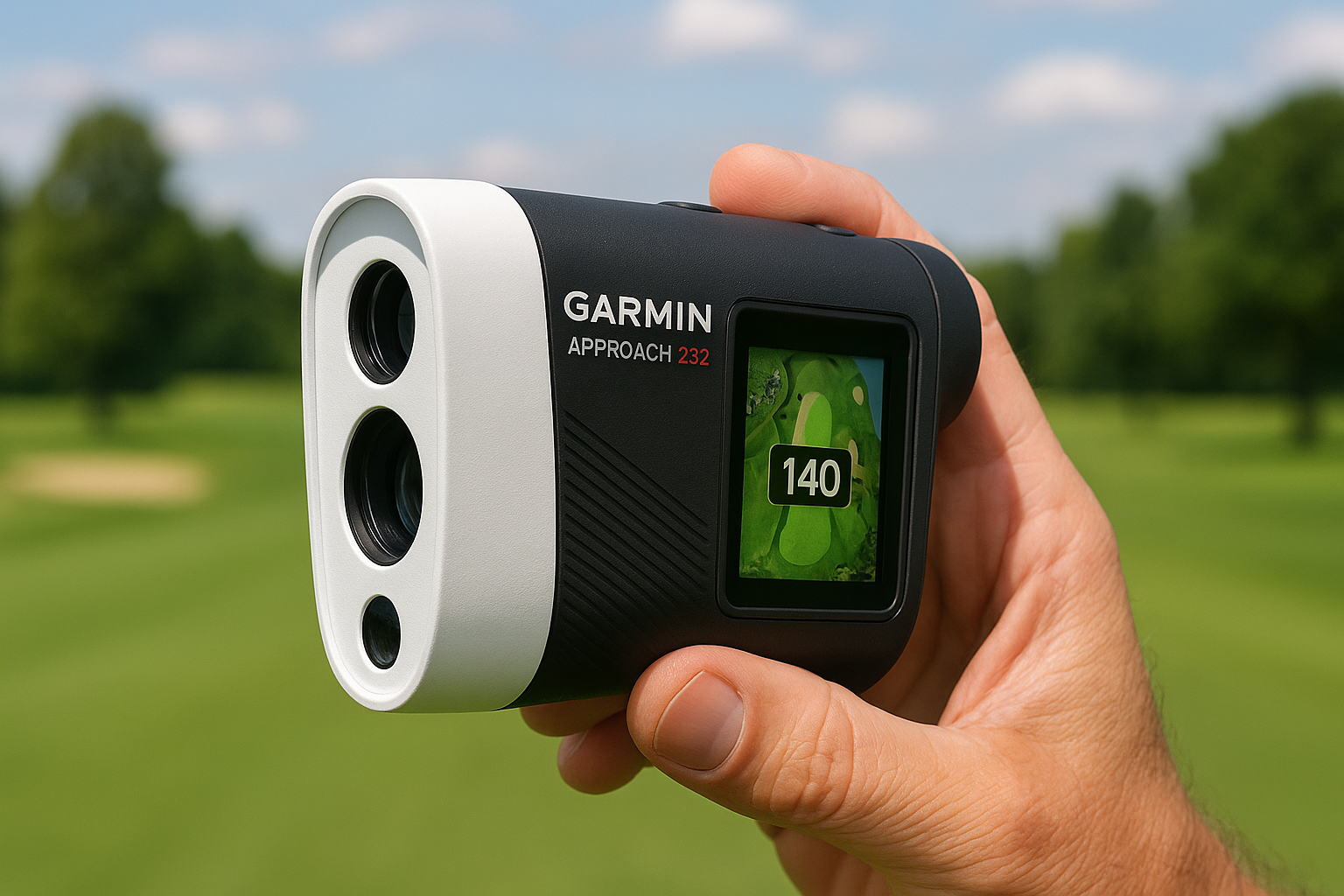
The Garmin Approach Z82 is the only rangefinder on this list that combines laser distance measurement with full GPS course mapping, giving it a dual-purpose capability that no other device here can match. If you want a single unit that handles both precise pin yardages and overhead hole views, the Z82 earns its place as a serious option for the best golf rangefinder for shaky hands.
Why it works for shaky hands
The Z82 includes image stabilisation technology built directly into the optical system, which smooths the view through the eyepiece while you press the measurement button. That physical stabilisation reduces the window of stillness you need to acquire the flag reliably, which benefits anyone managing tremor or reduced grip control. Pin acquisition happens quickly, and the device vibrates once the laser locks onto the target, giving you tactile confirmation without requiring you to hold steady long enough to read a fluctuating display number.
The combination of optical stabilisation and vibration lock confirmation means the Z82 delivers two separate signals that your reading is accurate, which is particularly reassuring when your hands are cold or unsteady.
Standout features that improve pin lock
The Z82 measures distances from 3.5 to 450 yards with 6x magnification, and the on-device display can show both laser yardage and GPS-derived distances to the front, middle, and back of the green simultaneously. Preloaded maps for over 41,000 courses worldwide appear directly on a colour touchscreen built into the side of the unit, so you can check the hole layout before you even raise the device to your eye. Slope-adjusted distances are available with a tournament-legal toggle, keeping the device within the rules for competitive golf when needed.
Things to know before you buy
The Z82 is significantly heavier than most rangefinders on this list due to the GPS display and additional hardware it carries, so if hand fatigue is a concern alongside tremor, that added weight is worth factoring in. The device charges via USB cable rather than a replaceable battery, which means you need to plan charging between rounds rather than swapping in a fresh cell on a Sunday morning.
Typical price range in the UK
The Garmin Approach Z82 typically retails between £450 and £500 in the UK, making it the most expensive option on this list. The premium reflects the dual laser-GPS functionality rather than rangefinder hardware alone, so it suits golfers who want one device to replace both a standalone GPS unit and a traditional laser rangefinder.
8. Shot Scope Pro L2
The Shot Scope Pro L2 brings together laser rangefinder precision and automatic GPS shot tracking in a single compact unit, making it a distinctive choice for golfers who want more from their device than yardage alone. It earns a place on this list as a genuine contender for the best golf rangefinder for shaky hands thanks to its fast pin acquisition and tactile lock confirmation.
Why it works for shaky hands
The Pro L2 uses Pin Pulse vibration technology that fires a short physical burst the moment the laser acquires the flag, which removes the need to hold perfectly still while watching a display number stabilise. That pulse acts as a hard confirmation signal, so even if your grip shifts slightly during the measurement, you know the reading is locked the instant the vibration fires. For golfers who struggle to hold a rangefinder steady, that clear feedback shortens the precise window of stability you need to get a reliable distance.
The vibration pulse fires at flag acquisition rather than at button press, so you receive confirmation only when the reading is genuinely locked, not just when the laser is active.
Standout features that improve pin lock
The Pro L2 measures distances from 5 to 900 yards with 6x magnification, and it layers GPS course data directly alongside the laser yardage, so you can cross-reference both figures without switching devices. Automatic shot tracking logs your distances for every club using small wearable tags, which builds a personal distance profile over time. Slope measurement is included with a legal toggle switch, keeping the device competition-ready without requiring a second unit in your bag.
Things to know before you buy
The Pro L2 charges via USB rather than a replaceable CR2 cell, which keeps running costs low but means you need to plan charging ahead of your round rather than swapping in a fresh battery on the morning. The GPS functionality requires an active Shot Scope subscription to unlock the full shot-tracking and course-mapping features, so factor that ongoing cost into your decision if you're primarily interested in the rangefinder capability alone.
Typical price range in the UK
The Shot Scope Pro L2 typically retails between £200 and £240 in the UK. That price includes the laser hardware, slope toggle, and GPS tracking platform, which positions it as strong value for golfers who want data beyond basic yardage.
9. GolfBuddy Laser Lite 2
The GolfBuddy Laser Lite 2 earns its spot on this list not through a premium price tag but through a practical, lightweight design that reduces hand fatigue over 18 holes. For golfers searching for the best golf rangefinder for shaky hands on a tighter budget, it delivers the core features that matter most without unnecessary bulk.
Why it works for shaky hands
The Laser Lite 2 uses flag acquisition vibration feedback that pulses the moment the laser locks onto the pin, giving you a clear physical signal that your reading is confirmed. That immediate tactile confirmation means you don't need to hold the device perfectly still while squinting at a fluctuating number on the display. The compact, lighter body also reduces the lever effect that makes heavier devices harder to hold steady, which is a genuine practical advantage for golfers whose hands tire quickly or shake under extended strain.
A lighter rangefinder puts less stress on your grip during the measurement window, which directly reduces the movement that causes an inaccurate reading.
Standout features that improve pin lock
The Laser Lite 2 measures distances from 5 to 800 yards with 6x magnification, which covers every club in your bag on a standard UK course. Slope-adjusted yardages are calculated automatically and displayed alongside the straight-line distance, and the slope function toggles off via a simple switch to keep the device legal for competition rounds. The pin acquisition mode filters background objects behind the green and prioritises the nearest target in your line, shortening the time you need to hold the crosshair on the flag before a lock fires.
Battery life runs on a standard CR2 lithium cell, which is easy to carry as a spare in your bag and widely available before a round.
Things to know before you buy
The Laser Lite 2 is water-resistant rather than fully waterproof, so it handles a light shower without issue but benefits from a protective pouch during a genuinely wet round. There is no optical image stabilisation in the hardware, so the pin-lock vibration is the primary tool working in your favour if your tremor is significant rather than mild.
Typical price range in the UK
The GolfBuddy Laser Lite 2 typically retails between £130 and £170 in the UK. That price point delivers slope measurement, flag-lock vibration, and a lightweight build in a package that suits golfers who want a capable device without stretching to the premium tier.
Quick recap and next step
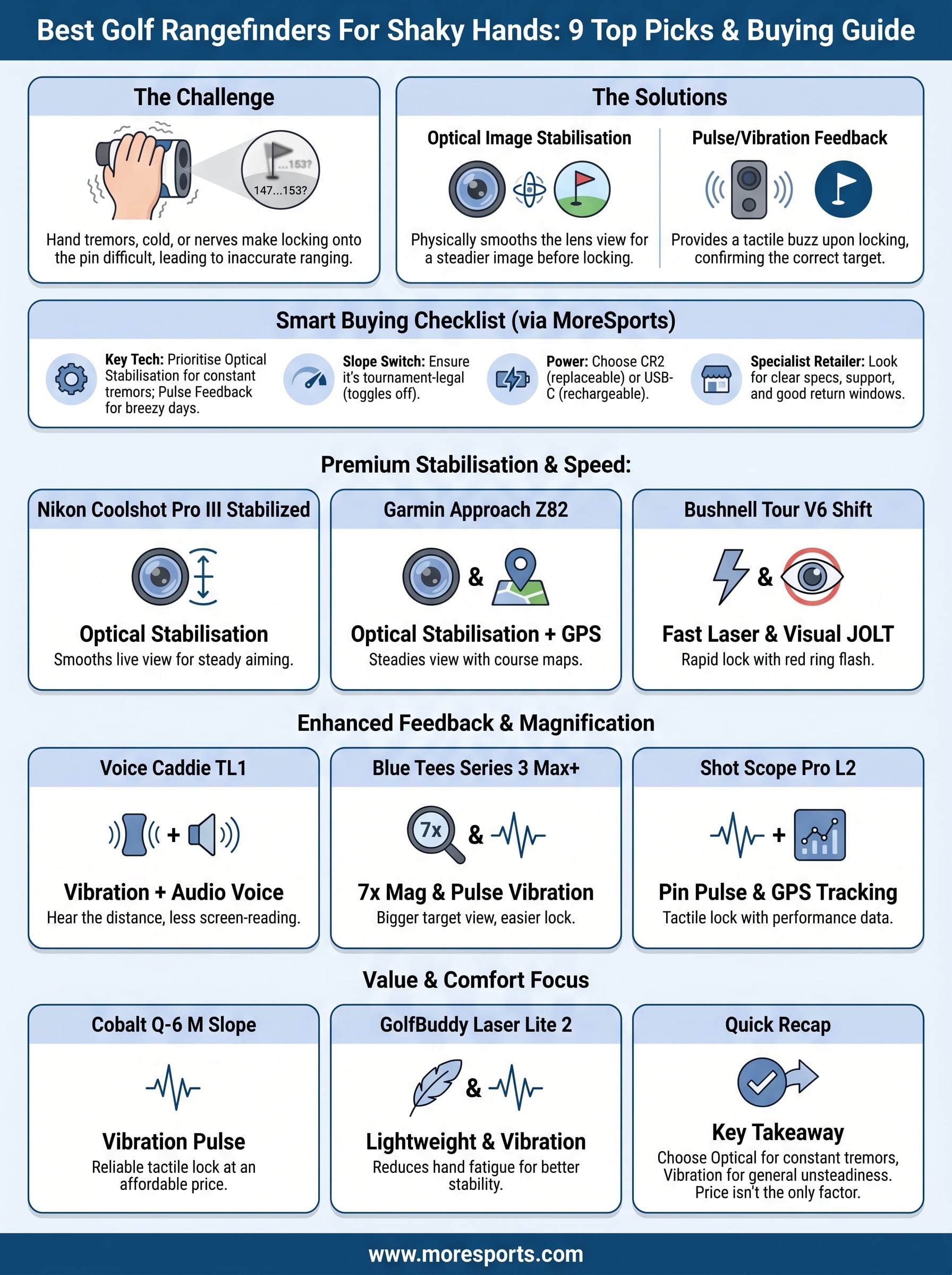
Nine rangefinders, one common thread: pin-lock vibration, optical stabilisation, or both make a measurable difference if you struggle to hold a device steady over the flag. The best golf rangefinder for shaky hands is not necessarily the most expensive one on the shelf. The Nikon Coolshot Pro III Stabilized leads on hardware stabilisation, while options like the GolfBuddy Laser Lite 2 and Cobalt Q-6 M Slope deliver solid flag-lock feedback at a lower price point. Budget and the severity of your tremor are the two factors that narrow the list fastest.
Whatever model you land on, buying from a specialist retailer gives you clear specs, genuine support, and a return window long enough to test the device properly. Head over to MoreSports to browse the current rangefinder selection, check live pricing, and take advantage of free UK delivery on orders over £25.