 No Duties or Customs Fees For EU & UK Customers
 Free UK Delivery On Orders Over £60
 90 Day Returns

Difference Between Driver And Fairway Wood: When To Use Each
RYKnowing the difference between driver and fairway wood might seem straightforward at first glance, but it goes well beyond just the size of the clubhead. These two club types are built for different jobs, and understanding when to reach for each one can genuinely lower your scores on the course. Too many golfers grab their driver on every tee or avoid their fairway woods entirely, both habits cost strokes.
This guide breaks down the key physical differences between drivers and fairway woods, including loft, shaft length, and head design, and explains how those differences affect your swing and ball flight. We'll also cover the on-course situations where each club gives you the best result, so you can make smarter decisions from the tee box to the fairway.
At MoreSports, we stock drivers and fairway woods from brands like TaylorMade, MacGregor, and more, so we spend a lot of time helping golfers pick the right clubs for their game. Whether you're a beginner still building your bag or a seasoned player looking to tighten up your strategy, this breakdown will give you the clarity you need to use both club types with confidence.
Why the difference matters on the course
Choosing the wrong club at the wrong moment is one of the most common ways amateur golfers add unnecessary strokes to their round. The difference between driver and fairway wood is not just a technical detail - it directly affects how you manage each hole from start to finish. Getting this right means better positioning, more consistent contact, and far fewer recovery shots throughout your round.
Distance versus control
The driver is built for one primary job: maximum distance off the tee. Its large clubhead, low loft (typically 9 to 12 degrees), and long shaft are all designed to help you launch the ball as far as possible. That extra distance is valuable, but it comes with a genuine trade-off. The longer shaft makes the driver harder to control, particularly for golfers who are still developing their swing consistency. When you miss the sweet spot with a driver, the resulting miss is usually bigger and harder to recover from than with any other club in the bag.
The driver rewards a confident, committed swing. Any hesitation or tension in your technique tends to produce wayward shots that cost you position off the tee.
Course management and shot placement
Fairway woods offer far more versatility across different situations on the course. Their shorter shafts and higher lofts, typically 15 to 18 degrees for a 3-wood, make them easier to control while still generating meaningful distance. You can use a fairway wood from the tee on tight, narrow holes, from the fairway when you need to attack a par 5 in two shots, or even from light rough where a driver simply cannot make clean contact with the ball. That flexibility is exactly why experienced golfers treat their fairway woods as some of the most valuable clubs in the bag, not just backup options.
Driver vs fairway wood: what changes
The difference between driver and fairway wood comes down to three core specs: loft, head size, and shaft length. Each of those specs shapes how the club behaves at impact and what you can realistically ask it to do.
Loft and head size
Drivers carry a loft of 9 to 12 degrees, which keeps the launch angle low and maximises roll after landing. Fairway woods run from 15 degrees on a 3-wood up to around 21 degrees on a 5-wood, producing a higher, softer ball flight that lands and stops more quickly. Driver heads are also significantly larger, often around 460cc at the maximum limit, which widens the sweet spot but makes clean ground contact almost impossible from anything other than a teed-up ball.
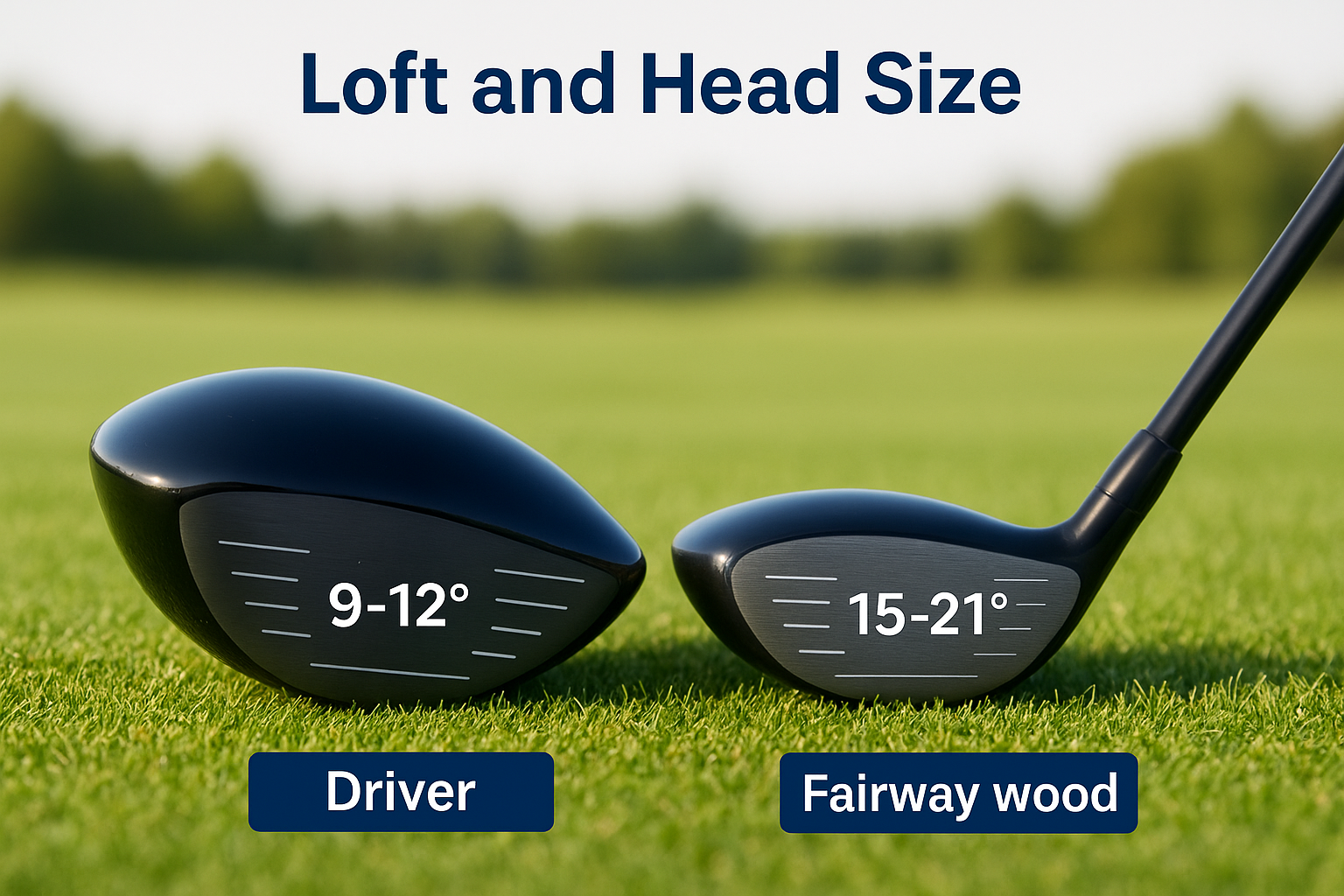
A fairway wood's smaller, shallower head is what allows it to glide through turf cleanly, something a driver simply cannot do.
Shaft length and ball position
Drivers use the longest shaft in the bag, typically 45 to 46 inches, which generates more clubhead speed but demands precise timing to control. Fairway wood shafts sit around 41 to 43 inches, giving you a shorter arc that is noticeably easier to repeat swing after swing. That difference in shaft length also shifts your natural ball position slightly, which changes your setup and contact point at address.
How to choose the right club for each shot
Understanding the difference between driver and fairway wood gives you the foundation, but applying that knowledge on the course is where the real gains happen. The decision between the two clubs comes down to three factors: the lie, the distance you need, and how much margin for error the hole allows.
When to reach for the driver
Your driver belongs in your hands when you have a teed-up ball, a wide landing zone, and distance is your primary goal. Long par 4s and par 5s where you need to cover maximum ground are the obvious situations. If the fairway is generous and the rough is forgiving, the driver gives you the best chance of setting up a short approach.
Narrow holes with out-of-bounds markers or water off the tee are exactly where many golfers should leave the driver in the bag.
When a fairway wood does the job better
Reach for your fairway wood when you are hitting from the turf, a tight tee shot requires accuracy, or you need to reach a par 5 green in two. A 3-wood off the tee on a demanding hole gives you meaningful distance with noticeably better control, and from the fairway it remains one of the most effective long-distance options available.
How to set up and swing each club
The difference between driver and fairway wood also shows up in how you position your body and deliver the club at impact. Getting your setup right for each club is just as important as choosing the correct one in the first place.

Setting up for the driver
Position the ball opposite your lead heel and tee it high enough that roughly half the ball sits above the crown of the clubhead. Your weight should favour your trail side slightly at address, which naturally promotes an upward strike through the ball for maximum carry and reduced backspin.
A sweeping, upward strike is what separates a well-hit driver from a low, spinning shot that loses distance quickly.
Key driver setup reminders:
- Ball furthest forward in your stance
- Weight slightly behind centre
- Tee height: half the ball above the clubhead
Setting up for the fairway wood
Move the ball back slightly, around two ball-widths inside your lead heel, and keep your weight more centred at address. Your swing should brush the turf through impact rather than driving upward into the ball, which is what creates clean, consistent contact from the fairway.
From the tee with a fairway wood, the same approach applies. Tee the ball very low and focus on a shallow attack angle that mirrors your fairway swing, rather than trying to lift the ball into the air artificially.
Common questions and myths golfers get wrong
Several persistent myths about the difference between driver and fairway wood lead golfers to make poor decisions on the course. Clearing these up will help you build better habits and stop leaving strokes on the table.
A 3-wood is just a shorter driver
This is one of the most common misconceptions. A 3-wood is a fundamentally different tool designed to do a different job. Its shallower face, higher loft, and shorter shaft mean it requires a different swing path and impact position, not simply a scaled-down version of your driver motion. Treating it like a miniature driver is exactly what causes golfers to thin or top fairway wood shots.
The moment you stop thinking of your 3-wood as a small driver, your contact and ball-striking consistency will improve noticeably.
You always need maximum distance off the tee
Many golfers assume longer is always better from the tee, but course management often rewards accuracy over raw distance. A 3-wood that lands in the fairway gives you a much better second shot than a driver that finishes in the rough or behind a tree. Choosing the club that puts you in the best position for your next shot is always the smarter play, regardless of which club produces the bigger number.
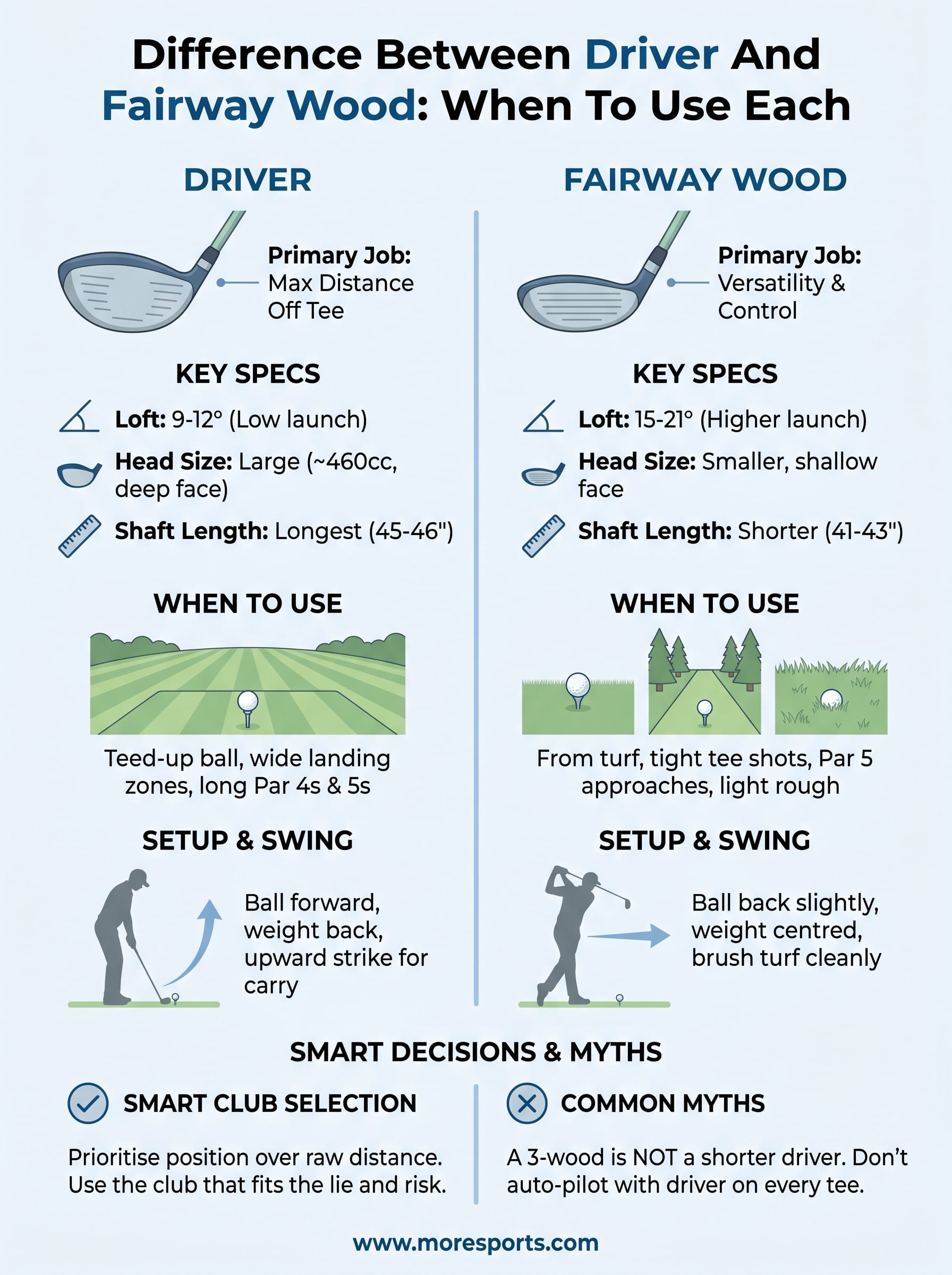
Quick recap
The difference between driver and fairway wood comes down to loft, head size, shaft length, and the situations each club handles best. Your driver exists for distance off the tee when the landing zone is wide and you have room to work with. Your fairway woods give you control, versatility, and reliable contact from the turf, tight tee boxes, and long par 5 approaches. Getting your setup right for each club matters just as much as picking the right one, so pay attention to ball position and attack angle before you swing.
Stop treating your 3-wood as a smaller driver, and stop reaching for your driver on every tee out of habit. Smarter club selection will do more for your scorecard than extra distance ever will. If you're looking to add the right clubs to your bag, browse the full range of golf clubs and equipment at MoreSports and find options that suit your game.