 No Duties or Customs Fees For EU & UK Customers
 Free UK Delivery On Orders Over £30
 90 Day Returns

Draw Bias Driver Meaning: What It Is And Who Should Use It
RYIf you've been shopping for a new driver and keep seeing the term draw bias driver meaning explained differently on every site, you're not alone. It's one of those golf terms that gets thrown around constantly but rarely gets a straight, clear explanation, especially when you're trying to figure out whether it'll actually fix that frustrating slice off the tee. A draw bias driver is a club specifically engineered to help the ball move right to left (for a right-handed golfer), counteracting the open clubface that causes most slices.
The design behind it isn't magic. It comes down to deliberate weight placement, adjusted lie angles, and offset hosels, all working together to encourage the clubface to close more naturally through impact. Understanding these features matters because not every draw bias driver is built the same, and picking the wrong one can introduce new problems into your game rather than solving existing ones.
In this guide, we break down exactly what a draw bias driver is, how the technology works, and who stands to benefit most from using one. At MoreSports, we stock draw bias drivers from brands like TaylorMade and Callaway, so we know these clubs inside and out. Whether you're a high-handicapper battling a slice or a mid-handicapper looking for a slight shot shape correction, this article will help you decide if a draw bias driver belongs in your bag.
What a draw bias driver is and what it is not
A draw bias driver is a driver built with internal and external design features that push the ball's starting direction and spin axis toward a right-to-left flight path for a right-handed golfer. When manufacturers describe the draw bias driver meaning, they're referring to a club where the centre of gravity sits toward the heel side of the clubhead, the hosel is often offset slightly, and the lie angle leans more upright than a standard driver. These three elements work together to encourage the clubface to arrive at the ball in a slightly closed position, which is what produces that right-to-left shape.
The specific design features that create bias
The word "bias" in this context means the club actively favours a particular ball flight outcome through its physical construction, not through any adjustment you make to your swing. Most draw bias drivers achieve this by positioning heel-side weighting further back and toward the inner heel area of the clubhead. When mass concentrates there, the clubhead naturally wants to rotate closed through the impact zone. Some models, such as those in the TaylorMade Stealth family, also use moveable weight systems so you can control how much draw bias you apply.
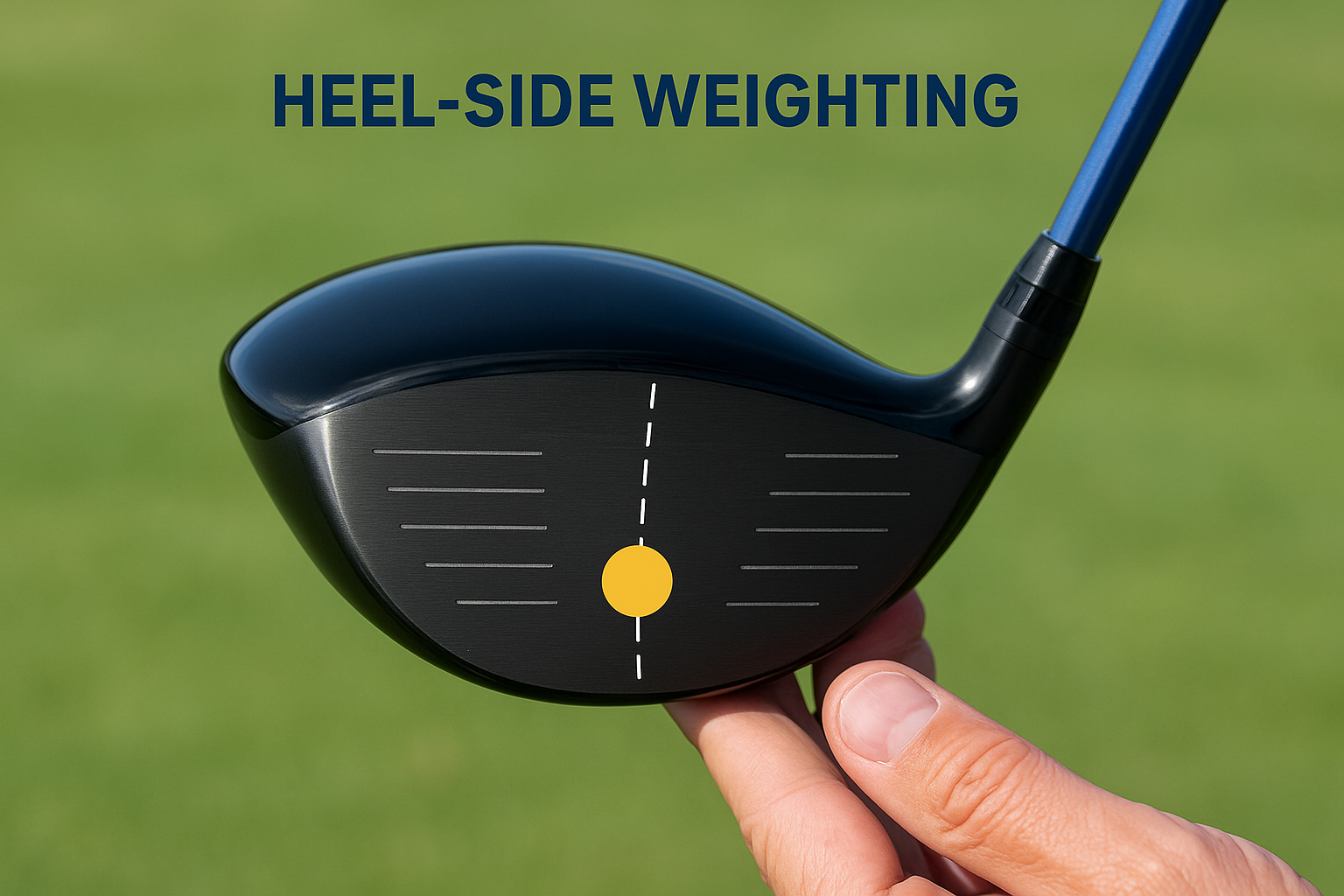
The lie angle on a draw bias driver is typically one to two degrees more upright than a neutral driver, which tilts the face slightly left at address and promotes a closed-face delivery through the swing.
Beyond the weight placement and lie angle, offset hosels play a role in several draw bias models. An offset hosel positions the clubface slightly behind the shaft at address, giving your hands a fraction of extra time to rotate through before impact. That extra rotation helps the face close through the hitting zone, which is precisely what a golfer who struggles with an open face at impact needs. Not every draw bias driver uses all three features simultaneously; some rely primarily on weighting, while others combine all of them for a stronger corrective effect.
What a draw bias driver is not
Knowing the draw bias driver meaning also requires understanding what these clubs cannot do for your game. A draw bias driver is not a swing fix. If your grip is weak, your swing path runs severely out-to-in, or you are losing posture through the downswing, a draw bias driver will reduce the side spin penalty but will not eliminate the root cause of your slice. You still need to address those mechanical issues through practice or instruction.
These clubs are also not the same as a standard driver with the adjustable loft sleeve rotated to a draw position. Some golfers confuse the two. Adjusting loft on a standard driver can shift the face angle slightly, but it does not change the centre of gravity location or the lie angle in the same meaningful way that a purpose-built draw bias head does. The corrective effect from a loft adjustment alone is noticeably weaker, and you may sacrifice ball speed or launch angle in the process.
Finally, draw bias drivers are not a tool exclusively for beginners or high-handicappers. While golfers with a consistent slice benefit most from the design, some mid-handicappers use them deliberately when a course layout rewards a controlled right-to-left shape. Treating the club as a performance option rather than a beginner's shortcut will help you make a better-informed decision about whether it belongs in your bag.
Why draw bias matters for ball flight and scoring
Ball flight shapes have a direct relationship with how far the ball travels and where it ends up on the hole. A slice does not just send the ball in the wrong direction; it also robs the shot of distance because the open face creates more side spin and less forward momentum through the air. Understanding the draw bias driver meaning goes beyond club design; it connects directly to why your scores on driving holes are higher than they need to be.
How a slice costs you distance and accuracy
When the clubface arrives at the ball in an open position, the ball launches with a significant clockwise spin axis for a right-handed golfer. That spin tilts the ball sharply to the right, shortening the carry distance and widening the landing zone unpredictably. Research by TrackMan confirms that golfers who slice lose between 20 and 40 yards of carry distance compared to a straight or draw shot hit with the same clubhead speed, simply because of the inefficient spin axis.
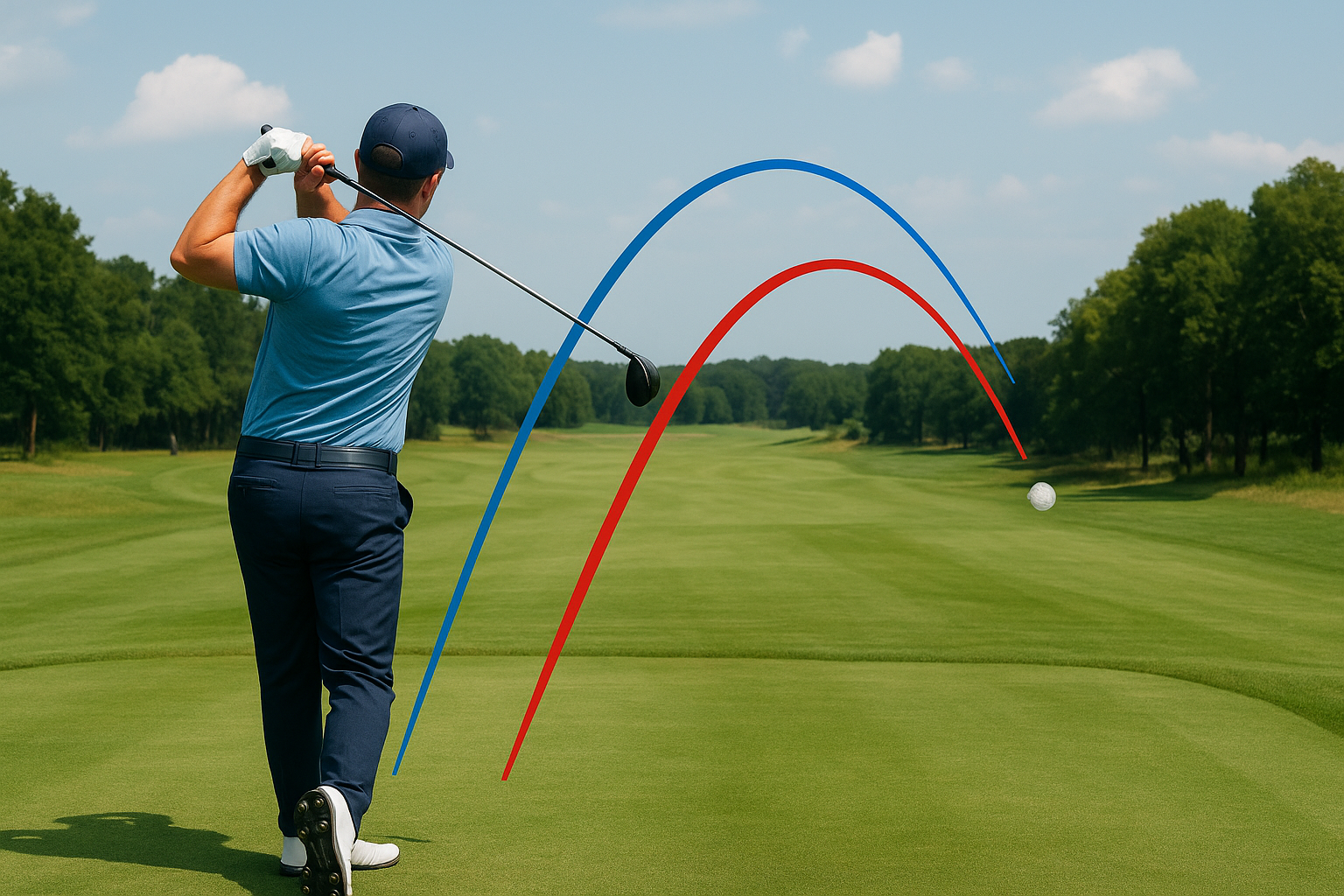
A ball hit with a draw bias flight holds its line longer in the wind and lands with more forward roll than a fade or slice, which means more distance from the same swing effort.
Your fairway percentage drops when you slice consistently. Fewer fairways means more approach shots from rough, trees, or awkward lies, which directly inflates your score over 18 holes. A draw bias driver reduces that side spin penalty even when your swing is not perfect, keeping the ball in a more useful part of the hole far more often.
The scoring benefit of a predictable shot shape
A repeatable draw gives you course management options that a slice simply does not allow. When you know the ball will move right to left, you can aim at the right edge of the fairway and let the flight work back to the centre. That kind of intentional play lowers your mental load on the tee and removes the guesswork that comes with an unpredictable ball flight.
Golfers who convert from a slice to a controlled draw typically find that their dispersion pattern tightens significantly, even if the swing itself has not changed dramatically. A tighter dispersion means shorter distances from the fairway or green, fewer penalty shots, and better scoring averages across all handicap levels.
How draw bias drivers create a draw
The mechanics behind a draw bias driver come down to physics, not guesswork. Manufacturers engineer these clubs to influence two critical variables at impact: the direction the face points and the path the clubhead travels through the ball. When you understand how each design element contributes to that outcome, the draw bias driver meaning becomes far more practical and easier to apply when you are actually standing in front of a rack choosing a new club.
Centre of gravity and the heel weight effect
Positioning extra mass toward the heel of the clubhead changes how the head rotates during the downswing. When weight concentrates at the heel, the clubhead resists staying open through impact because the heel-side mass pulls the toe around faster. The result is a clubface that closes more readily without any change to your grip pressure or swing speed. This passive closure effect is the primary mechanical reason a draw bias driver reduces or eliminates the right-shot miss for a wide range of golfers.
Most manufacturers achieve this by placing dense tungsten or steel weights at the inner heel position, either as fixed inserts or as moveable sliding weights on a track. TaylorMade's Qi10 Draw driver, for example, concentrates mass low and toward the heel to lower spin and encourage right-to-left ball flight. When you combine that weight placement with even a moderately on-plane swing, the ball exits the face with a counterclockwise spin axis that carries the shot toward the left side of the fairway rather than leaking right.
The heel-side centre of gravity works passively through the swing, meaning the corrective effect happens without requiring any conscious effort from you at the moment of impact.
Upright lie angle and face angle at address
The upright lie angle built into a draw bias driver tilts the toe of the club slightly upward at address. That tilt shifts the face angle left of the target line at setup, giving you a small but meaningful head start on a closed face before the swing even begins. Most draw bias drivers sit one to two degrees more upright than a neutral model, and that difference compounds with the heel weighting to deliver a stronger corrective result than either feature would produce on its own.
Your setup position changes slightly when you address the ball with an upright lie angle, and it is worth knowing this before you take the club out for the first time. The face will look more closed than you are used to, but as your eye adjusts over several rounds, that position starts to feel natural and your confidence on the tee builds with it.
Who should use one and who should avoid it
Understanding the draw bias driver meaning is only half the decision. The other half is working out whether this type of club will genuinely help your specific game or create new problems you do not currently have. The answer depends on your typical ball flight, your swing path, and your handicap level.
Golfers who will benefit most
If you consistently produce a slice or a weak fade off the tee, a draw bias driver is worth serious consideration. High-handicappers with an open clubface at impact represent the clearest match for this technology, as the heel-side weighting and upright lie angle do exactly what their swing fails to do naturally. You do not need a perfect action to benefit; the club's passive design compensates for a moderate open-face tendency without requiring you to change anything fundamental about how you swing.
A golfer who regularly misses fairways right and loses significant distance to side spin will see the most immediate and measurable improvement from switching to a draw bias driver.
Mid-handicappers who play courses with tight, left-to-right fairway layouts can also use a draw bias driver as a deliberate shot-shaping tool. Knowing the ball will move right to left lets you aim at the right edge of the fairway and trust the flight to work back, and a draw bias head delivers that shape more consistently than a neutral driver without requiring any in-swing manipulation.
Golfers who should avoid it
If you already hit a natural draw or hook, a draw bias driver will amplify that right-to-left shape and push your misses further left. A golfer who hooks the ball regularly does not need more face closure at impact; adding a draw bias head will turn manageable misses into severe pull-hooks that find trouble on the left side of almost every hole you play.
Low-handicappers and scratch golfers should also approach these clubs carefully. At that level, precise shot-shaping and workability matter more than corrective bias, and a draw bias driver limits your ability to play intentional fades or hold the ball into a right-to-left wind. If your ball striking is already consistent and your misses are small, a neutral driver with an adjustable weight system gives you far more flexibility than a fixed-bias model will.
How to choose and set up a draw bias driver
Choosing the right draw bias driver starts with an honest assessment of how severe your slice is and how much correction you actually need. Not all draw bias drivers apply the same level of corrective force, so matching the club's design to your typical miss will determine whether you see a genuine improvement or simply swap one problem for another.
Matching the right level of bias to your swing
If your slice is significant and consistent, look for a driver that uses fixed heel weighting combined with an upright lie angle, as this combination delivers the strongest corrective effect. Clubs like the TaylorMade Qi10 Draw fit this profile and are built for golfers whose misses regularly find the right rough or worse. The fixed design means you cannot dial the bias back, so make sure your ball flight genuinely needs that level of correction before committing.
For a golfer with a milder fade or an occasional right miss, an adjustable draw bias driver gives you more control over the outcome. Models with a sliding weight track let you position the mass at the heel for rounds when you need extra correction, then shift it back toward neutral when your timing is sharp. Applying the draw bias driver meaning practically here is simple: more adjustability equals more flexibility to manage different course conditions and swing days without changing clubs.
If you are unsure how much bias you need, a session on a launch monitor will show your spin axis numbers and face angle at impact, giving you a clear target for how much correction to look for.
Setting up the club for maximum effect
Once you have the right club, your address position and grip pressure both influence how much of the draw bias effect you actually feel at impact. Gripping too tightly through the downswing reduces the natural rotation the hosel and heel weighting promote, so keep your grip pressure firm but relaxed through the hitting zone. Place the ball slightly further forward in your stance than you would with a neutral driver, which encourages a shallower attack angle and lets the face close through the ball rather than across it.
These setup adjustments work with the club's design rather than against it:
- Align your feet parallel to the target line rather than aiming left, which would encourage an out-to-in path
- Tee the ball at your normal height; a draw bias head does not require tee height changes
- Keep your lead wrist flat or slightly bowed at the top of the backswing, reinforcing the closed-face delivery the club is already promoting
Key takeaways before you buy
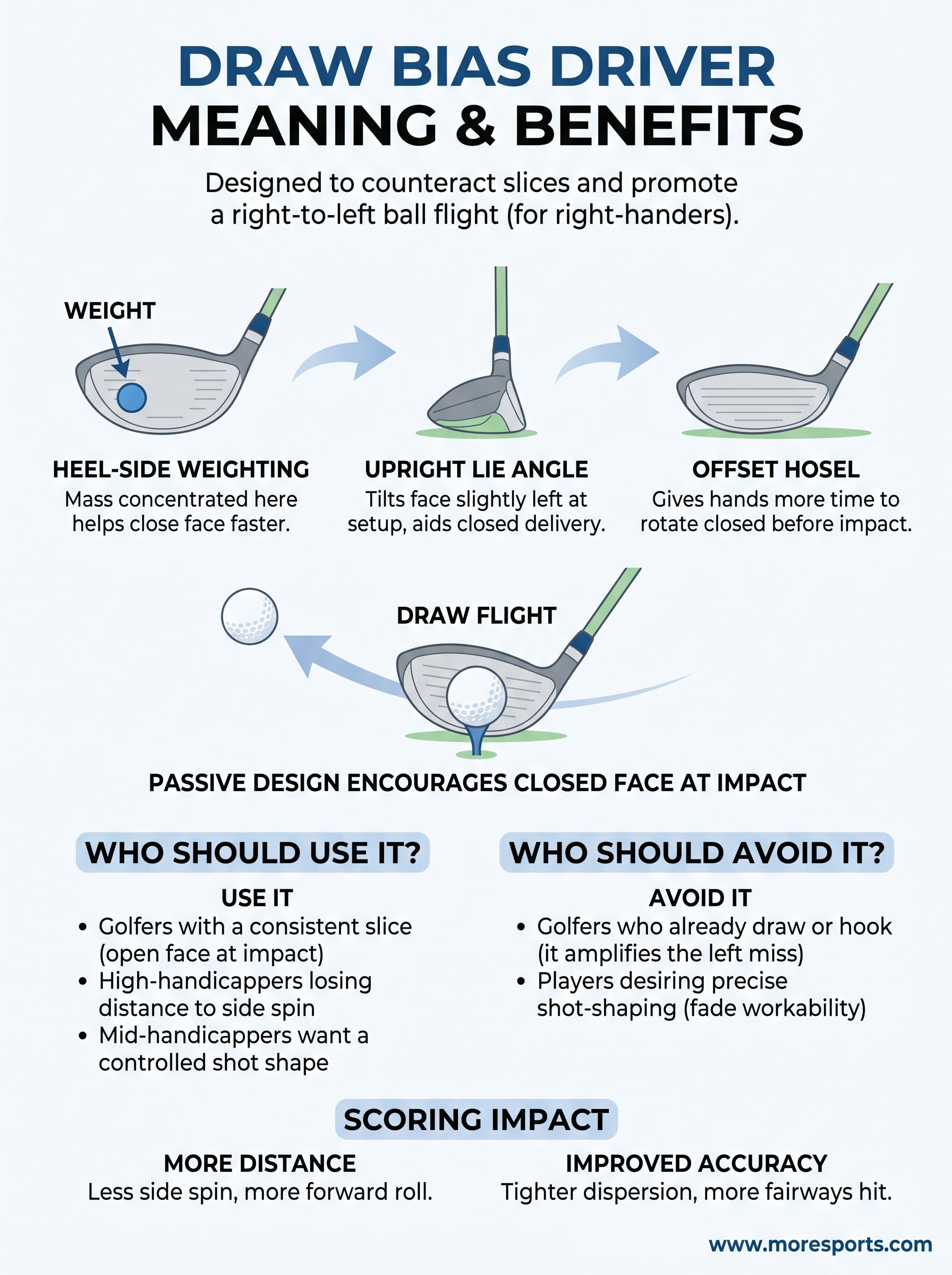
The draw bias driver meaning comes down to one core principle: the club uses heel-side weighting, an upright lie angle, and sometimes an offset hosel to encourage a closed clubface at impact without requiring you to change your swing. These features work passively, which means the correction happens through the club's physical design rather than through any conscious effort you make during the swing. If you slice consistently and lose distance and fairways because of it, a draw bias driver is a practical, well-engineered solution worth serious consideration.
That said, it is not the right tool for every golfer. If you already draw or hook the ball, this type of driver will make your misses worse, not better. Match the level of bias to your actual ball flight, use a launch monitor session if you are unsure, and test before you commit. Browse our full range of drivers at MoreSports to find the right fit for your game.