 No Duties or Customs Fees For EU & UK Customers
 Free UK Delivery On Orders Over £25
 90 Day Returns

Golf Shoes Explained: Spikes Vs Spikeless, What To Buy Now
RYYour choice of golf shoes affects everything from how you grip the turf during your swing to how your feet feel on the 18th hole. Yet it's one of the most overlooked equipment decisions golfers make. With golf shoes explained properly, you can avoid wasting money on a pair that doesn't suit your game, your course conditions, or the way you actually play.
The big question most golfers face is simple: spiked or spikeless? Both have genuine advantages, and the right answer depends on factors like the courses you play, the weather you deal with, and whether you prioritise stability or versatility. Materials, waterproofing, fit, and sole design all play a role too, and getting these details right makes a noticeable difference on the course.
This guide breaks down everything you need to know before buying your next pair. We'll cover how spiked and spikeless shoes compare, what materials and features matter most, and how to match a shoe to your playing style. At MoreSports, we stock golf footwear from trusted brands like FootJoy, Stuburt, and Adidas, so once you know what you're after, you can find the right pair at a competitive price and get it delivered to your door.
Why golf shoes matter
Golf shoes do more than protect your feet. They connect your body to the ground at the most critical moments of your round, and without that connection, your swing mechanics and overall performance suffer. A standard trainer or casual shoe simply cannot replicate the grip and stability that a dedicated golf shoe provides, particularly when you're generating power through your downswing or walking across wet fairways.
The foundation of a good golf swing starts from the ground up, and your footwear is a direct part of that foundation.
Stability during your swing
When you swing a golf club, your feet generate rotational force and need to stay planted. Lateral movement in the foot during the swing translates directly into inconsistency at impact, which costs you both distance and accuracy. Golf shoes are built with soles and outsole patterns specifically designed to resist this kind of movement. Whether spiked or spikeless, a well-made golf shoe gives you a stable base that a running shoe or casual trainer cannot match, even on flat, dry ground.
Beyond grip, golf shoes also provide structured support around the heel and midfoot. Heel cup design and arch support in purpose-built golf shoes reduce the strain that 18 holes of walking puts on your feet and lower body. Golfers who switch from regular trainers to proper golf footwear often notice less fatigue by the back nine, particularly on undulating courses where your ankles need to work harder.
Comfort over 18 holes
Walking 18 holes typically covers between five and seven kilometres, and you make that walk in all kinds of weather. Waterproofing and breathability are not optional extras in a golf shoe; they are functional requirements that affect how your feet feel throughout the round. Wet feet lead to blisters, reduced focus, and discomfort that builds with every hole. Most quality golf shoes now come with waterproof membranes and moisture-wicking linings that manage both water ingress and internal heat.
With golf shoes explained in full detail throughout this guide, you will see how specific construction choices affect both comfort and performance. The fit, the upper material, and the sole type all work together, and understanding these elements helps you buy a shoe that holds up across an entire season.
Spikes vs spikeless: which suits your game
The decision between spiked and spikeless golf shoes comes down to where you play and how you play. Both types deliver real performance benefits, but they suit different golfers in different conditions. Understanding the distinction is a key part of having golf shoes explained properly before you spend your money.
Spiked shoes: grip when conditions demand it
Spiked shoes use plastic cleats fitted to the outsole to dig into the turf and lock your feet in place during the swing. They are the better choice for wet, soft, or hilly courses where extra grip genuinely makes a difference to your footing and stability. Most modern spiked shoes use replaceable soft-spike cleats rather than metal ones, which means they deliver strong traction without causing damage to greens or fairways.
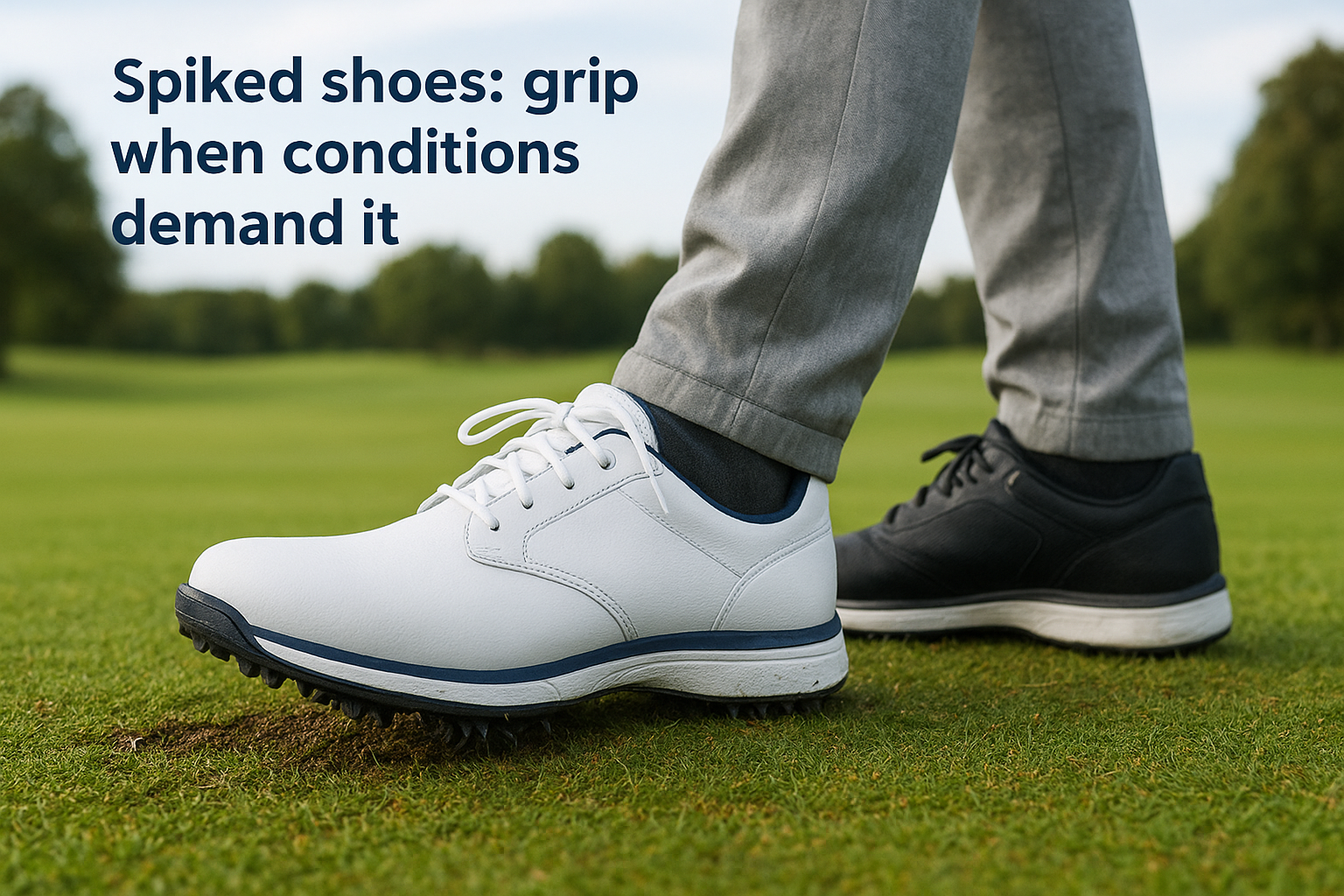
If you regularly play on wet or challenging courses throughout the year, spiked shoes will give you the most consistent grip through your swing.
Spikeless shoes: versatility on and off the course
Spikeless shoes feature moulded rubber nubs or tread patterns built directly into the outsole. They perform well on firm, dry ground and give you the added benefit of wearing them off the course without looking out of place. Comfort across long rounds is often cited as a strength of spikeless designs, and many tour players now opt for them on firm summer courses where hard turf makes heavy traction unnecessary.
Your best option depends on the courses you visit most often. If you play year-round in the UK on softer ground, spiked shoes provide more reliable traction and swing stability. If you play mainly in summer or on well-drained courses, spikeless shoes handle the job without compromise and offer more flexibility in everyday use.
Key features that change comfort and grip
Beyond the spike debate, the materials and construction of a golf shoe determine how comfortable you feel on the course and how much grip you carry through a full swing. Getting golf shoes explained at this level helps you compare options based on what actually matters rather than brand name or marketing claims.
Upper materials and waterproofing
The upper is the part of the shoe that wraps around your foot, and the material you choose directly affects breathability, durability, and water resistance. Most quality golf shoes now carry a waterproof guarantee of at least one year. Here is how the main upper materials compare:
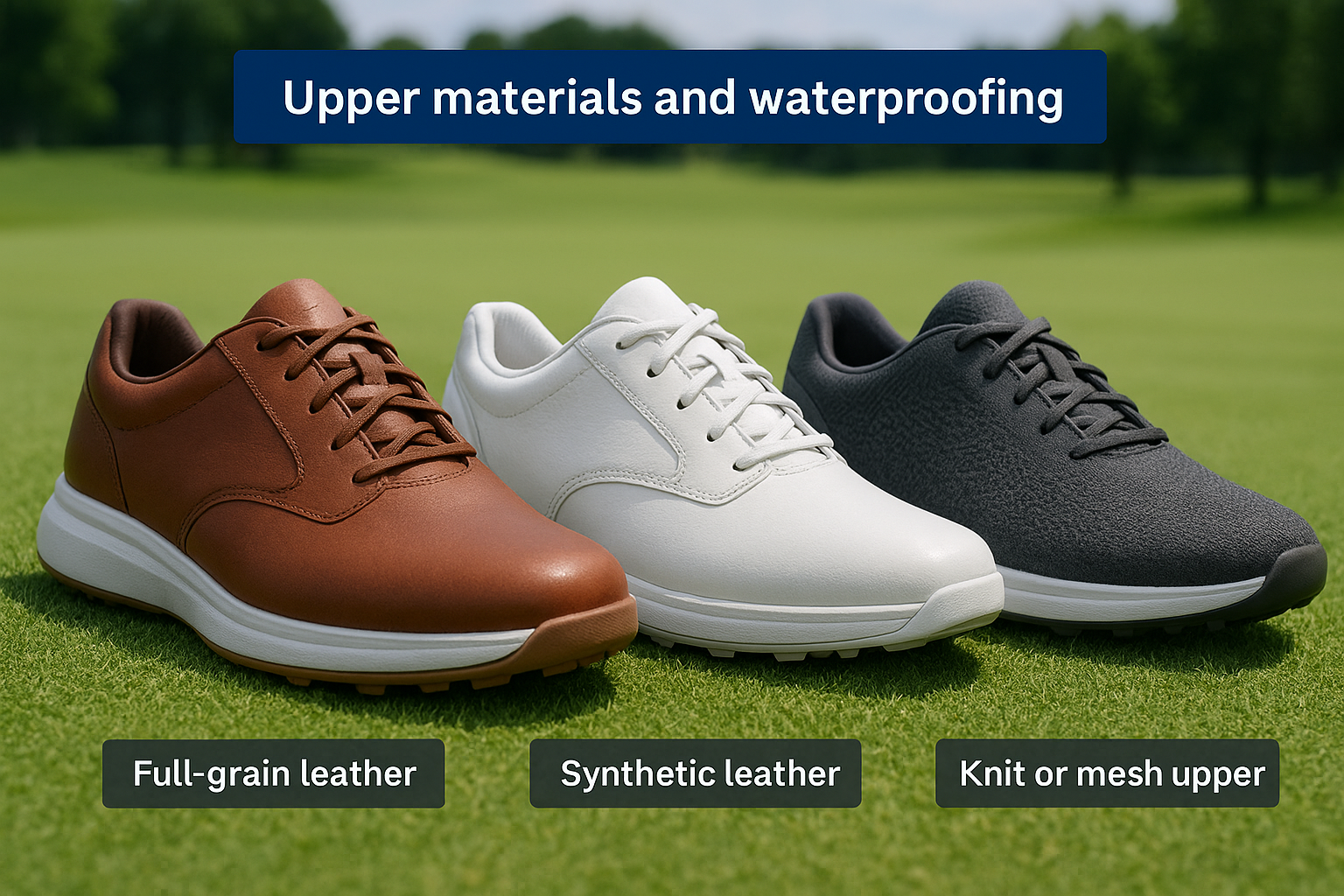
- Full-grain leather: excellent durability, moulds to your foot over time, typically heavier
- Synthetic leather: lighter and more affordable, still performs well in wet conditions
- Knit or mesh uppers: highly breathable, best suited to dry summer conditions
A waterproof upper means nothing if the shoe fits poorly, so always try golf shoes on with the socks you plan to wear on the course.
Sole construction and cushioning
The midsole provides the cushioning that absorbs impact across hours of walking, and a foam midsole with good energy return reduces foot fatigue by the back nine. Look for shoes with a stable heel platform and firm arch support in the insole, as these reduce strain on your ankles and knees on undulating terrain. Outsole rigidity also matters; a firmer outsole transfers more power through your swing, while a more flexible outsole suits walkers who prioritise comfort over mechanics. Checking outsole stiffness before buying, especially if you can test them in store, saves you from a mismatch between the shoe and your playing style.
How to choose the right pair for your courses
Choosing the right golf shoes comes down to matching the shoe's strengths to your typical playing conditions rather than buying the most popular model or the one with the most features. Once you have golf shoes explained at the level this guide covers, the decision becomes much more straightforward: think about the courses you visit most, the time of year you play, and how much walking each round involves.
Consider the course conditions you face most
UK courses tend to run soft and wet for much of the year, which means grip and waterproofing carry more weight here than they would in drier climates. If you play on parkland or links courses with regular rainfall, spiked shoes with a waterproof membrane give you the most reliable footing through autumn and winter.
Match your shoe's traction type to the wettest conditions you regularly face, not just your best playing day.
If your local course drains well or you play mostly in summer, a spikeless shoe handles the conditions without any sacrifice in performance. Firm, dry fairways reduce the advantage spiked cleats provide, and spikeless soles grip well enough that most golfers notice no difference in stability on these surfaces.
Think about how much you walk
If you carry your bag or pull a trolley for the full 18, cushioning and arch support should sit near the top of your checklist. More cushioning in the midsole reduces the fatigue you build through your legs and lower back across longer rounds, and checking the insole setup before you buy saves you discomfort by the back nine.
If you ride a buggy for most of your round, you can prioritise swing stability and a firmer outsole over long-distance walking comfort, since your feet spend far less total time on the ground between shots. A stiffer outsole transfers power more efficiently through your downswing, which suits golfers focused primarily on performance over comfort.
What to buy now based on how you play
With golf shoes explained across every dimension this guide covers, the final step is matching a specific shoe type to your playing habits. The right recommendation changes depending on how often you play, what conditions you face, and what you prioritise between stability, comfort, and value.
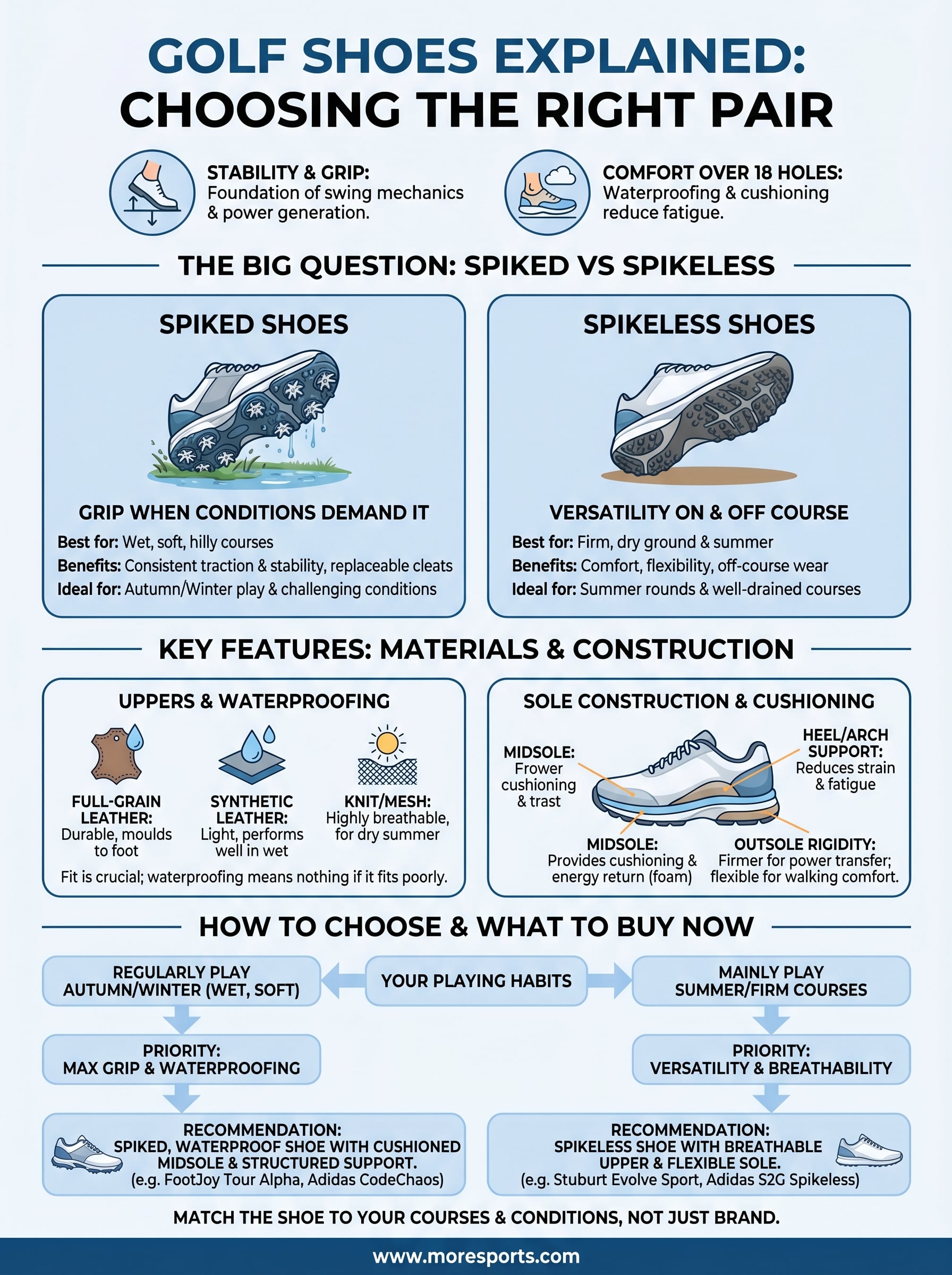
If you play regularly through autumn and winter
You need a spiked, waterproof shoe with a cushioned midsole. Brands like FootJoy and Adidas offer models that combine soft-spike traction with full waterproof guarantees and supportive insoles built for long rounds on wet ground. A structured heel cup and firm arch support reduce fatigue across back-to-back rounds on softer, heavier terrain.
A spiked, waterproof shoe is the most dependable all-weather choice for UK golfers who play through the colder months.
Look at the FootJoy Tour Alpha or the Adidas CodeChaos range as solid starting points in this category. Both deliver consistent traction, long-term waterproof performance, and the swing stability that frequent golfers need through a full UK season.
If you play mainly in summer or on firm courses
A spikeless shoe handles dry fairways and firm ground without any traction penalty. Look for a model with a breathable upper, a flexible midsole, and a moulded rubber outsole with defined nub patterns. The Stuburt Evolve Sport and Adidas S2G Spikeless are worth considering if you want summer versatility without sacrificing performance.
Spikeless designs work off the course as well, making them a practical choice if you travel to different venues or play a mix of leisure and competitive rounds through the warmer months.
Final thoughts
This guide has covered golf shoes explained from the ground up, giving you everything you need to make a confident buying decision. The choice between spiked and spikeless, the impact of upper materials, sole construction, and how course conditions should drive your decision all point toward one conclusion: the right shoe is the one that matches how and where you actually play, not the most expensive option on the shelf.
Your footwear is a functional piece of equipment, not just an accessory, and buying the wrong pair costs you comfort, grip, and consistency across every round you play. Once you understand what separates a good golf shoe from a poor one, the decision becomes straightforward. Browse the full range of golf footwear and equipment at MoreSports to find a pair that fits your game, your course, and your budget, with free UK delivery on orders over £25.