 No Duties or Customs Fees For EU & UK Customers
 Express Tracked UK Delivery On 1000s of Items
 90 Day Returns

How To Choose A Badminton Racket: Weight, Balance & Flex
RYStand in front of a wall of badminton rackets and they all look the same until you pick them up. One feels like a feather, another like a hammer, and a third snaps through the air in a way you can't explain. Learning how to choose a badminton racket means understanding three things: weight, balance, and flex, because these determine whether you're swinging something that suits your game or fighting against it every match.
This guide answers the practical question every player asks before buying: which racket actually fits my style? We'll break down head-heavy versus head-light balance, explain what those grams in the spec sheet really mean for your swing speed, and show you how shaft flexibility changes your power and control depending on whether you're a beginner, a club player, or chasing competitive form.
By the end, you'll know exactly what to look for rather than guessing based on price or brand name. At MoreSports, we stock racket sports gear alongside our golf, hiking, and workwear ranges, so we've seen how the right specs make or break a player's confidence on court. Let's get your next racket right the first time.
What makes a badminton racket right for you
A racket that suits your mate on the next court might feel completely wrong in your hand, and that's the point most buying guides skip. Body strength, swing speed, and playing style all interact with a racket's specs, so there's no single "best" racket, only the best racket for the way you actually play. Someone who relies on flat, fast exchanges at the net needs something different from someone who wants to smash from the back of the court, even if they're the same age and skill level.
Why specs matter more than brand names
Manufacturers spend a lot on marketing pro endorsements, but the sticker on the shaft won't tell you how a racket handles in a rally. What matters is a small set of physical properties: overall weight, balance point, shaft flex, grip size, and string tension. These five factors determine swing speed, power delivery, and how forgiving the racket is on off-centre hits. Learn to read these specs and you can walk into any shop, or browse any online listing, and know within seconds whether a racket fits your game.
Choose by specification, not by which player endorses the racket, because your swing isn't theirs.
The core specs at a glance
Before you get into the detail in the steps below, it helps to see how these properties typically get labelled on a racket's spec sheet or box. Here's what you'll be looking for:
| Spec | What it's usually labelled | What it affects |
|---|---|---|
| Weight | U (e.g. 3U, 4U, 5U) | Swing speed and arm fatigue |
| Balance | Head-heavy, even, head-light | Power vs manoeuvrability |
| Shaft flex | Flexible, medium, stiff | Timing and power transfer |
| Grip size | G4, G5, G6 (or S, M, L) | Wrist control and comfort |
| String tension | Measured in lbs or kg | Control vs power and stringbed feel |
Once you know how to read this table, choosing between two rackets on a shelf stops being guesswork.
How your game should drive the decision
Think about the last few games you played. Were you camped at the net poking shuttles over, or grinding out long rallies from the baseline with big overhead swings? Your answer matters more than any number on a spec sheet. A defensive, all-court player generally benefits from a lighter, more head-light racket that whips through the air for quick reactions, while an attacking player who wants heavy smashes often prefers a head-heavy or even-balanced frame that carries more mass into the shuttle on contact.
Your physical build plays a role too. Junior players and those with smaller frames or wrist or elbow issues should lean towards lighter setups regardless of playing style, because arm fatigue and injury risk climb fast with heavier, stiffer rackets. Adults with strong forearms and good technique can handle more demanding specs without losing racket head control mid-rally.
Rather than treating weight, balance, and flex as separate boxes to tick, picture them working together. A head-heavy racket with a stiff shaft rewards players with fast, technically sound swings, delivering serious power, but it punishes anyone who can't generate enough swing speed, leaving shots short and arms sore after a single session. A lighter, head-light racket with a flexible shaft forgives slower swings and helps beginners get the shuttle moving, but it won't give an advanced attacking player the punch they're after.
The steps that follow walk through each of these specs in order, starting with the most important question of all: what's your actual playing level and style right now, not the one you're aspiring to next season. Get that honest assessment right, and every decision after it gets a lot easier.
Step 1. Work out your playing level and style
Before you look at a single spec sheet, be honest about where you actually stand as a player. Skill level and playing style together decide almost every racket recommendation you'll get, so guessing here means every later step in this guide points you towards the wrong frame. Most players overestimate themselves slightly, which is fine on court but costly when it leads you to buy a racket built for someone with faster hands and a more developed technique.
Rate yourself honestly
Grading your level doesn't need to be scientific. Use the categories below and pick the one that matches how you actually play most weeks, not your best-ever session.
- Beginner: New to the game, still learning basic footwork and shot technique, rallies rarely last long.
- Improver/club player: Plays regularly, has consistent clears and drops, but lacks a fast, repeatable smash.
- Advanced/competitive: Trains or plays league matches, has developed swing speed and timing, wants specific tactical advantages from equipment.
Buy for the player you are this season, not the one you hope to become next year.
Work out your natural playing style
Once you've placed yourself on that scale, think about how you win points. Players generally fall into three broad camps, and most people lean clearly towards one even if they mix in elements of the others:
- Attacking players push forward, look for smash opportunities, and rely on power from the back of the court.
- Defensive/all-court players favour retrieval, quick net play, and consistent, controlled shots over raw power.
- All-rounders switch between both depending on the opponent and situation, without a strong bias either way.
Watch your last few matches in your head. Did you win most points by smashing through gaps, or by outlasting your opponent in long rallies and picking off loose returns at the net? That single pattern tells you more about the racket you need than any online quiz.
Why this step comes first
Level and style set the boundaries for every other decision in this guide, so treat this as your foundation rather than a box-ticking exercise. A beginner with an attacking mindset still needs a forgiving, lighter setup until their technique catches up with their ambition, while an advanced defensive player might deliberately avoid the heaviest, most head-heavy frames on the market. Once you've pinned down both factors, weight, balance, flex, grip, and string tension all become much easier choices, because you're matching specs to a real player instead of an imagined one.
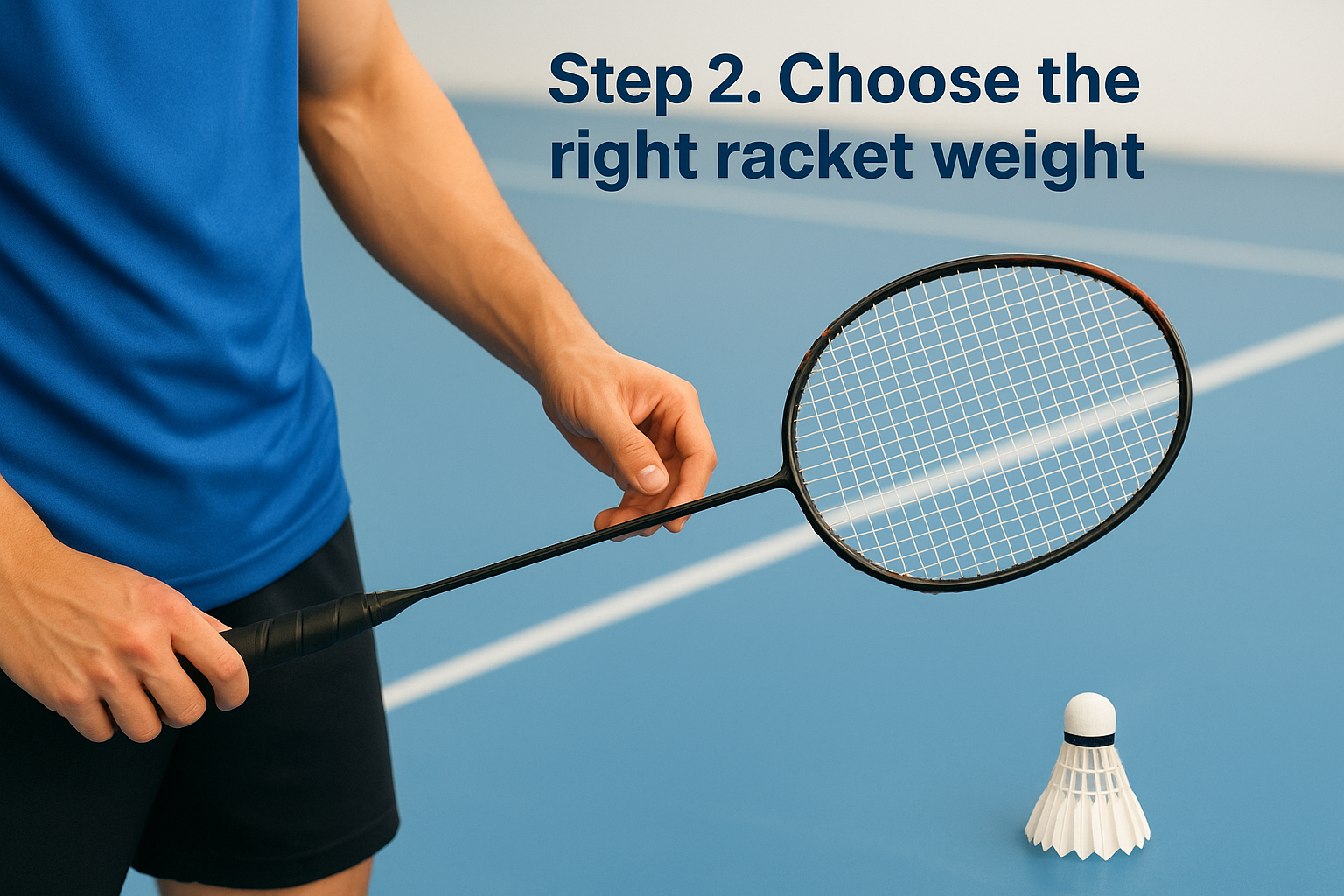
Step 2. Choose the right racket weight
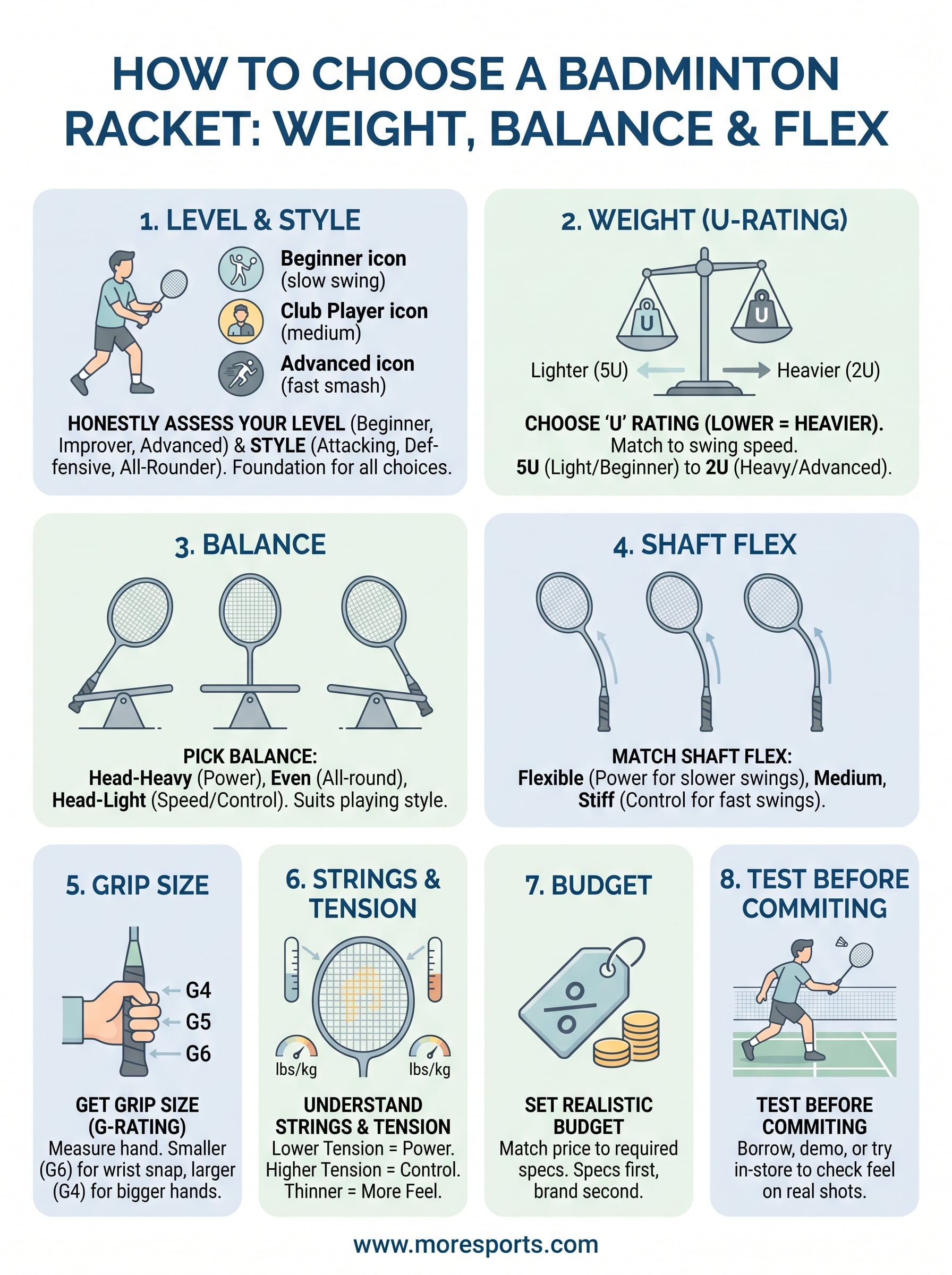
Weight is the first spec you'll see on any badminton racket, and it's also the one that decides how long you'll last on court before your arm gives out. Rackets get labelled with a "U" rating, and the lower the number, the heavier the frame. Getting this wrong doesn't just feel uncomfortable, it changes how fast you can react at the net and how much power you can generate on a smash, so it deserves more thought than most players give it.
Understand the U rating system
Manufacturers use the U system to group rackets by unstrung weight, and once you know the bands, comparing two rackets becomes a five-second job rather than a guessing game.
| Weight class | Approximate weight | Best suited to |
|---|---|---|
| 2U | 90-94g | Rare, used by strong attacking players wanting maximum power |
| 3U | 85-89g | Advanced and attacking players with fast, developed swings |
| 4U | 80-84g | Club players and improvers wanting a balance of power and control |
| 5U | 75-79g | Beginners, juniors, and players prioritising speed and manoeuvrability |
Match weight to your swing speed, not your ego
Heavier rackets carry more mass into the shuttle, which sounds appealing if you're chasing bigger smashes. But that extra mass only helps if your swing speed and technique can control it through a full rally. A 3U racket in the hands of a club player often means late reactions at the net and a tired forearm by the second game, because the extra grams add up fast over dozens of rallies.
A racket you can't swing fast enough is heavier than any number on the box.
Lighter frames, by contrast, let you flick the racket head into position quickly, which matters far more than raw mass for most recreational and improving players. If you're still working through Step 1's assessment and landed on beginner or improver, a 4U or 5U racket will almost always serve you better than anything heavier, regardless of how strong you feel in the gym.
Factor in your body and any injury history
Wrist, elbow, and shoulder strain build up gradually with badminton, and racket weight is one of the biggest contributors. Players recovering from tennis elbow or general wrist strain should default to 5U regardless of skill level, because the repetitive loading of a heavier frame over a long session is what causes flare-ups in the first place. Juniors should follow the same logic; a racket that's too heavy for a developing arm slows down technique development rather than building strength, and it makes the whole game feel like hard work instead of fun.
Step 3. Pick a balance that suits your game
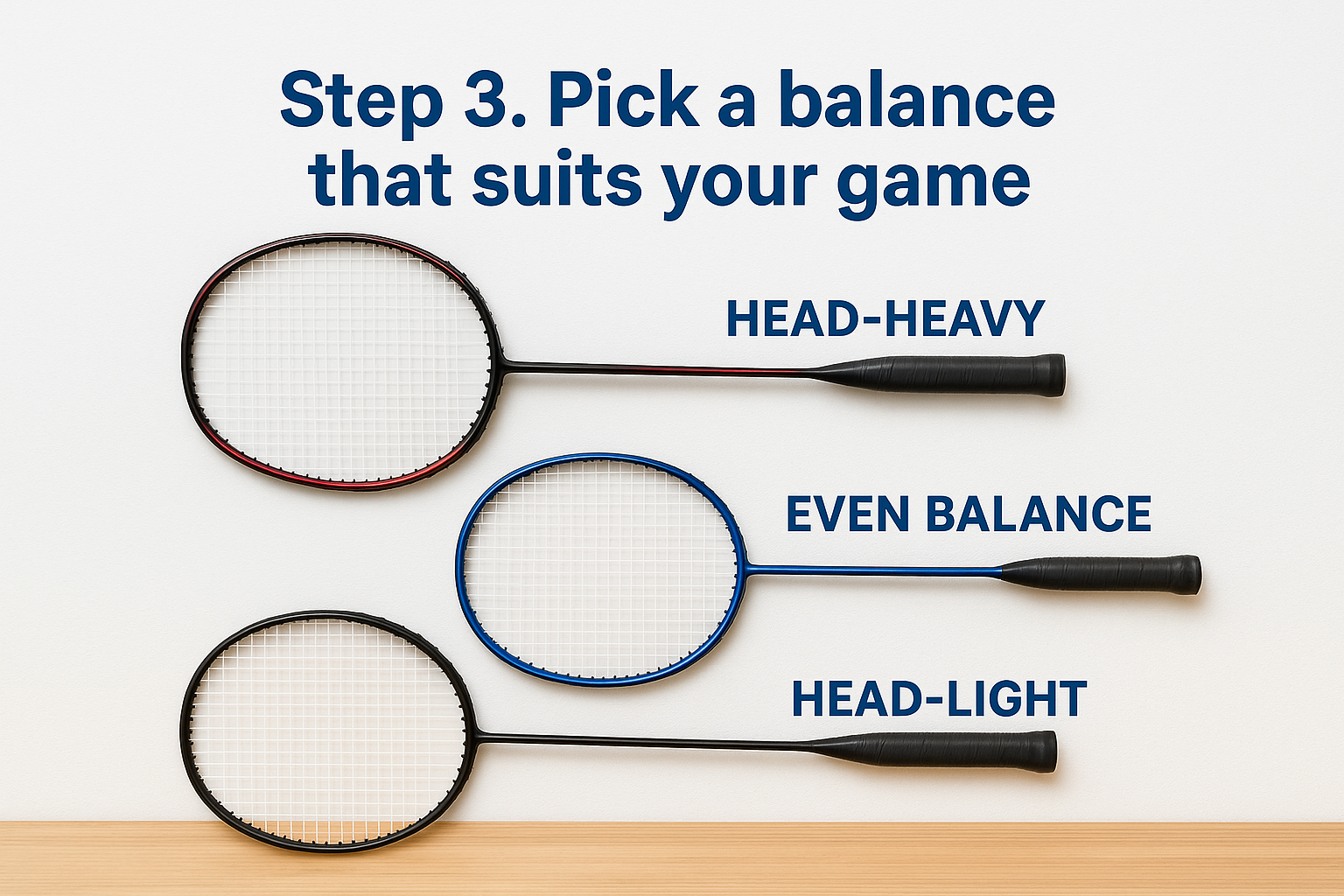
Once you've settled on a weight class, balance decides where that mass actually sits along the frame, and it changes how the racket feels far more dramatically than a few grams ever will. Manufacturers build rackets as head-heavy, even (or neutral), or head-light, and each distribution rewards a different style of play. Two rackets can share the exact same overall weight and feel completely different in your hand purely because of where the manufacturer placed that weight.
The three balance types explained
Rather than guessing from the box description, it helps to know exactly what each category delivers on court:
- Head-heavy: More mass sits towards the string bed, so the racket carries extra momentum into the shuttle. Great for smash power, harder to whip through fast net exchanges.
- Even balance: Weight distributes roughly equally between head and handle, giving a middle ground that suits all-rounders who don't want to compromise heavily either way.
- Head-light: More mass sits near the handle, so the racket accelerates quickly for fast reflex shots and net play, at the cost of some raw smashing power.
Match balance to the style you identified in Step 1
Go back to how you actually win points. Attacking players who camp at the back of the court and rely on powerful overhead smashes generally get more from a head-heavy or even-balanced frame, because that extra mass near the strings adds real pace to the shuttle without needing a huge swing. Defensive and all-court players, on the other hand, benefit from head-light rackets that snap into position fast enough to handle quick exchanges at the net and rapid direction changes during a rally.
Balance decides whether your racket helps you smash harder or react faster, and you can't have maximum amounts of both.
If you're still unsure which camp you fall into, or you genuinely play a mixed game, an even-balanced racket is the safer starting point. It won't max out either quality, but it won't punish you for picking the wrong extreme either, which matters a lot while you're still building consistent technique.
Why beginners should lean head-light or even
Newer players often assume head-heavy rackets will help them hit harder, but without the swing speed and timing to control that extra head mass, shots tend to arrive late and control suffers across the board. A head-light or even-balanced frame forgives slower reaction times and helps you develop clean technique first, with power coming later as your swing improves. Save the head-heavy frames for once your smash technique is genuinely established, not before.
Step 4. Match the shaft flex to your swing
Shaft flex decides how much the racket bends during your swing and how quickly it snaps back at contact, and it's the spec most players skip past even though it shapes almost every shot you hit. Flexible, medium, and stiff shafts each store and release energy differently, so pairing the wrong flex with your swing speed either wastes power you've generated or demands power you don't have. Get this one right and your timing feels natural within a few sessions rather than fighting the racket on every clear.
The three flex categories
Manufacturers usually label shaft flex directly on the frame or in the spec sheet, and each category suits a different level of swing speed and technique:
| Flex type | How it behaves | Best suited to |
|---|---|---|
| Flexible | Bends easily, generates power with a slower swing | Beginners, juniors, players still building swing speed |
| Medium | Balanced bend, forgiving but responsive | Club players and improvers with developing technique |
| Stiff | Barely bends, needs a fast swing to load properly | Advanced and competitive players with strong, quick technique |
Why swing speed decides flex, not ambition
A flexible shaft does a lot of the work for you. It bends on the backswing and whips forward on contact, which is exactly what a slower or developing swing needs to generate real pace on clears and smashes. Hand a beginner a stiff shaft and that snap never happens properly, because there's not enough swing speed to load the shaft in the first place, so shots feel flat and underpowered no matter how hard you try.
A stiff shaft only pays off if your swing is fast enough to bend it.
A stiff shaft, by contrast, barely flexes at all, which means almost all the power on a shot comes directly from your arm, wrist, and technique rather than the frame doing extra work. That's exactly why advanced players prefer it. Once your swing speed is fast and repeatable, a stiff shaft gives you precise control over placement and timing, because the racket isn't adding its own unpredictable whip into the mix. For players still developing that speed, though, a stiff shaft just feels dead and hard to control.
Match flex to your Step 1 result
Go back to how you rated yourself earlier. Beginners and improvers get far more consistent results from flexible or medium shafts, since they compensate for swing speed that's still developing and make it easier to feel timing on your shots. Advanced and competitive players, especially those with an attacking style built around fast, technical smashes, generally move towards medium or stiff shafts once their technique catches up, trading some forgiveness for sharper control over where the shuttle goes.
Step 5. Get your grip size right
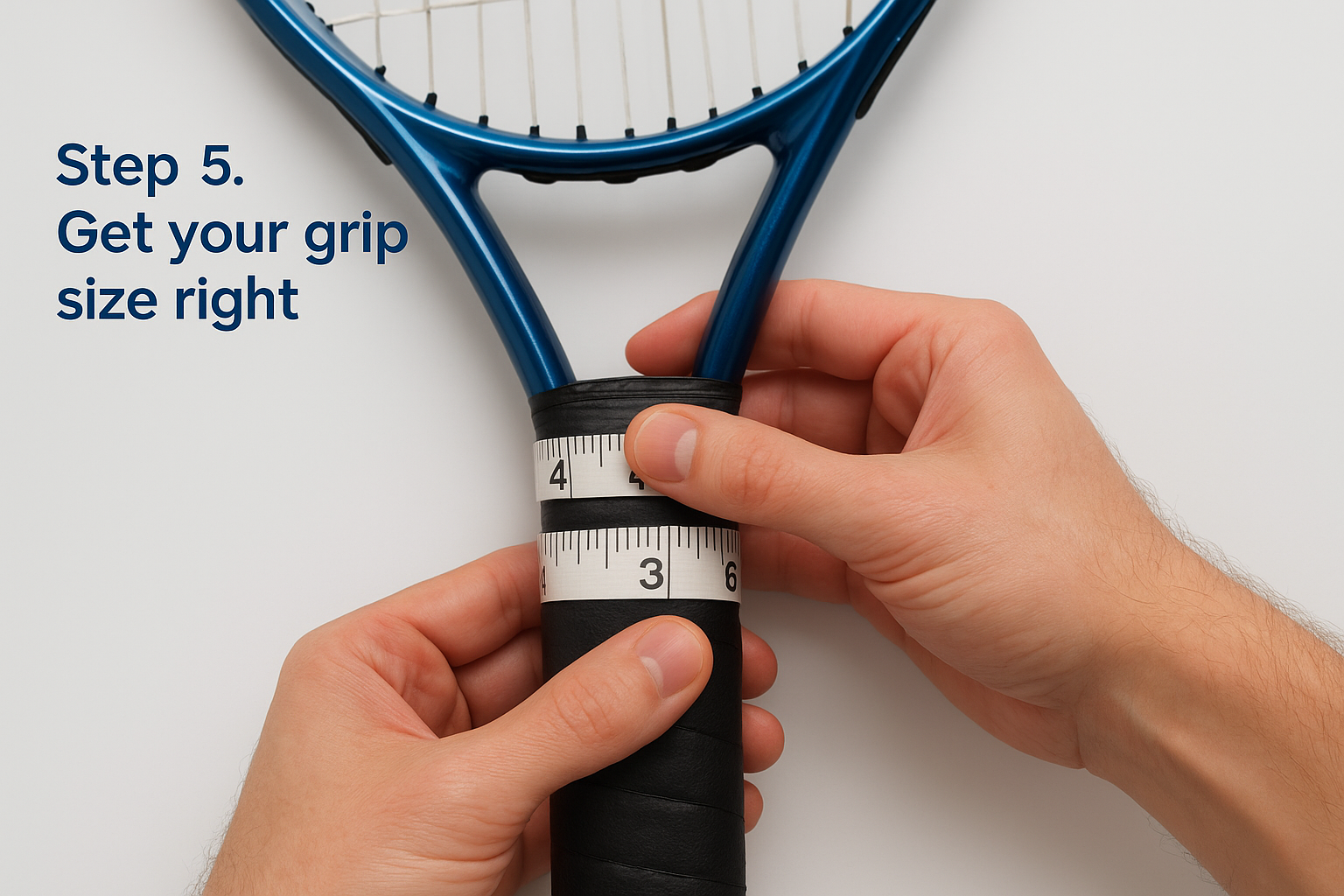
Grip size gets overlooked more than any other spec on this list, yet a handle that's even slightly wrong changes how much control you have over the racket head on every single shot. Grip circumference is measured around the handle, and manufacturers label it with a G number, from G4 up to G6 on most consumer rackets, sometimes marked as S, M, or L instead. Too thick and you lose wrist snap on net shots and drops. Too thin and the racket twists in your hand on firmer contact, costing you accuracy exactly when you need it most.
How the G sizing works
Each G number corresponds to a specific circumference, and the jump between sizes is small but noticeable once you're holding the racket:
| Grip size | Circumference | Typical fit |
|---|---|---|
| G4 | Around 3.75 inches | Larger hands, players who prefer a fuller handle |
| G5 | Around 3.5 inches | Most adult players, a common default size |
| G6 | Around 3.25 inches | Smaller hands, juniors, players who like a thin grip |
Measure your hand before you buy
Rather than guessing from your glove size or shoe size, which tells you nothing useful here, measure directly. Wrap a tape measure around your palm just below the knuckles, or measure the distance from the tip of your ring finger to the second palm crease if you want a quick self-check without kit. Compare that number against the manufacturer's sizing chart rather than assuming G5 fits everyone, because hand shape varies more than most players expect.
The right grip lets your fingers control the racket, not the racket control your fingers.
Why smaller often beats bigger
Most experienced players and coaches lean towards sizing down rather than up whenever you're between two sizes, and there's a good reason for that advice. A slightly smaller grip gives you more room to build up with an overgrip, and it keeps your wrist free to generate the fast flicks and rotations that badminton demands on net shots and defensive blocks. A grip that's too big locks your fingers into a fixed position and kills that flexibility outright, no matter how good your technique is otherwise.
Buying an oversized grip and trying to fix it with tape or a thinner overgrip only gets you partway there, since the underlying handle shape stays wrong even if the circumference shrinks slightly. It's far easier to start with a grip close to your natural size and adjust upward with an overgrip if you want more cushioning or a fractionally thicker feel. Keep that principle in mind and grip size stops being a guessing game every time you buy a new frame.
Step 6. Understand strings and tension
Strings do more work on every shot than most players realise, and the tension you choose changes the feel of the racket almost as much as the frame itself. String gauge and tension together decide how much power you get for free versus how much control you have to generate yourself, so this spec deserves proper attention rather than a default setting the shop happened to have on the reel. Get it wrong and even a perfectly matched racket ends up feeling flat or unpredictable.
Gauge decides durability versus feel
String gauge refers to the thickness of the string itself, measured in millimetres, and thinner isn't automatically better despite what some players assume.
| Gauge | Approximate thickness | Trade-off |
|---|---|---|
| 0.60mm-0.63mm | Thicker | More durable, slightly less feel and repulsion |
| 0.66mm-0.68mm | Standard | Balanced durability and feel for most players |
| 0.70mm+ | Thinner | Sharper feel and more power, breaks faster |
Beginners and players who break strings often through mishits should stick with standard or thicker gauge, since replacing strings every few weeks gets expensive fast. Advanced players chasing feel on their touch shots often accept the shorter lifespan of thinner strings as a fair trade.
Tension changes power and control directly
Tension gets measured in pounds (lbs) or kilograms, and it's strung specifically for your racket rather than sold pre-set on the frame. Lower tension, typically 18-22lbs, flexes more on contact and gives the shuttle extra pop, which suits beginners and improvers who haven't yet built the technique to generate power on their own. Higher tension, often 24-28lbs or above, produces a firmer, more controlled stringbed that rewards players with fast, accurate swings but punishes anyone still developing consistent contact.
Low tension gives you free power, high tension demands that you bring your own.
Stringing too tight for your level is one of the most common mistakes club players make, usually because they've heard a pro plays at 28lbs and assume matching that number will improve their game. It rarely does. Without the swing speed to load a tighter stringbed, shots come off feeling dead and control actually gets worse, not better.
Match tension to your Step 1 and Step 4 results
Your playing level and shaft flex from earlier steps should guide your tension choice directly. Beginners and improvers generally get the most consistent results between 18-22lbs, since it complements a flexible or medium shaft and forgives slower or developing swings. Competitive players with stiff shafts and fast, technical swings tend to move up towards 24lbs and beyond, where the firmer bed rewards precise timing with sharper control and flatter, faster shots. If you're unsure, ask whoever restrings your racket to start lower; you can always go up a pound or two next time if you find you want more feedback from the stringbed.
Step 7. Set a sensible budget
Price tempts a lot of players into buying either far more racket than they need or a bargain-bin frame that holds them back. Your budget should follow the specs you've already worked out, not the other way round, because a £180 racket with the wrong balance and flex for your level will underperform a well-matched £40 frame every time you step on court. Set a realistic price range first, then look for the best match within it rather than stretching for a premium name.
What you actually get at each price point
Badminton rackets roughly split into three price bands, and knowing what each one typically delivers stops you overspending on features you can't yet use.
| Price range | What you typically get | Best suited to |
|---|---|---|
| Under £40 | Basic aluminium or hybrid frames, limited flex options, pre-strung at fixed tension | Absolute beginners, casual or occasional players |
| £40-£100 | Full graphite frames, proper weight and balance choices, decent factory strings | Improvers and regular club players |
| £100+ | Premium graphite composites, precise flex tuning, better durability under high tension | Advanced and competitive players who'll use the extra performance |
A racket only earns its price tag once your swing is good enough to use everything it offers.
Don't let price replace the earlier steps
It's tempting to treat a higher price as a shortcut, assuming a £150 racket will automatically improve your game more than a £60 one. It won't, not if the weight, balance, and flex don't suit how you actually play. A mismatched expensive racket causes exactly the same problems as a mismatched cheap one: late reactions, sore forearms, and shots that don't go where you expect. Spend your money on the right specs from Steps 2 to 6 first, and only then let price break the tie between two rackets that both fit your game.
Budget for strings and grip too
Remember that the frame itself isn't the only cost. Factor in restringing, which most players need every few months depending on how often they play and what gauge they've chosen, plus an overgrip or two for comfort and sweat control. Setting aside a small amount for these extras from the start means you're not caught out later, and it keeps the whole setup performing the way it did on day one. A well-chosen mid-range frame with fresh strings will consistently beat a neglected premium racket strung months ago at the wrong tension.
Step 8. Test before you commit to a racket
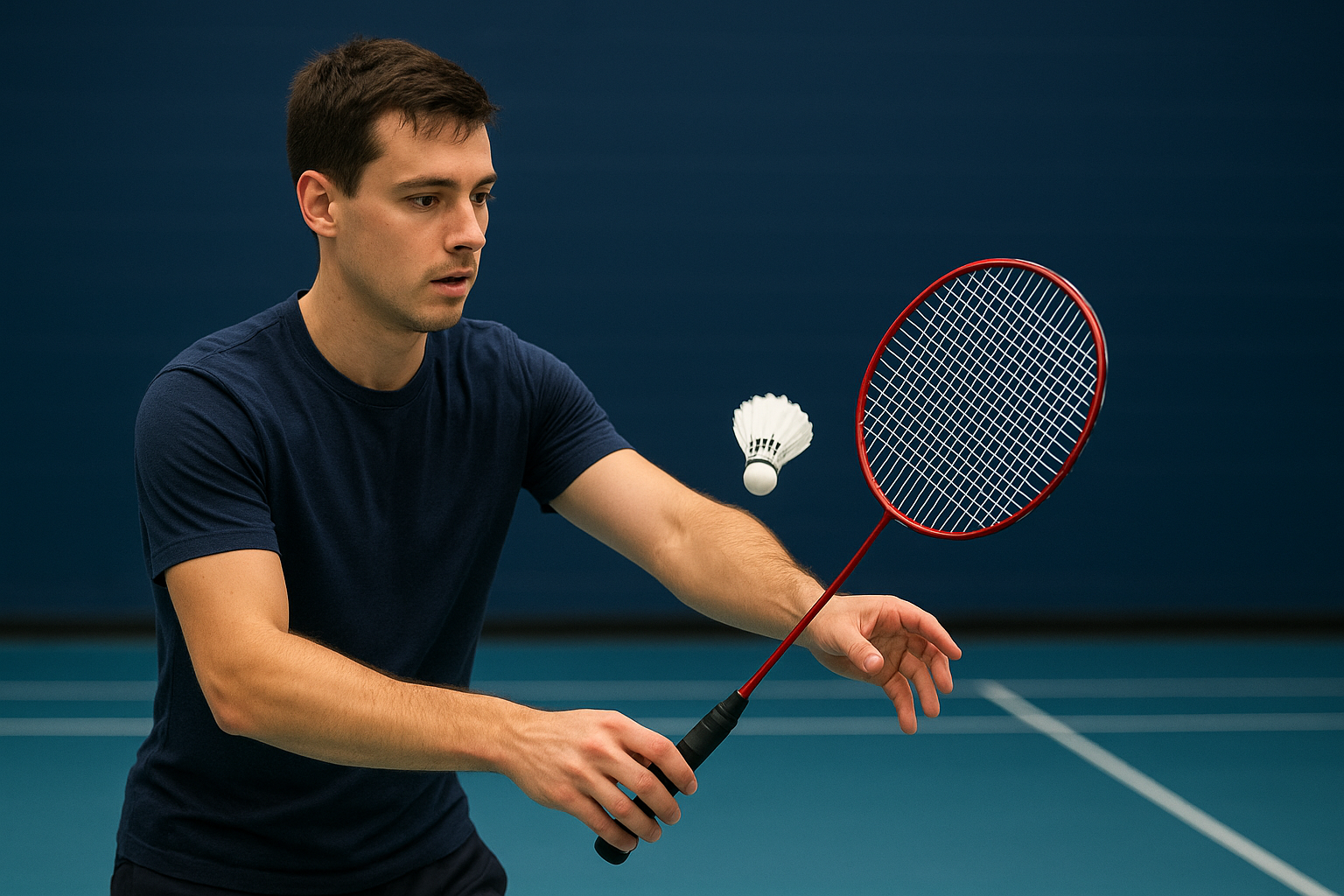
Every spec covered so far gets you close, but nothing replaces actually swinging the racket before money changes hands. Reading a spec sheet tells you what a racket should feel like on paper, while a proper test tells you how it feels when a shuttle is coming at you and you've got half a second to react. If you can test before you commit, do it, even if it means a slightly slower buying process than clicking straight to checkout.
Borrow, demo, or try in-store
Few players own a collection of rackets to compare, so you'll need to be a bit resourceful about getting one in your hand.
- Ask club-mates if you can swing their racket for a few points during a casual session, especially if it's a weight or balance you're considering.
- Visit a physical store where staff let you test grip feel and swing weight before buying, which is exactly why our Coleraine shop exists alongside online ordering.
- Check for demo programmes some retailers and coaches run, letting you borrow a racket for a week of regular play rather than a few practice swings.
- Attend a club open night, where multiple players usually bring a spread of rackets you can try back to back.
A five-minute swing in a shop tells you more than an hour of reading spec sheets.
What to check for during a test
Don't just wave the racket around in the aisle. Play a few real shots if you can, and pay attention to specific signals rather than a vague sense of whether it feels nice.
- Net shots: Can you feel the racket head respond quickly, or does it feel sluggish through the wrist?
- Overhead clears: Does the shaft load and release with a sense of extra pace, or does it feel flat and dead?
- Defensive blocks: Can you get the racket into position fast enough when a smash comes straight at you?
- Grip feel: After ten minutes of play, does your hand feel secure, or are you gripping harder than usual to compensate?
Trust your arm over the sales pitch
A racket can match every spec in this guide and still feel wrong once you're actually rallying with it, because feel is personal and specs only predict tendencies, not certainties. If a head-light racket you expected to love feels sluggish in your hand, or a stiff shaft you thought suited your level feels harsh on contact, listen to that reaction over the numbers on the box. Buy the racket that performs for you on court, not the one that looked best on the spec sheet, and you'll get far more seasons of consistent play out of it.
Choosing a racket that fits your game
Working through weight, balance, and flex isn't complicated once you break it down step by step, but it does take a bit of honesty about your actual level and style rather than the player you'd like to be. Get those two things right first, and every other decision, from grip size to string tension to budget, falls into place far more easily than picking blind off a shelf.
Go back through Steps 1 to 8 whenever you're ready to buy, jot down your U rating, balance preference, and flex, and use that as your shopping checklist. A racket matched to your swing will always outperform a pricier one that ignores how you actually play, so trust the specs over the marketing.
Once you know what you're after, browse the full racket sports range at MoreSports and find a frame built for your game, not someone else's.