 No Duties or Customs Fees For EU & UK Customers
 Express Tracked UK Delivery On 1000s of Items
 90 Day Returns

Role of Outdoor Accessories – Boosting UK Hiking Comfort
BLGBritish weather is famously unpredictable, and anyone who has tackled a lengthy walk through the Lake District or the Scottish Highlands knows that the right accessories can mean the difference between a memorable adventure and a struggle. For UK hikers and campers, each trip brings fresh challenges—unexpected rain, steep descents, or long stretches between villages—making thoughtful gear choices crucial. This guide highlights the supporting equipment that transforms hikes from a test of endurance into comfortable journeys across the UK’s wild and varied landscapes.
Table of Contents
- Defining Outdoor Accessories For UK Trips
- Key Categories And Their Specialised Uses
- Navigation And Route-Finding Accessories
- Hydration And Nutrition Accessories
- Stability And Support Accessories
- Weather Protection And Clothing Accessories
- Safety And Emergency Accessories
- Features And Quality That Shape Performance
- Material Resilience And Durability
- Ergonomic Design For Extended Comfort
- Technological Integration And Functionality
- Choosing Quality Over Cost
- How Accessories Enhance Comfort And Safety
- Weather Protection And Temperature Regulation
- Physical Stability And Injury Prevention
- Navigation Confidence And Lost Prevention
- Energy Maintenance And Fatigue Prevention
- Risks, Costs And Common Pitfalls To Avoid
- Over-Reliance On Electronic Devices
- Buying Excessive Or Unsuitable Gear
- Inadequate Weather Preparation
- Missing Navigation Backups
- Cost Management And Fitness Limitations
Key Takeaways
| Point | Details |
|---|---|
| Invest in Quality Accessories | Select durable, high-quality items that enhance comfort and safety on UK hikes. They perform better in challenging conditions and require less frequent replacement. |
| Choose Accessories Based on Conditions | Tailor your selections to specific terrains and weather conditions to effectively address potential challenges during hikes. |
| Prioritise Navigation and Hydration | Ensure you have reliable navigation tools and sufficient hydration solutions, as these are critical for both safety and performance on the trail. |
| Avoid Over-Reliance on Technology | Always have traditional navigation methods as backups to avoid vulnerability when electronic devices fail in unpredictable environments. |
Defining outdoor accessories for UK trips
Outdoor accessories are the functional items that sit between your core hiking gear and the ground, transforming a basic walk into a genuinely comfortable adventure. They’re not your main rucksack or boots—instead, they’re the supporting equipment that makes the difference between struggling through a day in the hills and enjoying it.
Think of accessories as your comfort multiplier. They address specific challenges you’ll face on UK trails: unpredictable weather, varying terrain, hydration needs, and navigation demands. These items exist because British hiking doesn’t follow a script. One moment you’re on moorland exposed to wind; the next you’re in woodland scrambling over roots.
Accessories encompass a surprisingly broad range of items that work together to enhance your experience. Navigation tools like maps and compasses keep you on track across featureless terrain. Hydration solutions—stainless steel water bottles and flasks—maintain your energy levels during long stretches between villages. Support equipment like trekking poles reduces impact on descents and stabilises you on loose ground.
What actually counts as an outdoor accessory?
Accessories differ from base gear in one key way: they enhance what you already own rather than form your foundation. Your walking boots and jacket are essentials; trekking poles are an accessory. Your rucksack is essential; a picnic rug is an accessory.
Common outdoor accessories include:
- Trekking poles for stability and joint protection
- Water bottles and hydration packs for sustained energy
- Navigation equipment (map cases, compasses, GPS devices)
- Reusable water bottles and insulated flasks
- Walking sticks for varied terrain support
- Picnic rugs for rest stops
- Additional layers and weather protection items
- First aid kits and repair tools
- Headtorches and visibility aids
Each accessory solves a specific problem you’ll encounter on UK trails. The beauty is that you choose which problems matter most for your particular walk.
Why UK hiking demands specific accessories
British terrain and weather are notoriously changeable. You might climb 800 metres and encounter completely different conditions at the summit compared to the valley. Accessories designed for UK footpaths account for this variability through durability, adaptability, and practicality.
The UK’s diverse landscape means accessories must work across moorland, woodland, coastal paths, and mountain terrain simultaneously. An accessory that’s perfect for Scottish highlands should also function on Sussex downland. This versatility requirement shapes what works here.
Quality accessories chosen for their functionality and durability turn uncomfortable hikes into genuinely enjoyable days outdoors.
You’ll also notice that UK accessory choices emphasise weatherproofing and rapid adjustment. British weather can shift from dry to soaked within 30 minutes. Your accessories need to respond to this reality rather than assume stable conditions.
To help you understand how outdoor accessories respond to the UK’s varied conditions, here is a comparison across different British terrains:
| Terrain Type | Main Accessory Requirements | Typical Challenge | Recommended Accessory Feature |
|---|---|---|---|
| Moorland | Navigation and weatherproofing | Poor visibility, wind | Waterproof map case, windproof layer |
| Woodland | Stability and insect protection | Underfoot obstacles | Trekking poles, gaiter use |
| Coastal Path | Hydration and sun defence | Salt spray, exposure | Insulated bottle, sun hat |
| Mountain | Emergency and cold resistance | Rapid weather changes | Bivvy bag, thermal gloves |
Pro tip: Select accessories based on the specific terrain and season of your planned walk, not on what looks impressive in a shop. A summer afternoon walk on lowland paths has entirely different accessory needs than a winter traverse across high moorland.
Key categories and their specialised uses
Outdoor accessories for UK hiking naturally divide into distinct categories, each addressing a different challenge you’ll encounter on the trail. Understanding these categories helps you decide what actually matters for your specific walk, rather than simply buying everything you see.
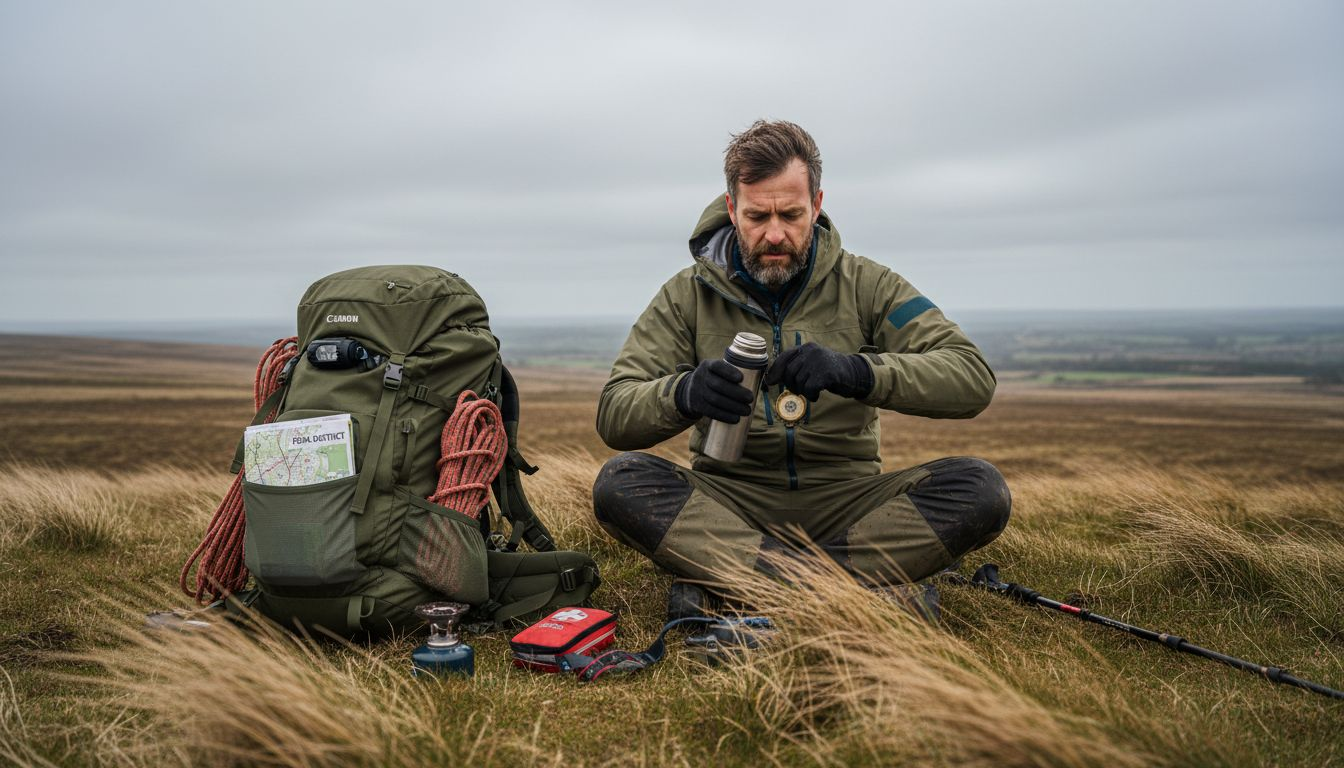
Every category exists for a reason. It solves a particular problem—whether that’s keeping your body fuelled, finding your way, staying dry, or handling emergencies. The gear choice depends on the hike’s duration, terrain, and expected weather conditions.
Navigation and route-finding accessories
Getting lost wastes time, creates stress, and can become dangerous if weather deteriorates. Navigation tools like maps and compasses prevent this by keeping you oriented across moorland, woodland, and mountain terrain.
Navigation accessories include:
- Ordnance Survey maps in waterproof cases
- Compass with baseplate for precise navigation
- GPS devices and handheld sat-nav units
- Smartphone apps with offline mapping capability
- Route cards and written directions
A physical map and compass work when batteries die and mobile signal vanishes—both common situations on British hills. Many experienced hikers carry all three methods, ensuring redundancy if one fails.
Hydration and nutrition accessories
Your body needs consistent water intake throughout a walk. Dehydration reduces decision-making clarity, increases fatigue, and slows recovery. Stainless steel bottles, hydration bladders, and insulated flasks keep you properly fuelled across long days on the hills.
Consider these hydration solutions:
- Wide-mouth water bottles for easy refilling
- Collapsible containers that save space when empty
- Insulated flasks maintaining hot or cold drinks
- Hydration packs integrated into rucksacks
- Water purification tablets for remote areas
Proper hydration accessories prevent fatigue and maintain your physical performance throughout the entire walk.
Insulated flasks deserve particular mention in UK hiking. They keep tea or hot water warm on winter walks, providing both physical warmth and psychological comfort when conditions turn challenging.
Stability and support accessories
Trekking poles reduce joint impact, particularly on descents where your knees absorb repeated shock. They’re not essential for gentle walks but become genuinely valuable on steep, rugged terrain or when carrying a heavy rucksack.
Stability accessories include:
- Lightweight aluminium trekking poles
- Collapsible walking sticks for compact storage
- Gaiters protecting lower legs from mud and moisture
- Ankle supports for weak or previously injured joints
Poles also provide three points of contact on steep scrambles, improving security and confidence across exposed ground.
Weather protection and clothing accessories
Protective clothing for UK weather shifts based on season and altitude, but versatile layers remain essential year-round. British weather changes rapidly, and your accessories must respond equally quickly.
Weather accessories include:
- Waterproof packs and stuff sacks
- Hat and glove combinations for cold exposure
- Neck gaiters for wind protection
- Moisture-wicking base layers
- Emergency bivvy bags for unexpected overnight situations
Safety and emergency accessories
Proper preparation means you’ll rarely need emergency items, but carrying them provides genuine peace of mind. First aid kits, emergency whistles, and headtorches transform potentially serious situations into manageable problems.
Safety essentials include:
- Well-stocked first aid kits
- Emergency whistles and signal mirrors
- Headtorches with spare batteries
- Multi-tools and repair kits
- Emergency contact information cards
Pro tip: Choose accessories based on the specific walk’s duration and terrain—a summer afternoon loop requires different gear than a winter mountaineering expedition across remote ground.
Features and quality that shape performance
Not all hiking accessories perform equally. Two water bottles might look similar, but one keeps your drink cold for eight hours whilst the other struggles past two. The difference lies in material quality, ergonomic design, and thoughtful engineering—features that directly affect your comfort and safety on the trail.
Quality accessories demonstrate superior adaptation to challenging UK conditions. Moorland exposure, wet woodland scrambles, and unpredictable weather demand gear that genuinely performs under stress, not just in a shop.
Material resilience and durability
Materials determine how long your accessories survive repeated use in harsh conditions. Stainless steel water bottles resist corrosion from minerals and acidic drinks. Gore-Tex fabrics maintain breathability whilst shedding water completely. Aluminium trekking poles balance lightweight construction with genuine strength across uneven ground.
Material resilience against wear and weather separates accessories that last five years from those needing replacement after one season.
Consider these material qualities:
- Stainless steel resisting rust and corrosion
- Double-stitched seams lasting longer than single stitching
- UV-resistant fabrics preventing colour fade and material degradation
- Reinforced stress points on straps and handles
- Waterproof coatings maintained across repeated use
Budget accessories often fail at stress points first—where handles attach to bottles, where seams meet fabric, where poles connect to grips. Premium alternatives anticipate these weak spots and strengthen them accordingly.
The following table highlights key factors to consider when selecting high-quality UK hiking accessories:
| Factor | Effect on Performance | Long-Term Benefit |
|---|---|---|
| Material Resilience | Withstands repeated exposure | Less frequent replacement needed |
| Ergonomic Design | Reduces fatigue, strain | More comfortable, longer use |
| Weather Adaptability | Resists rain, wind, cold | Reliable across all seasons |
| Functional Technology | Aids navigation, safety | Enhanced route confidence |
Ergonomic design for extended comfort
You’ll carry these accessories for hours across difficult terrain. Ergonomic design transforms them from tolerable to genuinely comfortable. Padded shoulder straps distribute weight evenly. Contoured handles fit your hand naturally. Lightweight construction reduces fatigue without sacrificing durability.
Ergonomic features include:
- Padded grips reducing hand fatigue on trekking poles
- Anatomically curved bottle shapes fitting backpack pockets perfectly
- Adjustable straps accommodating different body sizes
- Lightweight materials lowering overall pack weight
- Balanced weight distribution preventing shoulder strain
Premium ergonomic design keeps you comfortable across eight-hour days on exposed UK hillsides.
A poorly designed water bottle creates discomfort that builds throughout the day. A well-designed one becomes invisible—you simply forget you’re carrying it.
Technological integration and functionality
Modern hiking accessories increasingly incorporate technology. GPS devices offer reliable navigation when map reading fails. Headtorches with LED technology deliver brighter light using less battery power. Hydration packs feature integrated tube systems for hands-free drinking.
Technological features worth considering:
- GPS accuracy within five metres across open moorland
- LED headtorch brightness measured in lumens
- Battery longevity measured in hours of continuous use
- Waterproof ratings tested to specific depths
- App integration for route tracking and safety features
Technology enhances performance but shouldn’t replace traditional skills. A GPS device complements map navigation rather than replacing it. Quality accessories blend reliable technology with proven, time-tested functionality.
Choosing quality over cost
Cheaper accessories save money upfront but often cost more over time through replacement cycles. A £25 water bottle lasting one season costs significantly more than a £60 bottle lasting five years. Quality gear also performs better when conditions turn challenging—precisely when performance matters most.
Pro tip: Invest in quality accessories for items you’ll use constantly on every walk—water bottles, trekking poles, and navigation tools. Budget alternatives work fine for specialised gear you use occasionally.
How accessories enhance comfort and safety
Accessories transform hiking from an endurance test into something genuinely enjoyable. They address the specific challenges that make UK walks uncomfortable or risky—unpredictable weather, physical strain, navigation uncertainty, and fatigue. The right accessories turn these obstacles into manageable situations.
Comfort and safety aren’t luxuries; they’re interconnected. When you’re uncomfortable, decision-making deteriorates. Fatigue clouds your judgement. Cold slows your movements. Accessories prevent these spirals by addressing root causes before they become serious problems.
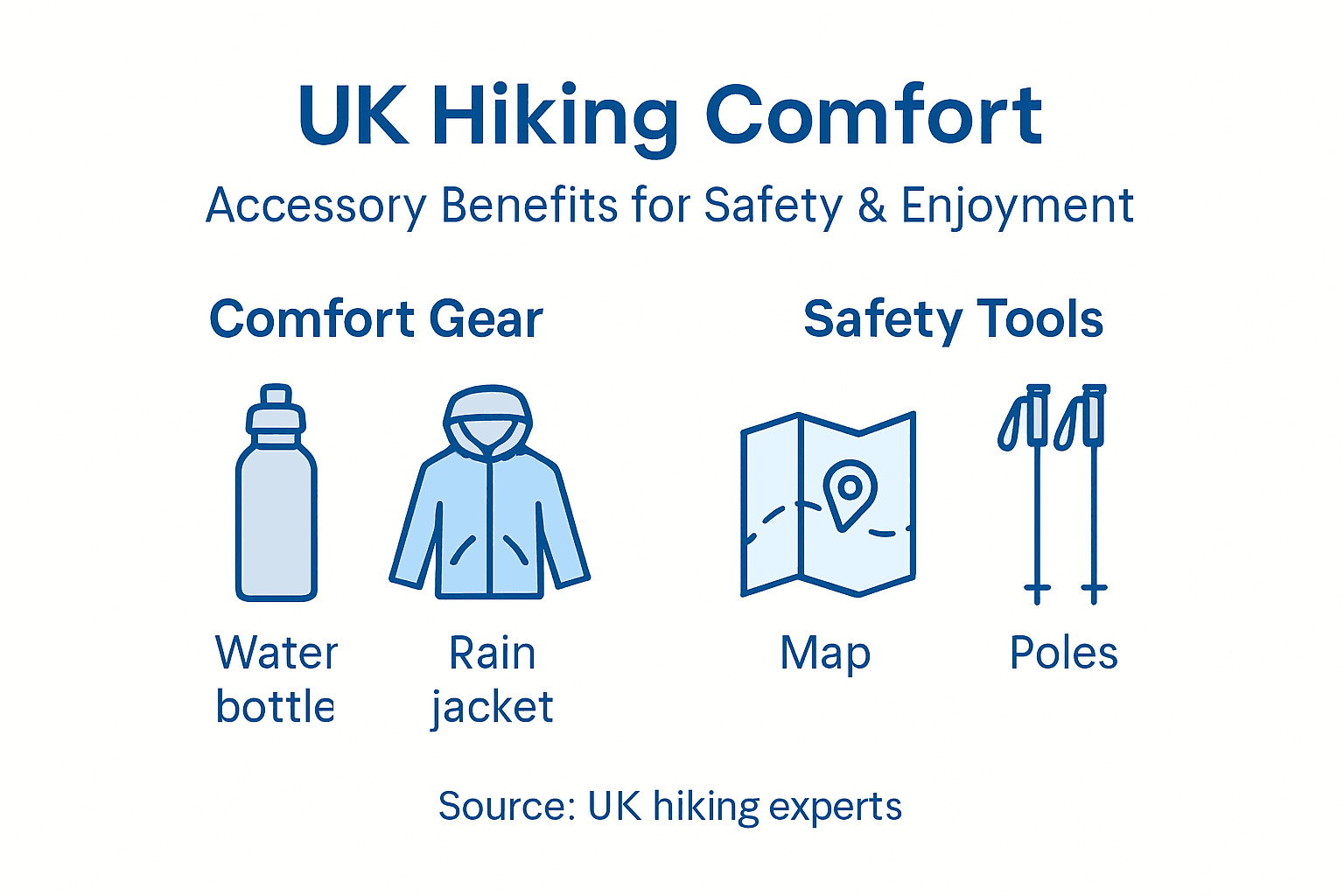
Weather protection and temperature regulation
British weather shifts rapidly, and your body struggles to adapt without proper support. Waterproof jackets shield from rain and wind that would otherwise drain body heat. Layered clothing systems regulate temperature as you ascend into exposed areas or descend into sheltered woodland.
Weather protection through quality accessories prevents hypothermia, heat exhaustion, and the general misery of being cold and wet for hours.
Weather accessories include:
- Waterproof jackets with taped seams shedding water completely
- Insulating layers trapping warm air close to your body
- Hand warmers and hats protecting extremities from cold
- Protective gloves maintaining dexterity in wet conditions
- Gaiters keeping moisture away from lower legs
Miserable people make bad decisions. Comfortable people stay patient and think clearly when conditions turn challenging.
Physical stability and injury prevention
Trekking poles aren’t optional luxury items—they’re injury prevention tools. They reduce impact on descents where your knees absorb repeated shock from your entire body weight plus rucksack. On uneven terrain, they provide three points of contact, improving stability and preventing twisted ankles.
Stability benefits include:
- Reduced joint stress on steep downhill sections
- Enhanced grip on loose or slippery surfaces
- Three-point contact improving balance across scrambles
- Support for those with previous knee or ankle injuries
- Confidence boost on exposed or challenging terrain
Trekking poles directly prevent injuries that would end your day or require assistance off the mountain.
Quality footwear with ankle support works alongside poles to protect your feet and lower legs. Together, these accessories reduce the injury risk that makes walking genuinely dangerous.
Navigation confidence and lost prevention
Getting lost creates panic that clouds decision-making. It wastes energy, prolongs exposure, and increases the risk of accidents in unfamiliar terrain. Reliable navigation accessories—maps, compasses, GPS devices—keep you oriented and confident.
Navigation accessories provide:
- Clear route confirmation at key decision points
- Reassurance during poor visibility or bad weather
- Emergency backup if one navigation method fails
- Accurate distance and elevation information
- Peace of mind across unfamiliar territory
A confident hiker makes safer decisions. Someone anxious about being lost focuses on finding paths rather than watching where they’re stepping.
Energy maintenance and fatigue prevention
Dehydration and low blood sugar reduce both physical and mental performance. Your legs work harder, your breathing becomes laboured, and your tolerance for discomfort plummets. Hydration systems and nutrition accessories maintain energy levels throughout the day, reducing both fatigue and cold-related risks.
Hydration benefits include:
- Consistent energy for demanding terrain
- Maintained mental clarity for decision-making
- Prevention of heat- and cold-related illness
- Faster recovery during rest breaks
- Reduced overall fatigue accumulation
Pro tip: Drink consistently throughout your walk rather than waiting until you’re thirsty—thirst appears after dehydration has already affected your performance.
Risks, costs and common pitfalls to avoid
Accessories solve problems, but they create new ones if chosen poorly. Over-investment in specialised gear becomes burdensome. Reliance on technology without backup creates dangerous situations when batteries fail. Neglecting weather-appropriate clothing leaves you vulnerable despite owning expensive equipment. Understanding these pitfalls prevents costly mistakes and genuine safety risks.
The goal isn’t owning the most gear—it’s owning the right gear used correctly.
Over-reliance on electronic devices
GPS units and headtorches are genuinely useful, but they fail. Batteries die. Screens crack. Electronics malfunction in cold, wet conditions. Over-reliance on electronic devices without traditional navigation backups creates vulnerability when technology inevitably fails.
Common electronic pitfalls include:
- Relying solely on GPS instead of carrying maps
- Forgetting spare batteries for headtorches and devices
- Assuming mobile signal will be available for navigation
- Failing to test equipment before departing on walks
- Neglecting to learn basic compass navigation
A GPS device enhances navigation. A map and compass remain your reliable foundation. Carry both.
Buying excessive or unsuitable gear
It’s tempting to purchase every accessory you see, imagining they’ll solve hiking problems. In reality, excessive gear becomes burdensome, expensive, and often unused. Unsuitable gear selection creates unexpected expenses when you realise you’ve bought items that don’t work for your actual walks.
Common purchasing mistakes:
- Buying highly specialised gear for occasional use
- Choosing fashion over function in accessories
- Investing in expensive equipment without understanding how to use it
- Purchasing full expedition-level gear for local day walks
- Ignoring weight when building your accessory collection
Essential multi-functional gear outperforms excessive specialist equipment every time.
Start with core accessories—water bottle, navigation tools, weather protection—then add others as specific needs emerge from actual walking experience.
Inadequate weather preparation
Neglecting weather-appropriate clothing is surprisingly common. Hikers carry summer accessories in winter. They ignore rain protection in changeable conditions. British weather shifts rapidly, and inadequate preparation creates genuine danger—hypothermia develops quickly in wet, cold conditions.
Weather pitfalls include:
- Assuming weather forecasts accurately
- Carrying insufficient insulation for altitude exposure
- Neglecting waterproof protection because rain seems unlikely
- Wearing cotton instead of moisture-wicking materials
- Packing light jackets that don’t actually keep you warm
Check weather forecasts, then prepare for conditions one level worse. British conditions change faster than predictions.
Missing navigation backups
Carrying a single navigation method is risky. Maps get wet and illegible. Compasses malfunction. GPS batteries die. Missing navigation backups forces difficult choices when your primary method fails in uncertain terrain.
Proper navigation includes:
- Physical map with compass as your foundation
- GPS device for verification and distance tracking
- Smartphone app with offline maps for redundancy
- Route cards with written directions
- Familiarity with the landscape before departing
Redundancy isn’t excessive—it’s sensible. You’ll rarely need backups, but they transform minor problems into manageable situations.
Cost management and fitness limitations
Accessories cost money, and unexpected purchases during walks compound expenses. More critically, buying gear won’t compensate for insufficient fitness. Quality accessories enhance capable hikers; they don’t transform unprepared ones into mountain-ready adventurers.
Pro tip: Before purchasing specialised accessories, complete several walks with basic gear to understand your actual needs—this prevents expensive mistakes and identifies what genuinely helps your specific style of hiking.
Elevate Your UK Hiking Experience with Essential Outdoor Accessories
Navigating the challenges of unpredictable British weather and diverse terrain requires more than just determination. The right outdoor accessories such as navigation tools, hydration solutions, and stability aids transform your walk into a comfortable, safe adventure. With MoreSports, you can find high-quality equipment designed to enhance comfort, durability, and performance for every UK trail.
Explore our comprehensive range of hiking accessories and apparel at MoreSports. Benefit from expert-picked gear, competitive prices, free UK delivery on orders over £25 and a 90-day return policy. Don’t wait for an unexpected weather change or navigation mishap to disrupt your plans — prepare today by visiting MoreSports and discover the outdoor essentials that British hikers trust for every season.
Frequently Asked Questions
What are essential outdoor accessories for hiking?
Essential outdoor accessories for hiking include trekking poles, water bottles, navigation tools (like maps and compasses), first aid kits, and weather protection items such as waterproof jackets and gaiters. These accessories enhance comfort and safety during hikes.
How do I choose the right accessories for different terrains?
Choosing the right accessories depends on the type of terrain you’ll encounter. For example, you may need navigation tools for moorland, hydration solutions for coastal paths, and stability accessories like trekking poles for mountains. Assess the specific challenges of your hike to select appropriate gear.
Why is hydration important while hiking, and how can I stay hydrated?
Hydration is crucial while hiking because it prevents fatigue, enhances decision-making, and maintains physical performance. To stay hydrated, carry water bottles or hydration packs, and drink consistently throughout your hike, even if you don’t feel thirsty.
How can I ensure my outdoor accessories are durable and effective?
To ensure durability, select accessories made from high-quality materials designed for harsh conditions, such as stainless steel and weatherproof fabrics. Look for ergonomic designs for comfort and enhanced functionality, and consider features like waterproof ratings and adaptability to different weather conditions.
Recommended
- Outdoor Gear Packing Guide for Stress-Free UK Adventures – More Sports
- What Is Seasonal Sports Gear and Why It Matters – More Sports
- Why Layer Hiking Clothing Boosts Outdoor Comfort – More Sports
- Layering in Outdoor Clothing: UK Adventure Essentials – More Sports
- Role of Drink Accessories in Modern Wellness – EQUA - Sustainable Water Bottles
- How To Deal With Hotter Climate When You Go Abroad | UK Food
- Heatons has al fresco dining and picnics sorted! - LoveBelfast